Welcome! In our previous lessons, we've explored the B2B SaaS buyer's journey and met the key members of the buying committee—the decision-makers, influencers, and champions. This completes our look at the customer's side of the equation. Now, we'll shift our focus to the company's side and introduce the master plan that ties everything together.
This lesson addresses the final outcome in our "Go-to-Market Foundations" module: Explain what a go-to-market strategy is and how it connects product, marketing, and sales. Think of your work as a backend engineer: you don't just write code, you work from an architecture or system design that ensures all the microservices, databases, and APIs work together coherently. A go-to-market (GTM) strategy serves the same purpose for a business—it's the architecture for revenue.
By the end of this lesson, you'll understand what a GTM strategy is, its core components, and how it orchestrates the efforts of product, marketing, and sales into a single, unified motion.
What is a Go-to-Market Strategy?
To start, let's get a clear, concise definition. A GTM strategy is a comprehensive action plan for how a company will bring a product to market, reach its target customers, and achieve a competitive advantage. It's much broader than a simple marketing plan.
What is a go-to-market strategy?
This video from Product Marketing Alliance provides an excellent introduction to the concept of a GTM strategy.
Watch the following two segments: What is a GTM strategy?: This part defines the concept and lists its key components. GTM vs. Marketing Strategy: Pay close attention to the distinction made here. A marketing strategy is a part of the GTM strategy, which also encompasses sales, product, and brand development.
As the video explained, a GTM strategy is the holistic plan. A marketing plan focuses on reaching and delivering value to the target audience, but the GTM strategy is what ensures the product being built, the message being delivered, and the sales process being executed are all aligned.
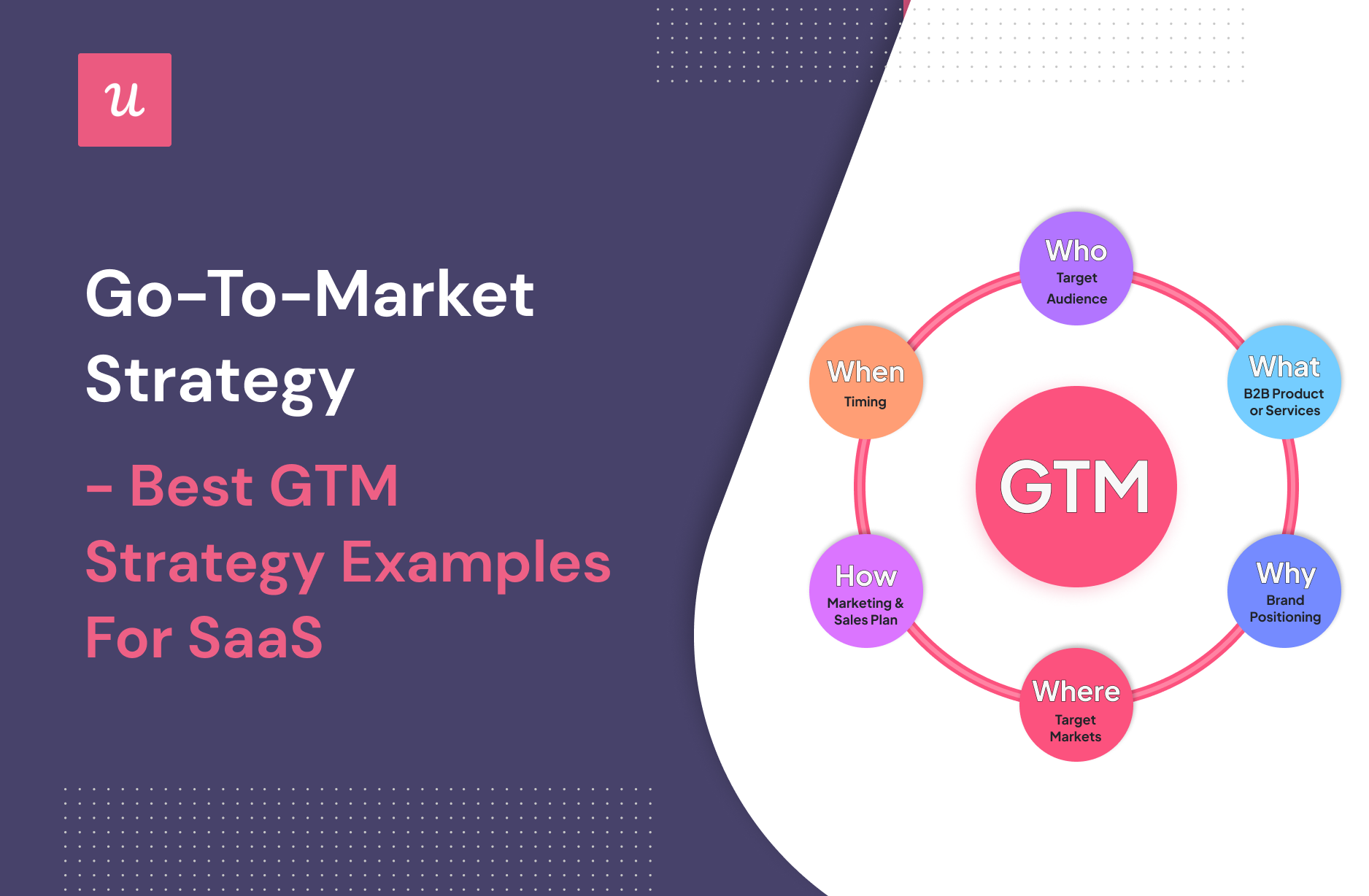
The GTM Strategy as a Blueprint
Given your engineering background, it's helpful to think of a GTM strategy as the master blueprint for your company's revenue engine. It ensures every department is working from the same set of plans toward the same goal.
A Go To Market Strategy Framework for SaaS Growth - Mick-Mar Inc.
This article from Mick-Mar Inc. does a great job of framing the GTM strategy as a foundational blueprint, which should feel familiar to an engineering mindset.
Read the introduction, from the beginning down to the heading "Core Components of a GTM Framework at a Glance". Then, carefully study the table under that heading. This table provides a high-level schematic of a GTM framework, showing the questions each component answers and its primary goal.
The key takeaway from that reading is that a GTM strategy forces alignment. Without it, you might have:
- Product building features for a customer profile that Marketing isn't targeting.
- Marketing generating leads that the Sales team isn't equipped to close.
- Sales making promises that the Product can't deliver on.
The GTM framework is the "single source of truth" that prevents this chaos.
The Components: How Product, Marketing, and Sales Connect
Let's break down how this alignment works by looking at the key components, or pillars, of a GTM strategy. Each pillar is a point of critical connection between Product, Marketing, and Sales.

Here’s how the three teams interact within these pillars:
-
Target Market & ICP:
- Product uses the Ideal Customer Profile (ICP) to decide which features to build and prioritize.
- Marketing uses the ICP to craft resonant messaging and choose the right channels to find these customers.
- Sales uses the ICP to qualify leads, ensuring they spend time on prospects who are a good fit for the product.
-
Positioning & Value Proposition:
- Product develops the features and capabilities.
- Marketing (specifically product marketing) translates those features into benefits and a compelling value proposition. They tell the story of why the product matters.
- Sales uses this positioning and messaging in their conversations to articulate the product's value to prospects.
-
Sales Motion & Funnel:
- The Product itself heavily influences the sales motion. A simple, intuitive product might enable a self-serve, "product-led" motion. A complex, expensive product will require a high-touch, "sales-led" motion.
- Marketing is responsible for the top of the funnel—generating awareness and capturing leads (e.g., through content, ads, SEO).
- Sales takes over to guide qualified leads through the middle and bottom of the funnel, converting them into customers. The GTM strategy defines the handoff points and criteria (e.g., a Service-Level Agreement or SLA) between the teams.
-
Enablement & Operations:
- This is where Marketing directly supports Sales. Marketing creates the assets the sales team needs to be effective, such as case studies, competitor battlecards, and demo scripts.
- Product provides the deep technical knowledge and validation that underpins these assets, ensuring they are accurate and credible.
Thinking Like a GTM Engineer
The best GTM strategies are dynamic and deeply integrated with the product itself. A modern and highly effective way to think about this is to treat your GTM motion as a product that needs to be designed, built, and optimized. This perspective is particularly powerful for someone with your technical background.
Let's hear from Jeanne DeWitt Grosser, Head of Revenue and GTM at Vercel, who has also led GTM at Stripe and Google. Her perspective will be highly relevant to you.
What world-class GTM looks like in 2026 | Jeanne DeWitt Grosser (Vercel, Stripe, Google)
In this clip from Lenny's Podcast, Jeanne DeWitt Grosser discusses what world-class GTM looks like, with a perspective that deeply connects it to product and engineering.
Please watch these clips in order: A holistic GTM definition: She defines GTM as any function that "touches a customer or makes a dollar," emphasizing the need for an integrated, orchestrated customer lifecycle. GTM as a product: This is a key concept. Listen to how she describes the customer's buying journey as an experience that can be a competitive differentiator, just like a product feature. The whiteboarding example at Stripe is a perfect illustration of this. The GTM Engineer: This segment introduces a role that directly blends engineering skills with GTM functions—a potential career path for you to consider. Sales as an R&D arm: Here, she explains how a great sales team functions as an extension of the product team by translating customer feedback into valuable signal for the product roadmap. This closes the feedback loop between Sales and Product.
Jeanne's insights perfectly encapsulate how a GTM strategy connects the three functions. It's not just a one-way street where Product builds something and throws it over the wall to Marketing and Sales. It’s a complete system:
- Product <> GTM Strategy: The product's nature informs the GTM strategy (e.g., product-led vs. sales-led).
- GTM Strategy -> Marketing & Sales: The strategy dictates who to target, what to say, and how to sell.
- Sales & Marketing -> GTM Strategy & Product: Feedback from the market, collected by Sales and Marketing, is fed back to refine the GTM strategy and inform the product roadmap.
Conclusion
This lesson concludes our foundational module by tying all the previous concepts together under the umbrella of the Go-to-Market strategy.
Here are your key takeaways:
- A Go-to-Market (GTM) strategy is a comprehensive, cross-functional blueprint that outlines how a company will launch a product, reach target customers, and achieve its business goals. It is not just a marketing plan.
- It serves as the connective tissue between Product, Marketing, and Sales by creating a shared plan for who the customer is, what the value proposition is, and how the company will win in the market.
- The connection is a two-way feedback loop: the strategy directs the execution of marketing and sales, while insights from the market are fed back to refine the strategy and the product itself.
- Thinking of GTM "as a product" and the emergence of roles like the "GTM Engineer" highlights a modern approach where the customer's buying experience is designed and optimized with the same rigor as the software product itself—a perfect intersection of technical and creative work.
In our next module, "Customer Discovery and Definition," we will begin to build the first pillar of a GTM strategy. Our first lesson will focus on how to create an Ideal Customer Profile (ICP), the foundation upon which all successful GTM strategies are built.