Welcome to the next lesson in our module on Budget Allocation & Bidding. In our last session, we focused on auditing bid strategies, establishing how your choices between Lowest Cost, Cost Cap, and Bid Cap directly influence campaign delivery and efficiency. We noted that a primary symptom of a misaligned bid strategy, such as a Cost Cap set too low, is chronic underspending.
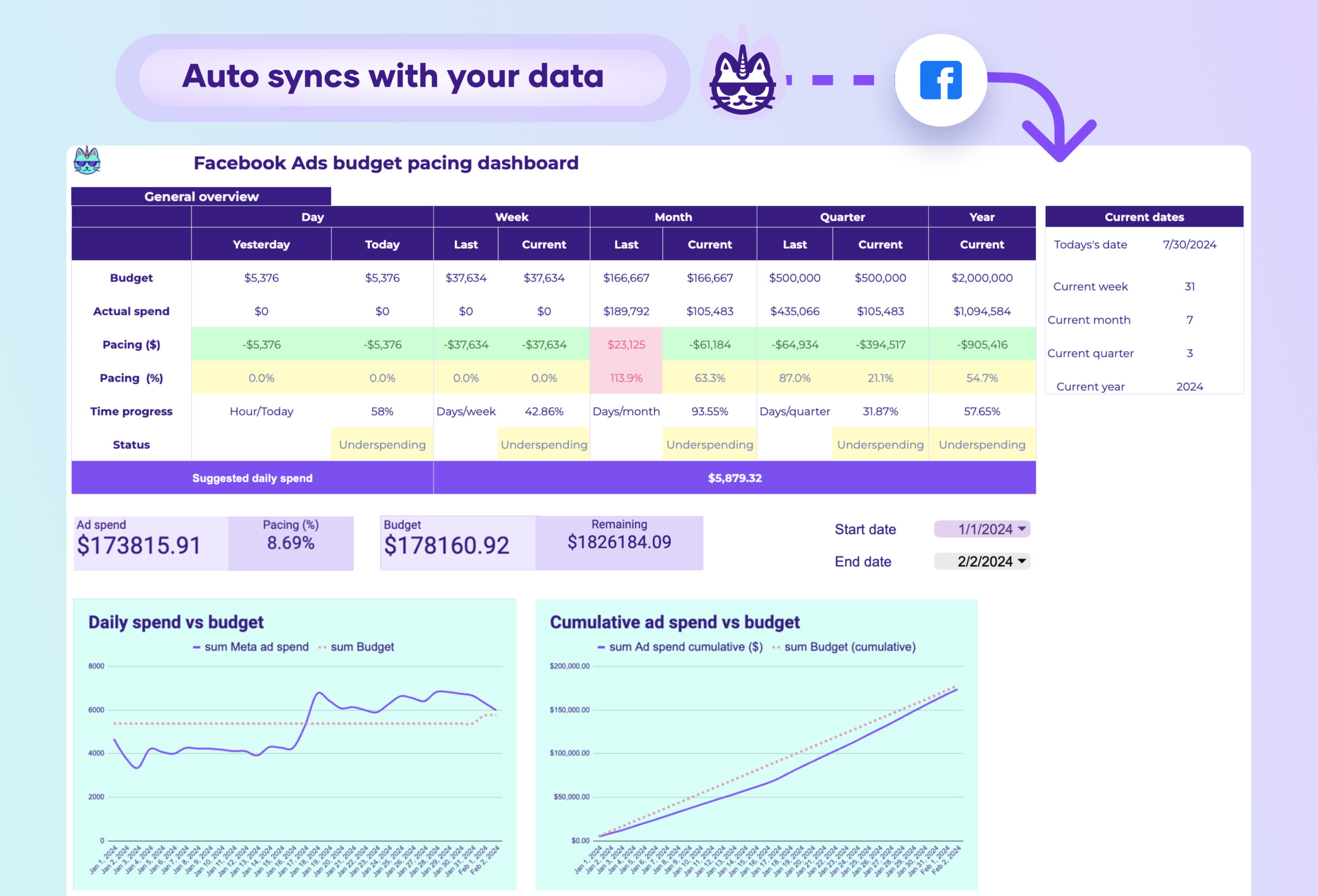
Today, we will broaden our financial audit to identify overspending and underspending patterns at the campaign and ad set levels. This goes beyond simply checking if a budget is being spent; it involves analyzing how and where that budget is flowing. For an internal audit, this is where you uncover significant opportunities—either by plugging "budget leaks" that drain profitability or by funding hidden gems that are starved for resources. We will establish a clear, data-driven process to diagnose these patterns and pinpoint their root causes.
1. The Anatomy of Spending Inefficiency
Before we dive into diagnostics, let's clarify what we mean by overspending and underspending in the context of a Meta ad account. It's more nuanced than just comparing spend to a daily budget number.
-
Overspending: This is the act of allocating budget to campaigns or ad sets that fail to meet your brand's key performance indicators (KPIs). It's not about spending "too much" in absolute terms, but about spending on assets that deliver a suboptimal return. A classic example is a legacy campaign, once a top performer, that now has a steadily climbing CPA but continues to consume a significant budget out of habit.
-
Underspending: This occurs in two primary forms:
- Delivery Underspend: The most obvious form, where a campaign consistently fails to spend its allocated daily or lifetime budget. As we discussed, this is often caused by overly restrictive bid caps, cost caps, or a very narrow audience.
- Opportunity Underspend: This is a more subtle but often more costly mistake. It happens when a highly efficient campaign—one with an excellent ROAS or a very low CPA—is given too little budget. Every dollar you don't spend on this campaign is a missed opportunity for profitable growth.
Your audit must hunt for both. Overspending erodes your Marketing Efficiency Ratio (MER), while opportunity underspend stunts your growth.

2. A Diagnostic Framework for Spending Patterns
To systematically identify these patterns, you need a clear diagnostic process. This involves exporting your performance data and looking at it through specific analytical lenses.
Start by exporting your campaign and ad set data from Ads Manager for the last 30 to 60 days. Ensure you include columns for Spend, ROAS (or CPA/CPL), Conversions, and if relevant, New-Customer ROAS.
Diagnostic 1: The Spend Concentration Audit
First, assess how distributed or concentrated your budget is. Over-fragmentation, where budget is spread thinly across too many campaigns and ad sets, is a primary driver of poor performance and an inability for the algorithm to learn.
The following article by media buyer Sam Tomlinson provides an excellent framework for identifying this issue.
Issue #136 | The Ultimate Meta Ads Account Audit, Part II
This article provides diagnostic tests for account structure and budget flow. It explains why a fragmented structure can destroy performance by starving the algorithm of the data it needs to optimize.
Begin by reading the sections under the heading "The Ad Account" to understand the common structural red flags. Then, continue through the subsection Is budget flowing to the right places?. Pay close attention to the specific numerical benchmarks he provides.
Based on this, conduct these two simple checks on your data:
- The 60/3 Rule: Sort your campaigns by spend. Do the top three campaigns account for at least 60% of the total budget? If your spend is scattered across ten or fifteen campaigns, each with a small slice of the budget, you likely have a fragmentation problem.
- The Learning Phase Check: How many of your active ad sets are failing to achieve at least 50 optimization events per week (or ~25 per week as a bare minimum)? Ad sets chronically starved of budget remain stuck in the "Learning" phase, leading to volatile performance and inefficient spend—a form of systemic overspending.
Diagnostic 2: The Efficiency Mismatch Audit
Next, we hunt for the "budget leaks" where money is being spent with poor returns. This involves a direct comparison of spend distribution versus performance distribution. The resource below outlines this process perfectly.
Meta Ads Budget Distribution Methods: 6 Ways to Win
This guide from AdStellar.ai details how to perform a baseline audit to find what they call "budget leaks."
Focus on the section Step 1: Audit Your Current Budget Structure. The key action is to sort your data by spend and compare it directly against performance metrics like ROAS or CPA.
To put this into practice in your spreadsheet:
- Create a
Spend %column ([Campaign Spend] / [Total Spend]). - Create a
Conversion %column ([Campaign Conversions] / [Total Conversions]).
Now, apply the 10/5 Rule, another valuable heuristic from Sam Tomlinson's article. Flag any campaign or ad set that meets this criteria:
Spend %is greater than 10%Conversion %(or revenue %) is less than 5%
Any asset that fits this profile is a significant budget leak and a prime candidate for budget reduction or deactivation. These are your clear-cut cases of overspending.
Conversely, you can now spot opportunity underspending. Scan your data for the inverse pattern: campaigns with a low Spend % but stellar performance (e.g., a campaign with 3% of spend driving 15% of conversions). These are your most scalable opportunities, and they are being artificially capped.
3. Root Causes and Corrective Actions
Identifying these patterns is the first step. The next is to diagnose why they are happening and what to do about them.
Cause #1: Overly Rigid Daily Budgets
One of the most common, yet overlooked, causes of opportunity underspending is the rigid adherence to fixed daily budgets.
Sam Tomlinson explains this problem in detail.
Issue #136 | The Ultimate Meta Ads Account Audit, Part II
This section explains how inflexible daily budgets can function as an "inhibitor" to performance, preventing Meta from spending more when opportunities are cheapest and most plentiful.
Read the section titled Daily Budgets Are A Silent Account Killer. The core concept is that audience behavior isn't uniform, and a rigid budget prevents the algorithm from capitalizing on this variance.
Corrective Action: For your proven, high-performing evergreen campaigns, test shifting from a strict daily budget to a lifetime budget or a 7-day rolling budget with the same total allocation. This gives the algorithm the flexibility to spend more on a Sunday and less on a Tuesday, optimizing for efficiency across the week rather than being constrained by a 24-hour window.
Cause #2: Lack of a Systematic Rebalancing Process
Overspending and underspending patterns often persist because there's no disciplined process for reallocating budget based on performance. Budgets are set and then left untouched for weeks or months.
A robust account has a clear rhythm for adjusting spend. The following video explains a simple, yet powerful, daily methodology.
How To Scale Facebook Ads In 2026
In this video, Nick Theriot outlines his agency's daily process for scaling and de-scaling budgets based on KPI attainment.
First, watch from the start of the process to understand the core rule: if yesterday's KPI was hit, increase spend by 20%; if not, begin the de-scaling process. This is a clear, systematic approach. Next, learn about the "hard deck" concept from this segment. This is a minimum spend floor you won't go below, even during poor performance, to ensure you have enough budget to test your way out of a slump. This is a critical guardrail against excessive underspending.
Corrective Action: During your audit, ask: Does a systematic budget rebalancing process exist? Is it followed? If not, implementing a simple +/- 20% rule based on daily or 3-day rolling performance can instill the discipline needed to continuously shift budget from losers to winners.
The AdStellar article also provides a great example of this rebalancing in action.
Meta Ads Budget Distribution Methods: 6 Ways to Win
This final section focuses on the continuous process of rebalancing budget based on performance data.
Read this section for a clear directive on weekly budget reviews and the explicit action of shifting budget from underperformers to those with headroom to scale. The example given is a perfect illustration of correcting both overspending and underspending simultaneously.
Cause #3: Ineffective Controls on New Tests
A final common source of overspending is letting unproven tests run wild with too much budget. A well-structured account has mechanisms to control spend on new creatives or audiences until they prove their worth.
The NEW Facebook Ads Strategy Dominating in 2026
In this clip, Sam Piliero explains a modern technique for managing test budgets within a CBO campaign.
Watch the segment from Budget and schedule section where he explains how to use ad set spending limits. Notice that the limit is only applied to new ad sets (or "packs") being introduced into a campaign, effectively capping the test budget while allowing proven ad sets to spend freely.
Corrective Action: Audit your testing protocol. When new creatives or audiences are launched, is there a mechanism like an ad set spending limit or a tightly controlled ABO test campaign to prevent them from overspending before they are validated? Implementing such controls is a key lever for financial hygiene.
Conclusion
Auditing for overspending and underspending is a critical financial health check for any Meta ad account. It's an exercise in ensuring every dollar is working as hard as it possibly can.
Your key takeaways from this lesson are:
- Look Beyond the Budget: Don't just ask if the budget was spent. Ask if it was spent efficiently and on the right campaigns.
- Use Diagnostic Rules: Simple heuristics like the "60/3 Rule" for concentration and the "10/5 Rule" for efficiency are powerful tools for quickly spotting major problems.
- Identify the Root Cause: Spending patterns are symptoms. The underlying causes are often structural—like rigid daily budgets or the lack of a rebalancing process.
- Correct with Process: The best solutions involve implementing systematic processes, such as daily budget adjustments, weekly rebalancing reviews, and controlled testing protocols.
We have now examined budget allocation, bid strategies, and spending patterns. In our next and final lesson of this module, we will address the mechanism that ties all of this together: the choice between Campaign Budget Optimization (CBO) and Ad Set Budget (ABO). Understanding when to use each is the final piece of the puzzle in mastering budget management on Meta.