Introduction
In our last lesson, we focused on optimizing prose at the action level, replacing inefficient verb + adverb combinations with single, stronger verbs. We treated this as a form of code refactoring for clarity and impact. Today, we apply the same principle of precision to a different category of words: nouns.
Our learning outcome is to replace abstract nouns (e.g., 'sadness') with concrete sensory details that evoke the emotion. If the last lesson was about making actions more specific (walked slowly -> trudged), this lesson is about making states and concepts tangible. An abstract noun is a label for a feeling or idea. Your task as a writer is not to hand the reader the label, but to provide the raw sensory data that allows them to generate that feeling for themselves.
1. The System: Abstract vs. Concrete Nouns
First, let's establish a clear, functional definition.
- Concrete Nouns: Refer to things you can perceive with at least one of your five senses (sight, sound, smell, taste, touch). You can see a
tree, hear asiren, smellcoffee. - Abstract Nouns: Refer to ideas, concepts, qualities, or states that are intangible. You cannot perceive
justice,freedom, orsadnesswith your senses.
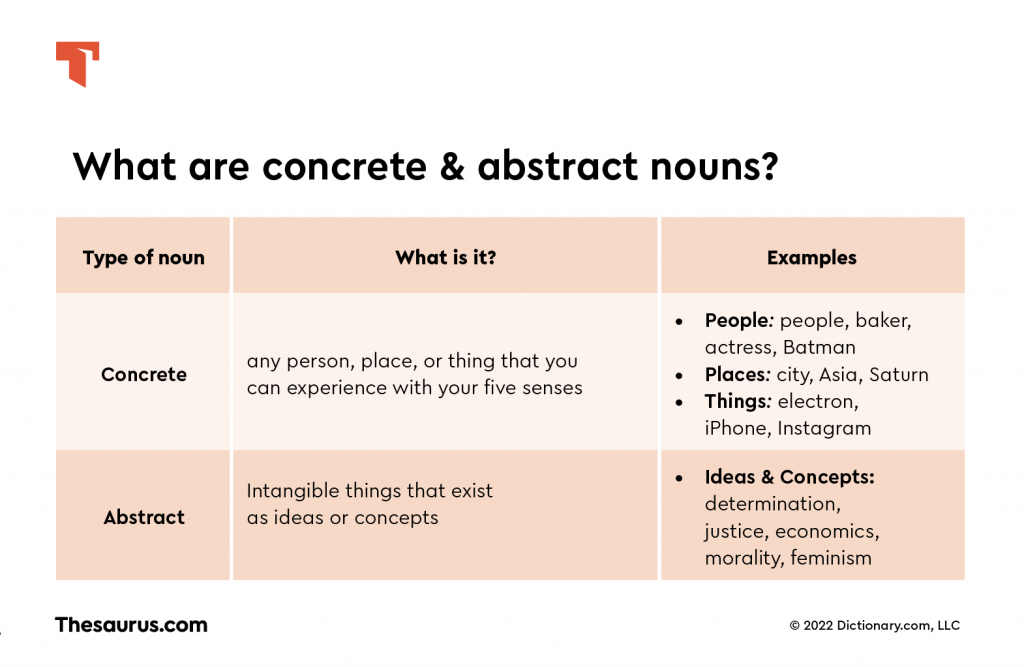
The problem with relying on abstract nouns in prose is that they are subjective shortcuts. When you write "she felt sad," you are telling the reader the conclusion. You are not providing the evidence. The reader's concept of "sad" might be completely different from what you intend. To engineer a specific experience, you must provide the specific inputs.
Let's watch a short video that clarifies this distinction with examples.
Specificity and Concrete Language | how to write vividly
The video 'Specificity and Concrete Language' by ShaelinWrites offers a very clear definition of abstract versus concrete language and explains why abstract terms are a problem.
Please watch from 03:05 to 04:41. Pay attention to how abstract words like 'sadness' or 'pretty' are subjective, while concrete language refers to things that can be experienced through the senses.
2. The Core Mechanism: From Label to Evidence
The fundamental technique is to replace the abstract label with the concrete evidence that justifies it. This is the core of the "Show, Don't Tell" principle. Instead of telling us a character is happy, you show them acting in a way that we, the reader, interpret as happiness.
A useful diagnostic tool for this is what writer Jeff Gerke calls the "camera test": Can a camera see it?
- A camera cannot see "happiness."
- A camera can see a man grinning so wide his eyes crinkle, or a woman jumping over a gate she could have easily opened.
By describing what a camera could see (or a microphone could hear, etc.), you are forced to use concrete details.
Let's watch another video that directly illustrates this transformation.
How to Show, Not Tell: The Complete Writing Guide
This clip from 'How to Show, Not Tell' by Diane Callahan provides excellent before-and-after examples and introduces the 'camera test' as a practical tool.
Please watch from 07:20 to 10:09. Focus on how abstract feelings ('happier than he'd ever felt') are replaced by concrete actions ('jumped clean over it'). Note the 'camera test' heuristic and the examples of turning abstract states like 'cold' or 'tired' into visible, physical manifestations.
3. Case Study: A Paragraph Transformation
Now let's analyze this principle in a longer-form example. We will examine a paragraph that is progressively rewritten from highly abstract to highly concrete. This process is analogous to refactoring code from a high-level, inefficient mess to a specific, optimized implementation.
Specificity and Concrete Language | how to write vividly
We'll return to the 'Specificity and Concrete Language' video. The author takes a poorly written, abstract paragraph and revises it in stages, explaining her reasoning at each step. This is a masterclass in applying today's principle.
Please watch from 10:32 to 17:53. This is the most important part of the lesson. First, listen to the initial 'bad' version (starting at 11:32). Notice the prevalence of abstract labels: 'made me happy', 'disappointed or embarrassed me', 'mother was very angry', 'this upset us'. Next, observe the 'middle ground' version (13:00) and how it starts to introduce more specific, but still somewhat generic, details. Finally, analyze the 'final' version (14:30). Pay close attention to how every abstract emotion is replaced with specific actions, dialogue, sensory details, and internal thoughts.
Let's deconstruct the transformation from the 'bad' version to the 'final' version:
| Abstract Label (Telling) | Concrete Evidence (Showing) |
|---|---|
The weather ... made me happy |
birds chittering, Sun gleamed, sky was a robin egg blue |
relationship with my sister ... was strained |
she ended up throwing one of her shoes at me...a Doc Marten...the heel dented my wall |
she disappointed or embarrassed me |
Caroline threw a rubber duck at a carnie's face when she lost a game, lost her in the crowd for an hour |
our mother was very angry |
our mother yelled at us for staying out past our curfew |
This upset us |
Caroline started to cry and buried her face in the giant stuffed polar bear's fluffy belly. I retreated to my room...and counted how many days it would be until I could move out: 114. |
The final version doesn't need to say the narrator feels trapped or that her sister is volatile; the concrete details force the reader to that conclusion. This is how you create an emotional experience rather than just describing one.
Test your understanding!
Take the abstract statement: "He was anxious about the presentation."
Rewrite this statement into 2-3 sentences using concrete sensory details to show the anxiety instead of telling it. Apply the "camera test"—what would we see and hear?
Show answer
Here are a few possible solutions. Notice how each one creates a slightly different flavor of anxiety.
Option 1:
He tapped his pen against the table, the sharp click-click-click echoing the frantic pulse in his throat. He glanced at the clock for the tenth time in five minutes. The stack of notecards in his hand was already damp with sweat.
Option 2:
A cold knot formed in his stomach. He tugged at his collar, which suddenly felt two sizes too small. When he tried to take a deep breath, it hitched in his chest.
Option 3 (from the resource LINK):
His throat went dry. His palms moistened. Unable to reach for his handkerchief in the packed downtown subway, he wiped both palms on his pants.
4. Advanced Technique: The Object as Emotional Carrier
A more subtle and powerful method is to let a concrete object carry the weight of an abstract emotion. By describing the object, you evoke the feeling associated with it.
Moving from the Abstract to the Concrete
The document 'Moving from the Abstract to the Concrete' by Neil Rollinson, though focused on poetry, explains this powerful technique for prose as well. It argues that a physical object can be imbued with emotion.
Please read from the beginning down to the 'Poetry Exercise' section. Focus on the core idea: 'Let the concrete noun carry the emotion.' Note the examples of William Carlos Williams's 'The Red Wheelbarrow' potentially carrying the feeling of 'Loneliness' or 'Loss', and Billy Collins's bicycle having 'all the dark blue speed drained out of it' to convey a sense of aging.
Instead of stating a character feels neglected, you might describe a houseplant on their desk: its leaves are yellowed and drooping, the soil is cracked and dry, and a fine layer of dust coats its pot. The state of the plant becomes a physical manifestation of the character's internal state.
5. Practice Exercise: Imbuing an Object with Emotion
Let's use the exercise proposed in the resource we just read. This will test your ability to apply the principle directly.
Your task:
- Choose a concrete object. For example:
a coffee mug,a pair of old running shoes,a key. - Choose an abstract noun. For example:
regret,pride,betrayal. - Write a short paragraph (3-5 sentences) that describes the object. Your goal is to evoke the feeling of the abstract noun without ever using the word itself or any direct synonyms. Focus entirely on the physical, sensory details of the object.
Example:
- Object:
Shaving Brush - Abstract Noun:
Grief - Paragraph (adapted from the resource):
Now that he's gone, my father's shaving brush stands on the sink beside the half-empty toothpaste tube. Its silver handle is cold in my palm. I hold it briefly, running the fine, stiff badger hairs across my cheek, just as he must have done every morning for thirty years.
Now, it's your turn. Combine an object and an emotion in a new paragraph.
Conclusion
Today we continued our work on prose engineering, moving from the precision of actions (verbs) to the precision of perceptions (nouns and sensory details). By replacing abstract labels with concrete data, you shift the cognitive work to the reader in a way that generates genuine feeling and immersion.
Key Takeaways:
- Abstract nouns are labels; concrete details are evidence. Your job is to provide the evidence.
- Use the "Camera Test": To force yourself into concrete descriptions, describe only what a camera could see or a microphone could hear.
- Translate Feelings into Sensations: Instead of writing "fear," write about a cold knot in the stomach, a metallic taste in the mouth, or the sound of blood pounding in the ears.
- Let Objects Carry Emotion: Imbue a physical object with the qualities of an abstract emotion to make that feeling tangible in your scene.
Preview of the Next Lesson
We have now examined the mechanics of prose at the level of sentence structure and word choice. In the next lesson, we will zoom out one level to address the learning outcome: Ensure each paragraph serves a single, clear purpose, such as describing a place, advancing an action, or exploring a thought. We will treat the paragraph as a functional unit, analyzing how to construct it for maximum clarity and purpose within the larger architecture of a scene.