Introduction
In our recent lessons, we've been engineering prose at the micro-level. We started with sentence structures, then optimized word choice by replacing weak verbs and abstract nouns with stronger, more concrete alternatives. We treated words and phrases as the fundamental units of meaning. Today, we zoom out to the next layer of organization: the paragraph.
The learning outcome for this lesson is to ensure each paragraph serves a single, clear purpose, such as describing a place, advancing an action, or exploring a thought.
In programming, a well-structured function has a single, clear responsibility. This makes the code easier to read, debug, and maintain. We will apply the same principle to writing. A paragraph is a functional unit of prose. Its job is to process one idea, one action, one description, or one speaker's turn in a dialogue. Mastering this allows you to guide the reader's attention with precision, controlling the flow and clarity of your narrative.
1. The Paragraph as a Functional Unit
At its core, a paragraph is a container for related sentences. The purpose of this container is to group a single, coherent idea, making it easier for the reader to process information.
Think of paragraphs as having one of four primary functions, as shown in this infographic:
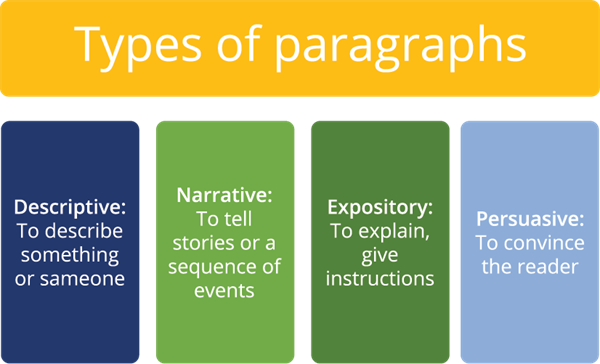
Let's get a more formal definition and understand why this structure is so important for the reader experience.
When to Start a New Paragraph | All About Paragraphs | Easy Writing Tips from an Editor
The video 'When to Start a New Paragraph' by Natalia Leigh provides a clear, concise definition of a paragraph and its purpose.
Please watch from 00:46 to 02:23. Focus on the definition of a paragraph as a grouping of sentences related to one idea or purpose, and how this structure helps the reader follow your logic.
The key takeaway is that paragraphing is a critical part of the user interface of your story. It manages cognitive load and directs the reader's eye, ensuring they process information in the chunks you intend.
2. The Rules of Paragraph Breaks
If a paragraph is a functional unit, a paragraph break (hitting 'Enter') is the signal that one function has completed and another is about to begin. Knowing when to make that break is a core mechanical skill.
Here are the primary triggers for starting a new paragraph:
- A New Speaker: In dialogue, this is a rigid rule. Every time the speaker changes, you start a new paragraph.
- A New Idea or Topic: When the focus shifts, a new paragraph is required. For example:
- Shifting from describing the setting to describing a character's action.
- Shifting from an external action sequence to a character's internal thoughts.
- Shifting from one character's actions to another's.
- A Significant Passage of Time: A break can signal a leap forward in time, from a few minutes to several hours.
- To Create Emphasis or Control Pacing: A short, single-line paragraph creates a powerful beat, forcing the reader to slow down and absorb a key piece of information.
Let's watch an analysis that demonstrates these rules in action. The presenter takes a single, unformatted block of text and refactors it into a properly paragraphed scene.
How to Use Paragraphs Effectively When Writing Fiction (With Examples from Dune)
In 'How to Use Paragraphs Effectively When Writing Fiction,' Brandon Cornett provides an excellent, hands-on demonstration of paragraphing mechanics using an excerpt from 'Dune'.
Please watch from 01:09 to 09:54. This is a practical walkthrough of the concepts we're discussing. Observe how he identifies logical break points based on shifts in focus: Initial setup (01:36 - 03:21): The first paragraph establishes the setting and characters. Notice it's one coherent unit of description. Dialogue (03:21 - 07:47): Pay close attention to how every change in speaker mandates a new paragraph. This is the most important rule of dialogue formatting. Shift in POV/Focus (07:47 - 08:22): The paragraph switches to Paul's internal perception. This is a clear shift from the external conversation to an internal experience, requiring a break. Action/Conclusion (08:22 - 09:54): The final paragraph is pure action, describing the old woman's departure. It has a different function from the dialogue and perception paragraphs that preceded it.
This video demonstrates that paragraphing isn't arbitrary. Each break is a logical decision to close one "container" of information and open a new one.
Test your understanding!
Here is a block of unformatted text. Your task is to break it into logical paragraphs. After you've formatted it, briefly explain the reason for each paragraph break you made.
The old warehouse smelled of rust and damp concrete. Rain hammered against the corrugated iron roof, each drop a tiny drumbeat in the echoing space. A single bare bulb cast long, distorted shadows from the stacks of forgotten crates. Detective Miller drew his pistol, the cold steel a familiar weight in his hand. He crept along the wall, his boots silent on the dusty floor. He had to find the ledger before they did. The thought was a cold spike in his gut. This was his last chance to close the case, his last chance to make things right. "Miller! We know you're in there!" a voice boomed from the entrance, distorted by a megaphone. "Come on out. Don't make this harder than it has to be." Miller froze, pressing himself flat against a stack of crates. His heart hammered against his ribs.
Show answer
Here is the text broken into logical paragraphs:
The old warehouse smelled of rust and damp concrete. Rain hammered against the corrugated iron roof, each drop a tiny drumbeat in the echoing space. A single bare bulb cast long, distorted shadows from the stacks of forgotten crates.
Detective Miller drew his pistol, the cold steel a familiar weight in his hand. He crept along the wall, his boots silent on the dusty floor.
He had to find the ledger before they did. The thought was a cold spike in his gut. This was his last chance to close the case, his last chance to make things right.
"Miller! We know you're in there!" a voice boomed from the entrance, distorted by a megaphone. "Come on out. Don't make this harder than it has to be."
Miller froze, pressing himself flat against a stack of crates. His heart hammered against his ribs.
Justification for Breaks:
- Paragraph 1: Pure description. Its single purpose is to establish the setting and mood.
- Paragraph 2: Pure action. Its purpose is to show what the character is doing physically. A break was needed to shift from describing the place to describing the person's actions within it.
- Paragraph 3: Internal thought/monologue. Its purpose is to reveal the character's internal state, motivation, and stakes. This shift from external action to internal thought requires a break.
- Paragraph 4: Dialogue. A new speaker is introduced, which always requires a new paragraph.
- Paragraph 5: Character reaction. Its purpose is to show Miller's physical and emotional response to the dialogue. It's a new beat of action prompted by the preceding dialogue.
3. Strategic Paragraphing: Orchestrating the Scene
Once you understand the basic rules, you can begin to use paragraphing as a strategic tool. The length and type of your paragraphs influence the reader's experience of the story.
Applying Paragraphing Techniques in Your Fiction Writing
The article 'Applying Paragraphing Techniques in Your Fiction Writing' from Writer's Digest provides a higher-level perspective on this skill. It moves beyond simple rules to discuss the artful application of paragraphing.
Please read the section that begins with the three bolded principles, starting with '1. PARAGRAPHS MANAGE CONTENT' and continuing to the end of the article. Focus on these three functions: managing content, amplifying voice, and generating mood.
This article highlights that your paragraphing choices are a key part of your narrative "voice" and directly impact the mood. A scene with long, descriptive paragraphs will feel slower and more contemplative. A scene with short, action-focused paragraphs and single-line dialogue will feel fast and tense.
Let's look at a specific, powerful technique: the one-line paragraph.
5 reasons to use one-line paragraphs in fiction writing
The article '5 reasons to use one-line paragraphs in fiction writing' by Louise Harnby provides a fantastic, granular breakdown of a single, powerful paragraphing technique.
Please read the entire article. It's a quick read with excellent examples. For each of the five reasons listed, pay attention to how the one-line paragraph achieves its effect. Notice that in every case, it serves a single, clear, and impactful purpose.
As the article notes, overuse of any technique dilutes its power. A single-line paragraph is effective because it contrasts with the longer paragraphs around it. It's a tool for emphasis, and you should reserve it for moments that warrant that extra focus.
Conclusion
Today, we've elevated our analysis from the word level to the paragraph level. We've established that paragraphs are not arbitrary blocks of text but functional units, each with a single, clear purpose. By controlling how you group sentences, you control how the reader processes your story.
Key Takeaways:
- One Paragraph, One Purpose: Each paragraph should focus on a single unit of description, action, thought, or dialogue.
- Paragraph Breaks are Signals: Use breaks to signal a change in speaker, topic, time, or to create deliberate emphasis.
- Paragraphing is a Pacing Tool: The length and rhythm of your paragraphs directly influence the mood and pace of a scene. Long paragraphs slow things down; short paragraphs speed them up.
- The One-Liner is a Power Tool: Use single-sentence paragraphs sparingly to emphasize a critical action, revelation, or thought.
Preview of the Next Lesson
We have now examined the mechanics of prose from the word up to the paragraph. In our next lesson, we will zoom out one final step to the level of the scene itself. Our learning outcome will be: Layer external tension in a scene by introducing a tangible threat, obstacle, or deadline. We will begin to explore the engine of all stories: tension and momentum.