Welcome back! In our last lesson, we identified the key players in the stock market: retail investors (like you), institutional investors, and the market makers who provide liquidity. This leaves us with a fundamental question: as a retail investor, how do you actually get access to the exchanges where all this buying and selling happens?
In today's lesson, we will answer that question by focusing on your direct gateway to the market. We'll explore the essential role of a stock broker and explain how the brokerage accounts they offer are the central hub for all your investment activities. Understanding this relationship is the final step in grasping the basic structure of the market before we dive into the mechanics of trading.
Your Gateway to the Market: The Stock Broker
To buy or sell shares on major exchanges like the New York Stock Exchange (NYSE) or NASDAQ, you need to be a licensed member. As an individual, this isn't practical. This is where stock brokers—or more commonly today, brokerage firms—come in. They are licensed entities that act as your authorized agent, executing your trade orders on your behalf.
In simple terms, the broker is your middleman. You give them your instructions, and they carry them out in the vast, complex marketplace. This video from ClayTrader offers a great visual analogy for this relationship.
Trading 101: How Online Brokers Work. Why You Need One.
This video uses simple illustrations to explain the fundamental role of an online broker as a necessary intermediary between you and the stock market.
Watch the following segments to see this concept in action: Why you need a broker to get started. How you act as the "boss", giving orders to your broker. The broker's role as the middleman who facilitates the transaction. Note that while the video visualizes a person in a suit, it correctly points out this all happens electronically in seconds.
The relationship can be visualized as a simple flow of information and assets. You instruct your brokerage company, which then interacts with the market via your brokerage account.
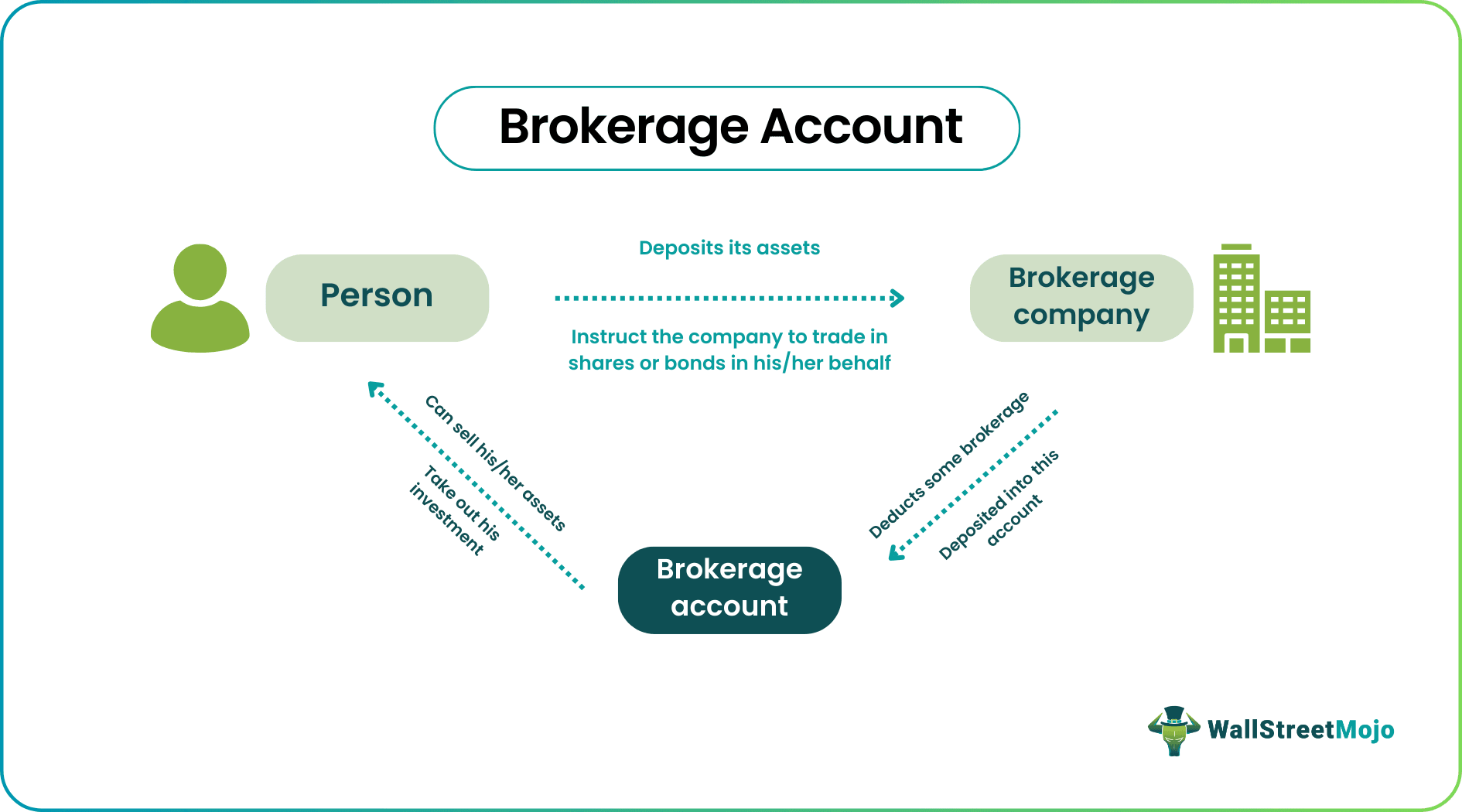
To solidify this core concept, the article "Stockbroker Guide" from Investopedia provides a concise definition of this crucial role.
Stockbroker Guide: Roles, Types, Requirements & Salaries Explained
This article clearly explains why brokers are necessary and how they function as intermediaries.
First, read the section The Role and Responsibilities of a Stockbroker to understand why you need a broker to access the exchanges. Then, jump down to the FAQ section and read the answer to the question What Do Stockbrokers Do? to see how they act as intermediaries.
Full-Service vs. Discount Brokers
Not all brokers are the same. They generally fall into two categories, distinguished by the level of service they provide and the fees they charge. Your experience building a store with Shopify offers a useful parallel here. Just as Shopify provides a platform with tools to run your e-commerce business yourself, an online broker provides a platform to manage your own investments.
- Full-Service Brokers: These are the traditional brokers who offer a wide range of services, including financial planning, investment advice, and portfolio management. They work closely with clients to manage their money. This high-touch service comes with higher fees.
- Discount Brokers / Online Brokers: These firms primarily provide the platform for you to execute your own trades. They offer minimal investment advice, which results in much lower costs (often zero-commission trades). This is the category that includes the popular online platforms like Fidelity, Charles Schwab, and Robinhood, and it's what most individual investors use today.
The following video gives an excellent breakdown of these different types of firms.
What Is A Brokerage Account and How Does It Work? 5 Things you must know!
This video from Diamond Edwards clearly explains the three main types of brokerage firms you'll encounter.
Watch the segment from "a few type of brokerage accounts" that distinguishes between full-service firms, discount brokers, and online brokers.
The Brokerage Account: Cash vs. Margin
When you open an account with a broker, you'll need to choose an account type. The most fundamental choice is between a cash account and a margin account. This decision determines how you will pay for your investments.
This infographic provides a great overview of brokerage accounts, including the different types.
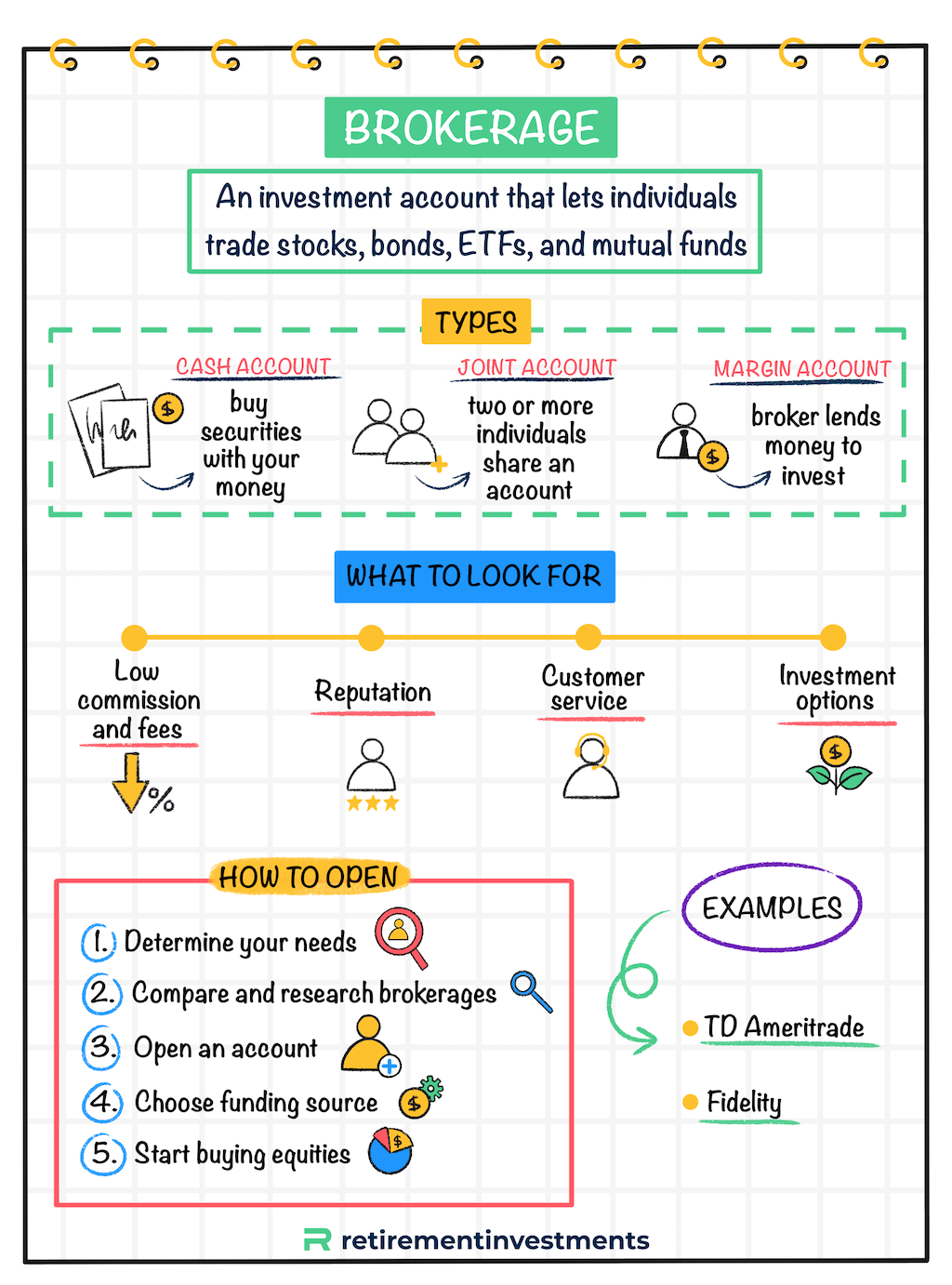
Let's dive into the two primary types using information from FINRA, the regulatory authority for brokerage firms.
This resource from FINRA, the industry regulator, is the authoritative source for understanding how brokerage accounts are structured and regulated.
First, read the introductory paragraph, which sets up the core difference. Next, read the detailed explanation of a cash account. Finally, read the separate section on Cash Accounts to clear up any confusion about what can be held in one.
As you just read, here's a summary of the key differences:
-
Cash Account: This is the most straightforward type. You must pay for all securities in full with the money available in your account. If you want to buy $500 worth of stock, you need to have $500 of settled cash in the account. For beginners, this is the recommended and safest option.
-
Margin Account: This type of account allows you to borrow money from your broker to purchase securities. This is known as buying "on margin." It allows you to leverage your capital, which can amplify both your gains and your losses. If the value of your investments falls, you may be subject to a "margin call," requiring you to deposit more funds or sell securities to cover the shortfall. Margin trading involves significant risk and is generally suited for more experienced investors.
How to Open a Brokerage Account
Opening a brokerage account is a straightforward online process, similar to opening a bank account. You will need to provide some personal and financial information. This isn't because the broker is being nosy; they are required by law to understand their customers' financial situation and risk tolerance to help protect both you and the financial system.
We'll return to the FINRA article to understand the practical steps and requirements for opening an account.
Read the entire section under the heading Opening An Account. Pay attention to the types of information requested and why it's important to be honest in your answers.
The process generally follows these steps:
- Choose a Broker: Compare firms based on fees, investment options, tools, and customer service.
- Complete the Application: Provide your personal information (name, address, Social Security number) and financial details (income, net worth, investment objectives).
- Fund the Account: Transfer money from your bank account to your new brokerage account.
- Start Investing: Once the funds have settled, you are ready to place your first trade.
Conclusion
In this lesson, we've connected you, the retail investor, to the broader market by explaining the role of brokers and brokerage accounts. You now have a complete picture of the market's fundamental structure.
Here are your key takeaways from today:
- Stock brokers are licensed intermediaries that provide you with access to stock exchanges.
- A brokerage account is the account you open with a broker to hold your cash and securities.
- Brokers can be full-service (offering advice for higher fees) or discount/online (offering a low-cost platform for self-directed investors).
- Accounts can be cash accounts (you pay in full) or margin accounts (you can borrow from the broker, which involves significant risk).
Now that you understand the "where" and "how" of market access, our next lesson will look at the "when." We'll explore the different trading sessions—regular trading hours, pre-market, and after-hours trading—and what they mean for you as an investor.