Introduction
In the last lesson, you created the Finding Classification Matrix, a critical tool for distinguishing between surface-level design debt and deep technical debt. This allows you to diagnose what a problem is. Now, we move from diagnosis to a concrete plan of attack. A client doesn't just want a list of problems; they want a prioritized, realistic roadmap they can hand to their team.
This lesson focuses on the "last mile" of your audit recommendations: classifying them by technical effort to align with a client's development roadmap. This is the skill that separates a junior designer who points out flaws from a senior consultant who provides a business-aligned action plan. You will learn the language of engineering effort estimation and use it to build credibility with developers and product managers.
Your deliverable for this lesson will be a Prioritized Audit Roadmap template in Figma, which combines the severity of a UX issue with its implementation effort, giving your client a clear sequence of what to fix first.
1. The Language of Effort: T-Shirts and Time-Boxes
To align with a development roadmap, you must speak the language of developers. Vague terms like "easy" or "hard" are not enough. You need a system for estimating effort that your client's technical team will recognize and respect.
T-Shirt Sizing
This is a common agile estimation technique used to assign a relative size to a task, not a specific number of hours. It’s fast, collaborative, and avoids the trap of promising exact timelines.

Your role isn't to be a perfect estimator, but to facilitate the estimation. During your audit, you can make a preliminary guess, which you will then validate with the client's engineering team.
Time-Boxing (Dev Days & Sprints)
This is a more concrete form of estimation. While you won't be committing the client's team, using these terms demonstrates that you understand their workflow.
- Dev Day: One developer's work for one day.
- Sprint: A fixed period (usually 1-2 weeks) in which a team completes a set amount of work.
To see how this looks in a professional deliverable, let's examine an example from a real agency.
UX Audit Service for SaaS & Digital Products
The agency Startup House provides an excellent example of how to frame recommendations using effort estimates. This is the format clients expect to see.
Read the section 'Prioritized UX roadmap & effort estimates' and study the example table closely. Notice how it combines the recommendation with 'Effort' (in dev days/sprints), 'Impact', and 'Priority'. Then, read the section 'End-to-end product expertise' to understand why this technical grounding is so valuable.
As the article states, knowing whether a change is a "2-hour task or a 2-day refactor" is what makes your recommendations credible and actionable.
2. The Calibration Conversation with Engineering
You are not expected to be a software architect. Your power comes from asking the right questions. The "Finding Classification Matrix" you built in the last lesson is your guide for this conversation.
Schedule a 30-minute call with a product manager or a lead engineer from the client's team. Present your initial findings and ask them to help you calibrate the effort.
Your Script:
- "I've identified this issue with inconsistent filtering. In my experience, this is usually a front-end cleanup. I've classified it as
Safe to Fixand estimated it as an S or M t-shirt size, maybe a few dev days. Does that sound right based on your codebase?" - "This navigation flow is confusing, but I suspect it's tied to the way user permissions are structured. I've flagged this as
Tied to Architectureand a potential XL task. Am I correct in assuming this is a major piece of work?"
This approach positions you as a collaborative partner, not an outsider making demands. Watch the following video to see this dynamic in action.
UI UX Audit Process - How to Stop Skipping Them [Free UX Audit Checklist]
The team at Headway discusses how to handle the handoff to developers. This conversation is crucial for turning your audit into a realistic plan.
Watch the Q&A segment from 19:21-22:08, where they discuss how to decide what to implement based on dev timelines. Then, watch the section on developer handoff from 26:21-27:39, focusing on the discussion of 'implementation impact'.
The key takeaway is that you present your priorities, but the final plan is a collaboration based on technical reality and business needs.
3. Assembling the Prioritized Roadmap
Now you will create the final deliverable. This roadmap combines everything: the UX problem, its business impact, and its technical effort. The goal is to create a simple prioritization matrix.
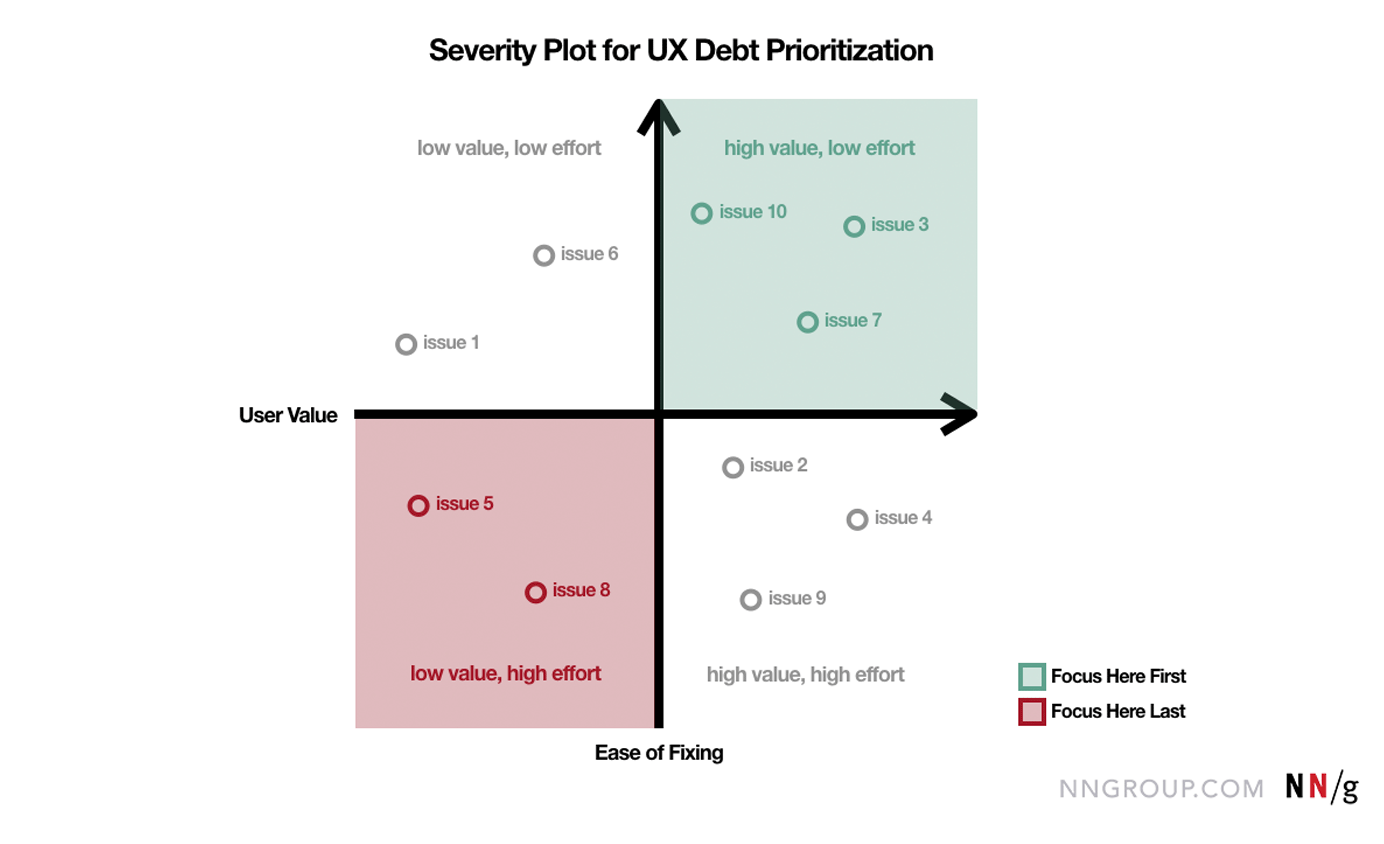
Your roadmap will formalize this into a table that a product manager can directly use for sprint planning.
Task (30 minutes): Build the "Prioritized Audit Roadmap" in Figma
- Open your Figma Project: Return to your
Sales Assetspage. - Create a New Frame: Title it
Prioritized Audit Roadmap. This will be a key page in your final audit report. - Build the Roadmap Table: Create a table with the following columns. This structure is based on the professional examples you've reviewed and is designed for maximum clarity.
| ID | Recommendation | Impact (User & Business) | Effort (T-Shirt) | Effort (Est. Time) | Priority |
|---|---|---|---|---|---|
-
Populate with Placeholder Examples: Fill in 2-3 rows to demonstrate how the table works. Use the classifications from the Startup House example and your previous lesson's matrix.
Example Row 1 (Quick Win):
- ID:
F-01 - Recommendation: Merge duplicate filters on the search results page into a single, consolidated panel to reduce user confusion.
- Impact: High (Reduces friction in core product discovery flow, likely to improve conversion).
- Effort (T-Shirt): S
- Effort (Est. Time): 2-3 Dev Days
- Priority: Quick Win
Example Row 2 (Strategic Initiative):
- ID:
N-03 - Recommendation: Redesign the core navigation to be role-based, showing relevant items to Admins vs. Viewers.
- Impact: High (Significantly improves efficiency for power users, reduces clutter for new users).
- Effort (T-Shirt): XL
- Effort (Est. Time): 2-3 Sprints
- Priority: Strategic
- ID:
-
Add a Key: Below the table, add a small key defining the Priority levels:
- Quick Win: High-impact, low-effort fixes. Recommend for the next 1-2 sprints.
- Medium-Term: Significant improvements that require planning. Recommend for the next quarter.
- Strategic: Large initiatives requiring architectural changes. Recommend for the 6-12 month roadmap.
This component is now the centerpiece of your audit's "next steps" section. It's a powerful tool that demonstrates you've thought through not just the problems, but the practical path to solving them.
Conclusion
In this lesson, you have moved beyond simply finding problems to creating a strategic, technically-grounded plan. This elevates your work from a simple critique to a valuable consulting deliverable.
Key Takeaways:
- Speak the Language: Use developer-friendly estimation terms like T-Shirt Sizes and Dev Days/Sprints to build credibility.
- Calibrate with Experts: You don't guess the effort; you facilitate a conversation with the client's technical team to get a realistic estimate.
- Prioritize with a Matrix: The goal is always to identify the "Quick Wins"—high-impact, low-effort fixes that deliver immediate value and build client trust.
- The Roadmap is Your Product: The
Prioritized Audit Roadmapis a tangible asset that product managers can use directly, making your audit incredibly actionable and justifying your fee.
Next Steps:
You now have a complete process for delivering a high-value audit. The final piece of the puzzle is converting this one-off project into a long-term relationship. In the next lesson, we will focus on tactics for proposing a recurring "performance review" or design retainer, ensuring you create a sustainable revenue stream from each client you win.