Introduction
In our last session, you defined your strategic position by crafting specialist statements. That work was about capturing a potential client's attention and establishing yourself as an expert who solves a specific, high-value problem. Now, we move from capturing attention to securing commitment.
This lesson addresses the critical next step in your freelance pipeline: structuring compelling proposals using outcome-focused language rather than technical feature lists.
Your positioning statement makes a client think, "This person understands my problem." A powerful proposal makes them conclude, "This person has the solution, and the investment is a no-brainer." We will deconstruct the architecture of a winning proposal, moving beyond the what and how (the technical implementation) to the why (the business outcome).
1. The Proposal's True Purpose: Confirmation, Not Persuasion
Before writing a single word, you must internalize the proposal's strategic role. A common failure is treating the proposal as a cold sales document meant to convince a stranger. This is incorrect and inefficient.
Consulting Proposal Template and Tips For Winning More ...
To grasp this fundamental concept, read the introductory sections of the article 'Consulting Proposal Template and Tips For Winning More' from Consulting Success.
Read the sections 'A Consulting Proposal is Not What You Think' and the short paragraph just below the 'Table of Contents'. Focus on the distinction between a 'sales tool' and a 'confirmation tool'.
The key insight is that the "sale" happens during your discovery call, where you diagnose the client's pain and get verbal agreement on a path forward. The proposal's job is to formalize that agreement, reinforce the value, and make it easy for the client to sign.
2. The Engineer's Analogy: Functional vs. Technical Specifications
Given your engineering background, here is the most direct way to frame this shift in thinking. A losing proposal reads like a technical specification, detailing the tools, nodes, and logic you will use. A winning proposal reads like a functional specification, describing what the system will do for the business and the user.
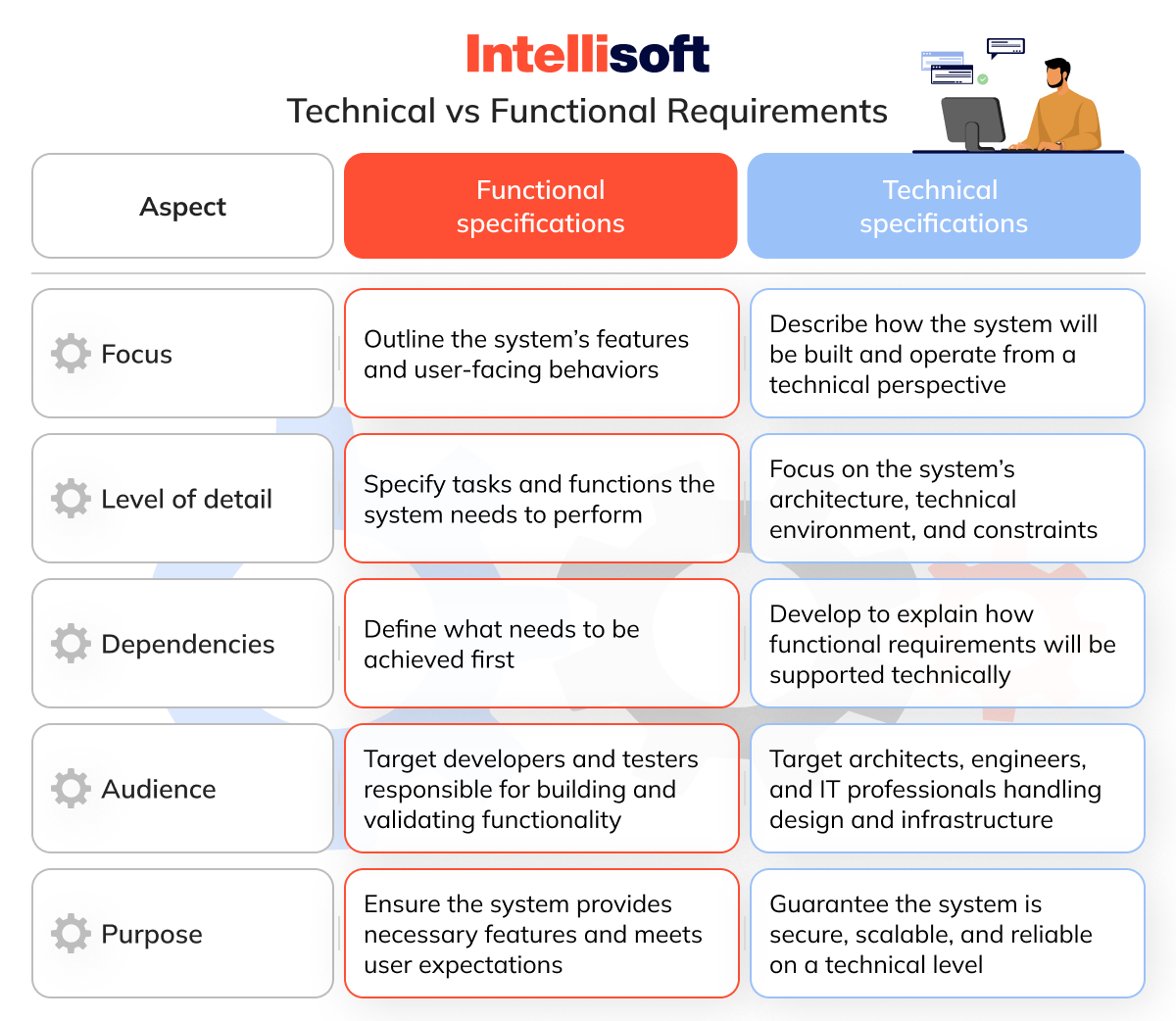
The client does not care if you use the HTTP Request node or a pre-built integration; they care that their client data is synced accurately, saving their team five hours per week. Your proposal must live entirely in the "Functional" column.
3. Deconstructing an Outcome-Focused Proposal
A winning proposal is not a list of services; it's a narrative that guides the client from their current pain to their desired future state. Let's examine the essential components.
How to Write a Business Proposal That Actually Wins ... - Zomentum
The article 'How to Write a Business Proposal That Actually Wins' provides an excellent breakdown of these components. We'll use it as our guide.
Read the section 'Essential Components of A Winning Business Proposal'. Pay close attention to how each component (Executive Summary, Situation Analysis, Proposed Solution, and Pricing) is framed around business outcomes.
Here's how to structure your proposal based on that reading:
- Executive Summary: This is your hook. Start by restating the client's primary challenge and quantifying its impact, using their own language from the discovery call. Then, present your solution's key outcome as the direct answer.
- Situation Analysis / Goals: Briefly elaborate on the current state. Prove you've listened and understand the full context of their problem. List the specific, measurable goals the project will achieve (e.g., "Reduce new client onboarding time from 5 hours to 30 minutes").
- Proposed Solution (The Transformation): This is where you connect your service to the outcome. Frame it as the "after" state.
- AVOID: "I will build an n8n workflow with a webhook trigger that connects to a Google Sheet and sends emails via SMTP."
- DO: "We will implement an Automated Client Onboarding System that captures client data seamlessly, triggers a personalized welcome sequence, and populates your project tracker instantly. This eliminates manual data entry and ensures a professional, consistent experience for every new client."
- Success Metrics & ROI: Make the value tangible. This is where you translate the outcomes into numbers.
- Investment (Not "Price"): Frame your fee as an investment that generates a return. We will explore specific pricing models in the next lesson, but the language you use here is critical.
- Timeline & Next Steps: Ambiguity kills deals. Provide a clear, simple path from signature to project kickoff.
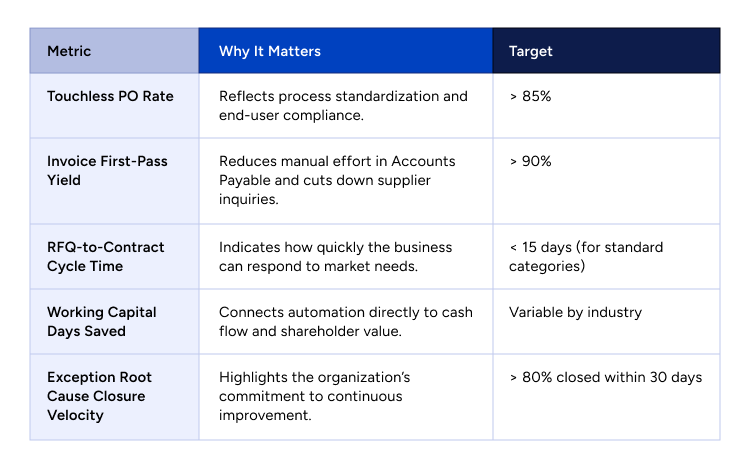
4. The Art of Translation: From Technical Metrics to Business Value
Your engineering mind thinks in metrics like API response times and execution success rates. A business owner thinks in metrics like cost savings, revenue growth, and hours saved. Your job is to be the translator.
How to Sell AI Workflows (Without Starting an Agency)
The video 'How to Sell AI Workflows' provides a perfect, concise explanation of this translation.
Watch from 08:23 to 09:43. Internalize the 'destination, not the car' analogy and the example of quantifying the value of automating a manual process.
Now, let's look at a concrete example of this translation.
5. Structuring the Offer: The 4R Framework and Option Strategy
Beyond the overall proposal structure, the way you package your core offer is crucial.
First, use a simple framework to ensure your offer is compelling.
How to Sign Your First AI Automation Client (Without Starting an Agency)
The video 'How to Sign Your First AI Automation Client' introduces an actionable framework for this.
Watch from 04:08 to 06:11 to learn the 'Four Rs' framework: Result, Roadmap, Risk Reversal, and Review. This is a powerful mental checklist for your offer.
Second, instead of presenting a single take-it-or-leave-it price, present options. This gives the client a sense of control and anchors your value.
Consulting Proposal Template and Tips For Winning More ...
The 'Consulting Proposal Template' article details this advanced technique.
Read the subsection 'The Option Strategy'. Understand the psychology behind offering three tiers (e.g., Basic, Comprehensive, Premium).
This strategy positions you as a flexible partner and makes your recommended option (typically the middle one) appear as the most reasonable choice.
Practical Task: Draft an Outcome-Focused Proposal
You will now apply these principles. Your task is to draft the core sections of a proposal for a hypothetical client based on your Client Onboarding Automation System portfolio project.
Scenario:
You've just completed a discovery call with "Innovate Digital," a small marketing agency.
Discovery Call Notes:
- Client: Sarah, Owner of Innovate Digital.
- Problem: The client onboarding process is manual, chaotic, and unprofessional.
- Key Pain Points:
- It takes Sarah 5-6 hours of manual work per new client (chasing forms, creating folders, sending welcome emails, setting up project boards).
- They onboard 4 new clients per month on average.
- Inconsistent data collection often leads to 1-2 day delays in starting projects.
- Sarah values her time at $150/hour, and this manual work is preventing her from focusing on sales and strategy.
- She feels the current process gives a poor first impression to new, high-value clients.
Your Task:
Create a document and draft the following four sections of a proposal for Innovate Digital.
- Executive Summary: Recap Sarah's problem and present your solution's primary benefit.
- Goals & Success Metrics: List 3-5 specific, measurable outcomes.
- The Transformation (Proposed Solution): Describe the "after" state using outcome-focused language.
- Investment Options: Create a 3-tier option table (e.g., Bronze, Silver, Gold).
- Bronze: The core automation (form intake -> project board setup).
- Silver (Your Recommended Option): Core automation + a personalized multi-step welcome email sequence + stakeholder notifications.
- Gold: Silver package + a monthly health check and 2 hours of support/optimization.
Deliverable
A text document containing the four sections of your proposal. You do not need to invent prices yet; use placeholders like $X,XXX, $Y,YYY, and $Z,ZZZ. The focus is on the language and structure.
Evaluation Criteria
- Client-Centric Language: The proposal speaks to Sarah's problems and goals, not your technical tasks.
- Quantified Value: The ROI is clear and calculated based on the notes (e.g., hours saved x hourly rate).
- Outcome-Focused Framing: The solution is presented as a transformation, not a feature list.
- Strategic Structure: The 3-tier option strategy is implemented correctly, anchoring the value of the recommended package.
Conclusion
You have now learned to architect a proposal that functions as a strategic closing tool. By shifting your language from technical features to business outcomes, you transform your service from a commodity into a high-value investment.
Key Takeaways:
- A proposal is a confirmation tool, not a sales pitch.
- Write a functional specification (what the client gets), not a technical one (what you do).
- Quantify everything. Connect your solution to time saved, money earned, or risk reduced.
- Structure your offer with options to anchor value and guide the client's decision.
Preview of the Next Lesson:
Your proposal effectively communicates value. The next step is to confidently price that value. In our next lesson, we will cover designing project-based and retainer pricing models suitable for automation services, ensuring your profitability matches the impact you deliver.