Introduction
In the last lesson, we architected an outcome-focused proposal, transforming a technical specification into a compelling business case. You learned to articulate the value of your solution. Now, we will assign a number to that value. This lesson focuses on the engineering of your pricing strategy, moving from the placeholder $[X,XXX] to a confident, justifiable investment figure.
The learning outcome for this session is to design project-based and retainer pricing models suitable for automation services. We will deconstruct the two primary models used by professional freelancers and agencies, giving you a systematic framework to price your work, protect your profitability, and scale your freelance business.
1. The Foundational Mindset: Price Outcomes, Not Inputs
Before we discuss models, we must reinforce the core principle. As an engineer, it's natural to think about the cost of inputs: your time, the complexity of the build, the tools used. To succeed in business, you must discard this thinking. Clients do not buy your time; they buy results. Your price must be anchored to the value of the outcome you deliver.
This is the shift from a cost-plus mindset to a value-based pricing mindset.
How to Price AI Workflows (Without Losing Clients)
To lock in this fundamental concept, watch the introductory segment of the video 'How to Price AI Workflows' by Nate Herk. He explains precisely why this mental shift is non-negotiable.
Watch from 00:14 to 01:35. Focus on the distinction between charging for inputs (time, effort) and charging for outputs (money saved, time saved, error reduced). Internalize the question you must be able to answer: 'Can you tell me exactly how you got to that number?'
Think of it this way: a client doesn't care if a solution takes you 2 hours or 20 hours. They care that it saves their business $40,000 a year. Your price is a fraction of that $40,000 value, not a multiple of your 2 or 20 hours.
2. The Two Core Pricing Models
Professionals primarily use two models, often in sequence: a project-based fee to start a relationship and a monthly retainer to continue it.
How to Price AI Workflows (Without Losing Clients)
The same video provides a clear overview of these two models and how they work together.
Watch from 01:35 to 05:32. Pay attention to the strategic purpose of each model: project-based pricing to 'get your foot in the door' and build trust, and monthly retainers to establish long-term, stable partnerships.
Let's break down how to calculate the price for each model.
Model 1: Project-Based Pricing (The Entry Point)
This is a fixed price for a fixed scope, ideal for your first engagement with a client. The price is calculated based on the value delivered.
How to Calculate the Price:
Your discovery call is the data-gathering phase. You must quantify the client's pain to calculate the value of your solution.
Pricing Models for AI Automation Agencies: What Works in 2025 ...
The article 'Pricing Models for AI Automation Agencies' from Leadslogik provides a structured, formulaic approach to this calculation.
Read the section 'How to Set Your Prices'. Focus on 'Step 3: Calculate Client Value'. This section provides a simple formula for quantifying annual savings.
Let's combine this with a practical rule of thumb.
How to Price AI Workflows (Without Losing Clients)
Nate Herk's video offers a concrete heuristic for turning the calculated value into a price.
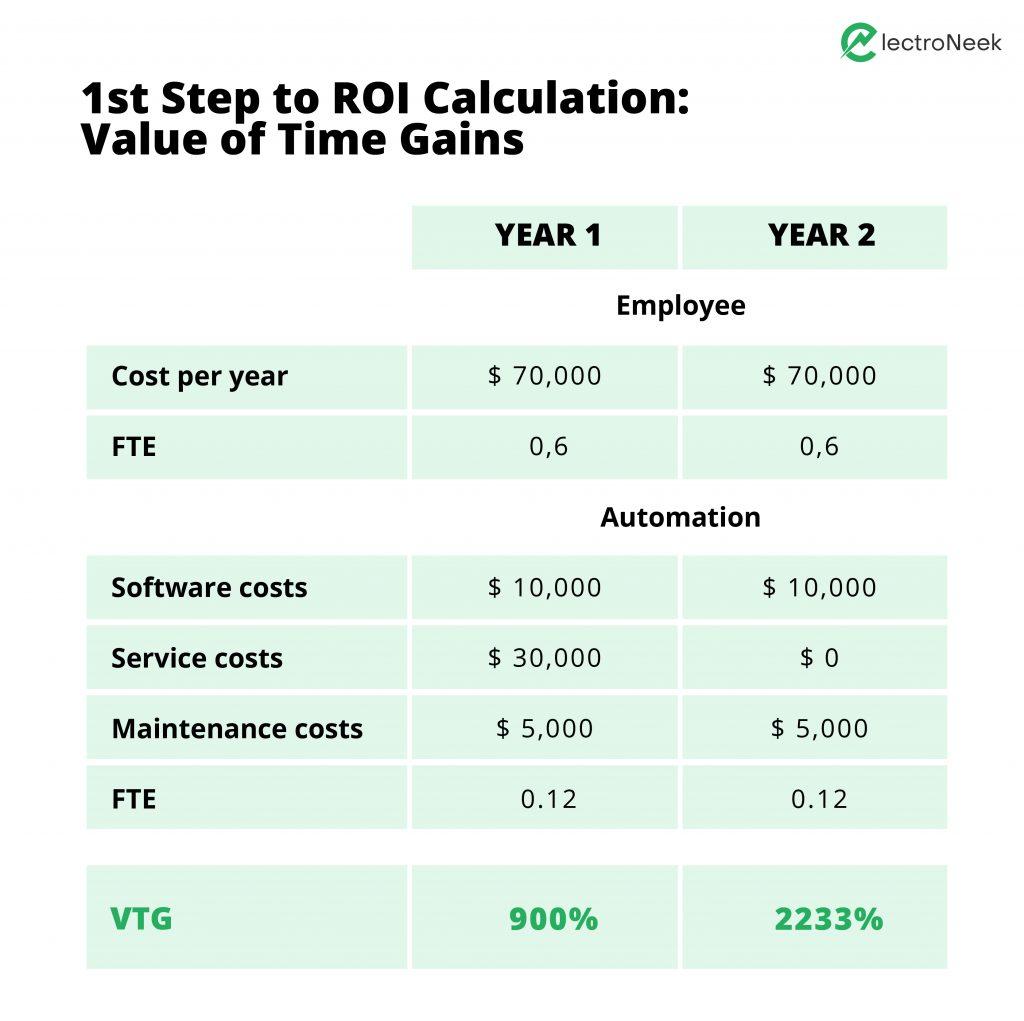
Watch from 05:32 to 07:40. Focus on the example calculation and the '10 times return' rule of thumb. This means your price should be around 10% of the first year's value you create for the client.
This value calculation is the core of your business case. You are not just presenting a price; you are presenting an investment with a clear, quantifiable return.
Model 2: Monthly Retainers (The Stability Engine)
Once you've delivered a successful project, the goal is to transition the client to a retainer for ongoing work. This provides you with predictable revenue and deepens your role as a strategic partner.
Pricing a retainer shifts from single-project ROI to your operational costs and desired profit margin.
How to Price AI Workflows (Without Losing Clients)
Let's return to 'How to Price AI Workflows' for the methodology on pricing retainers.
Watch from 07:40 to 09:32. Note the shift in thinking. You're now considering your costs to deliver the service and targeting a specific profit margin (e.g., 50-70%).
A crucial part of selling a retainer is defining what the client actually gets for their monthly fee. It's more than just "support."
The NEW Way to Price Your AI Automation Services
The video 'The NEW Way to Price Your AI Automation Services' by Nick Saraev offers an excellent breakdown of what to include in a retainer package to make it a 'no-brainer' for the client.
Watch from 00:40 to 06:29. Pay close attention to the list of services you can bundle into a retainer: weekly strategy calls, unlimited maintenance, priority support/availability, and ongoing development. These justify the recurring fee beyond just fixing things that break.
3. The Professional Strategy: The Hybrid Model
While these models can be used separately, the most effective approach combines them into a strategic sequence.
Pricing Models for AI Automation Agencies: What Works in 2025 ...
The Leadslogik article outlines this best-practice approach, which should be your blueprint for client engagement.
First, read the section 'The Hybrid Model (Recommended)'. This shows the ideal client journey: from a paid discovery, to a core implementation project, to an ongoing retainer. Then, review the 'Packaging Your Services' section. This shows how to structure your project-based offers into distinct tiers, which aligns with the three-option strategy we covered in the last lesson.
This hybrid model de-risks the engagement for the client, proves your value with an initial project, and then transitions them to a stable, long-term partnership—the optimal outcome for a freelance systems architect.
Practical Task: Price Your Proposal
In the previous lesson, you drafted an outcome-focused proposal for the "Innovate Digital" agency. Now, you will replace the placeholder prices with calculated, justifiable figures.
Scenario Recap:
- Client: Sarah, Owner of Innovate Digital.
- Pain: Spends 5-6 hours per new client on manual onboarding. Onboards 4 clients per month.
- Value of Time: Sarah values her time at $150/hour.
- Your Proposal Tiers:
- Bronze: Core automation (form intake -> project board setup).
- Silver (Recommended): Core automation + personalized welcome email sequence + stakeholder notifications.
- Gold: Silver package + a monthly health check and 2 hours of support/optimization (a retainer).
Assumptions for Your Calculations:
- Your internal "cost" (the minimum you need to earn) is $75/hour.
- Estimated hours to build:
- Bronze Package: 10 hours
- Silver Package: 16 hours
Your Task:
Create a document and complete the following two parts.
Part 1: Price the Project-Based Tiers (Bronze & Silver)
- Calculate the Annual Value: Based on Sarah's pain points (hours saved per month, hourly rate), calculate the total annual value of automating this process. Show your math.
- Price the Silver Package: Calculate the price for the "Silver" package using two different methods:
- Value-Based Price: Use the "10% of first-year value" rule of thumb.
- Cost-Plus Floor Price: Use the
Hours to deliver × Your hourly cost × 3formula from the Leadslogik article to determine your minimum viable price.
- Set the Final Prices: Based on your calculations, set the final price for the Bronze and Silver packages. The Bronze price should be logically lower than Silver. Justify your final Silver price, explaining how it provides a clear ROI for the client while respecting your cost floor.
Part 2: Price the Retainer Tier (Gold)
- Define the Retainer Service: The "Gold" package is a retainer. Explicitly list the services included (e.g., system monitoring, bug fixes, 2 hours of monthly enhancements, priority email support, etc.).
- Price the Gold Package: Set a monthly price for the Gold package. Justify this price based on the value of peace of mind, ongoing optimization, and access to your expertise. You can frame it as a percentage of the initial project fee or as a flat fee that reflects the value of the included services.
Deliverable
A single text document containing your calculations and justifications for the prices of the Bronze, Silver, and Gold packages.
Evaluation Criteria
- Correct Value Calculation: The annual value created for the client is calculated correctly based on the provided data.
- Methodical Pricing: Both value-based and cost-plus methods are used correctly to determine a price range.
- Clear Justification: The final prices are justified with a clear business case, referencing ROI for the client and profitability for you.
- Tangible Retainer: The Gold (retainer) package includes a clear list of deliverable services and a logically justified monthly price.
Conclusion
You now have the engineering principles to build a robust pricing structure. You are no longer guessing or charging by the hour; you are pricing your services as a strategic investment that delivers a measurable return.
Key Takeaways:
- Anchor to Value: All project-based pricing starts by quantifying the client's return on investment. The "10x rule" is a powerful starting point.
- Know Your Floor: Use a cost-plus calculation (
3x cost) to establish your minimum acceptable price, ensuring profitability. - Transition to Retainers: The strategic goal is to convert successful projects into stable, recurring revenue through retainers that offer ongoing support, maintenance, and optimization.
- Price Systematically: Use a hybrid model (Project -> Retainer) and package your services into clear tiers to guide client decisions.
Preview of the Next Lesson:
The critical inputs for your value calculations—the client's pain points, metrics, and goals—are all gathered during the discovery call. In our next lesson, we will focus on how to conduct a structured discovery call to diagnose client needs and qualify opportunities, ensuring you have all the data you need to build a winning proposal and a profitable price.