Recommended resources
The freely available resources this lesson will direct you to.
- How to Outsmart Your Own Unconscious Bias | Valerie Alexander | TEDxPasadenawww.youtube.com
- Dismantling Microaggressions Through the Power of Connection | Toya Webb | TEDxRushUwww.youtube.com
- [PDF] The Experience and Effects of Gender Microaggressions for Women ...www.ufz.de
- [PDF] Biases and Differences in Code Review using Medical Imaging and ...web.eecs.umich.edu
Introduction
In our previous lessons, we've focused on building your external professional brand, culminating in the strategy for engaging with industry leaders on platforms like LinkedIn. Now, we turn our attention inward, to the dynamics of the workplace itself. As you progress towards senior and leadership roles, your success will depend not only on your technical skills but also on your ability to navigate complex social environments with awareness and confidence.
This lesson addresses a crucial aspect of that navigation: identifying common forms of unconscious bias and microaggressions in tech workplace settings. We will explore the psychological roots of bias, define what microaggressions are, and examine how they specifically manifest in the daily life of a software developer. Recognizing these subtle but impactful behaviors is the first and most critical step toward developing strategies to counteract them, a topic we will tackle in our next lesson.
1. The Root of the Issue: Unconscious Bias
Before we can identify microaggressions, we must first understand their source: unconscious bias. These are not malicious, overt prejudices but rather the mental shortcuts, or heuristics, that our brains use to process the millions of bits of information we encounter every day. Because you have a background in computer science, you can think of this as a form of lossy compression for social information; it's efficient, but it can lead to artifacts and errors in judgment.
These biases are rooted in our brain's ancient survival mechanisms. The following TEDx talk by Valerie Alexander provides an excellent and accessible explanation of how this works.
How to Outsmart Your Own Unconscious Bias | Valerie Alexander | TEDxPasadena
In "How to Outsmart Your Own Unconscious Bias," Valerie Alexander uses a simple visualization exercise to reveal how our brains default to familiar patterns and explains the physiological response that occurs when we encounter the unexpected.
Please watch the following two segments: Begin with the visualization exercise and see how your own mental images compare to the prompts. Continue with the explanation of the amygdala's role in triggering a stress response to the unfamiliar. This is the "why" behind unconscious bias.
As the video illustrates, our brains are wired to react to the "unexpected" with a degree of stress. In a social context, this can translate into subtle, and often unintended, biased behavior. This isn't about blaming individuals for having brains that work as designed, but about becoming aware of these automatic processes so we can consciously override them.
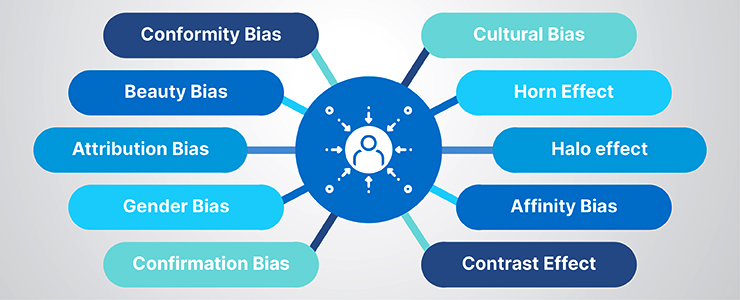
Some of the most common biases you might encounter in the workplace include:
- Affinity Bias: The tendency to gravitate toward people who are similar to us in background, interests, and appearance.
- Confirmation Bias: The tendency to search for, interpret, and recall information in a way that confirms our pre-existing beliefs. In a technical setting, this might mean giving more weight to a bug report from a senior male engineer than an identical report from a junior female engineer.
- Halo/Horn Effect: Allowing one positive (halo) or negative (horn) trait to overshadow all others. For example, if a developer is a great public speaker, their code might be perceived as being higher quality than it actually is.
- Gender Bias: The specific focus of our lesson, which involves attributing certain characteristics or abilities to individuals based on their gender.
2. From Bias to Behavior: Defining Microaggressions
If unconscious biases are the underlying "code," microaggressions are the "output"—the subtle, everyday behaviors that communicate hostility, denigration, or negative slights toward a person based on their membership in a marginalized group.
The term was coined to describe interactions that are often unintentional but have a cumulative, harmful effect. The following talk clearly defines the concept and its different forms.
Dismantling Microaggressions Through the Power of Connection | Toya Webb | TEDxRushU
In "Dismantling Microaggressions Through the Power of Connection," Toya Webb provides a succinct definition of microaggressions and breaks them down into three distinct categories.
Watch from the beginning to understand the core concept through a personal story, and pay close attention as she explains the three forms of microaggressions: the definition and classification.
As you just saw, microaggressions are categorized into three types. Let's formalize those definitions, as this classification is key to identifying them.
[PDF] The Experience and Effects of Gender Microaggressions for Women ...
This academic paper by Jennifer Kim and Alyson Meister provides a robust framework for understanding gender microaggressions, drawing from interviews with women leaders in STEM fields. It clearly distinguishes microaggressions from other forms of discrimination.
In this paper, please read the section titled "The Experience of Microaggression as an Identity Threat." Start from the beginning of the section and focus on the definitions provided for the three types of microaggressions: the three types. The text will explain each one, from the most blatant to the most subtle.
To summarize this important classification:
- Microassaults: Conscious and explicit actions, like using a derogatory name. This is closest to "old-fashioned" discrimination.
- Microinsults: Unintentional verbal or non-verbal behaviors that are rude or insensitive, demeaning a person's identity. A classic tech example is, "You're too pretty to be a coder."
- Microinvalidations: Comments or behaviors that exclude or negate the thoughts, feelings, or experiential reality of a person. For example, telling a woman who speaks up about being interrupted, "You're just being too sensitive."
3. Microaggressions in the Tech Workplace: Five Common Forms
Now, let's connect this framework directly to your work environment. The same research paper on women in STEM identifies five recurring themes of microaggressions. As you read through these, consider if you've witnessed or experienced similar situations in your own career.
[PDF] The Experience and Effects of Gender Microaggressions for Women ...
This section of the paper details the specific types of microaggressions reported by women leaders in STEM. These are concrete examples that move from theory to real-world experience.
Please read the entire section titled "Types of Microaggressions". It outlines and provides examples for five distinct categories, from the devaluation of technical competence to pathologizing gender.
These five categories are incredibly relevant to the tech world:
- Devaluation of Technical Competence: Being questioned on your expertise, having your tasks reassigned to male colleagues, or having others defer to a man on a project you are leading.
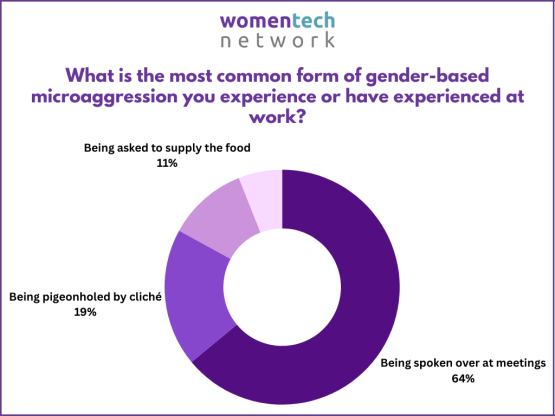
- Devaluation of Physical Presence: Being interrupted, talked over, or ignored in meetings. This is one of the most frequently cited experiences for women in tech.
- Denial of One’s Reality: When you point out a potential instance of bias and are told you're imagining it or misinterpreting the situation.
- Pathologizing Woman’s Personal Character: Being told your direct communication style is "aggressive" or that you need to be "softer," while the same behavior in male colleagues is seen as assertive and confident.
- Pathologizing Woman’s Gender: Receiving unsolicited comments about how starting a family will negatively impact your career commitment or being singled out in a group ("Hey guys, and one gal").
A Case Study: Bias in Code Review
To see just how deeply these biases can be embedded in core engineering practices, let's examine a study that used medical imaging and eye-tracking to analyze bias in code review. This is a powerful example because code review is a fundamental part of your daily work, and this research shows how perceptions of a pull request's author—specifically their gender—can influence the review process, even when the code is identical.
[PDF] Biases and Differences in Code Review using Medical Imaging and ...
This research paper provides objective, data-driven evidence of gender bias in a core software development activity. It's a compelling look at how unconscious bias translates into measurable behavior.
Please read the following sections: First, review the summary of prior work on gender bias to get some context. Next, read the core behavioral findings in the section "Behavioral Differences". Pay close attention to the findings on response times and acceptance rates for pull requests attributed to men, women, and machines. Finally, read the section "Self-Reporting and Code Review". This part is crucial as it highlights the disconnect between what people say they believe and how they actually behave.
The key takeaways from this research are stark:
- Participants spent significantly less time reviewing pull requests they believed were written by women.
- The vast majority of participants denied that gender played any role in their assessment, yet their behavior showed a clear statistical difference.
This is the very definition of unconscious bias in action: a measurable, impactful behavior that operates outside of our conscious awareness and intentions.
Conclusion
In this lesson, we have deconstructed the often-invisible forces that can shape your workplace experience. You have learned to connect the brain's natural tendency for unconscious bias to its behavioral manifestations as microaggressions. Most importantly, you are now equipped with a clear vocabulary and framework to identify specific forms these behaviors take within a tech environment, from being ignored in a meeting to facing subtle skepticism in a code review.
Here are the key takeaways:
- Unconscious bias is a product of our brain's efficient but flawed processing, not necessarily a moral failing.
- Microaggressions are the subtle, everyday expressions of these biases and fall into three categories: microassaults, microinsults, and microinvalidations.
- In tech, these often manifest as devaluation of competence, being ignored or interrupted, and having your character or reality invalidated.
- These biases are not just feelings; they are measurable phenomena that appear in core engineering activities like code reviews.
Recognizing these patterns is the first step. In our next lesson, we will build directly on this foundation by learning how to apply a framework for responding to microaggressions in real-time. You will move from identification to action, empowering you to address these situations constructively and maintain your professional momentum.