Recommended resources
The freely available resources this lesson will direct you to.
In our last lesson, we demystified the concept of "deployment"—the process of moving your app from your private local machine to a public server for the world to see. You now understand the fundamental difference between working on localhost and having a live application on the internet.
Now, we'll focus on one of the most popular tools that makes this process incredibly simple: Vercel. Your LLM assistant has likely mentioned it, and it's a favorite in the modern web development world. This lesson will explain exactly what Vercel is, what it does, and why it's become the go-to choice for developers and "vibe coders" alike.
What is Vercel? The "Frontend Cloud"
At its core, Vercel is a cloud platform specifically designed for deploying and hosting the frontend of web applications—the part that users see and interact with. Think of it as a specialized publishing service for your code.
It's important to understand what Vercel is not. Unlike a tool such as Webflow or Framer, you don't build your site inside Vercel. You build your site using code (or with an AI's help), and Vercel takes that code and puts it online for you.
This short video clip draws a clear distinction between an all-in-one builder and a deployment platform like Vercel.
Should You host On Webflow Or Vercel?
This clip from Flux Academy explains Vercel's role in the development process.
Watch the section from "what exactly is Vercel" to understand that Vercel is not a site builder, but a platform that turns your code into a live website.
The Vercel team itself describes their product as a "frontend cloud" or "frontend-as-a-service." This means they provide all the infrastructure and tools needed to run the user-facing part of your app, so you don't have to worry about managing servers yourself.

Why is Vercel So Popular?
So, why would your LLM assistant consistently recommend Vercel? The reasons go beyond simple hosting. Vercel is popular because it solves many of the tedious and complex problems of web deployment with an elegant and powerful workflow.
1. "Stupidly Easy" Deployment
In the past, deploying a website involved manually configuring servers, setting up networks, and writing complex scripts. Vercel abstracts all of that away. It's a managed service, meaning they handle the complicated server infrastructure behind the scenes.
The workflow is designed to be as simple as possible and integrates perfectly with what you learned about Git and GitHub.
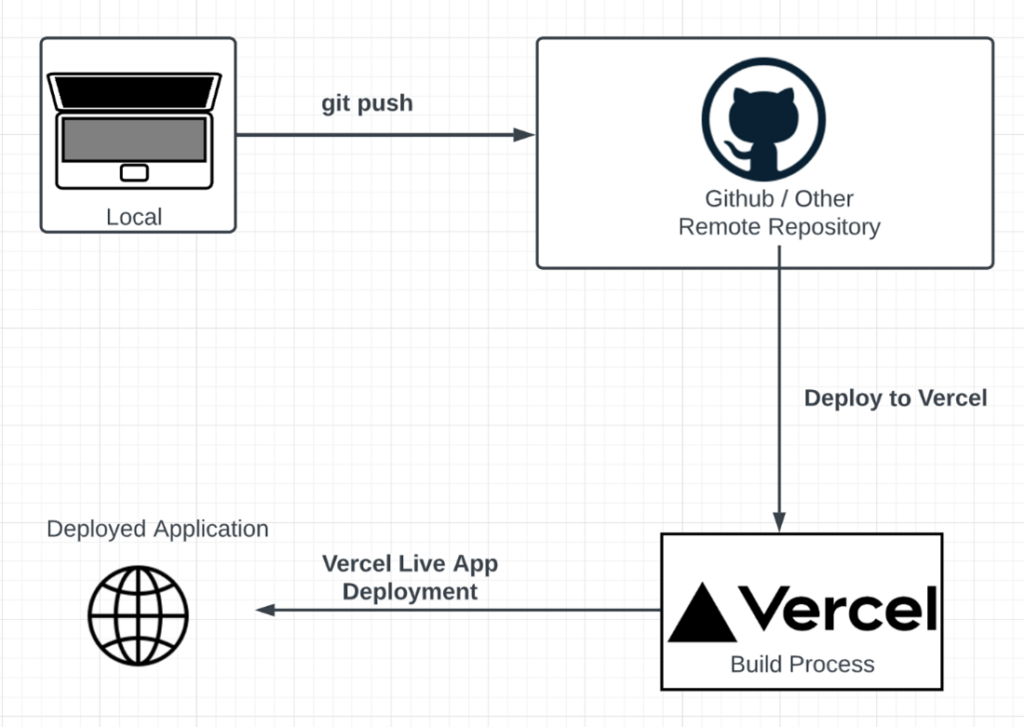
The following article from Vercel's own blog explains this core value proposition.
This article details the problems Vercel solves and illustrates its core workflow.
First, read the section "What does deploying mean?" to understand the traditional complexities that Vercel is designed to eliminate. Then, read the next section, which shows how you simply connect a GitHub repository and let Vercel handle the rest. Pay close attention to the concepts of automatic redeployment and deploy previews.
2. A Perfect Workflow for Design Iteration
As the article mentioned, two features make Vercel a dream for designers and anyone working in a highly iterative way:
- Automatic Redeployments: Every time you push a change to your GitHub repository, Vercel automatically rebuilds and updates your live site. There's no manual "upload" step. You just save your work with
git push, and your site is updated. - Deploy Previews: This is a game-changer. When you open a Pull Request on GitHub to propose a change, Vercel automatically creates a temporary, unique, and shareable live version of your site with those changes applied. You can send this link to colleagues or clients for feedback. It's like a fully functional prototype for every single change, big or small. This ends the need to share static screenshots or mockups for interactive changes.
3. It's Built for Speed and Scale
Vercel isn't just easy; it's also incredibly powerful. It's built on a modern architecture that provides two key benefits without any effort on your part:
- Global Performance: Vercel uses a "Global Edge Network." This means it automatically copies your site to servers all around the world. When a user visits your app, they are served from the server geographically closest to them, which dramatically reduces loading times.
- Automatic Scaling: If your app suddenly gets a huge spike in traffic—from being featured on a blog, for example—Vercel's infrastructure scales automatically to handle the load. Your site stays fast and online without you needing to do anything.
To see these advantages laid out clearly, let's compare Vercel to traditional hosting methods.
This article from Fishtank provides a direct comparison between Vercel and traditional server-based hosting.
Focus on the section "Benefits of Vercel vs. Traditional Server-Based Hosting." The comparison table is especially useful for summarizing the key differences in deployment, performance, cost, and maintenance.
4. The "Vibe Coder's" Secret Weapon
This brings us to the most important point for your goal. The technical barriers that once kept designers and non-developers away from professional hosting platforms have been dismantled by AI.
The hard parts—writing code and managing a GitHub repository—are now something you can do with an LLM assistant. Vercel handles the final, crucial step of publishing that work to the world. This combination has unlocked a powerful new workflow.
The following video from a designer-focused channel explains this shift perfectly.
Should You host On Webflow Or Vercel?
This video from Flux Academy explains why Vercel is now a viable and powerful choice for designers.
First, watch the segment on pricing to understand its accessibility, particularly the generous free plan (Vercel's pricing). Next, and most importantly, watch the part that explains how AI has changed the game. It describes how the barrier to using Vercel wasn't Vercel itself, but the coding required beforehand—a barrier that AI now helps you overcome (AI has changed that). Finally, listen to the practical examples of when a designer might choose Vercel, which will likely resonate with your own projects (when to use Vercel).
Conclusion
You now know that Vercel is much more than just a place to put your website. It's a comprehensive platform designed to make the process of deploying, iterating on, and scaling modern web applications as seamless as possible.
Key Takeaways:
- What Vercel is: A cloud platform that specializes in deploying and hosting the frontend of web applications. It is not a website builder, but a publisher for your code.
- The Core Workflow: You connect your GitHub repository, and Vercel automatically builds and deploys your site. Every
git pushupdates the live app. - Why it's Popular:
- Ease of Use: It automates away the complexities of traditional server management.
- Powerful Iteration: Features like Deploy Previews are invaluable for testing and getting feedback on design changes.
- Performance: A global edge network and automatic scaling ensure your app is fast and reliable.
- Accessibility: A generous free "Hobby" plan and its perfect synergy with AI-powered coding make it ideal for learning, experimenting, and launching real projects.
In the previous lesson, you learned the "what" of deployment. Today, you learned the "why" of using Vercel. In our next lesson, we'll move on to the "how." You'll learn about the build process that prepares your project for deployment and then walk through the steps to get your first app live on Vercel.