Recommended resources
The freely available resources this lesson will direct you to.
Hei! Last time, you learned words for things that can go wrong at home: lekkasje, avløp, vindu, and Det virker ikke. Now you will put those words to work. By the end of this lesson, you should be able to tell a landlord, caretaker, or tradesperson what is wrong, where it is, when you noticed it, and what help you need.
Allow about 40 minutes. Read the short Norwegian examples, then say the model reports aloud: the aim is language you can use when something actually needs attention.
Start with what you can observe
Look at the wall in this photograph. The visible facts are discoloration and peeling paint near the floor. The photograph does not establish where the moisture came from or what repair is needed. That distinction is useful when reporting a fault: describe the evidence clearly without having to diagnose the cause.
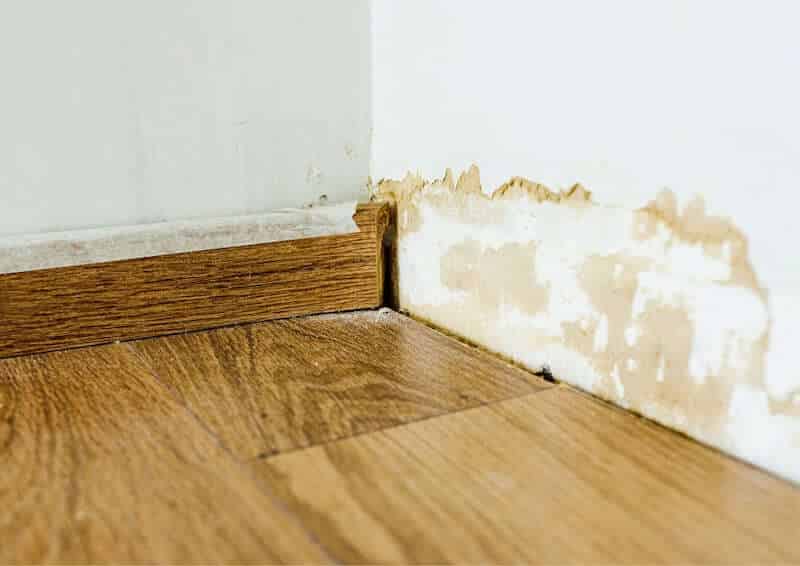
A short report about this wall could be:
Det er misfarging nederst på veggen, og malingen flasser. Jeg oppdaget det i dag. Kan noen komme og se på det?
“There is discoloration at the bottom of the wall, and the paint is peeling. I noticed it today. Can someone come and look at it?”
Nederst på veggen means “at the bottom of the wall.” Malingen flasser means “the paint is peeling.” If you suspect damp but do not know, you can add Det kan være fukt—“It may be damp.” A report does not need a confident explanation to be useful.
A real housing question shows how people describe faults in less formal Norwegian. Read only the beginning of the question, where the writer describes a washing machine and a new concern around the windows.
Utleier reparerer ikke vaskemaskin. Kan jeg si opp? - Ung.no
Read the opening of this question on Ung.no to see how a tenant describes a problem, an earlier message, and something newly discovered.
Under the question title, begin in the first paragraph at the sentence starting “I slutten av september sluttet vaskemaskinen”. Read the fault descriptions through the parenthetical note about sending another message; stop before the sentence beginning “Vi har også sendt melding”, which turns to moving out. Notice which details describe something observed and which describe communication with the landlord.
The writer says the washing machine sluttet … å funke—stopped working. Å funke is informal; å fungere is a useful neutral choice in your own report: Vaskemaskinen har sluttet å fungere. The question also mentions mugg langs vinduskarmene (mould along the window frames). If you are unsure whether a mark is mould, Jeg ser noe som ligner på mugg means “I see something that looks like mould.”
Build a report the listener can act on
A useful report normally contains four pieces of information:
- The item and location: kranen på badet (the bathroom tap), avløpet på kjøkkenet (the kitchen drain).
- What you observe: lekker (leaks), er tett (is blocked), virker ikke (does not work).
- When and how serious: siden i går (since yesterday), det er vann på gulvet (there is water on the floor).
- Your request: Kan noen komme og se på det? (Can someone come and look at it?)
Compare Det er noe galt på badet (“Something is wrong in the bathroom”) with Det drypper fra kranen på badet, og det har gjort det siden i går (“The bathroom tap has been dripping since yesterday”). The second version gives the listener a location, a symptom, and a duration, even though you do not know the cause.
Two time expressions are especially handy. Use for … siden for when something happened: Jeg oppdaget lekkasjen for to dager siden—“I noticed the leak two days ago.” Use siden alone for a condition continuing from a point in time: Det har lekket siden i går—“It has been leaking since yesterday.” If that distinction is hard to retrieve while speaking, Jeg oppdaget det i går is a clear alternative.
Here are three reports at different levels of urgency:
Vinduet på soverommet går ikke ordentlig igjen. Jeg oppdaget det i går. Kan noen se på det?
“The bedroom window doesn’t close properly. I noticed it yesterday. Can someone look at it?”
Avløpet på kjøkkenet er tett. Vannet renner ikke ned. Kan dere sende noen for å se på det?
“The kitchen drain is blocked. The water isn’t draining. Can you send someone to look at it?”
Det lekker fra et rør under kjøkkenvasken. Det er vann på gulvet, så det haster. Hva bør jeg gjøre nå?
“A pipe under the kitchen sink is leaking. There’s water on the floor, so it’s urgent. What should I do now?”
Det haster tells someone that the matter is urgent; it is more informative when paired with a reason. For an active leak or a possible electrical hazard, prioritise safety and use the appropriate urgent contact route rather than waiting for an ordinary message to be read.
Choose the recipient and make the request
Utleier is the landlord. Vaktmester is a caretaker or building maintenance worker. A rørlegger works with plumbing; an elektriker works with electrical systems. You can give any of them the same factual description, but adjust the request to the person you are addressing.
To a landlord or building office, you might say Kan dere sende noen for å se på det?—“Can you send someone to look at it?” To a tradesperson already handling the fault, Kan du se på det?—“Can you take a look at it?” Du addresses one person; dere addresses more than one person or an organisation.
Reporting a fault does not require you to decide immediately who caused it or who will pay. Forbrukerrådet’s guidance gives useful context: the landlord generally has the main responsibility for maintenance unless something else has been agreed, but it also lists parts of a home that a tenant may be responsible for maintaining. Read this for the distinction, not as a way to diagnose a particular fault from a short description.
Hvem har ansvar for vedlikeholdet? – Forbrukerrådet
Read the first subsection of Forbrukerrådet’s housing guidance to understand why a first fault report should state the facts rather than assume responsibility for a repair.
In “Hvem har ansvaret for vedlikehold av boligen?”, start with the paragraph beginning “Utleier har hovedansvaret for vedlikehold av boligen”. Continue through the tenant-maintenance list, ending with its final bullet about equipment that is not part of the fixed property. Stop before “Har huseier adgang til boligen?”. Focus on the qualification about what has been agreed and on the difference between reporting a problem and settling responsibility for it.
Your first message can therefore remain practical: Here is what I have found; can someone look at it? If the person needs more detail, they can ask. The next lesson will help you understand those follow-up questions.
Say it on the phone or write it in a message
On a call, begin with the reason for calling. You do not need an elaborate introduction:
Hei. Jeg ringer fordi det lekker fra et rør under kjøkkenvasken. Jeg oppdaget det i morges, og det er vann på gulvet. Kan dere sende noen så snart som mulig?
“Hello. I’m calling because a pipe under the kitchen sink is leaking. I noticed it this morning, and there’s water on the floor. Can you send someone as soon as possible?”
Jeg ringer fordi … gives you a simple opening. Jeg oppdaget det i morges means “I noticed it this morning,” and så snart som mulig means “as soon as possible.” If you cannot name the faulty part, say what you do know: Det er vann på gulvet under kjøkkenvasken, men jeg vet ikke hvor det kommer fra—“There is water on the floor under the kitchen sink, but I don’t know where it’s coming from.”
A written message can follow the same structure. It can also mention a photograph, if you have one:
Hei! Jeg vil melde fra om et problem i leiligheten. Det er misfarging nederst på veggen i stua, og malingen flasser. Jeg oppdaget det i dag og legger ved et bilde. Kan noen komme og se på det?
“Hello! I want to report a problem in the apartment. There is discoloration at the bottom of the living-room wall, and the paint is peeling. I noticed it today and am attaching a photo. Can someone come and look at it?”
Jeg vil melde fra om … means “I want to report …”; jeg legger ved et bilde means “I’m attaching a photo.” The photograph supports the description, but the words still tell the recipient where to look and what you need.
Spend a few minutes saying the phone report and written report aloud. Keep the location and symptom together as one phrase—for example, det lekker fra et rør under kjøkkenvasken—so you can retrieve it readily during a real conversation.
Conclusion
A clear household-fault report does not require technical vocabulary or a diagnosis. Name where the problem is, describe what you observe, say when you noticed it, and make a direct request such as Kan noen komme og se på det? If the situation is urgent, state both Det haster and the reason.
Next, you will practise understanding the questions that often follow a report—particularly about access, timing, cost, and responsibility for a repair.