Recommended resources
The freely available resources this lesson will direct you to.
Hei! Last time, you practised reporting a household fault: what is wrong, where it is, when you noticed it, and what help you need. Once you have said Det lekker under kjøkkenvasken. Kan noen komme og se på det?, the conversation often shifts. The other person needs to know whether they can get in, when they can come, and how the repair will be arranged.
This lesson focuses on understanding those follow-up questions, rather than learning to explain the fault again. Allow about 40 minutes. The examples are written as short spoken exchanges; read them aloud so that you hear the questions as complete utterances, not just lists of vocabulary.
Access: can someone get into the home?
A person arriving to inspect a fault may be asking one of two different things: Will you be there to open the door? or Do you give permission for us to enter if you are away? Both concern access, but they call for different answers.
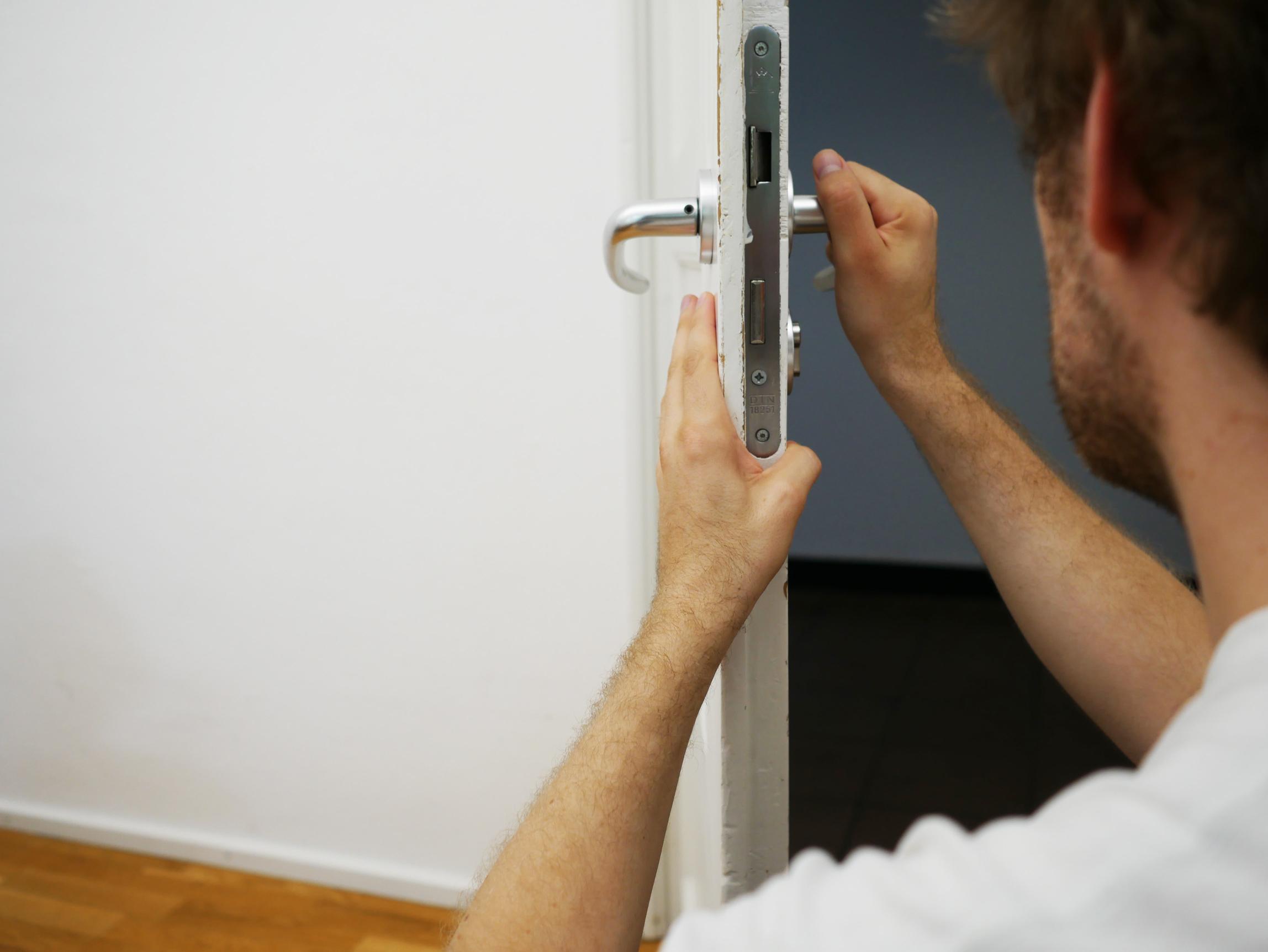
Listen for hjemme (at home), slippe inn (let in), nøkkel (key), and låse seg inn (let oneself in with a key):
Er du hjemme når vi kommer?
Will you be at home when we arrive?Kan du slippe oss inn?
Can you let us in?Hvis du ikke er hjemme, er det greit at vi låser oss inn?
If you are not at home, is it all right if we let ourselves in?
The last question asks for permission, not merely for information about your schedule. Er det greit at …? is a common way to ask whether an arrangement is acceptable. A direct answer might be Ja, det er greit, or Nei, jeg vil gjerne være hjemme når dere kommer (“No, I would prefer to be home when you come”). Here dere refers to the visitors; du refers to you.
You encountered Forbrukerrådet’s housing guidance in the previous lesson for maintenance responsibilities. This time, read its short passage about access. It explains why arranging entry and giving notice are ordinary parts of a repair conversation; it also distinguishes routine access from an emergency.
Hvem har ansvar for vedlikeholdet? – Forbrukerrådet
Revisit Forbrukerrådet’s guidance for the access rules, not the maintenance list you saw previously.
Under “Har huseier adgang til boligen?”, read the access passage. Begin with “Utleier kan ikke komme og gå som han vil” and stop after the example of a water pipe that has burst. Notice the distinction between advance notice for ordinary work and access in an emergency.
In a conversation, you do not have to settle every access detail immediately. Jeg må sjekke om jeg kan være hjemme (“I need to check whether I can be home”) makes it clear what remains undecided.
Timing: arrival, availability, or length of work?
Repair conversations use several kinds of time question. Identify what the speaker wants to schedule before concentrating on every word.
Når passer det for deg at vi kommer?
When would it suit you for us to come?Kan vi komme i morgen formiddag?
Can we come tomorrow morning?Er du hjemme mellom ni og elleve?
Will you be home between nine and eleven?Hvor lang tid tror du reparasjonen tar?
How long do you think the repair will take?
Når passer det? asks about a suitable time; mellom ni og elleve gives an arrival window. Hvor lang tid …? asks about duration, not the arrival time. If you hear Vi kommer mellom ni og elleve, you know when to expect someone, but not whether the job will be finished by eleven.
A time can also be proposed less directly:
Vi kunne kommet på torsdag. Passer det?
We could come on Thursday. Does that work?Det tar nok en times tid. Går det bra?
It will probably take around an hour. Is that okay?
In the first exchange, det in Passer det? refers to Thursday. In the second, det in Går det bra? refers to the proposed duration or arrangement. In everyday speech, people often leave the full proposal out of the final question because they have just said it.
If a time is unclear on the phone, confirm the part that matters: Mener du i morgen mellom ni og elleve? (“Do you mean tomorrow between nine and eleven?”). That is more useful than agreeing to a time you have only partly heard.
Cost and responsibility are related, but not the same question
Someone may ask what the work costs, who will receive the bill, or who is responsible for arranging or paying for it. Do not treat these as interchangeable.
Vet du omtrent hva reparasjonen vil koste?
Do you know approximately what the repair will cost?Skal vi sende regningen til deg eller til utleier?
Should we send the bill to you or to the landlord?Hvem har ansvar for å få dette reparert?
Who is responsible for getting this repaired?Hvem skal dekke kostnadene?
Who will cover the costs?
The key words are koste (cost), regningen (the bill), ansvar (responsibility), and dekke kostnadene (cover the costs). In particular, Hvem har ansvar? does not by itself tell you who will be billed. A tradesperson may also be asking where to send an invoice, without deciding what the rental agreement ultimately requires.
Read this brief explanation from Husleietvistutvalget to put those questions in context. Focus on the language of agreements and exceptions, not on trying to determine the outcome of a particular repair from a photograph or a short phone call.
Utleiers og leietakers vedlikeholdsplikt · Husleietvistutvalget
Husleietvistutvalget explains how a rental agreement and the type of work can affect responsibility. This helps you interpret questions about who is arranging or paying for a repair without assuming that every fault has the same answer.
Under “Partene kan selv avtale”, read the agreement passage, beginning with the sentence about what landlord and tenant can agree and ending after the sentence about checking safety equipment and changing batteries. Then read the cost examples, from the paragraph beginning “Utbedring av tilfeldig skade” through the paragraph under “Ved feil bruk av leietaker”. Notice that maintenance, accidental damage, and damage from incorrect use are discussed separately.
In the previous lesson, the priority was to report observable facts without claiming to know the cause. The same restraint helps here. If someone asks Er det du eller utleier som skal betale? (“Is it you or the landlord who will pay?”), you can understand the question without committing to an answer you do not know. Det vet jeg ikke ennå. Vi må sjekke avtalen means “I don’t know yet. We need to check the agreement.”
Hear the question inside a repair conversation
Read this exchange aloud once at a natural pace. Imagine that you have reported a blocked kitchen drain and a caretaker is arranging a visit. On a second reading, pause briefly after each question and identify whether it concerns access, timing, cost, or responsibility.
Vaktmester: Hei, jeg ringer om avløpet på kjøkkenet. Er du hjemme i morgen formiddag?
Du: Ja, men jeg må gå klokka elleve.
Vaktmester: Da kan vi komme mellom ni og ti. Kan du slippe oss inn?
Du: Ja, det kan jeg. Vet du hvor lang tid det tar?
Vaktmester: Det er vanskelig å si før vi har sett på det. Kanskje en times tid.
Du: Greit. Vet du om det koster noe?
Vaktmester: Jeg vet ikke ennå. Vi må først se hva som er galt, og sjekke hvem som har ansvar for arbeidet.
Du: Da sees vi i morgen mellom ni og ti.
The caretaker’s first question, Er du hjemme i morgen formiddag?, establishes your availability. Kan du slippe oss inn? checks access: being home does not necessarily mean you can open the door at the proposed time. Your question hvor lang tid det tar asks about duration, and om det koster noe asks about a possible charge. The caretaker does not say the repair is free or that you must pay; før vi har sett på det (“before we have looked at it”) signals that the answer is not known yet.
Notice also how a conversation can revise an initial time. I morgen formiddag is broad; mellom ni og ti is the agreed window. If you retain only one time, retain the final, more specific arrangement.
In real speech, you may miss part of a longer sentence such as Vi må først se hva som er galt, og sjekke hvem som har ansvar for arbeidet. The words først, se, and ansvar still give you its practical meaning: they need to inspect the problem before answering the responsibility question. You can check your interpretation with Så dere må se på det først? (“So you need to look at it first?”).
Conclusion
When someone follows up on a fault report, listen first for the kind of question. Hjemme, slippe inn, and nøkkel point to access; når, mellom, and hvor lang tid distinguish scheduling from duration; koste, regning, and ansvar point to different aspects of cost and responsibility. You can confirm a proposed arrangement without guessing about an unresolved bill.
Next, you will use similar listening skills in a basic telephone exchange with a service provider, where recognising the question quickly matters even when you cannot see the speaker.