Recommended resources
The freely available resources this lesson will direct you to.
- The war on rationality | Steven Pinkerwww.youtube.com
- The Intellectual Divide: Rationalism vs. Tradition - Jeffrey Langwww.youtube.com
- Notes on Karl Popper's "Towards a Rational Theory of Tradition"www.criticalrationalism.net
- Tradition v. Rationalism: Voegelin, Oakeshott, Hayek, and ...voegelinview.com
Hello! Welcome to the fourth module of our course on Popperian realism, tradition, and rationalism.
So far, we have explored Popper's foundational ideas in critical rationalism, his political philosophy of the Open Society, and David Deutsch's modern extension of these concepts. You've grappled with falsification, piecemeal engineering, the critique of historicism, and the search for 'good explanations'.
In this module, "Synthesis: A Philosophy of Critical-Traditionalism," we will begin to weave these threads together into a coherent worldview. This lesson, the first in our synthesis, tackles a central tension that has surfaced throughout our discussions and your previous studies of thinkers like Burke, Oakeshott, and Hayek.
Lesson 4.1: The Core Tenets of Critical-Traditionalism
Today's Goal: By the end of this lesson, you will be able to articulate the core tenets of 'Critical-Traditionalist Rationalism,' reconciling the value of evolved traditions with the imperative for rational criticism.
This lesson should take approximately 50-60 minutes to complete.
Recap from previous modules:
- You'll recall Popper's critical rationalism (P1 → TT → EE → P2), which frames knowledge growth as a process of conjecture and error elimination, not justification.
- We've contrasted Popper's 'piecemeal social engineering' with the 'utopian' projects of thinkers like Plato and Marx.
- We've also seen how Oakeshott and Hayek value tradition and spontaneous order as repositories of practical, tacit knowledge that centralized 'rationalist' planning ignores.
The question that naturally arises is: How can we simultaneously value tradition, as Oakeshott and Hayek do, and yet submit everything to the relentless, universal acid of Popperian criticism? Aren't these impulses contradictory? Today, we will construct a robust answer to that question.
1. Framing the Dilemma: Rationalism vs. Tradition
This tension isn't just an abstract philosophical problem; it's a lived experience for many. It's the conflict between the modern educational emphasis on critical, independent thought and the communal emphasis on upholding established norms and beliefs.
To set the stage, please watch the first few minutes of this video. It frames the problem from a sociological perspective, which provides a practical anchor for our philosophical inquiry.

In this video (0:00 - 4:58), Dr. Lang describes the divide his students face: their education teaches them "rationalism, cold objective reasoning," while their community stresses "tradition, following traditional thought." He characterizes them as "two mutually exclusive approaches."
This neatly mirrors the philosophical conflict Karl Popper sought to resolve. In his essay "Towards a Rational Theory of Tradition," Popper identifies two opposing, and in his view, equally flawed, attitudes.
To understand these, please read the sections titled "Popper's Problem with Tradition" and "Critical Attitude Towards Tradition" in the following summary. It should take about 5 minutes.
Notes on Karl Popper's "Towards a Rational Theory of Tradition" by Matt. Focus on points 1-5 and 8-9.
As the notes explain, Popper sets up two camps:
- The Anti-Rationalist/Traditionalist: Epitomized by his (perhaps contestable) reading of Edmund Burke, this view tends to "accept tradition as something just given... you cannot rationalize it." It values tradition for its own sake, often elevating it to an unquestionable, almost mystical status.
- The "Narrow" Rationalist: This person wants to "judge everything on its own merits... independently of any tradition." They believe they can wipe the slate clean and build a world from scratch based purely on abstract reason.
You've encountered versions of both these positions in your studies. Burke and Oakeshott champion the first, while the "rationalism in politics" Oakeshott critiques embodies the second. Popper's genius was to reject this dichotomy and propose a third way.
2. Popper's Third Way: The Critical Attitude
Popper's solution is not to choose between tradition and reason, but to define a healthier relationship between them. The key is to distinguish between uncritical acceptance and critical engagement.
For a concise and powerful explanation of this, please spend about 5 minutes reading the section titled "Popper's View on Tradition" in the Internet Encyclopedia of Philosophy article on his political thought.
Karl Popper: Political Philosophy by the Internet Encyclopedia of Philosophy.
This passage is crucial. It notes that while Popper, like Burke, valued tradition, he parted ways with traditionalists like Burke and Oakeshott, whom he labeled "anti-rationalists." Why? Because they "accept tradition uncritically."
Popper's alternative is the critical attitude. Let's return to the summary of his essay to see what this entails.
As you saw in point 9 of Notes on Karl Popper's "Towards a Rational Theory of Tradition", Popper argues:
- We can never fully escape tradition. Trying to do so is "really only a change from one tradition to another." The rationalist who wants to judge everything independently is, ironically, following a particular tradition of rationalism.
- The goal isn't to escape tradition, but to free ourselves from its taboos.
- We do this by making tradition an object of conscious thought: "we have to know of and to understand a tradition before we can criticize it."
This gives us our first core tenet:
Tenet 1: Tradition is the necessary starting point for knowledge and action, providing the essential raw material for criticism. It is not an unquestionable end point.
3. Why Tradition is Indispensable
If tradition is just "raw material" for criticism, why value it at all? Why not lean towards the rationalist's desire to "clean the canvas"? Popper provides a powerful, pragmatic defense of tradition that should resonate with your background in economics and complex systems.
Please review points 31-41 in Notes on Karl Popper's "Towards a Rational Theory of Tradition". This section outlines why the "clean the canvas" idea is, as Popper says, "nonsense and impossible to realize."
Here are the key arguments for the indispensability of tradition:
- It Provides a Framework for Action: Popper argues that rational action is impossible without a predictable social environment. Traditions create "regularities" that allow us to anticipate, with some confidence, how others will respond to our actions. This is foundational for any social coordination, from language to markets. This is a concept you'll recognize from game theory, where "common knowledge" of the rules is a prerequisite for rational strategy.
- It Provides a Framework for Knowledge: The world is infinitely complex. Tradition gives us a starting "theoretical framework" or a "system of co-ordinates" (point 31). It's our inherited map of reality. It may be flawed, but it's the only map we have to start with. Without it, we wouldn't know where or how to begin our analysis.
- The "Clean Canvas" is a Self-Refuting Idea: This is Popper's brilliant critique of utopian rationalism. If you wipe out the existing social world, you also "sweep away with it himself and all his ideas and all his blueprints of the future" (point 40). Blueprints for a new society only have meaning within an existing web of traditions, institutions, values, and language.
This connects directly to Hayek's "knowledge problem" and Oakeshott's distinction between "technical" and "practical" knowledge, which you've studied before. Traditions are the embodiment of accumulated, decentralized, practical knowledge that has survived countless real-world tests.
This leads us to our second tenet:
Tenet 2: Traditions function as a society's repository of evolved, problem-solving conjectures, providing the stable and predictable order necessary for rational action and social life.
4. The Engine of Progress: Criticism & Piecemeal Reform
We have established the necessity of tradition. Now, we turn to the "Critical" part of our philosophy. How do we improve upon the traditions we inherit?
Popper's answer is that we must treat the claims and solutions embodied in our traditions as we treat scientific theories: as fallible conjectures to be ruthlessly tested.
For a quick, energetic refresher on the logic of falsification, please watch this segment from Crash Course Philosophy.
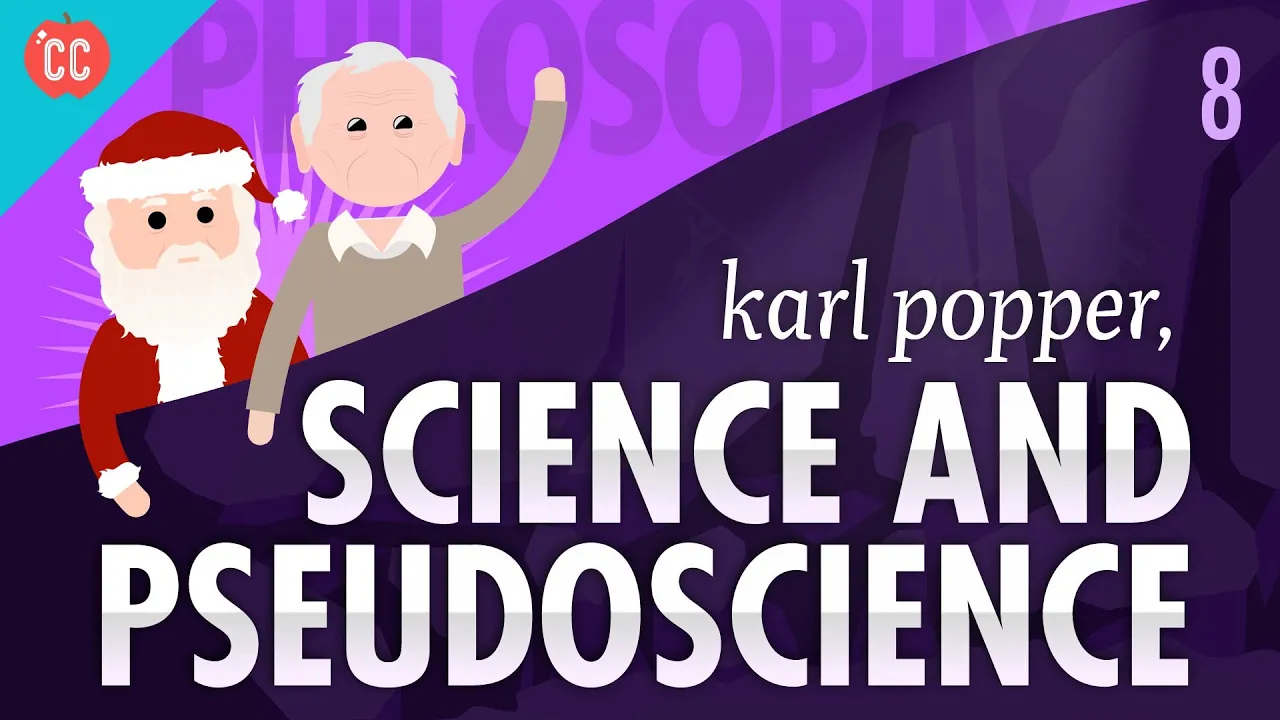
Focus on the segment from 3:48 to 6:42. The key takeaway is that genuine inquiry doesn't seek to confirm our beliefs, but to actively try to disconfirm or falsify them. A belief is only valuable to the extent that it has survived severe attempts at refutation.
How does this apply to social reform? We don't try to prove our traditions are "right." Instead, we look for where they are failing—where they are creating suffering or solving problems poorly. This is the logic behind Popper's concept of piecemeal social engineering.
As you read in the IEP article (Karl Popper: Political Philosophy, in the section "Piecemeal Social Engineering"), this approach:
- Focuses on solving concrete social problems (like poverty) rather than aiming for abstract ideals (like "perfect justice").
- Treats every reform as a testable hypothesis. We change one institution at a time and observe the results.
- Embraces a method of trial and error, learning from our mistakes to make continuous adjustments.
This is the critical attitude in action. It's not revolution ("wiping the canvas clean"); it's evolution. It's taking the "earlier models" that tradition has given us and tinkering with them, testing our changes, and keeping what works.
This gives us our final tenet:
Tenet 3: Rational criticism, operating through falsification and applied via piecemeal, experimental reform, is the evolutionary mechanism for correcting errors and improving upon the inherited conjectures of tradition.
Conclusion: Synthesizing Critical-Traditionalist Rationalism
We have now articulated the three core tenets of "Critical-Traditionalist Rationalism." Let's bring them together.
This philosophy is not a compromise between two extremes, but a synthesis that transcends the original conflict. It resolves the dilemma by assigning distinct but complementary roles to tradition and reason.
- Tradition provides the indispensable starting material—the accumulated wisdom, the social order, and the set of problems (P1) and tentative theories (TT) that we inherit.
- Critical Reason provides the evolutionary process—the mechanism of error elimination (EE) that allows us to test, refine, and improve upon that inheritance, leading to new problems and better solutions (P2).
Critical-Traditionalist Rationalism is therefore a philosophy that deeply respects the past without being enslaved by it. It values the stability and tacit knowledge of evolved institutions but insists that their legitimacy rests on their continued ability to solve human problems and survive our most severe criticisms. It is fundamentally a philosophy of progress through problem-correction, grounded in both humility about what we can know and optimism about what we can learn.
In our next lesson, we will delve deeper into the toolkit of criticism. We will explore how both Popper's concept of 'falsification' and Deutsch's criterion of 'good explanations' can be used as practical tools for evaluating and improving the conjectures embodied in our traditions and political ideologies.