Hello! Welcome back.
In our last lesson, you successfully laid the groundwork for your publishing business by setting up your Amazon KDP account. Your "digital store" is now ready; you have a legal identity, a way to get paid, and your tax information is sorted.
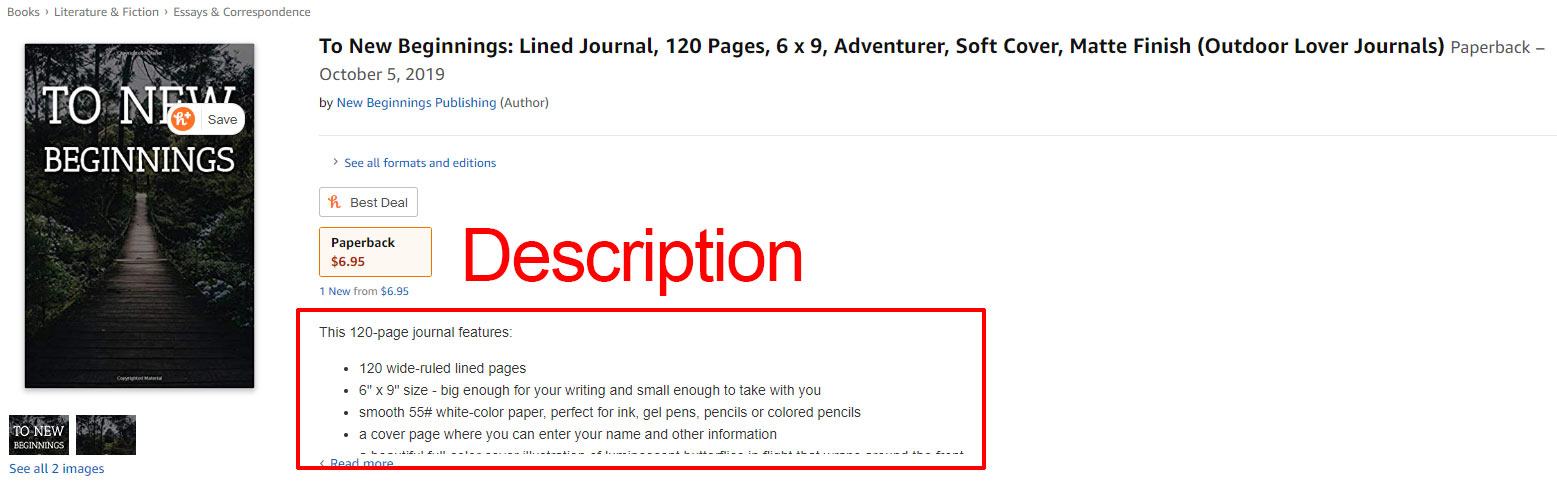
Today, we move from the back-office setup to the customer-facing storefront. After a customer is drawn in by your cover, the book description is your final, and most critical, sales pitch. Your background in digital marketing will be a great asset here, as the principles are the same: you're writing copy to convert a browser into a buyer.
This lesson is dedicated to mastering this crucial element. You will learn to write a compelling book description (blurb) using persuasive copywriting and keyword optimization. We'll explore the psychology behind effective blurbs and use free AI tools to generate, refine, and format them for maximum impact on Amazon.
1. The Anatomy of a High-Converting Blurb
Before we ask an AI to write anything, it's essential to understand what makes a book description successful. It’s not just a summary; it's a carefully crafted piece of marketing copy designed to evoke emotion and create a need to know what's inside.
To get a comprehensive overview of the fundamentals, start by reading the following guide.
Free Book Blurb Generator - AI-Powered Book Description ...
The 'Free Book Blurb Generator' page from MyStoryFlow has an excellent educational section that breaks down the core components of a blurb. This will give you a solid foundation.
Please read the sections titled 'What is a Book Blurb?' and 'Professional Blurb Writing Tips'. Focus on: The difference between a blurb and a synopsis. The four key elements of the blurb formula: Hook, Setup, Stakes, and Cliffhanger. The common mistakes to avoid, like being too vague or revealing too much.
As you read, you'll notice that effective blurbs often follow proven copywriting formulas. One of the most famous is AIDA (Attention, Interest, Desire, Action). This framework is about grabbing the reader's attention, building their interest in the premise, creating a desire to know the outcome, and finally, prompting them to take action (buy the book).
2. Crafting Your Blurb with AI
Now that you understand the theory, let's put it into practice using AI. You have two excellent, free approaches: using a general-purpose AI like ChatGPT with highly specific prompts, or using a specialized tool designed for this exact task.
Approach 1: Advanced Prompting with ChatGPT
Your experience with AI tools has shown that generic prompts yield generic results. The key to getting high-quality book descriptions is to "prime" the AI with context and use structured prompts.
15+ ChatGPT Prompts for Book Descriptions | Sell More Books ...
The article '15+ ChatGPT Prompts for Book Descriptions' from Vox Ghostwriting is a masterclass in advanced prompting for this purpose. It provides templates for nearly any genre you plan to write in.
First, read the section 'The Psychology of a Best-Selling Book Description' to reinforce the AIDA concept. Then, study 'Priming the Engine: Context is King' and '15+ ChatGPT Prompts for Book Descriptions'. Pay special attention to: The 'System Context' Prompt: This is crucial. It tells the AI to act as a professional copywriter. Non-Fiction Prompts (6, 7, 8): The Pain-Agitate-Solution and benefit-driven bullet point frameworks are perfect for the business, tech, and mentoring books you plan to write. Fiction Prompts (1-5): Notice how these are tailored to different genres, which aligns with your goal of exploring various book types.
This method gives you maximum control but requires you to provide the AI with a solid summary of your book's plot, characters, or key takeaways.
Approach 2: Using Specialized Free Tools
Sometimes, a dedicated tool can streamline the process. These tools have the copywriting formulas built-in, guiding you through the necessary inputs.
Using AI to Create Bestselling Book Descriptions [FREE!]
Dave Chesson from Kindlepreneur, a leading authority on KDP, created a free tool specifically for this. Watch this short video to see how it works.
Watch from 01:54 to 03:56. Notice how the tool takes a basic description and automatically restructures it based on proven marketing strategies for fiction or non-fiction. This can be a great way to get a solid first draft or improve one you've already written.
Another powerful option is the tool from the MyStoryFlow page you reviewed earlier. It not only generates blurbs but also provides three different versions (hook-focused, character-driven, situation-based) and analyzes their potential effectiveness.
3. Optimizing for Amazon: Keywords and Formatting
A great blurb needs to persuade both humans and Amazon's search algorithm, A9. This means strategically including keywords and formatting the text for readability.
Integrating Keywords
Your blurb is a prime location to include the keywords potential readers are searching for. However, they must be woven in naturally. "Keyword stuffing" will make your description unreadable and repel customers.
You can use an AI prompt to help with this. The Vox Ghostwriting article you read has a perfect example: Prompt #10: The Amazon KDP Keyword Integrator. You give it your drafted description and your list of keywords, and it rewrites the text to include them seamlessly.
Formatting with HTML
A solid wall of text is intimidating. Basic HTML can make your description scannable and professional. Amazon KDP allows a limited set of HTML tags in the description field.
Free Book Blurb Generator - AI-Powered Book Description ...
The MyStoryFlow resource provides an excellent, concise guide on how to use HTML for your KDP description.
Read the section 'Optimizing Blurbs for Amazon KDP'. Focus specifically on the subsections 'The Amazon-Optimized Blurb Structure' and 'HTML Formatting for Amazon KDP'. This will show you exactly which tags to use (<b>, <i>, <ul>) and how to structure your description for maximum impact.
An even faster way is to ask the AI to do it for you. Prompt #15: The HTML Formatter from the Vox Ghostwriting article is designed for exactly this. After you have your final text, you can run this prompt to get the HTML-formatted version ready to copy and paste into KDP.
Test your understanding!
Imagine you've written a short non-fiction book for IT professionals on how to transition to a fully remote career, leveraging their tech skills. Your target audience struggles with feeling disconnected and fears their career will stagnate. Your book offers a step-by-step guide to finding high-paying remote jobs and building influence in a remote team.
Using the Pain-Agitate-Solution (PAS) framework from the Vox Ghostwriting resource, write a prompt for ChatGPT to generate a book description.
Show answer
A good prompt would look something like this:
"Using the Pain-Agitate-Solution copywriting framework, write a book description for a non-fiction book titled 'The Remote IT Pro: Forge Your Path to Freedom and Influence'.
Target Audience: Experienced IT professionals.
Pain Point: They feel stuck in an office, fear career stagnation, and struggle to find legitimate, high-paying remote IT jobs.
Agitate: Explain why traditional job searching fails for remote roles, how their skills might be undervalued, and the risk of being invisible in a remote-first world.
Solution: Present my book as the ultimate solution that provides a step-by-step roadmap to land a dream remote job, stand out in a remote team, and build a powerful career outside the office."
4. The Final Step: The Human Touch
AI is a phenomenal starting point, but the final description needs your voice and expertise. The AI might use clichés or sound slightly generic. Your 10 years of IT experience are what will make a mentoring book on that topic truly valuable and authentic.
After generating a draft, always:
- Refine and Humanize: Read the description aloud. Does it sound like a real person? Rewrite any awkward sentences. Inject your unique perspective and personality.
- Check for Accuracy: Ensure the AI hasn't exaggerated claims or "hallucinated" a benefit your book doesn't offer.
- Strengthen the Hook: The first one or two sentences are critical, as they appear "above the fold" before a customer clicks "Read more." Make them as compelling as possible.
Finally, remember that one of your key concerns is copyright. The FAQ section in the Vox Ghostwriting article helpfully clarifies that using AI for marketing copy like a book description is standard industry practice and not a copyright issue, nor is it prohibited by Amazon.
Conclusion
You now have a complete workflow for creating a powerful, persuasive book description that works to sell your book 24/7. This is a cornerstone skill for your passive income goal.
Key Takeaways:
- A book description is a sales pitch that should follow a copywriting formula like AIDA or Pain-Agitate-Solution.
- You can use advanced prompts with general AIs like ChatGPT or leverage specialized free tools like the Kindlepreneur or MyStoryFlow generators.
- For Amazon, your blurb must be optimized with natural keyword integration and formatted with basic HTML for readability and conversion.
- The final, most important step is to refine the AI output with your human expertise and authorial voice to make it unique and authentic.
Preview of the Next Lesson:
We briefly touched on keywords today, but their importance cannot be overstated. In the next lesson, we will dive deep into selecting the optimal categories and keywords to maximize your book's discoverability. You'll learn how to research what real customers are searching for and use those insights to make sure your book shows up in the right place at the right time.