Hello! Welcome back to your journey in AI-assisted publishing.
In our last lesson, we crafted a compelling book description, which is your primary tool for converting a potential reader into a buyer. We briefly touched on the importance of including keywords in your blurb. Today, we're going to expand on that idea and tackle one of the most critical factors for your book's success: discoverability.
This lesson is dedicated to helping you select optimal categories and keywords to maximize your book's discoverability on the Amazon store. Think of Amazon as a colossal library. If your book is shelved in the wrong section (category) or has a misleading card in the catalog (keywords), your target readers will never find it. Mastering this is fundamental to achieving your goal of earning passive income.
We'll use a combination of direct research on Amazon, clever free tools, and AI assistance to turn your book from a needle in a haystack into a magnet for the right audience.
1. The Twin Pillars of Discoverability: Categories & Keywords
Before diving into research, it's important to understand the relationship between categories and keywords. They are the two most important pieces of metadata—data about your book—that you provide to Amazon. This metadata is what Amazon's search algorithm (often called A9) uses to understand what your book is about and who might want to buy it.
The Shocking Truth About Book Promotions & Discoverability
To start, let's solidify our understanding of these core concepts. The article 'The Shocking Truth About Book Promotions & Discoverability' offers clear, concise definitions.
Please read the sections from the beginning down to the heading 'The Pay-to-Play advantage'. Focus on the definitions of discoverability, metadata, and SEO. Notice how the article emphasizes that an 'algorithm-driven strategy' is built on clear metadata and relevant keywords.
The key insight is that categories and keywords work in tandem. You manually select up to three categories, but your choice of keywords can influence Amazon to place your book into additional categories automatically, increasing its visibility.
2. A Strategic Approach to Choosing Amazon Categories
On the surface, choosing categories seems simple. In your KDP dashboard, you'll see an interface that allows you to browse and select them.

However, the system has hidden complexities that can trap unwary authors. To navigate this effectively, it's crucial to understand these pitfalls first.
How to Choose Amazon Book Categories in 2025
The Kindlepreneur channel offers one of the best explanations of the challenges within Amazon's category system. This video will make you a much smarter category selector.
Please watch the video from the beginning until 04:44. Pay close attention to the concepts of: Duplicate Categories: Why selecting two categories that lead to the same Amazon page is a wasted opportunity. Ghost Categories: Why choosing these can make your book nearly invisible and ineligible for a bestseller tag in that category.
Now that you're aware of the potential problems, here is a strategic process for selecting your categories, based on the principles discussed in the video:
- Brainstorm Relevant Paths: Start by browsing Amazon's categories directly (e.g., Books > Business & Money > Personal Finance). Find all the paths that genuinely fit your book.
- Analyze Category Competitiveness: Click into a category and look at the books on the first page. What is their "Best Sellers Rank" (BSR)? A lower number is better. If the #1 book has a BSR of 500, it's much easier to rank in that category than one where the #1 book has a BSR of 50.
- Check for Duplicates & Ghosts: While the video mentions a paid tool (Publisher Rocket) for this, you can spot some issues manually. When you select a category in your KDP dashboard, see if other seemingly different categories become grayed out—that indicates they are duplicates. While harder to spot, a "ghost" category often looks strange on Amazon, with no clear breadcrumb trail at the top left. When in doubt, stick to the main, well-known categories.
- Reinforce with Keywords: This is the most important step. Amazon uses your keywords to verify your category choices. If you choose the category
Fiction > Thrillers > Espionage, you had better use keywords like "spy thriller," "cia operative," or "international espionage." This not only solidifies your placement but can also help Amazon add you to more niche categories automatically.
3. Mastering Keyword Research
This is where the real work of discoverability happens. You have seven "backend" keyword slots in KDP, and each can hold up to 50 characters. Your goal is to fill these slots with the search terms that your ideal reader is typing into the Amazon search bar.
Method 1: Direct Research on Amazon
The best keyword research tool is free: Amazon itself. Always use an Incognito or Private browser window for this work to ensure your personal search history doesn't influence the results.
Start by typing the beginning of a potential keyword into the search bar. The phrases that Amazon autocompletes are actual search terms used by customers. This is your first clue to search volume.
How to Choose Keywords for Your Amazon KDP Book
The Reedsy blog provides an excellent, structured guide to this process. Let's look at how to use Amazon's own features for research.
Read the sections 'Use Amazon search bar autocomplete' and 'Check category sidebar keywords'. These demonstrate the two primary ways to find keyword ideas directly on the Amazon site. Notice how sidebar filters (like 'Romantic Themes') are direct hints at powerful keywords.
Once you have a list of potential keywords, you need to assess the competition. Search for a keyword and ask these questions, as suggested by the Reedsy article:
- How many results are there? A keyword with 1,000 results is less competitive than one with 50,000.
- Who is on the first page? Is it dominated by famous authors and major publishers, or are there self-published authors like you?
- How strong are they? Do they have thousands of reviews, or just a handful? Are their covers professional?
Your goal is to find the sweet spot: keywords with enough search volume to matter but with competition you can realistically beat.
Method 2: AI-Powered Brainstorming & Competitor Analysis
This is where you can leverage your preference for AI and free tools to gain a significant edge. We will combine two powerful techniques: using ChatGPT for ideas and "spying" on the keywords of successful books.
100% PROFITABLE AMAZON KDP KEYWORD RESEARCH WITH CHATGPT #chatgpt #amazonkdp #keywordresearch
The video '100% PROFITABLE AMAZON KDP KEYWORD RESEARCH WITH CHATGPT' demonstrates several practical, free methods for finding high-value keywords.
This video is packed with actionable advice. Please watch two key sections: The ASIN Seed Method (11:49 - 18:30): This is a powerful technique. You'll learn how to find the ASIN (Amazon Standard Identification Number) of a bestselling competitor and use a free tool (asinc.com) to see the exact keywords that book is ranking for. The ChatGPT Method (34:57 - 40:58): This shows you how to prompt ChatGPT for keyword ideas. The most important lesson here is the final step: you must verify the AI's suggestions by searching for them on Amazon to check the competition.
To make your AI prompting even more effective, here are some structured prompts you can use.
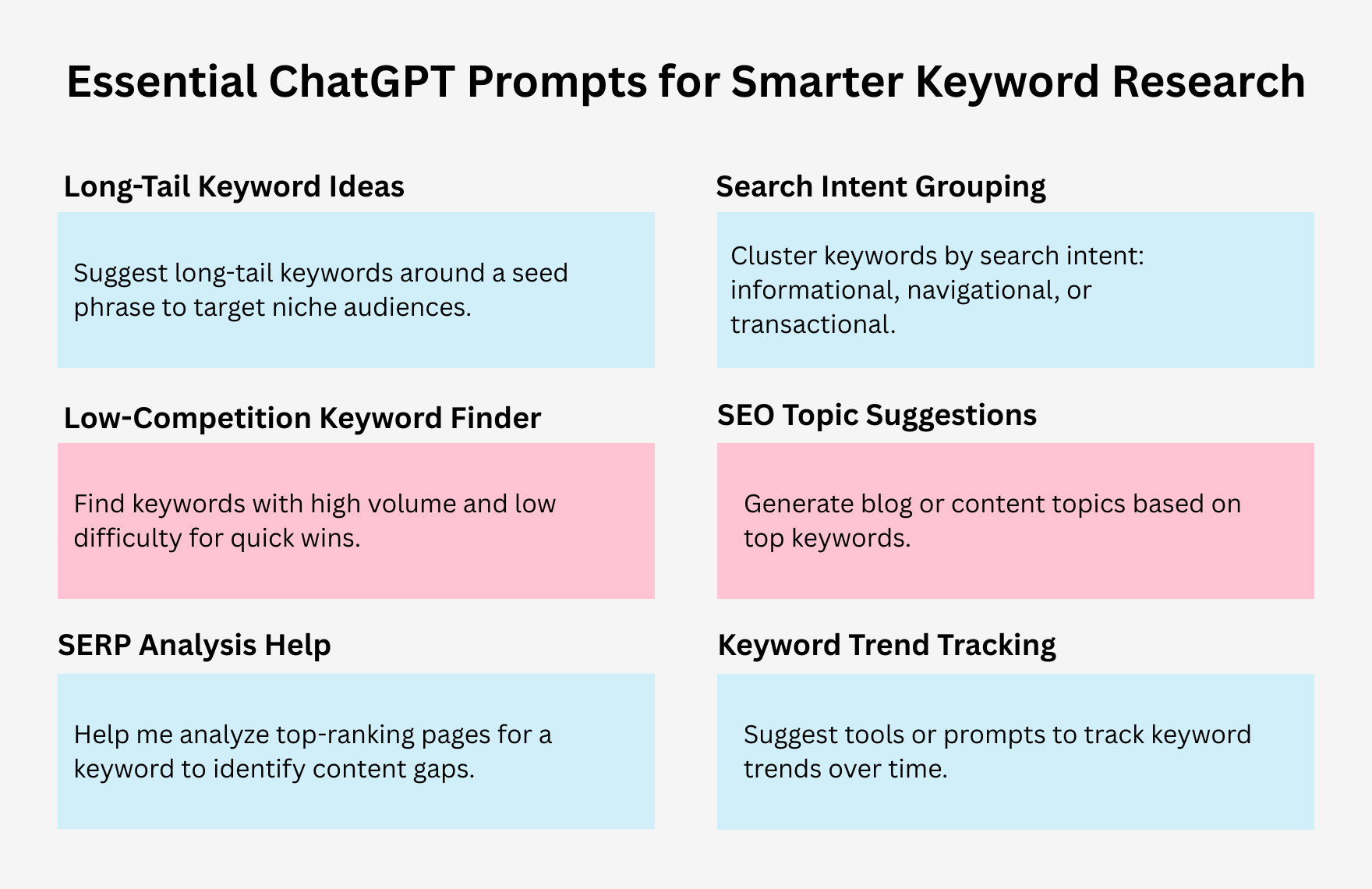
Test your understanding!
Imagine you're publishing a children's picture book about a shy dinosaur who learns to make friends.
- Find a popular, well-reviewed book in this niche on Amazon.
- How would you use the ASIN Seed Method from the video to find its keywords?
- How would you then prompt ChatGPT to generate more keywords based on what you found?
Show answer
- On Amazon, you might search for "dinosaur picture book friendship" and find a bestseller like "How Do Dinosaurs Say I'm Mad?"
- You would scroll down the book's product page to find its ASIN in the product details. Then you'd go to
asinc.com, paste in the ASIN, and run the reverse search to see what keywords it's ranking for. - Let's say the ASIN search revealed keywords like "dinosaur feelings book," "social skills for toddlers," and "first day of school." A good ChatGPT prompt would be: "Give me 20 more long-tail keywords for a children's picture book. The main keywords are 'dinosaur feelings book,' 'social skills for toddlers,' and 'shyness.' Focus on terms parents would search for related to emotional learning and making friends."
4. Finalizing Your 7 Keyword Slots: Rules and Strategy
Once you have a list of vetted keywords, it's time to choose your final seven. This requires strategy.
How to Choose Keywords for Your Amazon KDP Book
The Reedsy article contains a crucial final section on the rules and best practices for filling your keyword slots.
Please read the sections 'Optimize your keyword length' and 'Avoid Amazon’s keyword penalties'. These two sections contain the most important rules for finalizing your list. Focus on: Phrase Match: The concept that a long keyword like "spicy historical romance with dukes" also helps you rank for shorter searches like "historical romance" and "spicy romance." This is key to maximizing your 7 slots. What to Avoid: Pay close attention to the list of forbidden items, such as using competitor book titles, subjective claims ("best book"), or information already in your title/subtitle. This directly relates to your interest in following the rules and protecting your IP.
Additionally, remember the tip from the "Legal Naira TV" video: do not repeat words unnecessarily. If you use "cancer diet cookbook" in one slot, don't use "cancer diet recipes" in another. The algorithm already knows about "cancer" and "diet." A better use of the second slot would be something like "chemotherapy nutrition for patients," which introduces new, relevant concepts.
Conclusion
You now have a complete, professional process for identifying the optimal categories and keywords for your books. This is not a one-time task but a repeatable skill that will form the foundation of your discoverability strategy for every book you publish.
Key Takeaways:
- Categories and keywords are the core of your book's metadata and drive its visibility on Amazon.
- Category selection requires a strategic approach to avoid "ghost" and "duplicate" categories, and should be reinforced by your keyword choices.
- Keyword research is a cycle: Brainstorm (with AI), Research (on Amazon), Analyze (competitors via ASINs), and Validate (search volume vs. competition).
- Use long-tail keywords and "phrase matching" to maximize the power of your seven 50-character keyword slots.
- Always follow Amazon's guidelines to avoid penalties, such as not using competitor titles or repeating words from your title.
Preview of the Next Lesson:
Now that we've optimized your book's visibility within the Amazon ecosystem, the next strategic question is whether to commit to it exclusively. In the next lesson, we will address the learning outcome: Decide between KDP Select (exclusive) and wide distribution based on your publishing goals. We'll weigh the pros and cons of each path to help you make the right choice for your author business.