Recommended resources
The freely available resources this lesson will direct you to.
Hello! Welcome to the eighth module of your course, "The Art of the Edit."
In our last lesson, we focused on the crucial on-set decision of selecting takes. We used Walter Murch's "Rule of Six" to guide that choice, prioritizing emotion and story. We also touched on the idea that every shot has its own internal rhythm. Now, we move from the set into the editing suite, where you'll combine those carefully chosen shots into a cohesive whole.
This lesson is about creating the pulse of your film. We will explore how to apply principles of rhythmic editing to shape the emotional pacing of a sequence. You'll learn how the duration of each shot—how long it stays on screen before you cut to the next—is one of your most powerful tools for guiding the audience's feelings, whether you want to create frantic tension, quiet contemplation, or a surreal, dreamlike state.
This is where the footage truly comes to life, and where your artistic voice as a director finds one of its most potent forms of expression.
1. The Language of Rhythm: Pacing and Shot Duration
At its heart, rhythmic editing is about the speed and flow of the cuts. The primary metric we use to discuss this is Average Shot Length (ASL), which is simply the average duration of each shot in a given sequence. By consciously manipulating the ASL, you control the pace and, by extension, the emotional experience of your audience.
Let's begin with a video that introduces this fundamental concept and distinguishes it from simply cutting to music.
This video, 'Rhythm in Film Editing' by John Tindell, provides a clear and concise definition of rhythmic editing and explains how altering shot duration creates tension or calm.
Watch the video from the beginning until 03:19. Pay close attention to the definition of rhythm as the 'pacing of edits' and the explanation of how fast-paced and slow-paced editing are typically associated with different emotional states.
As the video explains, there's a general rule of thumb:
- Fast-paced editing (short shot duration) is associated with tension, action, anger, and excitement.
- Slow-paced editing (long shot duration) is associated with calm, romance, sadness, and reflection.
To solidify this, let's look at a textual resource that frames this concept as a key principle in the psychology of film editing.
Psychology of Film Editing: How Cuts and Pacing Shape Emotions
The article 'Psychology of Film Editing' by Nigel Camp provides a great summary of how Average Shot Length (ASL) functions as a control for pace. It also gives concrete examples of how different shot durations affect the viewer.
Please read the section titled 'Average Shot Length: Pacing Emotions Through Duration'. Focus on the breakdown of Short, Medium, and Long ASL and study the table of film examples to see how this plays out in different contexts.
This is the foundational grammar of rhythmic editing. However, knowing the rules is one thing; understanding why they work is what elevates technique into art.
2. The Psychology of Pacing: Giving Emotion Time to Breathe
Why do long takes often feel more profound or immersive? Why does our heart rate seem to rise during a rapid-fire sequence? The answer lies in how we as humans process emotion. An emotional response isn't instantaneous; it needs time to register and develop.
The following video from the celebrated channel Every Frame a Painting offers a brilliant exploration of this very idea.
How Does an Editor Think and Feel?
In 'How Does an Editor Think and Feel?', Tony Zhou explains why giving emotions time on screen is essential for making them believable. This is a core principle for shaping emotional pacing.
Watch the segment from 02:07 to 05:25. The key idea here is 'Emotions take time.' Notice the masterful comparison between the scenes from Star Wars and Ant-Man, which demonstrates how the duration of shots directly impacts our ability to feel a character's failure.
This concept is absolutely central to the kind of filmmaking you're interested in. For a director like Ingmar Bergman, whose work is built on psychological intensity, the long, lingering close-up is not an indulgence; it is a necessity. It gives the audience the space to look into a character's eyes and feel the complex, unspoken emotions brewing beneath the surface.

Conversely, rapid cuts deny the audience this time for reflection. They force the brain to process new information constantly, which can mimic the physiological experience of panic or excitement. The key is to match the rhythm of your editing to the emotional state you want to evoke.
3. A Masterclass in Rhythmic Tension
Now, let's see how a master filmmaker uses a dynamic range of rhythms within a single, iconic scene to create an unforgettable emotional arc of suspense, terror, and aftermath.
We'll return to the John Tindell video, this time to watch his brilliant analysis of the shower scene from Alfred Hitchcock's Psycho.
This analysis of the 'Psycho' shower scene is a perfect case study in how varying shot duration can manipulate audience tension.
Watch the segment from 03:19 to 08:58. Pay close attention to the visual timeline that illustrates the radical shifts in editing pace and how Tindell breaks the scene into three distinct rhythmic sections: before, during, and after the attack.
The rhythmic structure here is a work of genius:
- Before the Attack (Slow Rhythm): The average shot length is 5.5 seconds, with one shot held for a full 18 seconds right before the attack. This long, slow pace creates a false sense of security and builds suspense—the "calm before the storm."
- The Attack (Hyper-Fast Rhythm): Over just 22 seconds, there are 31 edits. The average shot length plummets to under a second. This brutal, fragmented, and disorienting rhythm mirrors the violence of the attack itself. The audience doesn't see a clear picture; they feel the chaos.
- After the Attack (Slow Rhythm Returns): The pace slows dramatically again, with an average shot length of 8.4 seconds. This releases the intense tension and forces the audience to sit with the horrifying aftermath, shifting the feeling from terror to dread.
This example proves that rhythmic editing isn't about finding one single pace for a scene, but about orchestrating changes in pace to tell an emotional story.
4. Rhythm in Experimental Film
While these principles are common in narrative cinema, they take on a different role in the experimental and performance-based work that inspires you. Here, rhythm isn't just a tool to support a story; it can be the story itself.
Your interest in artists like Rebecca Horn is key here. The rhythm of her performance pieces is often dictated by the physical constraints of her wearable sculptures—the slow, deliberate unfurling of mechanical wings, for example. The editing of a film documenting such a piece must honor and amplify that inherent rhythm.
Experimental film often manipulates time and pacing to explore perception and create abstract emotional experiences.
Experimental Animation: Pushing the Boundaries of the Medium
This article on experimental animation touches on how artists use time and rhythm not for narrative, but to explore perceptual phenomena. This directly applies to experimental live-action film as well.
Read the short subsection 'Time, Rhythm, and Perceptual Phenomena' under the 'Concept Development and Aesthetics' heading. Note how it talks about rhythmic loops and distorted continuity—techniques that move beyond simple fast/slow pacing.
For your work, this means you can think of rhythm in more abstract ways:
- Hypnotic Loops: You could repeat a short sequence of shots to create a trance-like or obsessive feeling.
- Sound-First Editing: As you want to incorporate your own music, you could create a piece of music first and let its rhythm dictate the entire visual edit. The cuts would be determined not by action, but by the musical structure.
- Juxtaposing Rhythms: You could cut between a very slowly paced, meditative sequence and a frantic, rapidly cut one to create a jarring emotional or conceptual contrast.
Practical Application: You are the Editor
Now it's your turn to apply these principles. Imagine you are editing a short, silent sequence. You have the following shots available, which you can use in any order and for any duration.
- Shot A: Close-up on a character's hands, nervously fiddling with a button on their sleeve.
- Shot B: Medium shot of the character sitting alone in a large, empty room.
- Shot C: Extreme close-up of the character's eyes, wide and staring at something off-screen.
- Shot D: A slow, smooth pan across old photographs on a dusty shelf.
- Shot E: A shaky, handheld shot looking out a window at a dark, empty street.
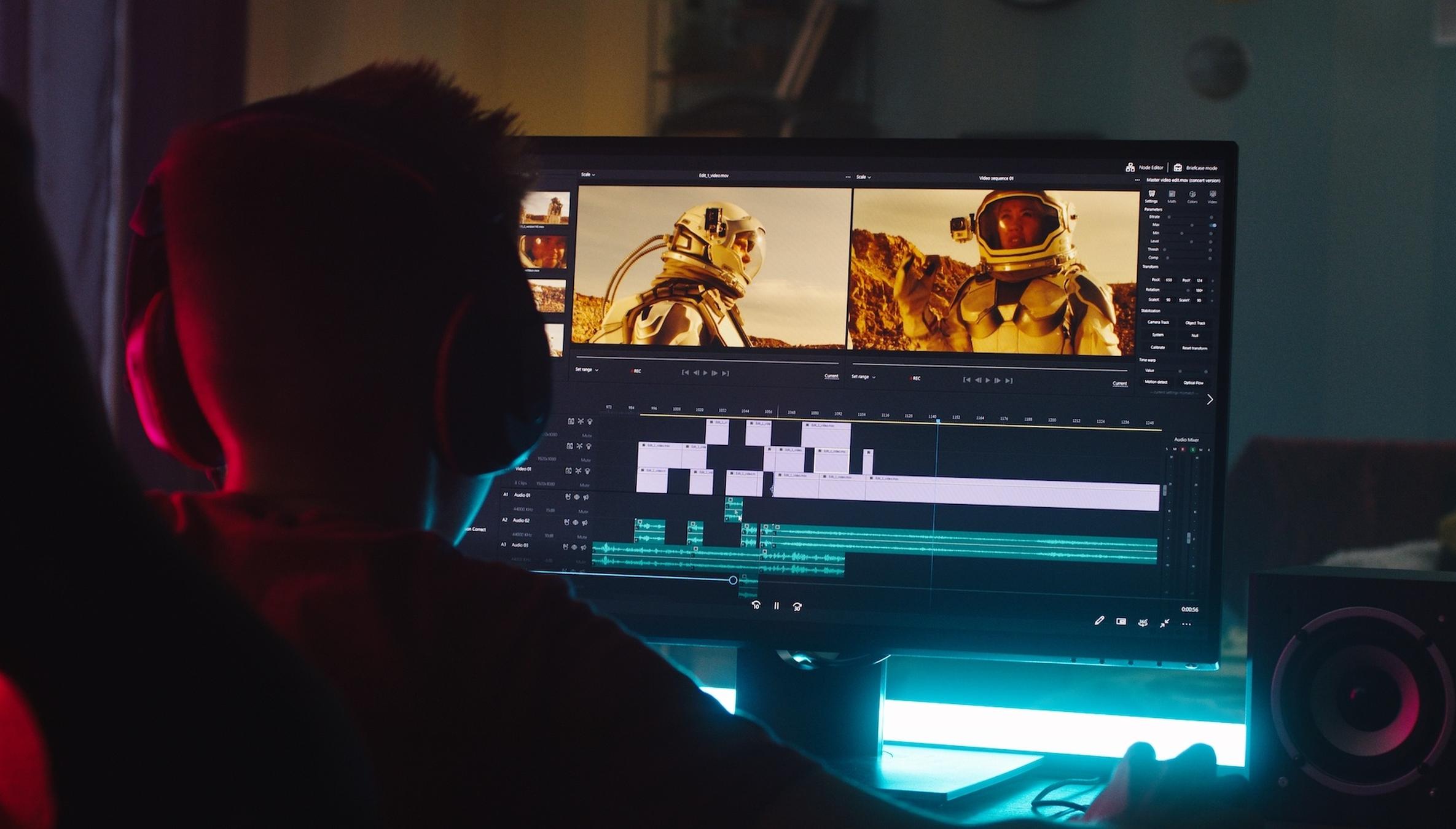
Your Task:
In your notes, briefly describe how you would edit these shots to create two completely different emotional moods.
- Mood 1: Imminent Panic. Describe the sequence of shots and, most importantly, the pacing. Would the shots be long or short? Would the rhythm be steady or escalate?
- Mood 2: Melancholic Memory. Describe how you would use the same shots but with a different rhythmic approach to create a feeling of sad, quiet reflection. How would your shot durations change? Which shots might you linger on?
Think about how changing the timing can completely transform the meaning.
Conclusion
Today, we've dissected the powerful and often invisible art of rhythmic editing. You've learned that the duration of a shot is never arbitrary; it is a deliberate choice that shapes the emotional journey of your audience.
Key Takeaways:
- Rhythm is Pacing: The core of rhythmic editing is the manipulation of shot duration (Average Shot Length).
- Pacing Shapes Emotion: Generally, fast cutting creates tension and excitement, while slow cutting allows for reflection and builds atmosphere.
- Emotions Need Time: To make an on-screen emotion feel real, you must often give the audience time to experience it through longer takes.
- Rhythm Tells a Story: Dynamic shifts in pace within a scene can create a compelling emotional arc of tension and release.
- Rhythm can be Abstract: In experimental film, rhythm can be used to create hypnotic, poetic, or purely perceptual experiences, untethered from traditional narrative.
What's Next?
In this lesson, we focused on when you cut. In our next lesson, we will focus on what you cut to. We will explore how to use juxtaposition and montage to create new meaning through visual association. You'll learn how placing two different images next to each other can spark ideas and emotions that neither image possesses on its own—a technique at the very heart of cinematic language.