Recommended resources
The freely available resources this lesson will direct you to.
Welcome back. In our last lesson, we deconstructed the 5-step model of IFRS 15, emphasizing how IFRS uses principles to ensure financial reporting reflects economic reality—in that case, the true pattern of revenue generation.
Today, we continue exploring the core IFRS standards by tackling IFRS 16 - Leases. This standard is another powerful example of the "substance over form" principle. Before IFRS 16, a company could lease entire buildings, fleets of vehicles, or essential machinery for many years, and these significant obligations might not appear on its balance sheet at all. This practice, known as off-balance sheet financing, reduced the transparency of a company's financial position.
Our learning objective for this lesson is to describe the core principle of IFRS 16 for lease accounting and its impact on the balance sheet. By the end of this session, you will understand how IFRS 16 fundamentally changed lease accounting to provide a more faithful representation of a company's assets and liabilities.
1. The Problem: Off-Balance Sheet Financing
Under the previous standard, IAS 17, leases were classified into two types for the lessee (the entity leasing the asset):
- Finance Leases: These were leases that transferred substantially all the risks and rewards of ownership to the lessee. They were treated like a purchase financed by a loan, so an asset and a liability were recorded on the balance sheet.
- Operating Leases: These were all other leases. They were treated like simple rentals. The company just recorded a "rent expense" on its income statement, and no asset or liability appeared on the balance sheet.
The problem was that many long-term, economically significant leases were structured as operating leases to keep large liabilities off the balance sheet, making companies appear less indebted than they truly were.
To understand this problem and how IFRS 16 was designed to solve it, please watch the following video.
Introduction to IFRS 16 (Leases)
This video, 'Introduction to IFRS 16 (Leases)' from Edspira, clearly explains the motivation behind the new standard. It highlights why the International Accounting Standards Board (IASB) felt a change was necessary.
Please watch the video from the beginning to 00:49 and then from 01:21 to 02:54. Focus on the explanation of 'off-balance sheet financing' and the goal of increasing transparency.
As the video explained, the primary goal of IFRS 16 was to bring transparency to lease obligations. It achieves this with one powerful, central idea.
2. The Core Principle: A Single Model for Lessees
IFRS 16 eliminates the classification of leases as either 'operating' or 'finance' for the lessee. Instead, it introduces a single lessee accounting model.
The core principle is that at the commencement of a lease, the lessee recognizes:
- A Lease Liability: This is the obligation to make lease payments, measured at the present value of the future payments.
- A Right-of-Use (ROU) Asset: This represents the lessee's right to use the underlying asset for the duration of the lease term.
In essence, the standard says that having the right to control and use an asset for several years is an economic asset, and the corresponding obligation to pay for that right is an economic liability. Both should be on the balance sheet.
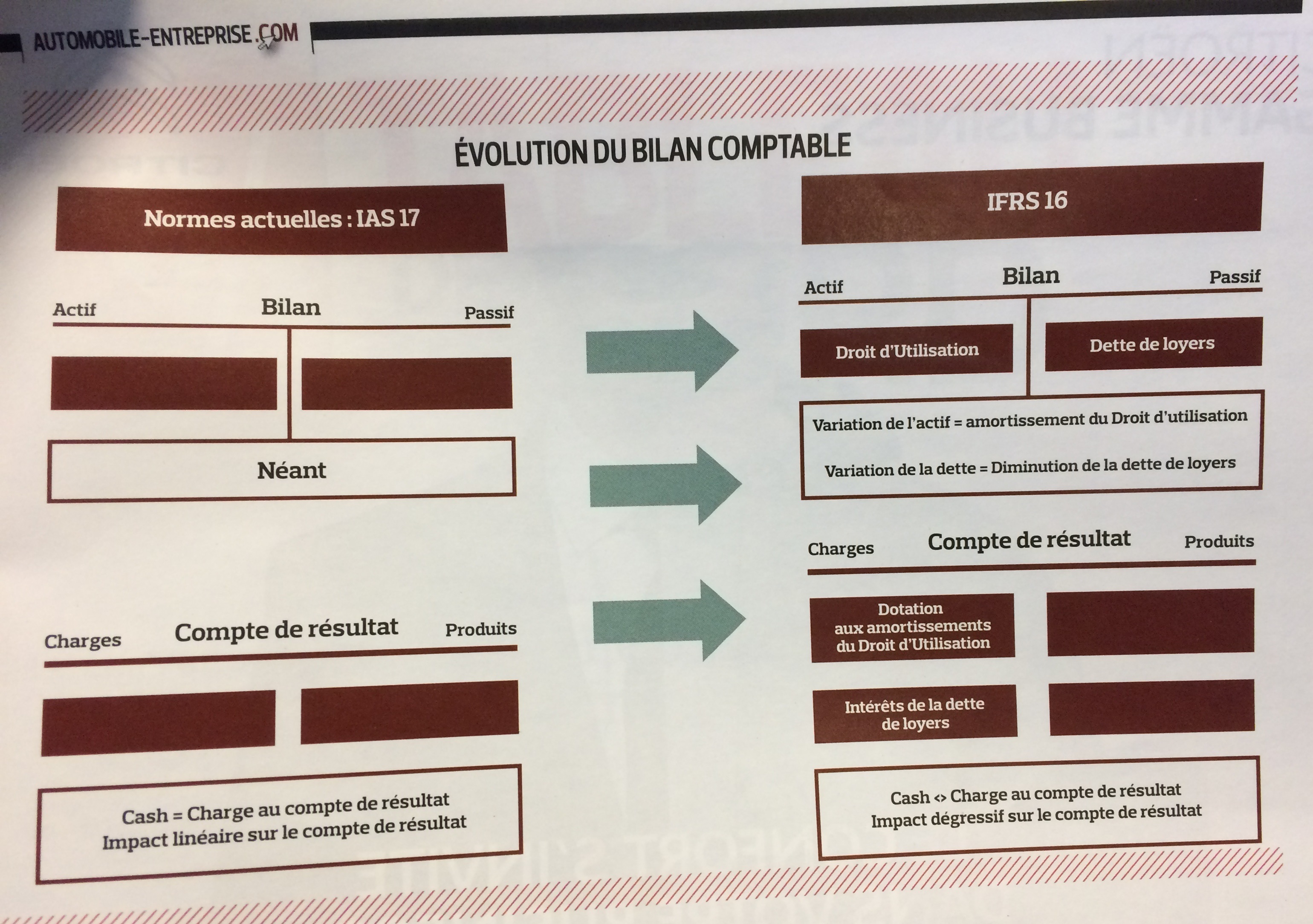
The following image provides a clear visual comparison of the balance sheet before and after this change.

To solidify your understanding of these two new elements, please review the following short video segment and reading.
Introduction to IFRS 16 (Leases)
Let's return to the Edspira video, which provides a concise explanation of the ROU asset and lease liability.
Please watch the segment from 00:49 to 01:21. This directly explains the two components that are now brought onto the balance sheet.
Now, let's formalize this with a brief reading.
IFRS 16 Leases: Summary, Example, Journal Entries, and ...
The article 'IFRS 16 Leases: Summary, Example...' from FinQuery gives a professional summary of this single model approach. This will help you get familiar with the formal terminology.
Please read the subsection titled 'IFRS 16 lessee lease classification.' Focus on how it describes the single model approach and the capitalization of leases.
Exceptions: The standard includes two practical exemptions for this recognition requirement:
- Leases with a term of 12 months or less.
- Leases where the underlying asset is of low value (e.g., a personal computer or office furniture).
For these leases, a company can choose to account for them as a simple expense, similar to the old operating lease method.
3. The Impact on Financial Statements
Bringing nearly all leases onto the balance sheet has significant consequences for a company's financial statements and the ratios derived from them.
Impact on the Balance Sheet
As shown in the image above, the most direct impact is the increase in both assets and liabilities.
- Total Assets Increase because of the newly recognized Right-of-Use (ROU) assets.
- Total Liabilities Increase because of the newly recognized Lease Liabilities.
This has a major effect on key financial ratios:
- Leverage Ratios: Ratios like Debt-to-Equity or Debt-to-Assets will increase, making the company appear more leveraged.
- Liquidity Ratios: The Current Ratio (Current Assets / Current Liabilities) may worsen, as the current portion of the lease liability increases current liabilities without a corresponding increase in current assets.
Impact on the Income Statement
The expense profile also changes significantly.
- Before IFRS 16 (Operating Lease): A single, often straight-line, "rent expense".
- After IFRS 16: The single rent expense is replaced by two separate expenses:
- Depreciation Expense on the ROU asset (usually straight-line over the lease term).
- Interest Expense on the lease liability (which is higher in the early years of the lease and decreases over time as the liability is paid down).
This separation leads to a "front-loading" of expenses and also changes key performance metrics like EBITDA.
The following image and video explain this dual impact on the balance sheet and income statement.
Introduction to IFRS 16 (Leases)
The Edspira video explains these financial statement effects in detail.
Watch the segment from 02:54 to 08:03. Pay close attention to the explanation of: Higher assets and liabilities. The 'front-loading' of expenses (depreciation + interest). The impact on EBITDA (Earnings Before Interest, Taxes, Depreciation, and Amortization).
Test your understanding!
An SME in Casablanca signs a 7-year lease for its new office space. Previously, under Moroccan GAAP which was similar to IAS 17, this would have been an 'off-balance sheet' operating lease. If the company were to now report under IFRS 16, what would be the two main impacts on its balance sheet? How would this likely affect its debt-to-equity ratio?
Show answer
- Balance Sheet Impact: The company's balance sheet would show a significant increase in both assets and liabilities. It would recognize a 'Right-of-Use Asset' representing its right to use the office, and a 'Lease Liability' representing its obligation to make payments.
- Ratio Impact: Since total debt (liabilities) increases while equity remains unchanged upon initial recognition, the company's debt-to-equity ratio would increase, making the company appear more financially leveraged.
4. A Real-World Moroccan Example: Attijariwafa Bank
To see how this theory applies in the Moroccan context, we can look at the financial reports of a major Moroccan company. Attijariwafa Bank, like all listed companies, adopted IFRS 16 in 2019. Their annual report provides a perfect real-world illustration.
Attijariwafa bank - RESULTS at 31 December 2019
This extract is from the 2019 annual report of Attijariwafa Bank. It shows exactly how the bank described the transition to IFRS 16 and how the new items appear in its financial statements. This directly connects the IFRS theory to professional practice in Morocco.
Please review the following three parts of the report: Read the section titled 'IFRS 16 Lease contracts' (under the main heading 'Policies adopted by Attijariwafa bank'). This shows how the bank explains the standard's core principle. Look at the two small tables titled 'Right-of-use asset' and 'Lease liability' in the middle of the page. Notice how the 'Of which right-of-use' and 'Of which lease liability' lines show balances for 2019 but are zero for 2018 (before adoption). Finally, look at the table 'Detail of lease contracts’ expenses'. This shows the new expense breakdown: 'Interests expenses on lease liability' and 'Right-of-use amortisation', replacing a simple rent expense.
This report is a concrete demonstration of IFRS 16 in action. You can see the new line items appearing on the balance sheet with values in the billions of Moroccan Dirhams, fundamentally changing the company's reported financial position.
Conclusion
You have now grasped the transformative impact of IFRS 16. By moving away from a rules-based classification to a single model based on the principle of control, the standard ensures that a company's balance sheet provides a complete picture of its resources and obligations.
Key Takeaways:
- The core principle of IFRS 16 is to recognize almost all leases on the balance sheet, eliminating the distinction between operating and finance leases for the lessee.
- This is achieved by recording a Right-of-Use (ROU) Asset and a Lease Liability.
- The impact on the balance sheet is a significant increase in both total assets and total liabilities, which affects key leverage and liquidity ratios.
- The impact on the income statement is the replacement of a single rent expense with separate depreciation and interest expenses, leading to a front-loaded expense profile.
Preview of the Next Lesson:
We will continue our exploration of advanced IFRS topics by turning to IFRS 9 - Financial Instruments. This standard governs how companies account for items like loans, investments in stocks and bonds, and derivatives. It's another cornerstone of modern financial reporting that is crucial for understanding the balance sheets of banks and large corporations.