Recommended resources
The freely available resources this lesson will direct you to.
Welcome back. In our last lesson, you mastered the construction and analysis of the functional balance sheet, a sophisticated tool within Moroccan GAAP for assessing a company's financial equilibrium. You learned to look beyond the legal presentation of accounts to understand the underlying economic and financial structure.
Today, we take that mindset a step further and enter the global arena. As companies in Morocco increasingly interact with international partners, investors, and capital markets, fluency in the global language of accounting is essential. This lesson marks your formal introduction to International Financial Reporting Standards (IFRS).
Our objective is to explain the purpose of IFRS and the key conceptual differences between the IFRS framework and the Moroccan Generally Accepted Accounting Principles (GAAP), known as the Code Général de la Normalisation Comptable (CGNC). This is a high-level introduction focused on the core philosophy, not a detailed rule-by-rule comparison. Understanding these fundamental shifts in perspective is the first and most critical step toward mastering IFRS.
1. The Purpose of IFRS: A Global Language for Business
Why do we need another set of accounting standards when the CGNC already provides a comprehensive framework? The answer lies in one word: globalization.
As a Moroccan company seeks funding from a German bank, acquires a supplier in Asia, or is evaluated by an American investment fund, a local accounting language becomes a barrier. IFRS was developed to tear down these barriers by creating a single, high-quality, and globally accepted set of accounting standards.
The core philosophy of IFRS is defined in its Conceptual Framework. To understand the purpose of IFRS, you must first understand the purpose of this framework.
The Conceptual Framework for Financial Reporting
This video from Kaplan UK explains the purpose of a conceptual framework in financial reporting. Although it's not specific to Morocco, it perfectly captures the underlying philosophy of IFRS, which is crucial for our discussion.
Please watch the following two segments: From 00:43 to 02:00, which answers the question: 'Why do we need a conceptual framework?' From 05:36 to 09:31, which details the primary objective of financial reporting under the framework. As you watch, focus on two key questions: Who are the primary users of financial statements, and what is the main goal of the information provided to them?
As the video explains, the primary objective of IFRS financial reporting is clear and specific:
To provide financial information that is useful to existing and potential investors, lenders, and other creditors in making decisions about providing resources to the entity.
This focus on capital providers is the philosophical bedrock of IFRS. The information is tailored to help them assess the company's prospects for future net cash inflows and evaluate management's stewardship of the company's resources. Keep this primary user in mind, as it explains many of the differences we will see later.
2. Two Accounting Worlds: Rules vs. Principles
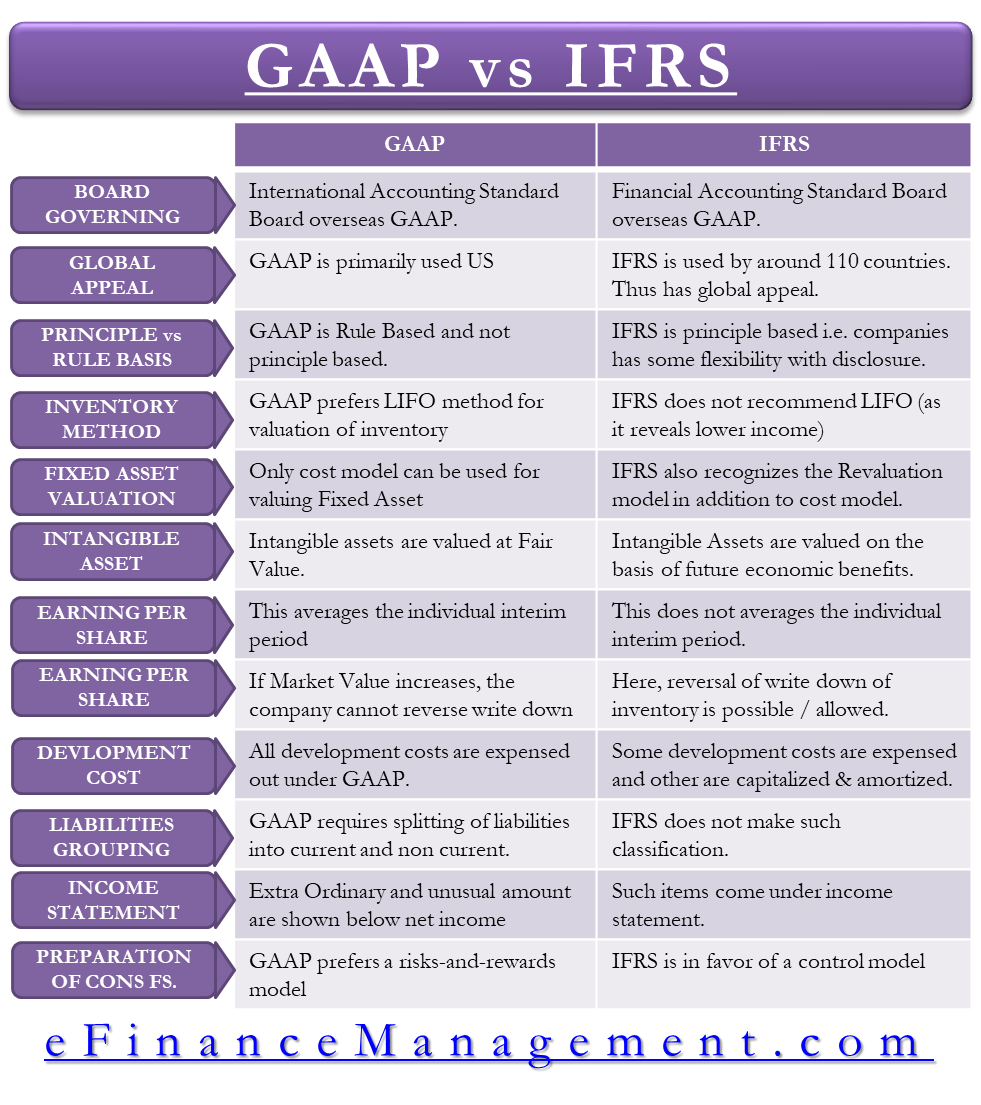
The differences between CGNC and IFRS are not just a collection of random rule variations; they stem from belonging to two different accounting traditions.
- The Continental European Tradition (Franco-Germanic): This tradition, which heavily influences the CGNC, is characterized by a strong link to law and taxation. Accounting rules are often detailed and prescriptive (
rule-based), with a primary focus on creditor protection and providing a reliable basis for tax assessment. Prudence and verifiability through historical cost are paramount. - The Anglo-Saxon Tradition: This tradition, from which IFRS originates, is oriented towards capital markets. It relies on a conceptual framework and professional judgment (
principle-based). The main goal is to provide relevant information to investors to make economic decisions.
[Maroc] L'image fidèle d'entreprises : d'une approche ...
The following article, though academic, perfectly contrasts these two philosophies. It also explores the concept of the 'true and fair view' (image fidèle) in both contexts.
Please read the section I- Analyse conceptuelle, focusing specifically on part 3. Interactions entre l’image fidèle et les courants comptables. Pay close attention to the table comparing the European and Anglo-Saxon accounting contexts. This table is a concise summary of the conceptual divide.
The table in the article you just reviewed highlights the fundamental opposition: CGNC is built for conformity, creditor information, and historical costs. IFRS is built for investor information, temporal comparability, and reflecting contemporary economic values.
3. Core Conceptual Differences: IFRS vs. CGNC
Now let's translate this philosophical divide into the most important conceptual differences between IFRS and the Moroccan CGNC. We will focus on three pillars.
Pillar 1: Primary User and Purpose
- CGNC: Aims to serve a broad range of users, including management, employees, the government (for tax and national statistics), and creditors. This leads to a more rigid, standardized format designed for legal compliance and tax calculation. The close link between accounting and tax law (
la connexion comptabilité/fiscalité) is a defining feature of the Moroccan system. - IFRS: As established, the primary users are investors and creditors. The main purpose is decision-usefulness for capital allocation. This means the standards prioritize information that is relevant to predicting future performance, even if it is less verifiable than historical data. Tax considerations are secondary; the financial statements should reflect economic reality, and tax adjustments are made separately.
Pillar 2: Substance Over Form (Prééminence de la substance sur la forme)
This is arguably the most significant conceptual shift.
- CGNC: Tends to be legalistic. The accounting treatment of a transaction often follows its legal form and ownership.
- IFRS: Mandates that the economic substance of a transaction must take precedence over its legal form. If the economic reality differs from the legal paper trail, the accounting must reflect the reality.
Example: Leases (Crédit-bail)
You are already familiar with re-stating leases from our lesson on the Bilan Fonctionnel. Under IFRS, this "re-statement" is the standard accounting treatment.
- Under traditional CGNC, a company using a machine via a
crédit-baildoes not own it legally, so it doesn't appear on the balance sheet. - Under IFRS 16, if the company controls the asset and will obtain economic benefits from its use, it must recognize a "right-of-use" asset and a corresponding lease liability on its balance sheet. The economic reality of having a long-term asset and a long-term obligation is reflected directly in the primary financial statements.

Pillar 3: Fair Value vs. Historical Cost (Juste Valeur vs. Coût Historique)
- CGNC: Heavily relies on the historical cost principle. Assets are recorded at their original purchase price. This value is objective and verifiable, aligning with the principle of prudence. Revaluations are rare and highly regulated.
- IFRS: Embraces the concept of fair value for many types of assets and liabilities. Fair value is the price that would be received to sell an asset or paid to transfer a liability in an orderly transaction between market participants. The IFRS framework argues that fair value, while sometimes subjective, provides more relevant and timely information for investors' decisions than outdated historical costs.
Example: Property, Plant, and Equipment (PPE)
Under IFRS (IAS 16), a company can choose to periodically revalue its land and buildings to their current market value, reporting the increase in equity. Under CGNC, these assets would typically remain on the books at their original cost less depreciation.
Test your understanding!
A Moroccan SME, which prepares its accounts under CGNC, is seeking a large investment from an international private equity fund. The fund's analyst is confused why the company's prime real estate, a factory bought 20 years ago, is valued so low on the balance sheet compared to its current market value.
As the company's accountant, how would you briefly explain this difference, referencing the concepts of CGNC and IFRS?
Show answer
You could explain it as follows:
"Our financial statements are prepared according to Moroccan accounting standards (CGNC), which are based on the historical cost principle. This means the factory is recorded at its original purchase price from 20 years ago, less accumulated depreciation. This method is prioritized for its objectivity and prudence.
International Financial Reporting Standards (IFRS), which you may be more familiar with, operate differently. IFRS allows for a revaluation model using fair value. Under IFRS, we would have the option to revalue the factory to its current market price, which would present a more current, but less historically verifiable, valuation. This difference reflects the CGNC's focus on prudence and verifiability versus the IFRS focus on providing the most relevant information for investor decisions."
4. Impact on Financial Statements
These conceptual divergences lead to very tangible differences in the presentation of financial statements.
A Comparison between IFRS and Moroccan Accounting ...
This academic paper offers a direct comparison of the financial statements under IFRS and Moroccan GAAP. It provides concrete examples of how the philosophical differences manifest in practice.
Please read the following sections of the paper: 3. Balance sheet, 4. Income statement, 5. Cash flow statements, and the Conclusion. Focus on the structural differences described for each statement.
Let's summarize the key presentation differences you've just read about:
| Financial Statement | Moroccan GAAP (CGNC) | IFRS | Conceptual Reason |
|---|---|---|---|
Balance Sheet (Bilan) |
Presented by function: Actif immobilisé (Fixed Assets), Actif circulant (Current Assets), Financement permanent (Permanent Financing), etc. |
Classified by liquidity: Current vs. Non-Current assets and liabilities. | IFRS's liquidity-based view is considered more useful for assessing short-term risk and financial flexibility for investors. |
Income Statement (CPC) |
Expenses are presented by nature (e.g., purchases, external charges, staff costs). | Allows a choice to present expenses by nature OR by function (e.g., cost of sales, distribution costs, administrative costs). | Presentation by function can provide a clearer view of the company's operational profitability (gross margin), which is highly relevant for investors. |
| Statement of Flows | Requires a Funds Flow Statement (Tableau de Financement), which explains changes in the functional balance sheet items (FRNG, BFR). |
Requires a Statement of Cash Flows, which classifies actual cash movements into Operating, Investing, and Financing activities. | IFRS prioritizes cash, as it is the ultimate source of returns to investors. The CGNC's Tableau de Financement is more of a financial structure analysis tool. |
Conclusion
Today, you have taken a crucial first step into the world of international accounting. You have moved beyond local rules to understand the global principles that guide modern financial reporting.
Key Takeaways:
- The primary purpose of IFRS is to provide decision-useful information to investors, lenders, and other creditors, creating a common accounting language for global capital markets.
- IFRS is a principle-based system that prioritizes economic reality over legal form (substance over form) and often uses fair value to provide more relevant information.
- Moroccan GAAP (CGNC) is a more rule-based system, heavily influenced by legal and tax requirements, and strongly rooted in the historical cost principle for prudence and verifiability.
- These conceptual differences result in significant variations in financial statement presentation, including the structure of the balance sheet, the classification of expenses, and the type of flow statement required.
Preview of the Next Lesson:
Having grasped the 'why' behind IFRS and its core philosophical differences with CGNC, we are now ready to begin exploring specific standards. In the next lesson, we will perform our first deep dive into a major IFRS standard: IFRS 15 - Revenue from Contracts with Customers. You will learn its 5-step model for revenue recognition, a critical process for any business.