Recommended resources
The freely available resources this lesson will direct you to.
Hello! Welcome to the final lesson of our module on building sustainable learning habits.
In our last lesson, we focused on accountability, exploring how partners and systems can provide the external structure needed to maintain consistency. You now know how to build a learning habit and how to create a support system to stick with it.
But just showing up, while crucial, isn't the whole story. To ensure your efforts lead to meaningful growth and not just repetition, you need to systematically increase the challenge. This is where today's topic, progressive overload, comes in. This principle is key to moving beyond basic retention and towards confident application—one of your primary goals.
Your learning outcome for this lesson is to apply the principle of 'progressive overload' to gradually increase the difficulty and scope of your learning. We will explore what this principle means, how to find the right level of difficulty, and concrete ways to apply it to your learning in UX, coding, and data analysis.
What is Progressive Overload?
The term "progressive overload" originates from physical fitness. It's the fundamental principle that to get stronger, you must continually increase the demands placed on your muscles. You lift a slightly heavier weight, run a slightly longer distance, or perform a more complex movement. Your body adapts to this new stress, and what was once difficult becomes the new normal.
This cycle of stress, recovery, and adaptation is not unique to muscles. Your brain works in a very similar way.
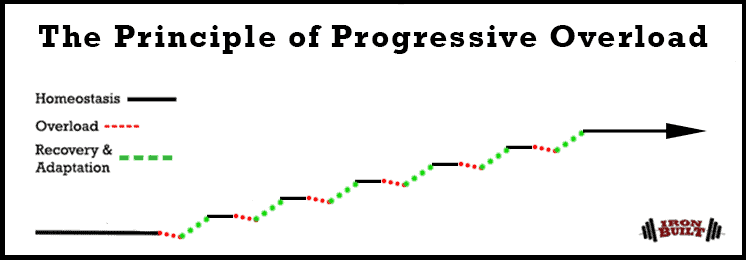
When you push your cognitive limits, your brain responds by strengthening neural connections. This process, known as neuroplasticity, is the physical basis of learning.
To understand this better, let's watch a short video that explains the science behind how practice, especially challenging practice, changes your brain.
How to Deliberate Practice | Routines and Examples
This video, 'How to Deliberate Practice,' explains the neurological basis for skill improvement. While it discusses 'deliberate practice,' a concept we'll cover next, its explanation of neuroplasticity and myelin is a perfect introduction to why progressive overload works.
Please watch the segment from 01:25 to 02:32. Focus on how the brain adapts and reinforces neural pathways through a substance called myelin when you engage in focused effort.
As the video explains, by challenging your brain, you are telling it which circuits are important. It responds by insulating these pathways with myelin, making them faster and more efficient. This is the biological mechanism behind "getting good" at something.
The "Just-Right" Challenge: Avoiding Comfort and Panic
Without progressive overload, you hit a learning plateau. You might be practicing consistently, but if the work isn't challenging you, you're essentially running in place. This is why many people can have years of "experience" in a skill but don't actually improve much after the initial learning phase.
The key is to find the sweet spot of difficulty. This spot lies between work that is too easy (the Comfort Zone) and work that is too difficult (the Panic Zone). This optimal space is often called the Learning Zone or the "Zone of Proximal Development."

But how do you know if you're in the learning zone? It should feel effortful. If learning feels easy and seamless, you might be in the comfort zone, passively reviewing information rather than actively constructing knowledge.
This is a common trap called the "illusion of competence." Let's explore this idea further.
Justin Sung's video 'Learn To Learn' has a fantastic section on what he calls the 'misinterpreted effort hypothesis.' It explains why we often mistake feelings of ease for effective learning, when in fact, effort is a sign that genuine learning is happening.
Watch the segment from 14:00 to 16:44. Pay close attention to the idea that effortful learning leads to better retention and understanding, even if it feels less productive in the moment.
The main takeaway is that you should learn to embrace this feeling of productive struggle. It's a sign that your brain is being challenged enough to adapt and grow.
Deliberate Practice: The Framework for Progressive Overload
Progressive overload is the what; deliberate practice is the how. Deliberate practice is a highly structured and purposeful form of practice aimed at rapid improvement. A core tenet of deliberate practice is consistently working at the edge of your abilities.
The following article provides an excellent, in-depth look at this concept. We will focus on the sections that give you concrete tools for calibrating difficulty.
The Power of Deliberate Practice
The article 'The Power of Deliberate Practice' by Moxie Institute provides a comprehensive guide. We'll focus on the part that directly addresses today's topic.
Please read three specific parts of this article: Start at the heading 'Working at the Edge of Your Abilities' and read the 'Challenge Calibration Framework.' Next, find the heading 'Avoiding Discomfort and Difficulty' and read about the 'Discomfort Diagnostic.' Finally, in the FAQ section, read the answer to the question 'How do I find the right balance between challenging myself and getting frustrated?' Focus on the practical heuristics provided, like the 60-80% success rate and the discomfort scale.
From the reading, you now have two excellent tools for calibrating your learning sessions:
- The 60-80% Success Rate: Aim for tasks where you succeed about 60-80% of the time. If you're succeeding more than 80% of the time, the task is likely too easy. If you're succeeding less than 60% of the time, it's likely too hard and will lead to frustration.
- The Discomfort Diagnostic: On a scale of 1-10, rate the "discomfort" of your practice session. The sweet spot for growth is typically in the 6-8 range—challenging but not overwhelming.
These are not exact sciences, but they are useful mental models for ensuring your practice remains productive.
How to Increase Difficulty: Practical Strategies
Knowing you need to increase the difficulty is one thing; knowing how to do it is another. Here are several concrete strategies you can use, with examples relevant to your interests in UX and data analysis. The article "How to Learn Skills Quickly" provides a great overview of these methods in practice.
1. Increase Complexity
Start with isolated components and gradually combine them into more complex systems.
- Skill: Learning a new UI design tool (e.g., Figma variables).
- Progression:
- Level 1: Create a single color variable.
- Level 2: Create a full palette of color and spacing variables.
- Level 3: Build a single component (like a button) using these variables.
- Level 4: Build a complex, multi-state component (like a dropdown menu) that relies on nested variables.
2. Add Constraints
Force yourself to work under new limitations, which spurs creative problem-solving.
- Skill: Wireframing a new user flow.
- Progression:
- Level 1: Sketch the flow with no limitations.
- Level 2: Sketch the same flow in half the time.
- Level 3: Design the flow for a much smaller screen size (e.g., a smartwatch).
- Level 4: Design the flow without using a common UI pattern (e.g., design a login flow without using text input fields).
3. Increase Scope
Expand the breadth of the problem you are solving. This is the core idea behind project-based learning.
- Skill: Learning Python for data analysis.
- Progression (from the "Learn Skills Quickly" article):
- Week 1: Build a simple calculator application.
- Week 2: Build a to-do list that saves data to a file.
- Week 3: Build a web scraper that collects data and visualizes it.
- Week 4: Build a personal website with a Python-powered backend.
4. Move to Higher-Order Thinking
Transition from simply recalling information to analyzing, evaluating, and creating with it. This is perhaps the most powerful lever for deepening understanding.
Let's return to Justin Sung's video. He provides an excellent framework for thinking about 'orders of learning,' which perfectly maps onto this strategy.
Watch the segment from 51:07 to 57:15. Focus on the distinction between 'lower-order' (isolated facts) and 'higher-order' (integrated knowledge) learning. Notice how higher-order thinking forces you to build mental models and schemas, which strengthens memory.
Here's how you can apply this to a UX concept like Jakob's Law:
- Lower-Order (Remembering): "State Jakob's Law." (Answer: Users prefer your site to work the same way as all the other sites they already know.)
- Application: "Review this checkout page and identify one element that violates Jakob's Law."
- Analysis: "Compare the onboarding flows of two competing apps. Which one better adheres to Jakob's Law and why?"
- Higher-Order (Evaluation/Creation): "A client wants to use a novel, unconventional navigation pattern for their e-commerce site. Write a brief argument, citing Jakob's Law, to persuade them to use a more standard pattern, while also proposing a small, low-risk area where they could experiment with their new idea."
Test your understanding!
Let's put this into practice. Choose a skill you want to learn or improve—this could be a specific UX methodology, a Figma feature, or a concept in data analysis.
Outline a 4-step progressive overload plan for it. For each step, clearly state the task and which method of increasing difficulty you are using (e.g., increasing complexity, adding a constraint, etc.).
Example for 'Learning CSS Flexbox':
- Step 1 (Lower-Order): Read the documentation and create a simple row of 3 boxes using
display: flex. - Step 2 (Increase Complexity): Re-create a simple web page header with a logo on the left and navigation links on the right.
- Step 3 (Add Constraint): Re-create a complex, responsive pricing card layout from a popular website in under 1 hour.
- Step 4 (Higher-Order/Increase Scope): Build a fully responsive photo gallery from scratch using Flexbox, and write a short blog post explaining why Flexbox was the right tool for the job compared to CSS Grid.
Now, it's your turn.
Show answer
There are many possible answers, but here is a strong example for "Learning to Conduct User Interviews."
- Step 1 (Lower-Order): Read a book chapter on user interviewing and write a script of 10 questions for a hypothetical product.
- Step 2 (Increase Complexity): Conduct a mock interview with a friend or colleague using your script, focusing on not asking leading questions.
- Step 3 (Add Constraint/Change Context): Conduct a real (but low-stakes) interview with a user for a personal project, but you are not allowed to look at your script. You must rely on a few bullet points and active listening.
- Step 4 (Higher-Order/Analysis): After conducting three interviews, synthesize the findings into a "Jobs to Be Done" framework and present your top three insights to a stakeholder (or a practice partner), justifying your conclusions with direct quotes.
Conclusion
Today, you've learned to connect the dots between habit formation and skill mastery. A consistent learning habit is the engine, but progressive overload is the steering wheel, directing that energy toward tangible growth. By intentionally pushing yourself into the "learning zone," you ensure that your practice time translates into deeper understanding and more confident application.
Key Takeaways:
- Progressive overload is the principle of gradually increasing the difficulty of a task to stimulate adaptation and avoid plateaus.
- Effective learning should feel effortful. This "productive struggle" is a sign that your brain is building stronger connections.
- Calibrate the difficulty by aiming for a 60-80% success rate or a 6-8/10 discomfort level.
- You can systematically increase the challenge by increasing complexity, adding constraints, expanding the scope, or moving to higher-order thinking.
What's Next?
With this lesson, you've completed the module on building sustainable learning habits. You now have the tools to establish a routine, stay accountable, and ensure your practice is effective.
Now, it's time to zoom out. In our next module, "Planning a Learning Project," we will take all the principles we've discussed—from memory and retention to habits and progressive overload—and integrate them into a cohesive plan for tackling a substantial learning goal from start to finish.