Recommended resources
The freely available resources this lesson will direct you to.
Welcome to the next step in our sound design journey. In our last lesson, we gave our sound a distinct personality by using filter resonance and drive to add aggression and vocal-like qualities. We now have a harmonically rich, characterful sound source. However, it's still a continuous drone—not yet a playable, musical element.
Today, we will address that by defining the sound's life cycle in time. This lesson focuses on using Serum's primary amplitude envelope (ENV 1) to sculpt its core dynamic shape. You will learn how to design ADSR settings to create the classic lead archetypes—plucky, sustained, and percussive—and understand why specific settings are crucial for making leads work in the context of a dense, high-tempo DnB track.
The Blueprint of Dynamic Shape: The ADSR Envelope
As an experienced Serum user, you're familiar with the ADSR (Attack, Decay, Sustain, Release) envelope. In this lesson, we're focusing on its most fundamental role: controlling the overall amplitude (volume) of the sound via ENV 1. Think of it as the master blueprint for your sound's volume from the moment a MIDI note begins to long after it ends.
Every stage serves a distinct purpose in defining the lead's character:
- Attack: The initial impact. Is it sharp and immediate, or does it swell in gently?
- Decay: The drop-off after the initial peak. Does the sound quickly become quieter, or does it hold its initial energy?
- Sustain: The holding level. Does the sound disappear after the initial hit, or does it maintain a constant volume while a key is held?
- Release: The fade-out. Does the note end abruptly when the key is released, or does it ring out?
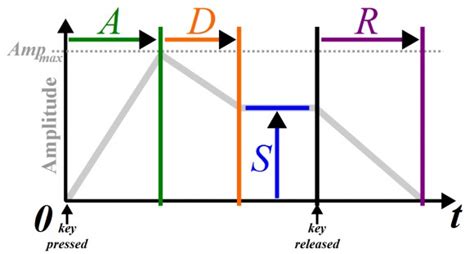
To refresh the core mechanics and hear each parameter in isolation, the following video provides a clear and concise breakdown.
The Complete Guide To Master Serum| 3# Envelopes
The video "The Complete Guide To Master Serum| 3# Envelopes" from Zen World offers a thorough walkthrough of the ADSR stages in Serum.
Watch the segments covering the basics and each stage of the envelope: Introduction to envelopes The Attack phase Sustain and Decay The Release phase As you watch, focus on the relationship between Decay and Sustain, and the instructor's comments on when a long Release might be undesirable.
Designing Lead Shapes for Drum & Bass
Now, let's apply these concepts to craft the specific lead dynamics required for different DnB subgenres. The high tempo and rhythmic complexity of DnB impose significant constraints; a lead that sounds great in isolation might create a muddy, indistinct mess in a full track.
1. The Plucky Lead
This is a cornerstone of Dancefloor and Liquid DnB, perfect for fast arpeggios and rhythmic melodic hooks. The goal is a sound with a clear, sharp transient that doesn't linger and cause melodic overlap.
-
ADSR Shape:
- Attack: Very fast (0-5 ms). You want an immediate, punchy start.
- Decay: Short to medium (e.g., 200-800 ms). This knob defines the "body" or "length" of the pluck.
- Sustain: Zero (-inf dB). This is the most critical parameter. By having no sustain, the sound's volume will always decay to silence, regardless of how long you hold the note.
- Release: Very short (e.g., 10-50 ms). A short release ensures the sound stops cleanly, maintaining rhythmic precision in fast passages.
-
The "Why": This shape creates a distinct "hit" for each note, allowing individual notes in a rapid melody to be heard clearly. The lack of sustain and short release prevents notes from bleeding into one another, which is essential for clarity at 174 BPM.
The following resource provides an excellent text-based guide for creating this exact type of envelope.
How to Make a DJ Snake Marimba Pluck in Xfer Serum
This article from ADSR Sounds, while about a marimba pluck, details the exact envelope philosophy needed for a DnB pluck.
Read Step 2 – Envelope Shaping. The author gives specific settings and, more importantly, explains the reasoning: "mimics the instant impact and quick decay" and a short release to "avoid overlap during fast melodic runs." This is the core principle of a plucky sound.
2. The Sustained Lead
This is the hero lead of anthemic Dancefloor DnB (think Fred V, Grafix) or expressive, vocal-like melodies (Fox Stevenson). The goal is a sound that maintains its power and presence as long as a note is held.
-
ADSR Shape:
- Attack: Fast (e.g., 1-10 ms). Usually fast for an upfront feel, but a slightly longer attack (~20-50ms) can soften the start, which is great for "pad-like" leads.
- Decay: The setting is less critical here but often short. Since Sustain is high, the decay stage will be brief or non-existent.
- Sustain: High (0 dB or slightly lower). This ensures the sound holds its volume, providing the continuous energy needed for a main hook.
- Release: Highly context-dependent. A short release (~50-150 ms) creates a tight, controlled sound. A longer release (~300-800 ms) can create a smoother, more "liquid" feel between notes, but use with caution to avoid mix clutter.
-
The "Why": A high sustain level provides the constant energy needed for a lead to carry the main melodic theme. Unlike a pluck, which is defined by its decay, a sustained lead is defined by its presence during the
Sustainphase.
3. The Percussive Stab
Common in Neurofunk and techier styles, this is an extreme version of the pluck. Its purpose is purely rhythmic and textural, acting almost like a tuned percussion hit.
-
ADSR Shape:
- Attack: As fast as possible (0 ms). The transient is everything.
- Decay: Very short (e.g., 50-250 ms). The sound is just a quick burst of energy.
- Sustain: Zero (-inf dB).
- Release: Very short (0-20 ms). The sound must stop dead to maintain maximum rhythmic tightness.
-
The "Why": This sound is all about the initial transient. It's designed to punctuate a rhythm rather than create a melody. The extremely short duration ensures it never interferes with the bassline or drum groove.
Advanced Control: Envelope Curves and the 'Hold' Parameter
For an experienced user like yourself, mastering the finer points of Serum's envelopes offers another layer of control.
-
Envelope Curves: In Serum, you can drag the lines between the ADSR points to change the curve from linear to exponential or logarithmic. For a pluck or stab, making the Decay curve more exponential (curving downwards faster) will make the sound feel even "snappier" and more percussive. This is a subtle but powerful tool for refining the "feel" of your dynamic shape. The article "Serum VST 101" from Unison.audio touches on this, highlighting the detailed control you have.
-
Hold Parameter: As shown in the Zen World video (LINK,
Hold parameter section ), theHoldparameter keeps the volume at its peak level for a set duration after the attack, before the decay phase begins. This is useful for creating more rectangular, "gated" style sounds, where you want the full impact of the sound to last for a moment before it starts to fade.
Conclusion
You have now learned to control the most fundamental aspect of your lead's evolution over time: its amplitude. By consciously designing the ADSR envelope, you can transform a static timbre into a dynamic, musical element that serves a specific function within a DnB arrangement.
Key Takeaways:
- The amplitude envelope (ENV 1) defines the core dynamic shape of your lead.
- The relationship between Decay and Sustain is the primary factor in determining whether a sound is plucky (low/no sustain) or sustained (high sustain).
- Release time is a critical consideration in DnB; short releases promote clarity and rhythmic precision, while long releases can create melodic flow at the risk of muddiness.
- Three key archetypes:
- Pluck: Fast Attack, Short Decay, No Sustain, Short Release.
- Sustained: Fast Attack, High Sustain, Release to taste.
- Stab: Instant Attack, Very Short Decay, No Sustain, Very Short Release.
- Use envelope curves to fine-tune the feel of the dynamics, such as creating a "snappier" decay.
In our next lesson, we'll build on this by exploring how to use a secondary envelope. While ENV 1 shapes the overall volume, we'll assign ENV 2 to other parameters, like the filter cutoff or FM amount, to create even more detailed transient impact and timbral movement at the start of each note.