Recommended resources
The freely available resources this lesson will direct you to.
Hello!
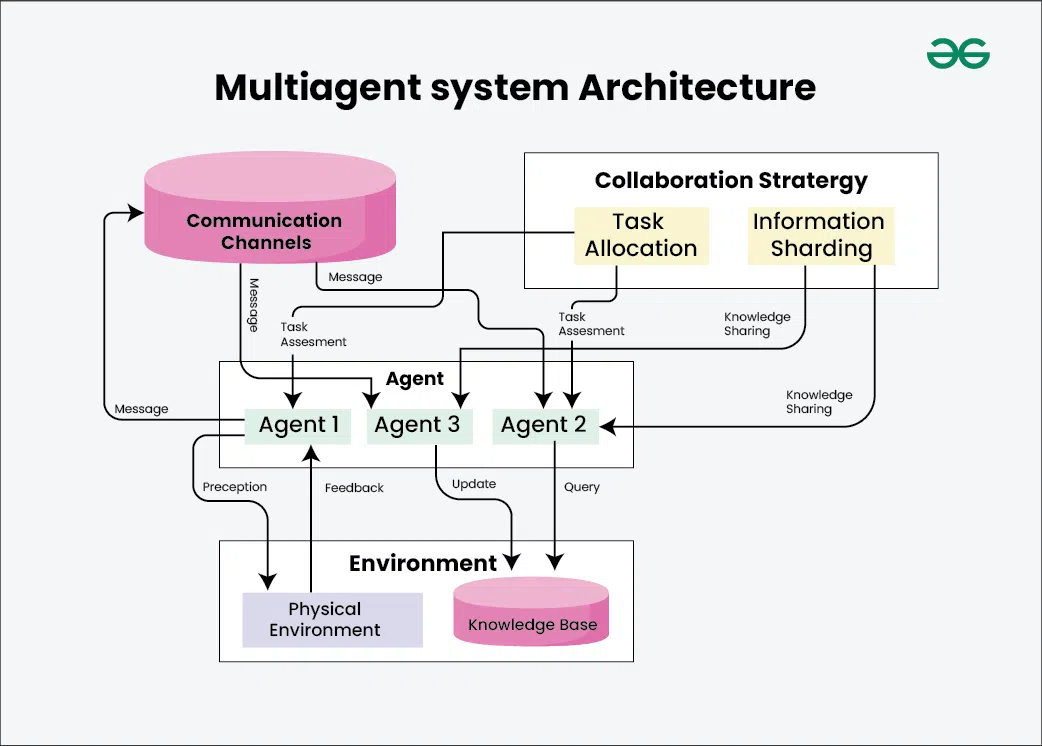
In our last lesson, we designed the orchestrator, the "project manager" of our agentic system, responsible for executing a sequence of tasks across multiple specialized agents. We now have a plan for what agents need to do and in what order. The critical question that follows is how they communicate. How does a "researcher" agent hand off its findings to a "writer" agent without crucial details being lost, misinterpreted, or buried in noise?
This lesson drills into that communication link. Our learning outcome is to structure inter-agent handoffs so that context is preserved and no information is lost between steps. We will move from high-level orchestration graphs to the detailed mechanics of the edges connecting the nodes. Mastering this is fundamental to building reliable and scalable multi-agent systems, directly addressing your goal of understanding how agents truly work together.
We'll start by defining the core challenge of inter-agent handoffs, then explore architectural patterns and specific techniques to ensure that when one agent finishes its work, the next one has exactly what it needs to succeed.
1. The Handoff Problem: Context Explosion and Error Cascades
A naive approach to handoffs is to simply pass the entire history of the conversation from one agent to the next. As you can imagine from your background in systems, this approach fails to scale.
Architecting efficient context-aware multi-agent framework for ...
This article from Google's engineering blog, 'Architecting efficient context-aware multi-agent framework', perfectly articulates the scaling bottleneck of naive context management. It sets the stage for why we need a more principled approach to handoffs.
Please read the introduction and the section titled 'The scaling bottleneck'. Focus on the three pressures it identifies: cost/latency spirals, signal degradation ('lost in the middle'), and physical limits.
This "shoveling" of context leads to two primary failure modes:
- Context Explosion: As the workflow progresses, the context passed between agents grows uncontrollably. This not only makes the system slow and expensive but also floods the LLM with irrelevant information, degrading its ability to focus on the immediate task.
- Error Cascades: A small error or omission in an early step (e.g., a missing unit, an ambiguous variable name) gets passed down the chain. Subsequent agents, unaware of the initial error, build upon it, amplifying the mistake until the final output is completely wrong.
To solve this, we must shift our thinking from treating context as a simple string to be appended, to what the Google article calls context engineering.
2. A New Mental Model: Context as a Compiled View
The key to robust handoffs is a sophisticated state management architecture. The most powerful mental model for this is to treat the context you send to an LLM not as raw data, but as a compiled view over a richer, underlying stateful system.
Architecting efficient context-aware multi-agent framework for ...
The same Google ADK article proposes this 'compiler' thesis and outlines a tiered structure for managing context. This provides an excellent architectural blueprint.
Now read the sections 'The design thesis: context as a compiled view' and '1. Structure: The tiered model'. Pay close attention to the distinction between the four layers: Working context, Session, Memory, and Artifacts. This separation is the foundation of clean handoffs.
This tiered model gives us a precise vocabulary for managing information:
- Session: The immutable, durable log of everything that happens. This is the ground truth.
- Memory / Artifacts: Long-term knowledge and large data files that agents can access on demand.
- Working Context: The ephemeral, purpose-built prompt that is "compiled" for a single agent invocation.
A handoff, in this model, is the process of compiling a new Working Context for the receiving agent by selecting, transforming, and formatting information from the Session, Memory, and Artifacts.
3. Handoff Mechanisms: Shared State vs. Message Passing
Architecturally, there are two primary ways to implement this "compilation" and transfer of context.
The Shared State Model
In this pattern, all agents in a workflow have access to a central, shared state object. Each agent's job is to read the necessary information from this state, perform its task, and write its output back to the state for the next agent to use.
Building Effective Agents with LangGraph
The LangGraph framework, which we've looked at before, is a prime example of the shared state model. This video demonstrates how a central 'state' dictionary is passed between nodes in a graph.
Please watch from 04:55 to 07:10. The presenter explicitly defines a dict that will serve as the container for the workflow's state. Notice how each function (node) takes state as an input and returns a dictionary with keys to update that state. This is the shared state handoff in action.
- Pros: Simple to implement, and all agents have a global view of the process, which can be useful for complex reasoning.
- Cons: Tightly couples agents to a shared data structure. There's a risk of one agent accidentally overwriting or corrupting state needed by another.
The Message Passing Model (Actor Model)
In this pattern, agents are treated as encapsulated entities (actors) that communicate by sending explicit messages to one another. An agent has no direct access to another agent's internal state; it only knows about the information it receives in a message.
Building Multi agent Systems with Finite State Machines
This video on building multi-agent systems with Finite State Machines introduces the concept of the Actor Model as a complement to FSMs.
Watch the segment from 03:31 to 04:23. It defines an actor as an autonomous entity that interacts via message passing. This is a different paradigm from the shared state model. The handoff is the message itself.
- Pros: Promotes loose coupling and modularity, making the system easier to maintain and reason about. Communication channels are explicit.
- Cons: Can require more boilerplate to define messages and protocols. Can lead to information silos if agents don't pass enough context in their messages.
In practice, many modern frameworks use a hybrid approach. LangGraph, for example, uses a shared state object that functions like a message bus, while the graph structure defines the explicit message-passing paths.
4. The Golden Rule of Handoffs: Explicit Scoping
Regardless of the mechanism, the most important principle is that a handoff must be explicitly scoped. The goal is not to pass all context, but to pass only the minimal necessary context for the next agent to do its job.
The Google ADK article provides an excellent breakdown of two patterns for this:
- Agents as Tools: The calling agent treats the sub-agent like a function call. It constructs a highly-focused prompt with only the specific inputs required, and the sub-agent returns a result without any knowledge of the broader conversational history.
- Agent Transfer (Hierarchy): Control is fully passed to a sub-agent. The sub-agent inherits a view of the session, but this view is deliberately controlled. By default, you might only pass the last user turn, not the entire history.
Architecting efficient context-aware multi-agent framework for ...
Let's return to the Google ADK article to see how they implement these scoped handoffs. This section provides the critical design patterns for preventing context explosion.
Please read section '3. Multi-agent context: who sees what, when' and '3.2 Scoped handoffs for agent transfer'. Focus on the distinction between the 'Agents as Tools' and 'Agent Transfer' patterns, and the concept of include_contents knobs to control context flow.
This principle of minimal, scoped handoffs is the primary defense against context explosion and signal degradation.
5. Preserving Context Integrity
Once you've scoped the context, you must ensure the receiving agent interprets it correctly. Two techniques are crucial here.
Technique 1: Structured Data for Handoffs
Instead of passing information as a free-text paragraph, enforce a schema. Using structured formats like JSON with a predefined schema (or Pydantic models in Python) creates a formal contract between agents.
The sender is obligated to provide the data in the correct format, and the receiver knows exactly what to expect. This eliminates ambiguity and makes the handoff far more reliable and debuggable. We saw this in the LangGraph video on routing, where the router was forced to output a structured object defining the next step.
Technique 2: Context Translation
A subtle but critical problem arises when passing conversational history. If Agent B receives a log of Agent A's actions, it might mistakenly believe it performed those actions, as they are typically labeled with the generic "Assistant" role.
Architecting efficient context-aware multi-agent framework for ...
The Google ADK paper discusses this specific problem and offers a solution: actively translating the context during the handoff.
Please read section '3.3 Translating conversations for agent transfer'. Understand the techniques of 'Narrative casting' and 'Action attribution' to prevent the receiving agent from misattributing past actions to itself.
This translation step is a key part of "compiling" the working context. It ensures that history is provided for context, not as a record of the receiving agent's own actions.
6. Advanced Design: Proactive Error Correction at the Handoff
So far, we've focused on designing clean handoffs. But what if an agent produces a faulty output despite our best efforts? The most robust systems treat the handoff itself as a point of validation and potential correction.
This is a frontier research area, but the concepts are directly applicable to building production-grade systems.
AgentAsk: Multi-Agent Systems Need to Ask - arXiv
This research paper, 'AgentAsk: Multi-Agent Systems Need to Ask', introduces a fascinating approach: a module that sits at the 'edge' between agents and intervenes to fix errors before they propagate. It also provides a valuable taxonomy of handoff errors.
First, read the 'Introduction' to grasp the concept of 'edge-level error cascades'. Then, read Section 3, 'Error Taxonomy', which provides an excellent framework for categorizing handoff failures. Finally, quickly review the tables in 'Appendix B' to see concrete examples of these errors and how a clarifying question at the handoff can fix them.
The AgentAsk paper formalizes the types of errors that can occur at the handoff "edge":
- Data Gap: The sending agent omits a crucial piece of information (e.g., a boundary condition for a piece of code).
- Referential Drift: An ambiguous term (like a variable
x) is used, and its meaning becomes inconsistent between agents. - Signal Corruption: A factually incorrect intermediate result is passed along as truth (e.g., a wrong unit conversion).
- Capability Gap: The task is handed to an agent that is not suited for it (e.g., asking a planning agent to write code).
Designing a system that can detect and correct these errors at the handoff represents a significant leap in reliability. This can be implemented as a specialized "validator" or "quality gate" agent that inspects the output from one agent before it's passed to the next.
Conclusion
Today we dissected the critical communication links between agents. A robust multi-agent system is not just a collection of smart agents; it's a system defined by disciplined, well-architected communication protocols.
Key Takeaways:
- The Problem: Naive handoffs lead to context explosion and error cascades, making systems unreliable and unscalable.
- Architectural Foundation: Treat context as a compiled view over a richer stateful system (Session, Memory, Artifacts), not as a simple string buffer.
- Core Principle: Employ scoped handoffs to provide each agent with the minimal necessary context, using patterns like "Agents as Tools" or controlled "Agent Transfer."
- Integrity and Reliability: Use structured data to create a formal contract between agents and context translation to prevent misattribution of past actions.
- Proactive Design: The most robust systems include a validation step at the handoff to detect and correct edge-level errors (Data Gaps, Referential Drift, etc.) before they propagate.
You now have a comprehensive framework for designing the communication layer of your agentic systems. This moves beyond simply connecting agents to engineering their interactions for reliability and scale.
In our next lesson, we will focus on observability. Now that we have designed an end-to-end workflow with an orchestrator and well-structured handoffs, we will learn how to trace an end-to-end request through a multi-agent system to identify bottlenecks and failure points. This is the final piece of the design puzzle before we can confidently debug, optimize, and prove the value of our systems.