Recommended resources
The freely available resources this lesson will direct you to.
- What is Mise en Scene — How Directors Like Kubrick Master the Elements of Visual Storytellingwww.youtube.com
- How to read mise en scéne | Visual film analysis explained!www.youtube.com
- Mise en scène – Introduction to Film & TVopen.library.okstate.edu
- Notes on Ingmar Bergman's Stylistic Development and Technique ...www.kosmorama.org
Hello and welcome back.
In our previous lessons, we focused on the camera itself—first exploring the emotional language of static shot sizes, then adding the expressive power of camera movements like the pan, tilt, and tracking shot. We established the principle that every camera decision should be motivated by the story.
Now, we shift our focus from the camera to what is in front of the camera. This lesson is dedicated to mise-en-scène, a French term that literally means "placing on stage." It encompasses everything the audience sees within the frame and is the primary way a director builds the world of the film. We will analyze its four core elements:
- Staging (including figure movement)
- Props
- Lighting
- Costume (including hair and makeup)
This topic is where your extensive background in industrial design, textiles, and visual communication becomes a direct and powerful asset in your filmmaking. You already possess a sophisticated understanding of how objects, materials, and composition communicate meaning and emotion. Today, we will frame that knowledge within the context of cinematic storytelling.
What is Mise-en-Scène?
Mise-en-scène is the soul of a film's visual world. It’s the sum of all the visual choices made to create a scene's environment, mood, and characterizations before the camera even starts rolling. To get a foundational overview of its key components, let's start with a short video.
How to read mise en scéne | Visual film analysis explained!
The video 'How to read mise en scéne' by The Media Insider provides a clear and concise introduction to the concept, breaking it down into its essential parts using memorable examples from well-known films.
Please watch from the beginning (00:07) up to the 6:05 mark. This covers the definition of mise-en-scène and then walks through its main elements: character appearance (costume), props, the set, and lighting. Pay attention to how these elements work together to tell a story visually, without relying on dialogue.
The video you just watched breaks mise-en-scène down into its practical components. Film theorists also think about it in terms of its overall style. Let's watch one more brief video that introduces a very useful distinction.
What is Mise en Scene — How Directors Like Kubrick Master the Elements of Visual Storytelling
This video from StudioBinder, 'What is Mise en Scene', introduces the difference between two broad approaches: naturalistic and theatrical mise-en-scène. This is a crucial concept for a director developing their artistic vision.
Watch the section 'The Two Traditions' from 03:47 to 05:38. Notice how naturalistic mise-en-scène aims for realism, while theatrical mise-en-scène embraces exaggeration and artifice to create its effect. Think about which style aligns more with your inspirations like Bergman or surrealist cinema.
This distinction between naturalistic and theatrical is fundamental. A film by Eric Rohmer might strive for a naturalistic look to capture the feeling of everyday life, while the work of surrealists, or even the heightened psychological dramas of Ingmar Bergman, often lean into a theatrical style to express internal, subjective realities. Your own work can consciously exist anywhere on this spectrum.
The Core Elements in Detail
Let's now dive deeper into each element of mise-en-scène. We'll use a comprehensive text that explores their functions in detail.
Mise en scène – Introduction to Film & TV
The chapter 'Mise en scène' from the online textbook Introduction to Film & TV offers a thorough breakdown of each element. We'll read it in sections.
First, please read the introductory section titled 'DEFINING MISE EN SCÈNE'. It provides a solid definition and outlines the main expressive functions of mise-en-scène, which we will explore next.
As the text highlights, the core functions of mise-en-scène are to:
- Establish time and place.
- Reveal narrative information and character traits.
- Create mood.
- Develop thematic meaning.
Now, let's look at how specific elements achieve this.
1. Sets, Costumes, and Props
This is the domain of the production designer, the art director, and the costume designer. For you, this is a natural extension of your skills in fashion and textile design. These elements are not passive background details; they are active storytelling agents.
Mise en scène – Introduction to Film & TV
Let's continue with the same resource, focusing on the tangible objects within the frame.
Please read the section titled 'SETS, COSTUMES, AND PROPS,' including the analysis of Sofia Coppola's films. Focus on how these elements define character, create distinctions between characters, and express a character's internal state or transformation.
Your background gives you a unique advantage here. You understand how the choice of a specific fabric, the construction of a garment, or the form of an object can convey status, emotion, and identity.

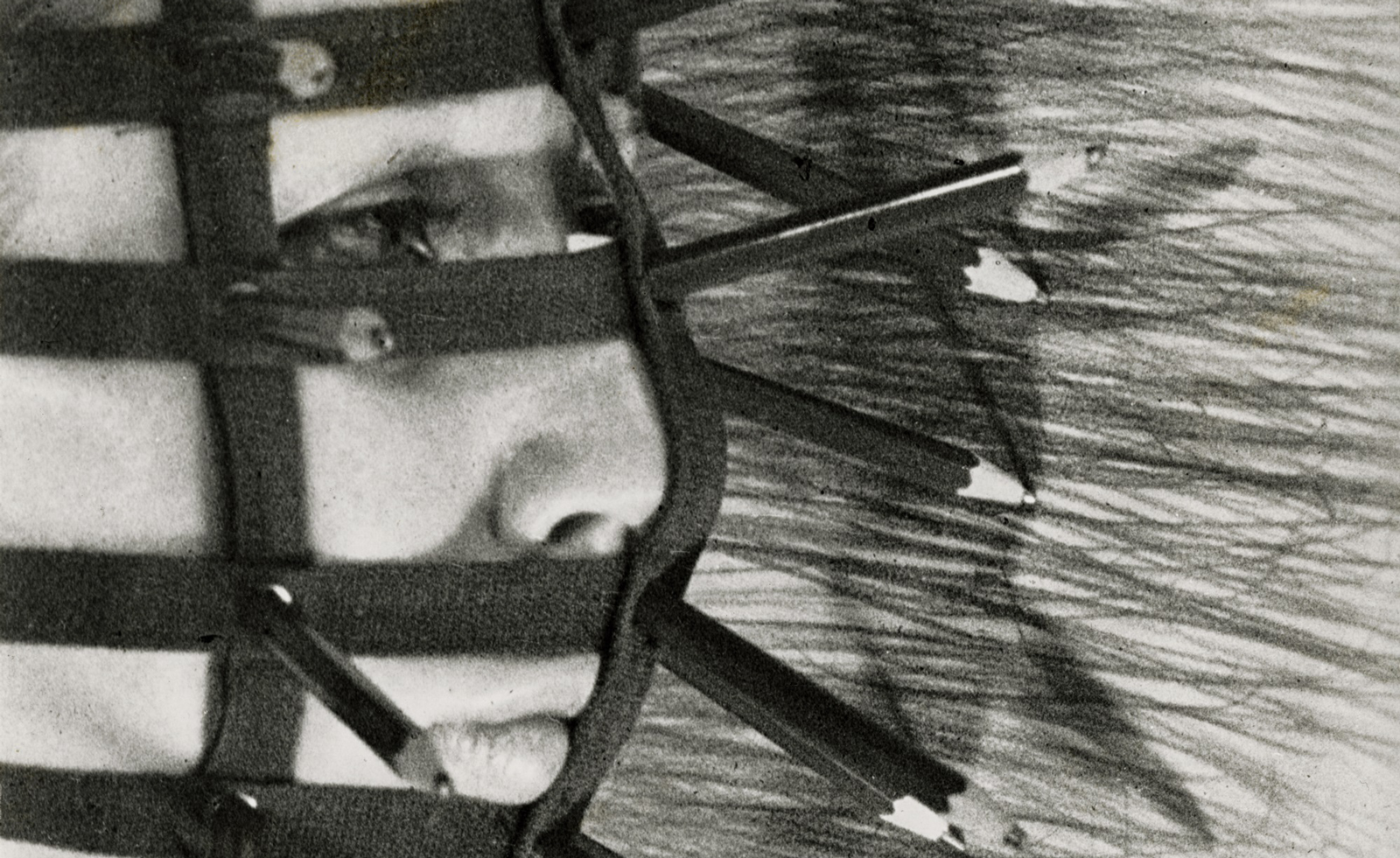
For your interest in blending performance art and sculpture, props and costumes can transcend their traditional roles. They can become extensions of the body or symbolic objects that drive the narrative, much like in the work of Rebecca Horn.
2. Lighting
Lighting is arguably the most powerful tool for creating mood. It sculpts the space, directs the eye, and shapes the audience's perception of characters and events.
Mise en scène – Introduction to Film & TV
Now, let's focus on the element that 'writes with light.'
Read the 'LIGHTING' section. Pay close attention to the distinction between high-key (low contrast, few shadows) and low-key (high contrast, deep shadows) lighting, as this is a fundamental choice that defines a film's visual tone.
The concepts of high-key and low-key lighting are essential. High-key lighting is often used in comedies and musicals, creating a bright, open feel. Low-key lighting, with its dramatic shadows (a technique known as chiaroscuro), is the hallmark of film noir, horror, and the psychological dramas of directors like Bergman, where it is used to suggest moral ambiguity and hidden turmoil.
3. Staging and Figure Movement
Staging, or blocking, is the choreography of figures (actors, extras) within the frame. It dictates where they are, where they move, and how they relate to each other and their environment.
Mise en scène – Introduction to Film & TV
Finally, let's examine how figures are arranged and moved within the scene.
Read the sections on 'FIGURE MOVEMENT' and 'STAGING'. This will connect what actors do with where they are placed, introducing key compositional ideas like 'deep space' versus 'shallow space' composition.
Your interest in Ingmar Bergman provides a perfect case study for how staging can become a director's signature. Bergman famously broke from conventional, naturalistic staging in dialogue scenes. Instead of a simple shot/reverse-shot, he often positioned his actors in highly stylized two-shots, sometimes looking towards the camera, to create a sense of profound introspection and psychological intimacy.
Notes on Ingmar Bergman's Stylistic Development and Technique ...
This article, 'Notes on Ingmar Bergman's Stylistic Development and Technique,' examines his unique approach to staging intimate, psychological scenes.
Please read the second section of the article, which begins with 'Bergman was not only deploying narrative templates...'. Focus on how he uses two-shots and frontal staging to create a 'soliloquy'-like feeling, moving beyond naturalism to express his characters' inner worlds.
This non-naturalistic staging is a powerful tool for experimental and art-house cinema. It prioritizes emotional and psychological truth over physical realism, a technique that aligns perfectly with your goal of telling stories about human feelings and inner states.
Application Exercise
Let's put these elements into practice.
Imagine a single, static shot for a short, experimental film. The theme is "creative confinement." Your character is an artist, trapped but also inspired by their small workspace.
In a few sentences for each point, describe the mise-en-scène you would create:
- Setting: What does the room look like? Is it cluttered with materials, or stark and empty? Are the walls textured, colored, or bare?
- Costume/Props: What is the artist wearing? Is the clothing restrictive or flowing? What single prop in the room is most significant (e.g., a dried-up paintbrush, a pristine roll of fabric, a broken teacup)?
- Lighting: Is the light hard or soft? Where is the key light coming from (e.g., a high window, a low desk lamp, an unseen source)? Is it high-key or low-key?
- Staging: Where is the artist in the frame? Are they small in a corner, or centered? Are they facing the camera, away from it, or in profile?
Thinking through these choices is the practical work of directing. There is no single right answer; there is only your intentional vision.
Key Takeaways
- Mise-en-scène is the art of visual storytelling, encompassing everything placed in front of the camera: setting, props, costume, lighting, and staging.
- The elements of mise-en-scène work together to establish the world of the film, create mood, and define character.
- Directors can choose between a naturalistic style (mimicking reality) and a theatrical style (stylized, expressive) to serve their artistic vision.
- Your background in design gives you an innate understanding of how to use these elements to tell a story with purpose and artistic intent.
Looking Ahead
In this lesson, we analyzed the contents of the frame. In our next lesson, we will focus on the frame itself. We will explore Framing and Composition, looking at how the boundaries of the shot and the arrangement of elements within it are used to guide the audience's eye and control the emotional interpretation of a scene. This will build directly on our understanding of staging and allow you to compose your shots with even greater precision.