Recommended resources
The freely available resources this lesson will direct you to.
Hello, and welcome back.
In our last lesson, we examined the purification methods used to transform the crude output of the Kroll reactor into titanium sponge. We contrasted vacuum distillation, the high-cost/high-purity option, with acid leaching, its lower-cost but more contamination-prone alternative. You saw that the choice of purification technology is a foundational techno-economic decision.
This lesson builds directly on that foundation. We will now analyze the central optimization problem that defines the economics of sponge production: the three-way trade-off between final sponge purity, recovery yield, and processing costs. For a potential investor or executive evaluating a titanium operation, understanding how a plant navigates these competing pressures is paramount. It reveals the core of its operational strategy and its position in the market.
This analysis will directly address your goal of being able to critique the business models of industrial producers.
1. Defining and Quantifying Purity
The term "purity" in the context of titanium is not just about the percentage of Ti. It's primarily defined by the absence of a few specific, highly detrimental interstitial elements, most notably oxygen, nitrogen, carbon, and iron. Given your materials science interests, you'll appreciate that even in tiny concentrations, these elements can dramatically alter the crystal lattice of titanium, increasing its hardness and brittleness and reducing its ductility and fracture toughness—qualities essential for aerospace applications.
Therefore, the "purity" of a batch of sponge is defined by its grade, which sets maximum allowable limits for these impurities. A common indicator of overall purity is the Brinell Hardness Number (BHN), as hardness correlates strongly with interstitial content. A lower BHN signifies purer, more ductile titanium.
The following resource provides a detailed look at the sources of these impurities and how different international standards quantify them.
Titanium Extraction Metallurgy Developments and Control of ...
The chapter 'Titanium Extraction Metallurgy Developments and Control of…' provides an excellent overview of quality control in the Kroll process. The sections we'll look at focus on the specific impurities and the standards used to measure them.
Please read section 8, 'Control of impurity elements in the Kroll process', starting from the second paragraph ('The following are the major factors...'). Then, review Table 3 in the following section. Focus on: The list of factors influencing sponge quality. The specific impurity elements listed in Table 3 (O, N, C, Fe, etc.). The different maximum impurity levels allowed by standards like ASTM, SHOWA (Japanese), and CIS (Russian), and the corresponding target BHN.
As you can see from Table 3, producing sponge for critical applications isn't about achieving 100% Ti; it's about staying below stringent thresholds (e.g., 0.06% oxygen for SHOWA S-90 vs. 0.10% for the basic ASTM MD 120 standard). Meeting these tighter specifications requires more rigorous, and therefore more expensive, process control.
2. The Purity vs. Yield Trade-Off
Recovery yield is the percentage of titanium from the initial TiCl₄ feedstock that ends up as saleable sponge. The fundamental conflict between purity and yield arises from the non-uniform nature of the sponge cake produced in the Kroll reactor. Impurities are not evenly distributed.
The next reading explains where these impurities originate and how their location within the reactor leads directly to this trade-off.
Titanium Extraction Metallurgy Developments and Control of ...
Returning to the same resource, 'Titanium Extraction Metallurgy Developments and Control of...', we will now examine the section that discusses where impurities come from and how they are distributed within the sponge cake.
Please read the text following Table 2, starting with 'Mastery of high-purity titanium sponge production...'. Pay close attention to the description of how impurity concentrations vary: contamination is highest at the walls and bottom of the reactor and decreases toward the center. Note the operational consequence mentioned: 'the sponge in the central regions/core assumes the highest purity and is separately harnessed...'
This presents a clear operational dilemma:
-
To maximize purity: A producer must be selective. After the sponge cake is removed from the reactor, it is broken up. The outer layers and bottom section, which are contaminated by contact with the steel reactor wall (introducing iron) and potential atmospheric leaks (introducing oxygen and nitrogen), are segregated. Only the central "core" of the sponge is used for the highest-purity lots. This practice inherently reduces the overall yield, as a significant fraction of the reduced metal is either downgraded to a lower-value product or recycled as scrap.
-
To maximize yield: A producer would need to blend more of the outer, less-pure material with the core material. This increases the total weight of sellable product from a given batch but results in a lower average purity, commanding a lower price and being unsuitable for the most demanding applications.
This process of selective "harnessing" or grading is a key lever in a plant's production strategy, directly linking operational decisions to the financial performance of each batch.
3. Incorporating Processing Costs
Cost is the third, and often deciding, variable in this optimization problem. Striving for higher purity and better yield inevitably drives up processing costs.
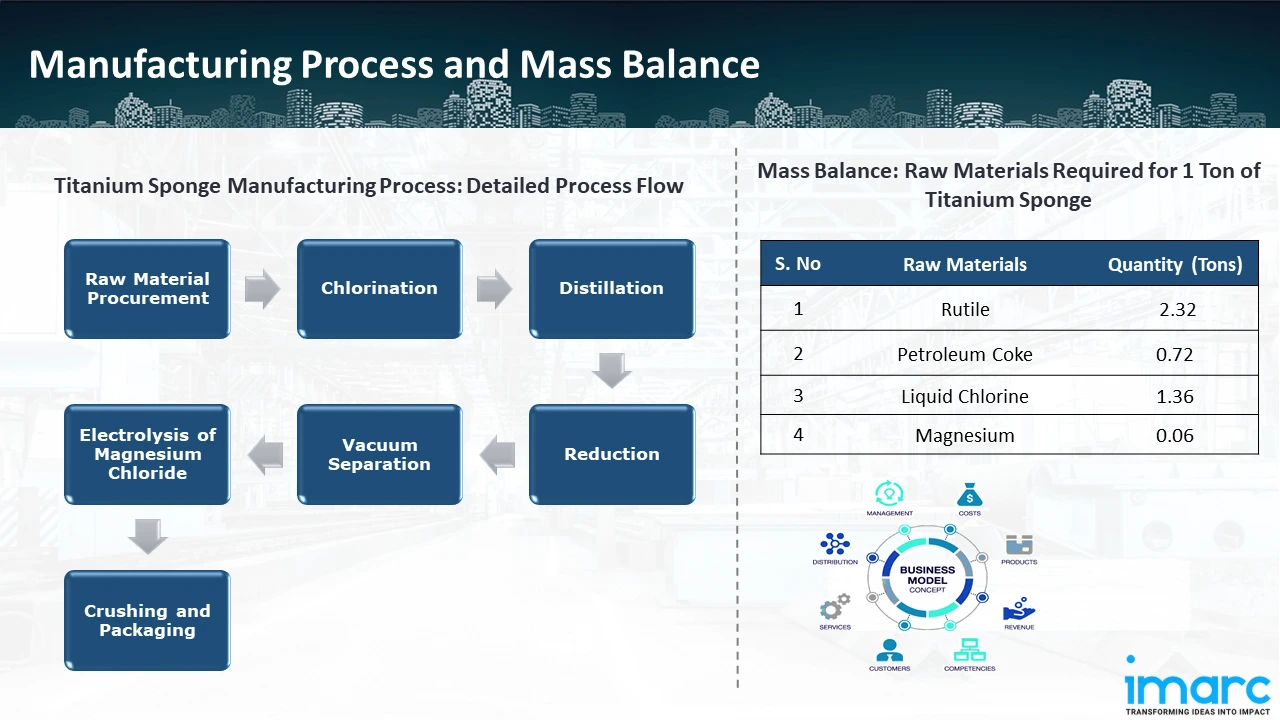
Let's break down how cost interacts with purity and yield:
-
Cost of Purity:
- Raw Materials: Using higher-purity magnesium and TiCl₄ as inputs costs more upfront but reduces the downstream purification burden.
- Processing: As we saw in the last lesson, achieving the highest purity demands vacuum distillation—a process that is far more energy-intensive and has higher capital costs than acid leaching.
- Handling: To prevent contamination after purification, especially with fine powders, requires clean rooms, inert atmosphere handling, and specialized equipment, all of which add to operating and capital costs.
-
Cost of Yield:
- The decision to scrap the outer layers of the sponge cake is a direct hit to revenue for that batch. This is an opportunity cost.
- However, trying to "save" this material by reprocessing it adds further costs. For example, some lower-grade sponge might be suitable as an alloying addition in steelmaking, but it will sell for a fraction of the price of high-purity sponge.
The following reading provides a high-level perspective on the cost structure of titanium production and the trade-offs involved in different purification and processing choices.
[PDF] LOW COST TITANIUM - MYTH or REALITY Paul C. Turner Alan ...
The paper 'LOW COST TITANIUM - MYTH or REALITY' provides a pragmatic analysis of the costs involved in titanium production. We will focus on the sections discussing purification and overall cost breakdown.
First, quickly read the section titled 'Purification via Vacuum Distillation and Leaching'. This reinforces the cost and purity differences between the two methods from our previous lesson. Next, read the section titled 'Cost', including Table V. Focus on how the cost builds up from the raw ore (rutile) to the sponge. The text highlights that fabrication adds significantly more cost, emphasizing the importance of optimizing the initial sponge production.
As the paper makes clear, the base cost of the raw materials and the chlorination step sets a high floor on the price of titanium. The reduction and purification steps then add significant cost, and the choices made here determine the final quality of the sponge. A 10-20% difference in operating cost at the sponge stage, driven by purity and yield targets, can be the difference between a profitable plant and an uncompetitive one.
4. A Strategic Decision Framework
The interplay of these three factors—purity, yield, and cost—is not a problem with a single "correct" solution. It's a strategic framework that defines a company's place in the market.
| Strategy | Purity Priority | Yield Priority | Cost Priority | Target Market |
|---|---|---|---|---|
| Aerospace Specialist | Highest | Low | Low | Aircraft engines, airframes, medical |
| Industrial Generalist | Medium | Medium | Medium | Chemical processing, power generation |
| Low-Cost Producer | Lowest | High | Highest | Alloying agent, non-critical applications |
An "Aerospace Specialist" will invest in the best vacuum distillation equipment, use high-purity inputs, and accept the lower yields from selectively harvesting only the best part of the sponge cake. Their high processing costs are justified by the premium prices they can charge.
A "Low-Cost Producer" might use acid leaching, less-pure inputs, and aim to sell almost 100% of the reduced metal, targeting customers for whom price is the main concern and moderate impurity levels are acceptable.
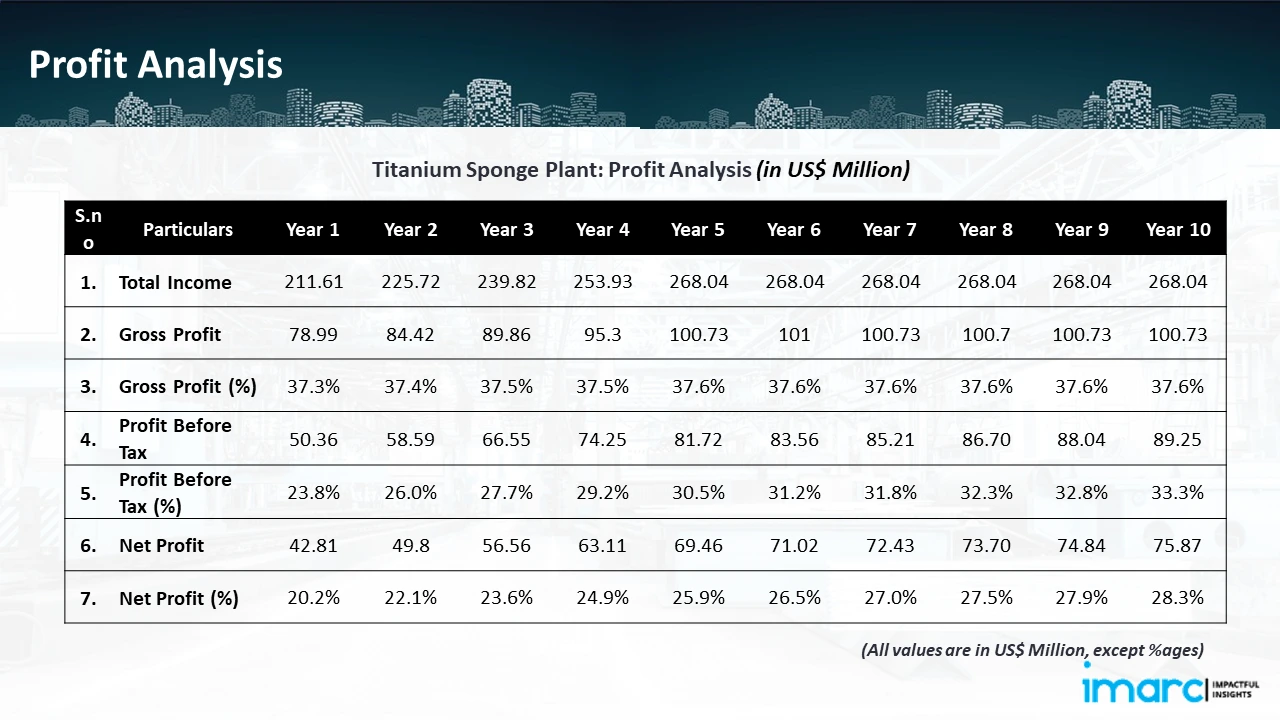
Ultimately, the financial success of a titanium sponge plant depends on aligning its operational capabilities with its chosen market strategy and executing it efficiently.
Conclusion
In this lesson, we moved beyond the "how" of purification to the "why" of operational strategy. You have analyzed the core trade-offs that govern the economics of titanium sponge production.
Key Takeaways:
- Purity is defined by standards: Sponge quality is determined by meeting specific maximums for impurities like O, N, C, and Fe, which dictate its mechanical properties and end-use.
- Purity and yield are inversely related: Due to the non-uniform distribution of impurities in the sponge cake, achieving the highest purity requires discarding less-pure sections, thereby lowering the overall recovery yield.
- Cost is the deciding factor: The pursuit of higher purity and yield drives up capital and operating costs through more expensive raw materials, energy-intensive processes, and specialized handling.
- Managing these trade-offs is a business strategy: A producer's choice of where to operate on the purity-yield-cost spectrum defines its target market, competitive position, and ultimate profitability.
In our next lesson, we will move to the next stage of the value chain. The purified sponge, regardless of its grade, is still a porous, brittle material. We will examine the technologies used to consolidate it into a solid, workable form: the titanium ingot. We will begin with Vacuum Arc Remelting (VAR), the workhorse of the industry.