Recommended resources
The freely available resources this lesson will direct you to.
Hello! Your mixed diagnostic showed why a study plan cannot simply list subjects and divide the available days equally. A missed literary-history item, an unsupported passage inference, and a question left unanswered under time pressure each require different work. This lesson turns that evidence into a two-phase schedule: prepare primarily for UGC-NET first, then redirect practice toward the distinctive demands of GATE XH English.
By the end, you should have a weekly timetable with named tasks, a transition point, and a rule for changing the plan when practice results warrant it. Allow about 40 minutes to read, watch, and draft your schedule. The dates and hours in the worked example are illustrative; use your actual examination dates and available time.
Why the phases should be different
The two examinations share a substantial English-literature foundation, but they do not reward identical practice. In the UGC-NET bulletin, Paper I has 50 questions worth 100 marks, while the English-subject Paper II has 100 questions worth 200 marks. Both are taken within three hours, without a break. The bulletin specifies no negative marking for an incorrect response. That makes broad subject coverage, regular Paper I work, and practice sustaining decisions across the whole sitting sensible priorities for the first phase.
Read the examination scheme and marking rules in the UGC-NET June 2025 Information Bulletin, issued by the National Testing Agency. It establishes the constraints for a NET-focused week. It is a 2025 bulletin, not a source of dates for your next attempt.
information-bulletin-for-ugc-net-june-2025-16042025.pdf
Read the official pattern and marking rules so that the schedule reflects both papers and the full examination sitting.
In Chapter 2, “Examination Scheme,” find subsection 2.2, “Pattern of Examination” (pp. 11–12). Read the paper pattern, including the table showing questions, marks, duration, and the absence of a break. Then find subsection 2.5, “Marking Scheme” (p. 12, continuing onto p. 13). Read from the rule about choosing one option through the attempt rules. Focus on how these conditions affect timed practice rather than memorizing the bulletin’s old administrative dates.
GATE XH calls for a later change of emphasis, not a fresh start in literature. Its pattern assigns 60 marks to the chosen optional section—English here—25 to compulsory Reasoning and Comprehension, and 15 to General Aptitude. It also uses multiple-choice (MCQ), multiple-select (MSQ), and numerical-answer (NAT) questions. Wrong MCQs incur a penalty; wrong MSQs and NATs do not, but MSQs receive no partial marks. Your earlier diagnostic sampled why selecting a complete, defensible set in an MSQ is a different habit from choosing one answer in a NET question.
Read the official GATE 2026 Question Paper Pattern for the format that the second phase must train. As with the NET bulletin, check the applicable official notice when fixing a future examination date or confirming rules for your own sitting.
Read the official GATE pattern to distinguish shared English preparation from practice that must be done in GATE’s question formats.
Under “QUESTION PAPER PATTERN,” read the general pattern table, paying particular attention to MCQ, MSQ, and NAT marking. Then move to the paper-wise distribution table, identified by its “Paper Code” column, and find the XH row near the bottom. Read that row, including the optional-section rule; note the 15, 25, and 60-mark distribution rather than borrowing the distribution from another paper.
The scheduling principle is therefore asymmetric: in Phase 1, build and test the shared English foundation while protecting time for NET Paper I. In Phase 2, retain that foundation but practice GATE’s compulsory comprehension section, aptitude section, answer formats, and marking decisions deliberately.
Set the boundaries before assigning topics
Start with four entries on a calendar: the confirmed or currently announced NET date, the GATE date, the hours you can reliably study each week, and any weeks when that capacity will change. Verify the dates from the notices for the examinations you intend to take. The June 2025 NET dates in the bulletin are historical; they are not a planning deadline now.
Then mark two phases:
- NET-priority phase: From your start date through NET. Keep Paper II English and Paper I present every week. Increase timed, full-paper work as NET approaches, without abandoning revision of weak areas.
- GATE-specific phase: After NET, through GATE. Shift the hours previously assigned to Paper I toward GATE Reasoning and Comprehension, General Aptitude, and MCQ/MSQ/NAT practice. Continue English retrieval and subject questions.
If your actual GATE date precedes NET, do not force this chronology onto your calendar. Prioritize the examination that comes first and reverse the format-specific transition. The two-phase example below assumes NET comes first.
Build in a little slack. For example, if you can realistically protect 14 hours in a week, schedule 12 and leave two unassigned for interruptions or work that takes longer than expected. A timetable filled to its last available minute is difficult to maintain.
Build a repeatable NET-priority week
Suppose, only as a worked example, that you have ten weeks until NET, six further weeks until GATE, and 12 scheduled study hours per week. A normal NET-phase week could allocate six hours to English Paper II, three to Paper I, two to timed work and review, and one to retrieval of earlier material.
That is not a claim that all literary domains take equal time, or that ten weeks guarantees coverage. It gives the larger subject paper sustained attention without allowing the smaller paper to disappear. Within the six English hours, rotate through the course’s literary histories, genres, theory, language, and research methods. Use your diagnostic to decide which of those domains needs an additional session, but remember that ten diagnostic items cannot measure the entire syllabus.
The following is one way to place those 12 hours. Each entry names an activity rather than merely saying “study English.”
| Day | Scheduled work |
|---|---|
| Monday | 90 min: one English topic and its representative questions; 30 min: recall an earlier topic without notes |
| Tuesday | 90 min: a second English topic; 60 min: Paper I |
| Wednesday | Unscheduled |
| Thursday | 90 min: English questions or passage analysis; 60 min: Paper I |
| Friday | 90 min: English topic review; 30 min: earlier-topic recall |
| Saturday | 60 min: Paper I; 60 min: timed mixed NET questions |
| Sunday | 60 min: review the timed questions and choose next week’s adjustments |
A blank half-hour grid can help you place these blocks around your fixed commitments. Treat the times as reserved appointments; the subject and task written inside each appointment can change when evidence changes.
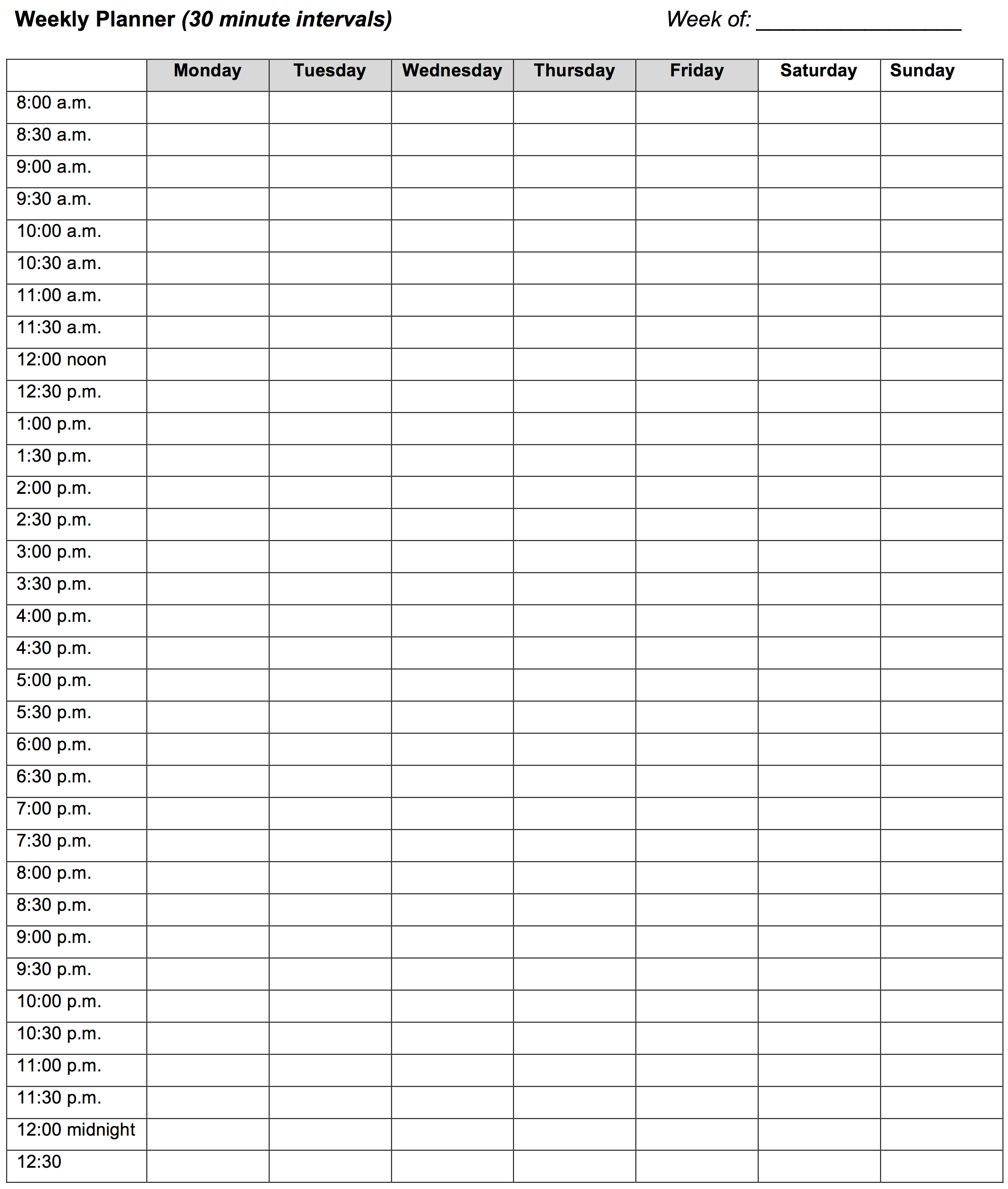
In the example’s earlier NET weeks, use the English blocks to make a first, prioritized pass across domains and Paper I blocks to encounter its major question areas. In the later NET weeks, spend more blocks on questions that combine domains and on weaknesses established by practice. Schedule a full three-hour NET-style mock periodically, including the no-break condition. In a mock week, it can replace the usual timed block and some topic study; also reserve review time. Do not add a mock on top of a full week and then leave its errors unexamined.
For a large literary period such as British literature, a timetable entry needs a boundary: “Romantic contexts, major writers, and a short question set” is more usable than “finish British literature.” Arpita Karwa’s video on covering British literature offers a compact way to think about breaking a large area into periods and using previous-year questions to direct attention. Use those questions as evidence of what merits practice, not as a replacement for checking the full syllabus.
UGC NET June 2025 | Crack UGC NET English with Ease | Step-by-Step Guide to cover British Literature
Watch the relevant portion of Arpita Karwa’s “UGC NET June 2025 | Crack UGC NET English with Ease” for a method of turning one broad literature heading into manageable study blocks.
Watch question-guided scope for the discussion of the broad syllabus and previous-year questions. Continue with dividing periods for the chronological breakdown. Focus on the planning method, not on adopting an unexamined list of “important” authors.
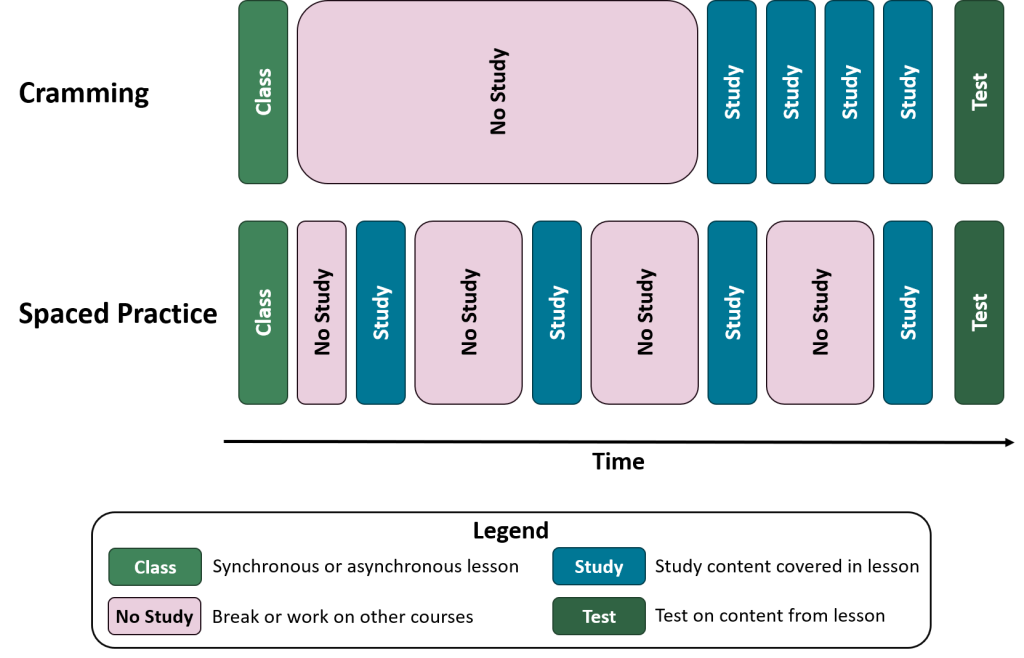
Spacing is also a scheduling choice. Four hours with one topic immediately before a test are not equivalent to four encounters distributed across weeks: later encounters require you to retrieve what is no longer freshly in view. The diagram below contrasts those arrangements. Your Monday and Friday recall blocks should therefore revisit older material, not simply continue that day’s new reading. The exact interval can be adjusted; the essential feature is returning after a gap.
Make the post-NET transition explicit
After NET, allow a short reset and note what the exam revealed while it is still fresh. Then replace NET-only tasks rather than trying to continue both complete timetables. In the illustrative six-week GATE phase, a normal 12-hour week might contain:
- Five hours of English: retain literary and theoretical knowledge, now using GATE-style subject questions and passage-based interpretation.
- Three hours of Reasoning and Comprehension: work through arguments and passages, requiring support for each selected claim.
- Two hours of General Aptitude: practice the quantitative, verbal, and reasoning skills sampled in that section.
- Two hours of timed mixed-format work and review: include MCQs, MSQs, and NATs; review both accuracy and your decision to attempt or leave an item.
This is a starting allocation, not a direct conversion of 60:25:15 marks into hours. Some English preparation carries over from Phase 1; your diagnostic may show that comprehension or aptitude needs more new work. Use at least one timed, full-length GATE-style sitting during the phase, with time reserved afterward to inspect MCQ penalties, unsupported MSQ selections, and avoidable NAT errors. Toward the final weeks, increase integrated practice rather than beginning a large new survey of authors.
The switch in marking rules matters during that practice. For NET, an unanswered question earns nothing and an incorrect response has no negative mark under the cited bulletin; practice reaching and answering all questions while managing the three-hour sitting. For GATE, practice a more selective MCQ decision because wrong MCQs cost marks. Do not mistake the absence of an MSQ penalty for permission to select unsupported options: there is no partial credit for an incomplete or incorrect set.
Keep the plan responsive, not improvised
At the end of each week, use the same evidence you recorded in the diagnostic: answer, time, confidence, and reason. Ask what the next scheduled block should do about a recurring problem. If two passage errors came from treating an inference as an explicit statement, change one comprehension block to evidence-checking practice. If you cannot recall works and dates, use an English block for retrieval. If you knew answers but never reached the last section of a mock, use the timed block to test pacing. A single doubtful answer should not overturn a whole week; look for a pattern.
Keep your adjustment small enough to remain executable—usually one or two blocks at a time. Preserve coverage of both NET papers in Phase 1 and all three GATE XH components in Phase 2. If you have fewer or more than 12 hours, scale the example while keeping those protected components, timed practice, and review.
Your finished schedule should show dates, weekly available hours, a NET-to-GATE switch point, named study blocks, mock-and-review appointments, and a weekly review slot. That is enough structure to begin, while leaving room for what later practice teaches you.
Key takeaways
A useful dual-exam plan is not two full syllabuses studied simultaneously. Prioritize NET first, maintaining English Paper II, Paper I, retrieval, and timed review each week. After NET, reassign time to GATE’s Reasoning and Comprehension, General Aptitude, and MCQ/MSQ/NAT demands while retaining English. Check real dates and current rules before fixing the calendar, and let repeated evidence—not one surprising question—change its blocks.
The next lesson will make the retrieval blocks more precise by turning clusters of authors, works, dates, movements, and concepts into structures you can recall and test efficiently.