Recommended resources
The freely available resources this lesson will direct you to.
- How Agentic AI Is Reshaping Finance Workflows, Processes, and Governance | CFA Institutewww.youtube.com
- Unleashing AI in Accounting and Finance: Boost Your Efficiency Todaywww.youtube.com
- AI Plays for Smarter, Profitable Fund Administration | Grant Thorntonwww.grantthornton.com
- Rethinking alternative investment operations: Agentic AI and the path to smart, autonomous workflows | Deloitte Luxembourgwww.deloitte.com
Welcome back. In the previous lesson, we compared the operating environments of Luxembourg, the UK, Jersey, Guernsey, and Cayman. The key operational insight was that a fund administrator’s core work is broadly similar across jurisdictions, but the required evidence, provider coordination, oversight, and reporting perimeter can differ sharply.
This lesson turns that operating knowledge into an AI decision framework. The question is not simply, “Is this task repetitive?” A fund-administration workflow is suitable for AI only when its data, variability, controls, confidentiality requirements, and required human judgment support the particular kind of AI being proposed.
By the end, you should be able to take a workflow such as reconciliation, LPA extraction, investor reporting, valuation support, or waterfall processing and decide whether it is suitable for: a controlled AI pilot, AI-assisted production work, highly constrained automation, or no production AI use at all.
Start with the right question: suitable for which AI role?
“AI” can obscure important differences. A fund administrator should not assess a workflow as though AI were one uniform technology. Instead, first define the proposed role.
| AI role | Typical fund-administration use | Main value | Main limitation |
|---|---|---|---|
| Document intelligence | Extracting fields from LPAs, side letters, notices, and portfolio-company reports | Reduces reading and data-entry effort | May misread legally significant language |
| Anomaly detection | Highlighting unusual cash movements, reconciliation breaks, or inconsistent reporting data | Focuses staff attention on unusual items | Identifies a signal; it does not determine the correct resolution |
| Generative AI drafting | Drafting investor-query responses, narrative reporting, meeting summaries, or first-pass disclosures | Speeds up communication and synthesis | Can produce plausible but unsupported wording |
| Predictive models | Forecasting cash needs or likely settlement failures | Helps prioritise and plan | Requires relevant, reliable historical patterns |
| Agentic workflow orchestration | Gathering data from approved systems, preparing a draft report, routing exceptions and approvals | Connects several tasks into one controlled workflow | Can amplify errors if permissions and escalation rules are weak |
| Rules-based automation | Calculating a defined fee or waterfall after terms are approved | Repeatable and reproducible execution | Does not solve ambiguity in the legal terms or source data |
A strong design often combines these roles. For example, an LPA-reading model might extract a management-fee clause; a qualified operations reviewer validates it; and only then does a deterministic rules engine use the approved parameter to calculate fees. The AI should not silently translate ambiguous legal language into an investor-facing payment.
That distinction is especially important in private funds, where “exceptions” often encode the actual economics of the fund: a side letter, a bespoke class, a recycled distribution, an excuse right, a co-investment allocation, or a nonstandard carried-interest provision.
The six-factor suitability test
Assess each workflow against six dimensions. Score each from 0 to 2 if useful, but do not let a high total score hide a serious control failure. In particular, uncontrolled confidential data, unclear authority, or an inability to evidence what happened are stop conditions, not minor deductions.
| Dimension | What good looks like | Warning signs | Appropriate AI design response |
|---|---|---|---|
| 1. Data quality | Complete, reconciled, authoritative data with stable identifiers and known source systems | Missing fields, duplicates, delayed feeds, inconsistent entity names, spreadsheet overrides | Fix data lineage and validation first; use AI only to identify or classify issues |
| 2. Process variability | A stable process with clear inputs, rules, outputs, and boundaries | Each fund uses materially bespoke terms; staff resolve cases through undocumented judgment | Limit AI to drafting, extraction, or triage; preserve human interpretation |
| 3. Exception rate and severity | Most cases follow a standard path; exceptions are identifiable and resolvable | Exceptions are frequent, novel, high-value, or legally sensitive | Use AI to prioritise and explain exceptions, not to clear them automatically |
| 4. Auditability | The organisation can reproduce the result and retain evidence of inputs, rules, output, review, and approval | Opaque reasoning, unlogged prompts, changing model versions, manual copying between systems | Log the full decision trail; restrict production actions to controlled systems |
| 5. Confidentiality | Data access is permissioned, minimised, contractually protected, and aligned with retention and residency rules | LP tax forms, bank details, valuation data, or non-public portfolio information is uploaded to an unapproved tool | Use an approved private environment, role-based access, and data minimisation |
| 6. Human oversight | Clear escalation thresholds, accountable reviewers, segregation of duties, and approval before irreversible actions | AI can send notices, update the ledger, release payments, or determine valuations without review | Keep humans accountable for judgments, legal interpretations, and money movement |
A useful shorthand is:
- High suitability for AI assistance: clean data, a recurring workflow, limited variability, low-risk outputs, and easy human review.
- Moderate suitability: AI can prepare a draft, identify anomalies, or assemble evidence, but a knowledgeable person must decide and approve.
- Low suitability for autonomous action: bespoke legal interpretation, valuation judgment, investor-specific economics, payment release, or any workflow where an error has legal, regulatory, or financial finality.
The word autonomous matters. A workflow can be very suitable for AI assistance while being completely unsuitable for unsupervised execution.
Why data and exceptions matter more than repetition
A private-fund administrator can encounter the same activity hundreds of times—such as reconciling cash, answering investor requests, or updating capital accounts—yet still face large variation underneath the apparent repetition.
Consider a capital call. The broad process is standard:
- Confirm the approved call amount and timetable.
- Apply each investor’s commitment, funding status, class, side-letter provisions, and notice requirements.
- Generate notices and payment instructions.
- Record receipts and reconcile cash.
- Escalate late payments, mismatches, or investor-specific issues.
The workflow is repetitive, but the data may not be. A call can involve multiple currencies, parallel funds, investors with excuse rights, different notice periods, tax blockers, or bank-account changes. AI might be excellent at checking that a draft notice agrees to approved call data, detecting unusual variances, or classifying incoming payment references. It should not independently decide that a side letter does not apply, alter an investor’s allocation, or release a payment.
The same principle applies to reconciliation. Reconciliation is often a strong early candidate because there are structured records from accounting platforms, bank feeds, custodians, and internal reporting tools. AI can help normalise descriptions and flag breaks. But the presence of a break does not tell the model which record is authoritative or whether a correction is appropriate. Those are accounting and control decisions.
Read the selected sections of Grant Thornton’s practitioner-oriented overview to see how this distinction appears in real fund-administration use cases. Its productivity figures are illustrative examples rather than universal benchmarks; focus on the stated control conditions.
AI Plays for Smarter, Profitable Fund Administration | Grant Thornton
Read Grant Thornton’s “AI Plays for Smarter, Profitable Fund Administration” for concrete examples involving reconciliations, legal-document extraction, waterfalls, NAV production, and routine investor service. Notice that the useful pattern is not “replace the operator,” but “automate preparation and highlight exceptions for review.”
In “Streamlining reconciliations for reliable reporting,” read the reconciliation discussion. Focus on why normalising data and filtering anomalies are valuable only when the operations team can understand and clear the exceptions. Then read “Streamlining system setup through document intelligence,” beginning with the validation warning. The important point is that extracted LPA terms must enter a validation and exception process before becoming operational data. In “Automating fund fee calculations,” read from the waterfall risk. Distinguish AI extraction and anomaly checking from the approved calculation logic itself. Finally, in “Scaling client service,” read the routine-query example. Consider why authentication, access permissions, and use of authoritative source systems are essential before an investor-facing response can be automated.
Data quality: “more data” is not enough
For fund administration, data quality means more than whether a file has blank cells. Before using AI, establish five practical facts about the data:
-
Source of truth
Is the authoritative commitment amount in the approved investor register, the fund accounting system, an executed subscription document, or a spreadsheet maintained by the deal team? The answer must be explicit. -
Lineage
Can you trace a number in an investor report back to the source transaction, valuation input, accounting entry, and approved calculation rule? -
Identity consistency
Does the same investor, fund, SPV, portfolio company, or share class have consistent identifiers across systems? -
Timeliness
Is the data available before the process must complete? A technically accurate feed that arrives after the reporting deadline does not support automation. -
Validation status
Has the data already passed reconciliations and controls, or is the proposed AI expected to operate on conflicting raw inputs?
One important boundary: do not use synthetic data, statistical imputation, or a generative model to fill a missing accounting transaction, investor commitment, bank record, or legal term. Those are records of fact. A missing cash receipt must be investigated, not estimated. Synthetic or simulated data may have a legitimate place in model testing, scenario analysis, or stress testing, but not as a substitute for the books and records of a fund.
A useful rule is:
AI may help locate, standardise, compare, and explain fund data. It must not invent the official record.
Variability and exceptions determine the right level of automation
A low exception rate is generally favourable for controlled automation, but it is not enough to count exceptions. You also need to understand what type of exception they are.
- A routine formatting mismatch in a bank reference may be suitable for AI-supported matching.
- A late payment from an investor may be operationally important but follow a documented escalation procedure.
- A disagreement over a side-letter term is infrequent, but highly material and unsuitable for automatic resolution.
- A valuation challenge involving a private portfolio company may occur only quarterly, yet demand substantial professional judgment and documented governance.
This gives us three practical operating lanes.
| Lane | Suitable workflow type | What AI may do | What must remain controlled by people |
|---|---|---|---|
| 1. Controlled automation | High-volume, standardised, low-discretion tasks | Classify documents, match records, populate drafts, route standard cases | Design the rules, monitor performance, approve changes |
| 2. Human-supervised assistance | Moderate variability or material consequences | Summarise evidence, extract terms, flag anomalies, prepare calculations or responses | Resolve exceptions, validate terms, approve outputs |
| 3. No autonomous production use | High judgment, high confidentiality, or irreversible consequences | Support research in a segregated environment, if approved | Legal interpretation, valuation conclusion, payment release, official-book changes |
The point is not to avoid AI in Lane 3 entirely. It is to narrow the AI’s role. For example, AI could create a comparison table of valuation inputs received from portfolio companies; it should not set the fair value of an unquoted company or produce an unreviewed valuation memorandum.
Auditability is a product requirement, not a compliance afterthought
In fund administration, a good answer is not merely an accurate answer. It must be a defensible answer. If an auditor, manager, AIFM, depositary, regulator, or LP asks how a figure or statement was produced, the administrator should be able to reconstruct the process.
For an AI-supported workflow, retain a controlled record of:
- the source documents and datasets used;
- extraction and transformation steps;
- the model, version, and configuration used;
- prompt or instruction templates where relevant;
- the AI-generated output;
- exceptions raised and how they were resolved;
- reviewer identity, approval time, and any amendments;
- the final action taken in the official system.
This is particularly important for generative AI. Its fluent output can make uncertainty difficult to spot. A response to an LP asking, “When will my distribution be paid?” must come from approved payment and investor data—not from a model inferring an answer based on a prior distribution pattern.
The same requirement applies to agentic systems. A multi-step agent that gathers documents, drafts a report, and routes tasks may be useful, but only if its permissions are narrow and its path is logged. It should not have open-ended access to every client file or authority to change official records simply because it can technically connect to them.
Deloitte’s discussion is helpful here because it treats AI adoption as an operating-model and control problem, rather than as a standalone model-selection problem.
Read Deloitte Luxembourg’s overview for a more architectural view of AI in alternative-investment operations. It is most useful for understanding why fragmented data and bespoke exceptions limit autonomy, and why governance must be designed into the workflow.
In the opening discussion of operational pain points, read the list of operating constraints. Relate each constraint to the six-factor suitability test: fragmented data impairs data quality, while bespoke structures increase process variability and exception burden. Next, in “Strategy, architecture and trust: The path to scale,” read from the quarterly-reporting example. Focus on the distinction between an agent that assembles and checks information and a human who owns the resulting judgment. Finish with the passage beginning governance by design. Note the three concrete requirements: logged reasoning, data minimisation, and validation before actions flow into downstream systems.
Confidentiality and oversight: the two non-negotiable gates
Private-fund data is unusually sensitive. It can include LP identity and contact data, tax documentation, bank-account instructions, capital-account balances, side letters, non-public portfolio-company results, deal documents, and draft valuations.
Before a workflow enters production, establish at least these controls:
- Use an approved environment with contractual and technical protections appropriate to the data.
- Apply role-based access: an investor-services assistant should not automatically gain access to every portfolio-company report.
- Minimise data supplied to the model. A task that only requires entity name and commitment status should not receive a full subscription pack.
- Restrict whether prompts and outputs are retained, who can inspect them, and how long they remain available.
- Test whether the system can retrieve data across clients or funds improperly.
- Define escalation conditions, such as an unrecognised instruction, a high-value variance, a side-letter reference, or a request to alter payment details.
- Preserve segregation of duties for cash movements and official accounting changes.
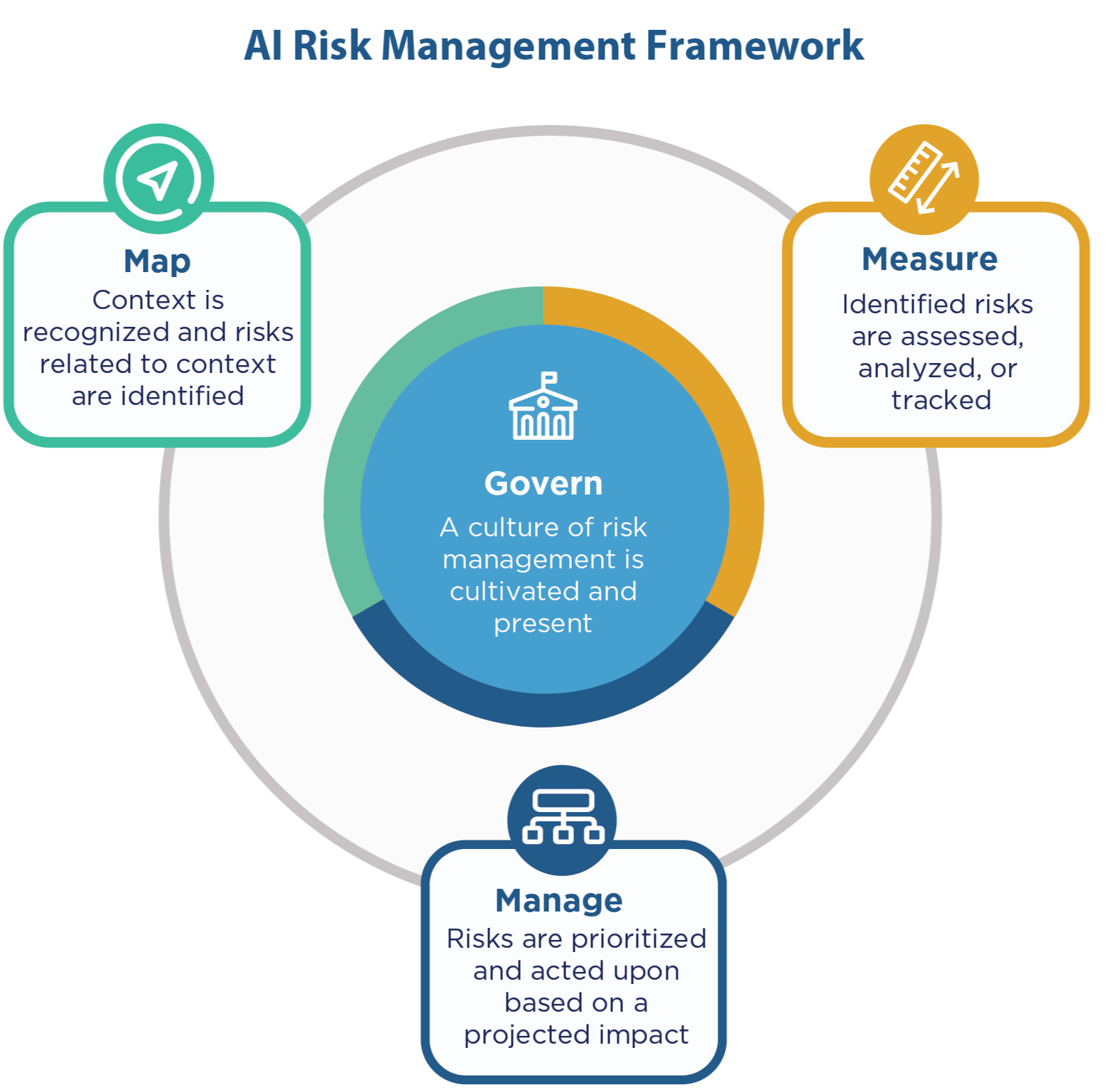
The NIST AI Risk Management Framework captures the broader discipline well. Govern sits at the centre: it is not a final approval after the technology has been built. Governance is the control environment that shapes mapping the context, measuring risks, and managing the resulting actions.
Watch this short discussion from the CFA Institute on governance and model testing. It is framed around finance more broadly, but the principle transfers directly: trust should be earned through deliberate testing and observed performance, not assumed from a persuasive demo.
How Agentic AI Is Reshaping Finance Workflows, Processes, and Governance | CFA Institute
In “How Agentic AI Is Reshaping Finance Workflows, Processes, and Governance,” the CFA Institute discusses red-teaming, governance, and how organisations build justified trust in AI-supported work.
Watch governance and testing. Focus on the idea of deliberately trying to expose model failures, measuring performance over repeated tasks, and using the results to define where human oversight remains necessary.
Applying the framework to five fund-administration workflows
The following examples show how the same framework produces different answers.
1. Cash and position reconciliation
Assessment: Often a strong AI-assistance candidate.
- Data quality: Usually good if bank, custodian, accounting, and portfolio records are structured and reconciled.
- Variability: Matching logic can be relatively stable, though descriptions and timing differences create noise.
- Exceptions: AI can prioritise breaks by size, age, recurrence, and likely cause.
- Auditability: High, provided the original records, matching logic, and reviewer resolution are retained.
- Oversight: A fund accountant clears material breaks; AI does not post unexplained adjustments.
Recommended scope: AI-supported normalisation and anomaly detection, with human-reviewed exception clearance. Do not allow an AI system to amend the general ledger without controlled accounting approval.
2. Extracting fund terms from LPAs and side letters
Assessment: Valuable, but normally human-supervised.
- Data quality: Signed, final versions of documents are essential. Drafts, amendments, and side letters must be correctly linked.
- Variability: Very high. Different clauses can express economically similar terms in legally different ways.
- Exceptions: A missed side-letter right can create an investor dispute.
- Auditability: Every extracted field should link to the source clause and document version.
- Oversight: Fund operations and, where necessary, legal counsel validate material terms.
Recommended scope: Use document intelligence to create an extraction queue and comparison table. Require human approval before any term becomes a live parameter in accounting, investor servicing, or a waterfall engine.
3. Distribution waterfall calculation
Assessment: Suitable for a hybrid design, not for autonomous AI decision-making.
- Data quality: Requires correct commitment data, prior distributions, expenses, tax effects where relevant, and approved legal terms.
- Variability: Often very high because of catch-ups, hurdles, preferred returns, multiple classes, side letters, and recycling provisions.
- Auditability: Essential. LPs, auditors, and managers may need to reproduce the calculation precisely.
- Oversight: Senior fund accounting and the manager retain ownership of the result.
Recommended scope: A deterministic, version-controlled calculation engine should produce the official economics. AI can assist with clause extraction, scenario generation, completeness checks, and identification of surprising outcomes. It should not independently interpret an ambiguous clause or approve payment allocations.
4. Routine investor-service queries
Assessment: Often high suitability, with strong authentication controls.
Examples include document requests, statement availability, notice-status confirmations, or explanations of standard reporting fields.
- Data quality: The response must draw from authoritative systems.
- Variability: Standard questions are repeatable; unusual tax, legal, or economic questions are not.
- Confidentiality: Critical. The system must verify identity and entitlement before exposing data.
- Oversight: Escalate any question involving legal interpretation, complaints, payment details, side-letter rights, or material discrepancies.
Recommended scope: A controlled AI assistant can classify requests, retrieve approved documents, draft a response, and route exceptions. It should never rely on open-ended text generation to answer questions about an investor’s economics.
5. Quarterly portfolio-company data and valuation reporting
Assessment: Moderate suitability for preparation; low suitability for final judgment.
- Data quality: Private-company information often arrives late, in inconsistent formats, and with varying accounting quality.
- Variability: High across sectors, companies, and valuation methods.
- Exceptions: A variance may reflect a reporting error, a business event, or a genuine valuation issue.
- Oversight: Investment, valuation, and fund-accounting professionals must evaluate the evidence.
Recommended scope: AI can standardise submissions, identify missing schedules, compare period-on-period changes, and assemble a draft variance pack. Final valuation conclusions, methodology choices, and disclosures remain human responsibilities.
A practical assessment memo
For a real workflow, write a one-page assessment before building anything. It should contain:
-
Workflow boundary
Define the exact start and end. “Automate investor reporting” is too broad; “draft the standard quarterly capital-account commentary from approved data” is assessable. -
Decision and action authority
State whether the AI only reads, drafts, recommends, routes, writes to a non-production system, updates an official record, or triggers a payment-related action. -
Data inventory and source of truth
List each source, owner, refresh timing, quality issue, and sensitivity classification. -
Exception taxonomy
Identify common exceptions, their frequency, severity, required reviewer, and escalation route. -
Control design
Specify logs, validation tests, reviewer sign-off, access controls, rollback method, and how model or prompt changes are approved. -
Success metrics
Measure outcomes such as preparation time, exception precision, review time, rework rate, output accuracy, and audit-evidence completeness. Do not measure success only by reduced headcount or faster throughput.
A good first pilot is narrow, reversible, and easy to compare against an existing human process. For instance, run AI-generated reconciliation classifications in parallel with normal operations for several cycles. Measure how often the suggestions are correct, which exceptions it misses, and whether reviewers can understand its output. Expand the scope only when the evidence supports it.
Key takeaways
A responsible AI assessment in fund administration rests on six linked factors:
- Data quality: AI cannot repair an unclear source of truth.
- Process variability: bespoke fund terms and undocumented judgment limit autonomy.
- Exception rate and severity: AI may help find and prioritise exceptions, but material exceptions need accountable resolution.
- Auditability: inputs, model version, outputs, reviewer actions, and final results must be reconstructable.
- Confidentiality: LP, bank, tax, valuation, and portfolio data require approved, permissioned handling.
- Human oversight: people retain responsibility for legal interpretation, valuation judgment, official accounting changes, and money movement.
The most promising near-term applications are usually not fully autonomous fund administration. They are controlled systems that reduce manual retrieval, document review, formatting, matching, and first-pass analysis—while making human review more focused and better evidenced.
Next, we will apply a similarly disciplined lens to blockchain and distributed-ledger technology. Rather than asking whether blockchain is innovative, we will ask whether a workflow truly needs a shared record, compatible identities, legal finality, governance across participants, and sufficient adoption to justify the change.