Recommended resources
The freely available resources this lesson will direct you to.
Good to see you again. In the previous lesson, you mapped the main parties around a Luxembourg private fund and separated legal form from regulatory role: the GP governs a limited partnership, the AIFM provides regulated fund management, and the administrator, depositary, auditor, and counsel each occupy different positions around the vehicle.
This lesson makes the boundary lines operational. By the end, you should be able to look at a task such as preparing a capital call, booking an investment, producing a NAV, or reviewing a valuation and answer four questions: who prepares it, who decides or approves it, who independently checks it, and who remains accountable. This separation is also the baseline for later assessing AI and blockchain: automation can support preparation and checking, but it must not blur authority or eliminate independent control.
The central distinction: operational execution is not management or assurance
A fund administrator is the fund’s operational recordkeeper and calculation engine. In a closed-end PE or VC fund, it turns approved legal, investment, and cash events into reliable records, calculations, notices, reports, and evidence.
That wording matters. The administrator normally does not:
- decide whether the fund should invest in a company;
- approve a transaction on behalf of the GP or AIFM;
- set the investment strategy;
- own the AIFM’s regulatory responsibility;
- provide the depositary’s independent safekeeping and oversight function;
- certify the annual accounts as auditor.
A useful shorthand is:
| Function | Core question | Typical principal party |
|---|---|---|
| Decision and governance | Should the fund take this action? | GP, board, investment committee |
| Regulated management | Is the fund managed, risk-controlled, and overseen in line with AIFM rules? | AIFM |
| Operational preparation | Have the records, calculations, notices, and reports been prepared correctly? | Administrator |
| Independent ongoing control | Are assets, cash flows, and selected fund activities being properly monitored? | Depositary |
| Independent retrospective assurance | Do the financial statements fairly present the fund’s position? | External auditor |
| Legal interpretation and documentation | What is permitted, required, or contractually effective? | Legal counsel |
The same organisation may sometimes provide more than one service. A large fund-services group might offer administration, corporate services, tax support, and depositary services through separate entities. That commercial bundling does not merge the functions. Each mandate, regulated permission, approval route, and conflict-control arrangement still matters.
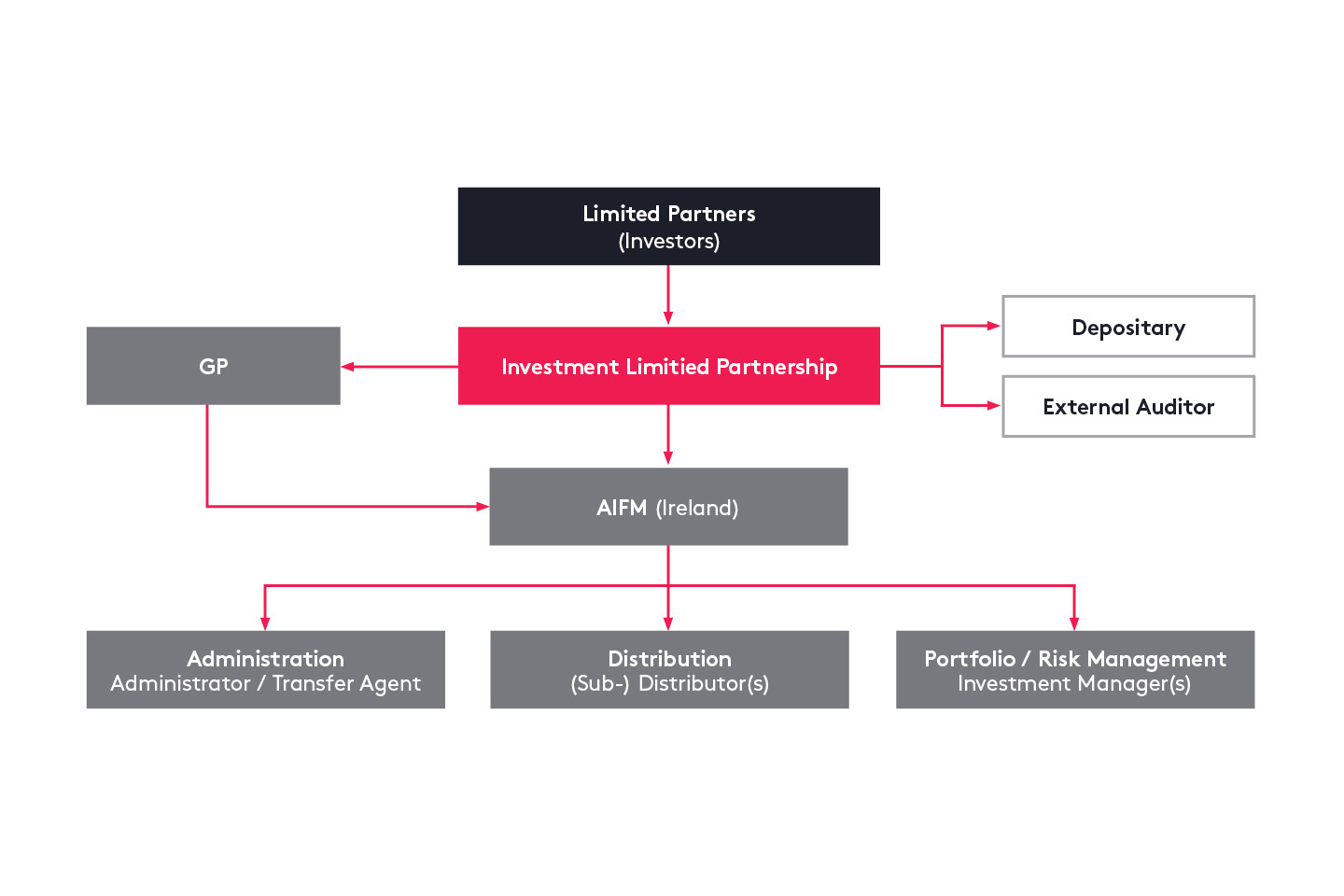
The diagram also reveals a common source of confusion: arrows on structure charts often show relationships, not authority. An administrator may receive transaction information from a manager and send reports to investors, but that does not mean it can make investment decisions or act as an auditor.
What the administrator actually does
For PE and VC funds, the administrator’s core contribution is to create a dependable operational version of the fund’s economic reality. Private assets do not usually have daily market prices or high volumes of exchange-traded activity. Instead, the administrator must assemble evidence from subscription documents, bank statements, signed investment agreements, portfolio-company information, valuation papers, and GP instructions.
The administrator’s mandate commonly includes five connected areas.
1. Fund and vehicle accounting
The administrator maintains books and records for the fund and often for the holding companies and SPVs beneath it. This can include:
- recording subscriptions, capital calls, investments, expenses, income, disposals, and distributions;
- maintaining the general ledger;
- reconciling cash balances and investment records to supporting documents;
- recording management fees, fund expenses, carried-interest allocations, and other partnership allocations according to the LPA;
- preparing trial balances, financial-statement schedules, and audit support.
The administrator applies the accounting policy and fund documents. It does not invent the policy or determine whether a proposed investment is permissible.
2. Investor operations
Closed-end fund administration is deeply concerned with each LP’s capital account. The administrator may maintain commitment, called-capital, uncalled-capital, contribution, distribution, and ownership records for every investor.
It often prepares:
- subscription-processing data and investor registers, where included in the mandate;
- capital-call notices;
- distribution notices;
- quarterly capital-account statements;
- investor reports and portal materials;
- documentation and administrative support for investor AML/KYC.
“Support” is an important qualifier in AML/KYC. The administrator may collect documents, run workflows, flag missing evidence, and maintain records. The party holding responsibility for the compliance framework and final acceptance decision depends on the fund’s regime and documentation; it will commonly be the AIFM, GP, or another designated regulated entity.
3. Calculation and reporting support
Administrators frequently prepare the data behind:
- NAV calculations or periodic net-asset-value reporting;
- management-fee and carried-interest calculations;
- portfolio and exposure reports;
- financial statements;
- tax-reporting inputs and filings;
- FATCA, CRS, and country-by-country reporting, where in scope;
- regulatory-reporting data supplied to the AIFM.
Preparation does not equal approval. A calculation can be mechanically correct yet based on an unauthorised valuation, incomplete legal document, or instruction that conflicts with the LPA. That is why a robust fund process requires a defined review and approval chain.
4. Corporate and entity services
Private-market structures can involve dozens or hundreds of entities: the main fund, parallel funds, co-investment vehicles, carry entities, blockers, holding companies, and acquisition SPVs. Administrators may provide domiciliation, company-secretarial support, board-meeting logistics, statutory filing support, and document maintenance for these entities.
These services keep the structure functioning, but the directors, GP, or other authorised persons still exercise formal corporate authority.
5. Evidence, control, and coordination
Much of the administrator’s value is less visible than an investor report. It maintains the evidence trail linking an economic event to the books:
- An authorised party supplies an instruction and supporting documents.
- The administrator validates completeness against agreed procedures.
- It records the transaction and performs calculations.
- It reconciles the records to bank, investment, and counterparty information.
- It routes items for review, approval, or exception resolution.
- It retains an auditable trail.
In other words, the administrator makes the fund operable and reportable. It does not become the investment decision-maker merely because its systems contain the most complete operational data.
[PDF] LUXEMBOURG PRIVATE EQUITY AND VENTURE CAPITAL brochure
Read the ALFI brochure’s overview of Luxembourg service providers. It provides a practical baseline for the administrator’s broad service menu, particularly in PE and VC structures with SPVs, co-investment vehicles, and carry entities.
In Section 1, “Luxembourg – a conducive environment for PE and VC,” find the subsection “Players on the Luxembourg PE and VC scene.” Read the service-provider overview. Then, in Section 2.4.3, “Administration,” read the administration description. As you read, separate listed activities into accounting, investor operations, tax and regulatory support, and corporate services; none of those activities grants investment discretion.
What stays with the GP, investment manager, and AIFM
The terms GP, fund manager, investment manager, and AIFM can refer to affiliated entities in the same sponsor group, but they should not be treated as synonyms.
GP: the partnership’s governance and authority
In an SCSp or SCS, the GP is the legal managing partner. Under the limited partnership agreement, it typically has authority to bind and manage the partnership, make appointments, convene advisory committees where applicable, and exercise the partnership’s rights.
The GP’s responsibilities often include:
- acting within the fund’s investment policy and LPA;
- appointing service providers;
- authorising fund actions through its directors or authorised signatories;
- addressing LP-consent, conflict, key-person, or advisory-committee matters under the LPA;
- taking formal partnership decisions.
A GP may delegate tasks, but it cannot casually delegate away its legal governance role.
Investment manager or adviser: investment judgement
The investment function originates and evaluates investments, conducts due diligence, negotiates deal terms, monitors portfolio companies, and recommends or makes investment decisions under its mandate.
For a buyout investment, the investment team may assess the target, negotiate a share-purchase agreement, and prepare an investment-committee paper. The administrator may later book the transaction, reconcile payment, and update the portfolio records. These are essential activities, but they belong to different stages of the same event.
AIFM: regulated management and oversight
The AIFM has a formal role under the AIFM framework. At a minimum, it provides portfolio management and risk management to the AIF. It also has regulatory, governance, delegation, and oversight responsibilities under the applicable regime.
The AIFM may perform investment management itself or delegate aspects of it. It may also delegate central-administration or valuation-related activities. Delegation, however, does not transform the AIFM into a passive nameplate. It must retain sufficient substance and oversight; it cannot become a “letterbox” entity.
For operational tasks, this often translates into an approval architecture:
- the administrator prepares accounting files, reports, call notices, and calculation support;
- the GP or AIFM, as required by the documents and governance framework, authorises the action;
- the AIFM oversees delegated providers and relevant risk, valuation, and compliance processes;
- the depositary and auditor conduct distinct forms of checking.
[PDF] LUXEMBOURG PRIVATE EQUITY AND VENTURE CAPITAL brochure
This section explains why AIFM responsibility cannot be equated with outsourced administration. Use it to distinguish an AIFM’s regulated management role from the work it may delegate.
In Section 2.4.1, “AIFM,” begin with the sentence “Each Luxembourg AIF shall have a single AIFM.” Read the AIFM definition and minimum functions. Continue through the delegation discussion. Focus on the difference between performing a task and retaining responsibility for oversight.
Depositary and auditor: two different kinds of independence
It is tempting to call every external provider a “check,” but the depositary and auditor are different from each other and from the administrator.
Depositary: ongoing safekeeping and oversight
For an AIF requiring a depositary, the depositary performs safekeeping and oversight functions. In PE and VC, assets are often unlisted shares, shareholder loans, or interests held through SPVs rather than traded securities held in conventional custody. The depositary therefore focuses heavily on ownership verification, asset records, cash-flow monitoring, transaction documentation, and checks tied to the fund’s rules.
The depositary may examine whether:
- the fund or SPV has documented ownership of an acquired asset;
- transaction approvals and legal documents are complete;
- cash flows match the transaction record;
- subscriptions and distributions have been handled through the required processes;
- a transaction appears consistent with the fund’s stated investment policy.
The depositary does not maintain the fund’s general ledger as its primary role, prepare all investor statements, select investments, or provide the annual audit opinion. Its operational independence is a feature, not inefficiency: its records and checks should be able to challenge the administrator’s and manager’s data.
Auditor: periodic independent opinion
The external auditor examines the annual financial statements and issues an audit opinion. It tests evidence, accounting treatment, balances, valuation information, controls, and disclosures, using professional judgement and an audit plan.
The basic division is:
- The fund, through its authorised governance, is responsible for preparing financial statements.
- The administrator commonly prepares accounting records, schedules, and draft statements on the fund’s behalf.
- The auditor independently tests whether those statements are fairly presented under the relevant accounting framework.
An audit is not a substitute for day-to-day administration. By the time an annual auditor finds an error, the fund may have already issued investor reports, made a distribution, or filed a regulatory return. Conversely, careful day-to-day administration does not eliminate the need for independent audit testing.
A concrete example: a portfolio-company valuation
Suppose a VC fund owns an unlisted company that has just raised a new financing round.
- The investment team obtains information on the financing and the company’s performance.
- The valuation process, overseen under the manager’s and AIFM’s framework, determines the appropriate valuation methodology and conclusion.
- The administrator records the approved valuation, updates the fund’s accounts, prepares supporting schedules, and reflects the result in reporting.
- The depositary performs its relevant oversight and documentation checks.
- The auditor later tests the valuation evidence and financial-statement presentation as part of its audit.
The administrator can identify missing documentation or implausible inputs, but should not quietly substitute its own investment judgement for the authorised valuation process.
[PDF] LUXEMBOURG PRIVATE EQUITY AND VENTURE CAPITAL brochure
Read this portion of the ALFI brochure to contrast depositary oversight with PE/VC administration. It is particularly useful because private assets change what “safekeeping” looks like in practice.
In Section 2.4.2, “Depositary services,” read from the two core depositary components. Then continue into Section 2.4.3.1, “Monitoring function,” through the practical oversight activities. Pay special attention to the depositary’s monitoring and documentation role; compare it with the administrator’s bookkeeping and reporting role from the earlier reading.
A responsibility matrix for common fund events
The clearest way to distinguish roles is to examine a recurring event. The matrix below describes a typical Luxembourg private-fund arrangement. Actual mandates, fund documents, regulatory perimeter, and delegation agreements may change the detail.
| Fund activity | Administrator | GP / investment manager | AIFM | Depositary | Auditor | Legal / other specialists |
|---|---|---|---|---|---|---|
| Onboard an LP | Collects documents, maintains data and register where mandated, supports notices | Accepts investor under LPA process where retained | Oversees applicable compliance and delegated process | May perform relevant monitoring | Tests later as part of audit where relevant | Counsel handles legal terms; tax advisers may assess eligibility |
| Capital call | Calculates call amounts, prepares notices, tracks receipts, posts accounting entries | Authorises call under LPA | Oversees process and relevant controls | Monitors cash flows where required | Tests samples and balances at year end | Bank executes payments; counsel advises on disputes or interpretation |
| Make an investment | Receives documents, records transaction, reconciles payment and ownership data | Sources, evaluates, approves or implements investment under mandate | Performs portfolio and risk-management duties; oversees delegation | Verifies ownership/documentation and monitors cash and compliance matters | Tests transaction evidence during audit | Counsel negotiates and documents deal; tax specialists structure it |
| Value an unlisted asset | Prepares accounting and reporting from approved valuation | Supplies portfolio information and valuation input as mandated | Owns or oversees valuation framework and process | Performs relevant oversight checks | Independently tests valuation during audit | Valuation specialist may provide independent input |
| Issue quarterly reporting | Produces reports and capital-account statements | Reviews manager commentary and investor communications | Oversees reporting obligations and process | Reconciles or monitors as applicable | Does not normally pre-approve quarterly reporting | Counsel reviews sensitive disclosures when needed |
| Annual accounts | Prepares ledger, schedules, draft accounts, and audit file | Governing body accepts accounts under applicable process | Oversees relevant management responsibilities | Reconciles and provides evidence | Audits and issues opinion | Tax advisers prepare or review tax data; counsel resolves legal questions |
| Distribution | Calculates allocations, prepares notices, books entries, tracks payments | Authorises distribution under LPA | Oversees process and applicable controls | Monitors cash flow where required | Tests in annual audit | Bank/paying agent transmits cash |
A compact way to read the table is:
- Administrator: prepares, records, calculates, reconciles, reports.
- GP / investment manager: decides, instructs, governs.
- AIFM: manages under the regulatory framework, controls risk, oversees delegation.
- Depositary: safeguards or verifies assets and monitors selected activity and cash.
- Auditor: independently examines and opines.
- Counsel and specialists: advise, document, interpret, and execute specialist work within their mandates.
The word authorise should always trigger a pause. A fund administrator may send a capital-call notice, but it should do so after the appropriate authorised instruction. It may compile a distribution calculation, but the GP or another authorised party must approve the distribution under the LPA. The person pressing “send” in an administrator’s system is not necessarily the person with legal authority to make the economic decision.
Investment fund services in Luxembourg: accounting | Financial Services Luxembourg
This practitioner resource offers a concise responsibility matrix for books, NAV work, investor registers, capital calls, and distributions. Read it as a practical illustration rather than as a substitute for a fund’s own mandate and governing documents.
First, locate the section “Who does what: the responsibility matrix” and read the responsibility matrix. Then read the section “What we do and what we coordinate,” from the boundary statement. Finally, scan the table in “Who does what in a Luxembourg fund.” Identify where the resource uses “prepares,” “approves,” “reconciles,” and “audits”: those verbs reveal the control design.
Other providers: important, but not interchangeable
A real fund structure includes more than the five core roles. These providers are often essential to the administrator’s work, while retaining distinct professional responsibilities.
Legal counsel drafts and negotiates fund and transaction documents, advises on regulation and contractual interpretation, and handles legal disputes. Lawyers do not generally maintain books or approve routine accounting entries.
Tax advisers model tax consequences, prepare or review tax filings, and advise on withholding, reporting, and structuring. An administrator may compile data or submit routine filings under instruction, but tax advice belongs with qualified tax specialists.
Transfer agents or registrar agents maintain investor ownership records and process subscriptions, transfers, and redemptions where applicable. In some structures, the administrator performs all or part of this work; in others, it is a separate regulated function.
Banks, paying agents, and treasury providers hold bank accounts and execute cash movements. They act on authorised instructions and applicable controls. The administrator may prepare payment files and reconcile the bank records, but should not bypass approval controls.
Valuation agents or specialists may provide third-party valuation support for difficult private assets. They do not replace the fund’s valuation framework or the AIFM’s oversight of it.
Company secretarial and domiciliation providers support entity governance, filings, registered-office requirements, and meeting records. The administrator may offer these services, particularly for SPVs, but directors and authorised signatories remain responsible for the corporate acts themselves.
This is why a fund-administration contract should be read function by function. “Full administration” can sound comprehensive while masking choices about investor onboarding, payment initiation, valuation preparation, corporate services, tax filings, and reporting. Good operating models make each handoff explicit.
The control principle that technology must preserve
The practical safeguard is a separation between information production, authority, and independent challenge.
For example, a system might automatically ingest bank data, calculate an LP’s capital call, draft notices, compare the output with the LPA, and flag discrepancies. Those are strong candidates for technology assistance. But before money moves, the fund still needs authorised approval, the depositary may need to perform required monitoring, and the administrator needs an audit trail showing inputs, calculations, exceptions, reviewers, and final instructions.
That is the essential lesson for AI and blockchain as well:
- AI may help extract data from subscription documents, identify exceptions in capital-account calculations, reconcile documents, and draft reporting commentary.
- A shared ledger may improve the consistency of records across administrator, manager, depositary, and investors.
- Neither technology should be treated as the legal decision-maker, the regulated AIFM, the independent depositary, or the external auditor.
A technically accurate automated record is valuable. It is not, by itself, authorisation, legal finality, or independent assurance.
Key takeaways
A fund administrator is best understood as the private fund’s operational backbone. It maintains books, performs calculations, supports investor operations, produces reporting, coordinates evidence, and often provides entity services across the fund’s SPV structure.
The boundary lines are equally important:
- The GP retains partnership governance and authority under the LPA.
- The investment manager or adviser performs investment judgement within its mandate.
- The AIFM retains regulated management, risk-management, delegation, and oversight responsibilities.
- The depositary provides safekeeping or ownership verification and ongoing oversight, particularly over assets, cash flows, and specified fund activity.
- The auditor independently examines annual financial statements and issues an audit opinion.
- Legal, tax, banking, valuation, and corporate-service providers perform specialist work that should be specified in clear mandates.
Next, you will trace how these roles interact through the full closed-end fund cycle: capital call, investment, valuation, reporting, and distribution. That process map will make the flow of data, approvals, accounting entries, and cash visible—and show where operational friction and technology opportunities actually arise.