Recommended resources
The freely available resources this lesson will direct you to.
Introduction
Welcome back. In our last lesson, we focused on the internal economics of the Kroll process, analyzing why its batch nature creates significant inefficiencies and why developing a continuous alternative—a potential disruptor—is so technically challenging. We identified this technical hurdle as a major barrier protecting incumbent producers.
Today, we will broaden our strategic analysis from the plant level to the entire industry. The goal is to systematically assess the competitive landscape of the titanium sponge market. Our learning outcome is: Using a competitive analysis framework (e.g., Porter's Five Forces), assess the key barriers to entry and the sources of competitive advantage for incumbent titanium sponge producers.
Given your background in economics and business strategy, you're likely familiar with Porter's Five Forces as a foundational tool. We will therefore dispense with a lengthy theoretical introduction and move directly to applying the framework to the unique and complex structure of the global titanium industry. This lesson will equip you to analyze the "moat" around existing producers and understand the sources of their profitability and market power.
A Framework for Industry Analysis
To structure our analysis, we'll use the Porter's Five Forces model. It helps deconstruct industry profitability by examining the competitive pressures at play.
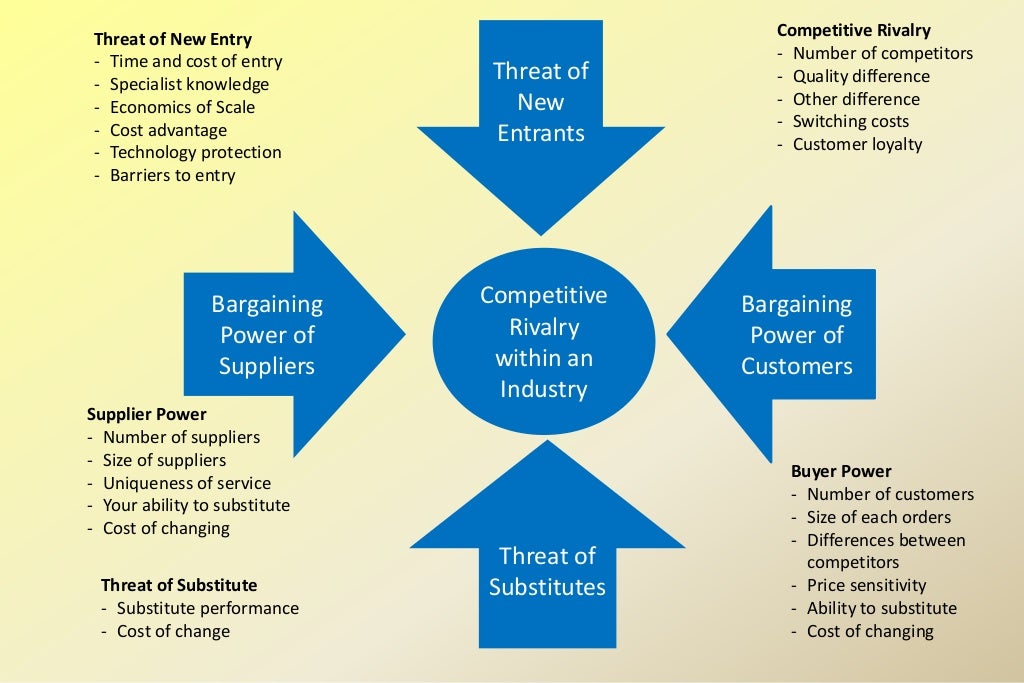
We will now work through each of these five forces, drawing on industry reports to build a comprehensive picture of the competitive dynamics.
1. Threat of New Entrants: A Formidable Fortress
The attractiveness of an industry is heavily influenced by how easily new competitors can enter and erode profits. In the case of titanium sponge, the barriers to entry are exceptionally high.
Let's start by reading an overview of the key players and the risks that define the industry.
[PDF] CASE STUDY: Ukraine's Titanium Industry
To understand the barriers, we first need to know the landscape. This report from the Better Regulation Delivery Office of Ukraine provides a concise overview of the value chain, key global players, and the systemic risks that shape the market.
Please read section 3.2 'Key Players and Integrated Business Models' and section 3.3 'Global Risks and Vulnerabilities of Supply Chains'. As you read, focus on identifying factors that would make it difficult for a new company to start producing and selling titanium sponge, especially for high-value applications.
The reading highlights several factors, but let's formalize them into distinct barriers to entry:
- Massive Capital Investment: The Kroll process requires a purpose-built, large-scale plant with heavy industrial equipment (reactors, distillation columns, furnaces). A 2021 U.S. government report noted that keeping the single remaining U.S. plant operational would require capital investment "approaching [REDACTED]". Building a new plant from scratch is a multi-hundred-million-dollar endeavor with a long payback period.
- Process Technology and Proprietary Know-How: While the Kroll process has been around since the 1940s, its implementation is a complex art. The operational expertise to manage high-temperature reactions, handle corrosive materials, and achieve high purity is a significant, often unwritten, form of intellectual property.
- Aerospace & Medical Certification: This is arguably the most significant barrier to the high-margin segment. As the reports mention, end-users like Boeing, Airbus, and medical device companies impose stringent certification standards (e.g., AMS, ASTM). A new producer would need to undergo a lengthy and expensive qualification process, which can take years, with no guarantee of success. This locks new entrants out of the most profitable markets.
- Economies of Scale and Scope: Incumbents benefit from established production volumes. Furthermore, many key players like VSMPO-AVISMA (Russia) and TIMET (USA) are vertically integrated, controlling the process from sponge to certified alloys and finished products. This integration provides cost advantages, quality control, and supply chain security that a standalone sponge producer cannot match.
- Access to Customers: The aerospace market is dominated by long-term contracts between a few major buyers (Boeing, Airbus) and the handful of certified producers. A new entrant would find it incredibly difficult to break into these established supply chains.
- Government and Geopolitical Factors: As the U.S. Department of Commerce report LINK emphasizes, titanium is a strategic material. Governments may protect domestic producers (as the U.S. has considered) or subsidize them (as in Russia and China), creating an unlevel playing field that discourages purely market-driven entry.
In short, the threat of new entrants into the aerospace-grade titanium sponge market is extremely low. The industry is a natural oligopoly protected by a combination of economic, technical, and regulatory moats.
2. Bargaining Power of Buyers and Suppliers
Bargaining Power of Buyers (Customers): High and Concentrated
The buyers of titanium sponge fall into two main categories:
- Aerospace & Defense: This segment is dominated by a few massive corporations (e.g., Boeing, Airbus, Rolls-Royce). Their large order volumes give them significant power to negotiate prices. As the Ukraine case study notes, they "effectively set market standards and structure."
- Industrial: This segment is more fragmented, buying lower-grade titanium for applications in chemical plants, desalination, etc. Buyers here are more price-sensitive, treating sponge more like a commodity.
The power of the large aerospace buyers is counterbalanced by the fact that there are only a handful of suppliers certified to meet their quality demands. This creates a "bilateral oligopoly" where both sides have significant negotiating power, leading to complex long-term contracts and strategic partnerships, such as the joint ventures between Boeing and VSMPO-AVISMA.
Bargaining Power of Suppliers: Moderate to High
The key inputs for the Kroll process are titanium ore, a reducing agent (magnesium), and energy.
- Ore Suppliers (Rutile/Ilmenite): While ore deposits are found globally, high-grade rutile is less common. However, the reports suggest that ore availability is not a critical constraint. Thus, the power of ore suppliers is moderate.
- Energy Suppliers: The Kroll process is famously energy-intensive. This gives energy providers significant power, especially in regions with high or volatile electricity costs. The economic viability of a plant can be directly tied to its long-term energy contracts. This was highlighted as a key economic risk in the Ukraine case study.
3. Threat of Substitute Products
The threat of substitutes for titanium sponge comes from two directions: substituting the material itself and substituting the input for melting.
- Material Substitution: In its core high-performance applications (e.g., jet engine components, critical airframe structures), titanium's unique combination of strength, light weight, and temperature/corrosion resistance gives it few perfect substitutes. While carbon composites and advanced aluminum or steel alloys compete in some areas, they cannot replace titanium in many critical hot-section and high-stress parts. The threat is therefore low to moderate.
- Scrap as a Feedstock Substitute: This is a much more significant and dynamic threat. Titanium scrap from machining and manufacturing processes can be remelted to produce new metal. Let's examine how this impacts the industry.
[PDF] THE EFFECT OF IMPORTS OF TITANIUM SPONGE ON THE ...
The U.S. Department of Commerce report on titanium sponge provides an excellent analysis of the role scrap plays in the U.S. market. It's a critical factor that puts a ceiling on virgin sponge prices.
Please navigate to the section titled 'VII. The Economic Decline of the U.S. Titanium Sponge Industry Is Caused By Increased Imports of Titanium Sponge'. Read subsection 8, 'Role of Scrap in Mitigating Price Increases and Downstream Production.' Focus on the share of scrap used in melt feedstock and the limitations of its use.
As the report details, scrap is a vital part of the ecosystem, with U.S. producers using it for 59-66% of their melt feedstock. This has two key effects:
- It reduces the demand for virgin sponge, acting as a direct substitute.
- It creates a price ceiling. If sponge prices rise too high, melters will increase their use of relatively cheaper scrap.
However, the threat is not absolute. As the report also notes, the highest-purity, safety-critical "rotating-grade" aerospace alloys cannot use high percentages of scrap, ensuring a baseline demand for high-quality virgin sponge.
4. Intensity of Rivalry Among Existing Competitors
While there are few players, the rivalry among them is intense and complex, driven by several factors.
[PDF] THE EFFECT OF IMPORTS OF TITANIUM SPONGE ON THE ...
Let's return to the U.S. government report, which details the global competitive landscape and the pressures exerted by state-supported players.
Please review the following sections: Section VI, 'Global Titanium Sponge Industry Conditions,' particularly Figures 14 and 15 showing global capacity and production trends. Section VIII.D, 'Increased Global Titanium Sponge Capacity and Production Further Impact the Long-Term Viability of U.S. Titanium Sponge Production,' focusing on the analysis of China and Russia. Briefly skim Appendix F, 'Trade Cases Involving Titanium Sponge,' to get a sense of the history of competitive disputes.
The readings paint a clear picture of a fierce competitive environment:
- High Concentration, Global Competition: The market is an oligopoly with producers in the US, Japan, Russia, Kazakhstan, and China fighting for market share.
- State-Backed Competitors: The rivalry is not on a level playing field. Russian producer VSMPO-AVISMA and the burgeoning Chinese industry benefit from state support. This allows them to make strategic investments and pricing decisions that are not purely market-driven, putting immense pressure on commercial players in the US and Japan.
- High Exit Barriers: A Kroll plant is a specialized, multi-million dollar asset that cannot be easily repurposed. This high exit barrier means that even during industry downturns, producers are likely to continue operating and cut prices to cover fixed costs, leading to intense price wars.
- Demand Cyclicality: The industry's fortunes are tied to the highly cyclical aerospace sector. Booms lead to capacity expansion, while busts (like the one following the COVID-19 pandemic) result in overcapacity and ruinous price competition.
- History of Trade Disputes: Appendix F shows a long history of anti-dumping cases against the USSR, Japan, and others, proving that aggressive, price-based competition has been a feature of this industry for over 50 years.
Synthesis: Sources of Competitive Advantage
Based on this Five Forces analysis, we can conclude that the titanium sponge industry is structurally difficult but can be profitable for incumbents with the right competitive advantages. The primary sources of advantage are:
- Quality & Certification (Differentiation): The ability to produce high-purity, aerospace-certified sponge is the single most important differentiator. It provides access to a protected, high-margin market segment where few can compete.
- Vertical Integration (Cost & Control): Integrating forward into melting, forging, and finished parts (like VSMPO-AVISMA and TIMET) captures more value, ensures quality control, and creates a captive customer for the sponge.
- Process Technology & Operational Excellence: While all use the Kroll process, minor differences in execution that improve yield, reduce energy consumption, or enhance purity can create a meaningful cost advantage.
- State Support (Non-Market Advantage): For producers in Russia and China, government assistance in the form of subsidies, cheap capital, or energy acts as a powerful, and arguably unfair, competitive weapon.
- Customer Lock-In: Securing long-term, multi-year supply agreements with major aerospace firms provides revenue stability and a defensible market share.
Activity: Strategic Advice
Imagine you are advising a well-funded private equity firm that sees the high prices and margins in aerospace-grade titanium and is considering an investment to build a new Kroll plant in a politically stable, low-energy-cost country.
Based on the Five Forces analysis, identify the two most significant barriers they would face and recommend a specific strategic action for each to mitigate the risk. (Take 5-10 minutes to formulate your answer).
Sample Answer
-
Barrier 1: Aerospace Certification. A new plant has zero track record. It would take years of producing at a loss before its material could be certified for use in a jet engine.
- Mitigation Strategy: Instead of a greenfield project, the firm should pursue a joint venture with or acquisition of a smaller, existing certified producer. This would allow them to acquire the certification and operational know-how instantly, even if the target's physical assets are old. The investment would then focus on modernizing and scaling the acquired, pre-qualified operation.
-
Barrier 2: Customer Access & Intense Rivalry. The existing market is locked up in long-term contracts with powerful incumbents, some of whom are state-backed and can afford to undercut a new entrant on price.
- Mitigation Strategy: Focus on a niche differentiation strategy rather than competing on cost. They could aim to become the premier supplier for an emerging, high-value segment that is currently underserved, such as powders for additive manufacturing (3D printing) of titanium parts. This might have different certification pathways and customers, allowing them to build a beachhead away from the core battleground of the major aerospace firms.
Conclusion
Our analysis reveals that the titanium sponge industry is a classic example of a mature, concentrated oligopoly protected by formidable barriers to entry. Profitability is not a given; it is hard-won.
Key Takeaways:
- The industry's structure is highly unattractive for new entrants due to massive capital costs, proprietary technology, and, most importantly, the aerospace certification barrier.
- Rivalry among the few incumbents is fierce, characterized by global competition, state-supported players, and cyclical price wars.
- Competitive advantage is not primarily about having the lowest cost, but about differentiation through quality and certification, vertical integration, and locking in powerful customers through long-term relationships.
- The threat from substitutes is moderate, with scrap recycling placing a soft cap on virgin sponge prices, while material substitutes pose a lesser threat in core markets.
In our next lesson, we will move from industry structure to operational profitability. The learning outcome will be to evaluate the impact of feedstock quality (e.g., rutile vs. ilmenite) and energy price volatility on the profitability of a titanium production operation. This will allow you to connect the high-level competitive forces we discussed today to the specific input costs in the techno-economic model you have been developing.