Recommended resources
The freely available resources this lesson will direct you to.
Introduction
In our last lesson, we examined the deep divide between Murray Rothbard's radical, rights-based anarchism and Milton Friedman's pragmatic, consequence-based minarchism. We saw how this split between "destinationist" and "directionalist" approaches represents a fundamental fault line within libertarian thought.
Today, we bring a third pivotal figure into the conversation: Friedrich Hayek. While Hayek shares Friedman's rejection of radical anarchism, his reasoning carves out a unique and highly influential intellectual position. This lesson will focus on identifying where Hayek's views diverge from those of uncompromising radicals like Rothbard. Specifically, we will unravel the apparent paradox of how one of the 20th century's fiercest critics of central planning could also accept the idea of a limited social safety net.
Hayek's Critique of Planning: Knowledge, Not Morality
To understand Hayek's nuanced position, we must first grasp that his primary argument against state control is different from Rothbard's. Rothbard, as we've learned, bases his argument on a moral absolute: the non-aggression principle. For him, the state is inherently illegitimate because it is built on the aggression of taxation and legal monopoly.
Hayek's critique, on the other hand, is primarily pragmatic and epistemological—it's about the limits of human knowledge. He argues that a complex modern economy is a "spontaneous order," a system that has evolved without a central designer. The crucial information needed to coordinate this system is held in the minds of millions of individuals and is communicated through the price system. No central planner, no matter how intelligent or well-intentioned, could possibly gather and process this vast, dispersed knowledge.
Let's begin with a short video that outlines Hayek's core ideas.
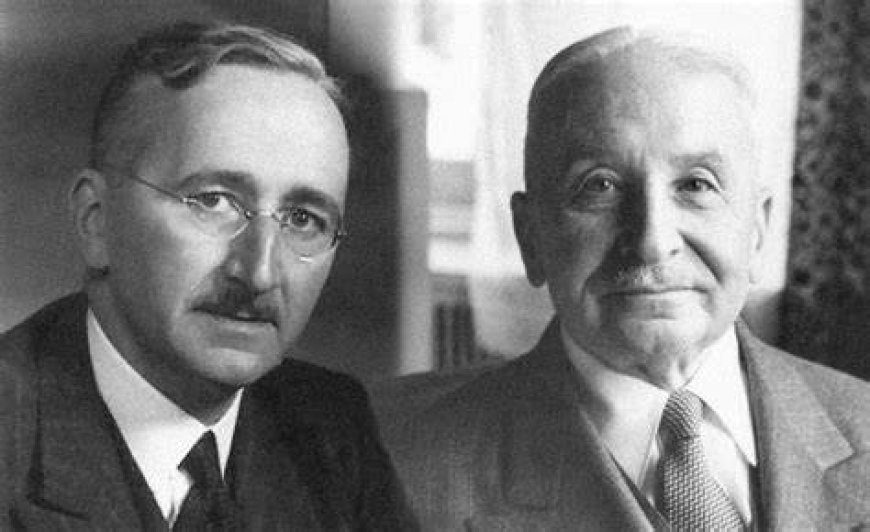
POLITICAL THEORY – Friedrich Hayek
This video from The School of Life provides a concise overview of Hayek's intellectual project. It explains his fundamental argument against central planning, which is essential for understanding his entire philosophy.
Please watch the segment from the critique of state planning. As you watch, focus on the core of his objection: not that planning is immoral, but that it is impossible for any single person or committee to possess the necessary information to make rational economic decisions for an entire society. This is what economists now call the "knowledge problem."
Hayek's argument is that attempts at central planning inevitably fail and, in doing so, lead to an erosion of freedom. To enforce an unworkable plan, the state must take on more and more power, eventually setting society on what he famously called "the road to serfdom." This is a consequentialist argument about where certain policies lead, quite different from Rothbard's declaration that the state is illegitimate from the start.
A Tale of Two Libertarians: Rothbard vs. Hayek
This difference in starting principles—Rothbard's moral absolutism versus Hayek's pragmatic fallibilism—led to a profound disagreement. The conflict came to a head when Hayek was preparing his monumental work, The Constitution of Liberty, which was his attempt to define the principles of a free society and the proper, limited role of government within it.
The radical anarchist Rothbard saw Hayek's project not as a defense of liberty, but as a dangerous compromise. The following article from Reason magazine discusses a private memo Rothbard wrote about Hayek's book, revealing the depth of the chasm between them.
A Tale of Two Libertarianisms - Reason Magazine
This article details the intellectual clash between Rothbard and Hayek. Reading about Rothbard's reaction to Hayek's work is a powerful way to understand their fundamental differences.
Please read the section that begins with a discussion of the memo. Take note of why Rothbard considered The Constitution of Liberty to be an "evil book." What were the specific "concessions to state power" that he found so objectionable?
As the article reveals, Rothbard was aghast that Hayek, a supposed champion of the free market, would make concessions to the state. Rothbard believed that by endorsing state functions like "compulsory unemployment insurance" and "minimum income guarantees," Hayek was betraying the cause of liberty. From Rothbard's destinationist perspective, this was unacceptable. It legitimized the very state aggression he sought to abolish.
This raises the central question for our lesson: Why did Hayek, the great critic of state planning, believe a limited social safety net was compatible with a free society?

Resolving the Paradox: Two Kinds of Welfare State
The key to solving this apparent contradiction lies in a crucial distinction Hayek made, not between having a safety net or not, but between two different ways a state can provide one. He opposed one form of welfare state as the "road to serfdom," while accepting another as compatible with the rule of law.
An excellent blog post from Bleeding Heart Libertarians explains this distinction with great clarity.
Hayek on Serfdom and Welfare States - Bleeding Heart Libertarians
This text masterfully unpacks the nuance in Hayek's position, resolving the seeming contradiction between his warnings against the state and his support for a safety net.
First, read the introduction to see how this puzzle is framed: the common confusion. Next, read the core of the argument, which introduces the key distinction between two types of welfare states. Focus on the section titled "II. The Welfare State of Law and Welfare State of Administration" and the text immediately following it, from the explanation of the two types. Finally, read the conclusion to see how this distinction applies in practice: the acceptable versus unacceptable models.
As the article explains, Hayek's ideas can be understood by distinguishing between:
-
The Welfare State of Administration: This is the model Hayek feared. It is a system where bureaucrats and politicians have the discretionary power to constantly "tinker" with the economy. They intervene to set "fair" wages for some groups, subsidize favored industries, and pursue vague goals of "social justice." This, for Hayek, is the slippery slope. It destroys the rule of law (which requires general, predictable rules) and cripples the price system by replacing market signals with the arbitrary decisions of planners. It puts society on the path to total state control.
-
The Welfare State of Law: This is the model Hayek could accept. It does not involve tinkering or discretionary power. Instead, it provides a safety net through clear, general, and uniformly applied rules. The prime example is a guaranteed minimum income (or a Universal Basic Income). In this system, the government's role is simply to ensure that no citizen's income falls below a publicly known, legally fixed floor. It doesn't decide who is "deserving," what prices are "fair," or which jobs to protect. It simply sets a universal baseline and then allows the market to operate freely above it. This approach respects the rule of law and avoids the knowledge problem.
Hayek's acceptance of a safety net was therefore highly conditional. He did not support the kind of sprawling, bureaucratic welfare systems common today. He supported a minimal backstop, provided in a way that was least distorting to the market and most consistent with the principle of a government of laws, not of men.
Conclusion
Today we've delved into the nuanced position of Friedrich Hayek and placed him on the libertarian spectrum relative to radicals like Murray Rothbard. We have seen that while both were profound critics of state power, their reasons and conclusions differed significantly.
Here are the key takeaways from our exploration:
- Different Foundations: Hayek's critique of the state is primarily pragmatic, rooted in the knowledge problem—the inability of central planners to manage a complex economy. This contrasts with Rothbard's moral absolutism, rooted in the non-aggression principle.
- A Non-Anarchist Position: Unlike Rothbard, Hayek was not an anarchist. He believed in a limited government bound strictly by the rule of law, whose primary function is to provide a stable legal framework for the spontaneous order of the market to flourish.
- A Conditional Safety Net: Hayek's controversial acceptance of a social safety net is not a contradiction but a careful distinction. He rejected the "welfare state of administration" with its discretionary tinkering and pursuit of "social justice." He accepted the possibility of a "welfare state of law," such as a uniform minimum income, which provides a basic floor through clear, general rules without empowering bureaucrats to manage the economy.
By making this distinction, Hayek charts a course between the absolute anti-statism of Rothbard and the expansive welfare states of modern social democracies.
In our next module, we will step back to formalize the concepts we've been discussing. We will clearly define the major branches of libertarianism—including minarchism and anarcho-capitalism—and explore other fascinating variations, giving you a comprehensive map of the diverse world of libertarian thought.