Recommended resources
The freely available resources this lesson will direct you to.
- Government in Business - Murray Rothbard [For a New Liberty]www.youtube.com
- How Would Private Courts and Military Defense Work? Bob Murphy Lectures Menger Institutewww.youtube.com
- EconLog Book Club: For a New Liberty, Chapter 12 - Econlibwww.econlib.org
- Society without a State | Mises Institutemises.org
Introduction
In our last lesson, we explored Murray Rothbard's uncompromising moral case for anarcho-capitalism. We saw how his strict adherence to the Non-Aggression Principle led him to define the state as a fundamentally illegitimate, criminal organization. You also learned about the philosophical arguments he and his followers use to ground this principle, such as the proof by elimination and the concept of argumentation ethics.
This moral argument naturally provokes a practical question: if we abolish the state, what happens next? How would a society function without a government to create laws, operate courts, and resolve disputes? Wouldn't it descend into chaos? This lesson will tackle that very question by describing Rothbard's vision for how law and dispute resolution could be provided by the free market. We will move from the why of anarchism to the how.
Challenging the Monopoly Mindset
Before diving into the mechanics, it's important to address a common mental hurdle. We are so accustomed to the government providing services like courts and law that it can be difficult to imagine any other way. Rothbard argued this is a failure of imagination, not a failure of the market. He used a famous analogy to make his point.
Government in Business - Murray Rothbard [For a New Liberty]
In this excerpt from a lecture based on his book For a New Liberty, Murray Rothbard uses a powerful analogy to illustrate the public's resistance to privatizing services that have long been government monopolies.
Please watch the section from "if the government..." to "...any other government operation". He asks you to imagine the government had always held a monopoly on making and selling shoes. What questions would people ask a libertarian who advocated for privatizing the shoe business? Notice how these questions, which seem absurd when applied to shoes, are the very same ones people raise about privatizing courts and police.
The point of the shoe analogy is that a free market is a dynamic process of discovery. No one can provide a perfect blueprint for how a private legal system would look, just as no one in 1850 could have predicted the exact structure of today's global telecommunications market. The argument is that the competitive, profit-driven, and ever-inventive energies of individuals on the market will find solutions far more effectively than a coercive monopoly.
The most common objection, famously articulated by thinkers like Milton Friedman, is that while markets are great for producing goods like shoes, you still need the government to set and enforce the "rules of the game." Anarcho-capitalists challenge this premise directly.
How Would Private Courts and Military Defense Work? Bob Murphy Lectures Menger Institute
In this lecture, anarcho-capitalist economist Bob Murphy responds to the idea that the government is necessary to define the rules of the game.
Watch the segment from his discussion of Milton Friedman. Murphy points out that we don't have a single world government setting the rules for all countries, yet different nations still manage to interact, trade, and have their road networks connect. He argues that if multiple state jurisdictions can coexist without a higher authority, it's conceivable that multiple private legal providers could as well.
With this groundwork laid, let's explore the practical building blocks of a market-based legal system.
The Market for Justice: Arbitration and Private Courts
The first thing to realize is that private, voluntary dispute resolution isn't a futuristic fantasy; it's a massive, well-established industry that operates today. This is the world of arbitration. When businesses sign complex contracts, they often include clauses specifying that any disagreements will be settled not by government courts, but by a private arbitrator or arbitration firm.
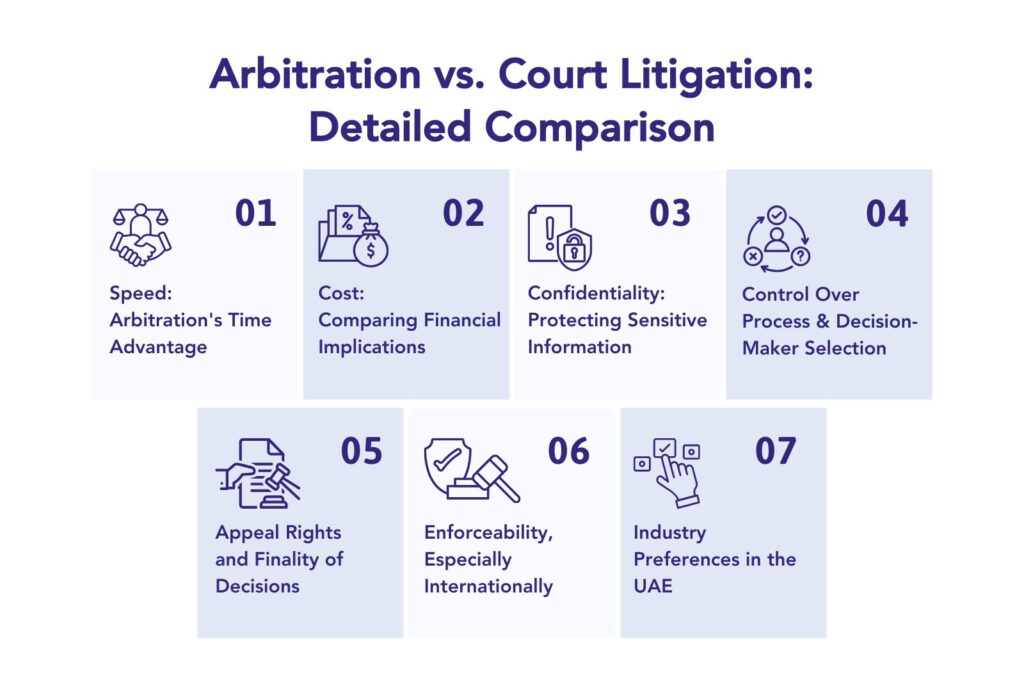
Arbitration is popular precisely because it is often more efficient, faster, and less expensive than the state's judicial system. Rothbard saw this existing practice as a model for how all disputes could be handled.
Society without a State | Mises Institute
In this foundational essay, Rothbard explains how private arbitration already forms a parallel legal system and draws on historical examples of successful non-state courts.
First, read the section that begins "Arbitration has grown". Note the sheer scale of private arbitration and the fact that arbitrators can create their own body of "private law." Next, read the following section, which starts with an objection. This part is crucial because it addresses enforcement. How did historical merchant courts ensure their decisions were respected without police power? Focus on the role of reputation and boycott.
The success of private arbitration and historical merchant courts demonstrates two key points:
- Demand: People will voluntarily seek out and pay for expert, impartial dispute resolution.
- Enforcement: State coercion is not the only way to ensure compliance. The threat of being ostracized from a business community—of having your reputation ruined and no one willing to trade with you—can be an even more powerful enforcement mechanism.
The Anatomy of a Private Legal System
Building on the model of arbitration, Rothbard and other anarcho-capitalists have sketched out a plausible system for law and courts. It rests on a few key components.
1. Courts, Judges, and Reputation
In a free market, judicial services would be provided by competing firms or individual judges. Like any other service provider, their success would depend entirely on their reputation.
- Selection: Disputing parties would choose judges or courts known for their wisdom, impartiality, and expertise in the relevant area of law (e.g., contract law, family law, property disputes).
- Incentives: A judge who developed a reputation for being biased or incompetent would quickly lose customers and go out of business. Unlike a government judge who has a job for life and is paid by taxpayers, a private judge's livelihood would depend directly on being seen as fair and effective.
2. The Law Code
If there's no government legislature, where does the law come from?
The answer is twofold. First, as we discussed in the last lesson, the entire system would be built upon a foundational, widely accepted basic law code: the Non-Aggression Principle. Any court that sanctioned clear aggression (like theft or assault) would be seen as illegitimate by the wider community and other court systems.
Second, beyond this basic prohibition on aggression, a vast body of specific law would develop through precedent and competition, much like the English common law or the law merchant. Courts would offer different procedural rules, and consumers would patronize those whose legal codes they found most just and efficient. The judges' role is not to make law, but to find and apply it based on these established principles and precedents.
3. A Step-by-Step Dispute
So, how would a conflict play out, especially when one party is uncooperative? Let's walk through a common scenario.
EconLog Book Club: For a New Liberty, Chapter 12 - Econlib
This article by economist Bryan Caplan provides a very clear, step-by-step summary of Rothbard's proposed process for handling a dispute between two people who use different court agencies.
Please read the section that begins with the "Mr. Jones" example. This flowchart-style explanation is perhaps the clearest description of the anarcho-capitalist legal process.
Let's recap the process described by Caplan:
- Plaintiff vs. Defendant: Smith believes Jones has wronged him.
- Unilateral Agreement: If both Smith and Jones are clients of the same court (e.g., "Prudential Court"), the process is simple. They are bound by that court's decision.
- Disagreement: But what if Smith uses Prudential Court and Jones uses "Metropolitan Court"? Smith's court finds Jones guilty. Jones's court, however, finds him innocent. Do they go to war?
- The Appeal: No. War is "bad for business." It's destructive and costly, and no customer wants a police agency that starts street battles. Therefore, it is in the absolute self-interest of both Prudential Court and Metropolitan Court to have a pre-agreed upon method for resolving such conflicts. They would submit the case to a third-party appeals court that both agencies trust for its impartiality.
- Finality: The decision of the appeals court would be considered binding. The system needs a cutoff point to prevent endless appeals, and a common-sense rule would be that a decision reached by two out of three courts is final.
This appeals process is the crucial mechanism that prevents the system from devolving into constant conflict. The profit motive itself creates a powerful incentive for peaceful, orderly resolution.
Stability and the "Nash Equilibrium"
This brings us to the ultimate question of stability. Would this system be robust, or would a private court or police force just try to become the new government? Rothbard argues the market has powerful, built-in checks and balances.
A corrupt judge would lose all business to honest competitors. A police agency that turned into a protection racket would face the armed opposition of all other agencies defending their clients. Crucially, a rogue agency would lack the one thing the state has: legitimacy. The public would see them as bandits, not as a rightful government, and would rally with other agencies to put them down.
Economist Bryan Caplan frames this stability using a concept from game theory: a Nash Equilibrium.
EconLog Book Club: For a New Liberty, Chapter 12 - Econlib
Here, Caplan explains why the anarcho-capitalist system would be stable.
Read the final two paragraphs of the article, starting from "But there’s a lot more". A Nash Equilibrium is a situation where no participant can gain by unilaterally changing their strategy. See if you can understand why, in Rothbard's system, it's in everyone's best interest to play by the rules of peaceful arbitration rather than resorting to violence.
In simple terms, Rothbard's system is designed to be a stable equilibrium because the costs of aggression (losing all your customers, having other agencies unite against you) are astronomically high, while the benefits of peaceful cooperation are immense.
Conclusion
In this lesson, we have moved from the abstract moral imperative of anarcho-capitalism to its proposed institutional framework for law and justice. Rothbard’s argument is that, far from being a source of chaos, the free market is uniquely suited to providing the legal services a peaceful society requires.
Here are the key takeaways from his model:
- Market Precedent: Private, voluntary dispute resolution (arbitration) is already a successful and widespread practice, demonstrating the viability of non-state justice.
- Reputation as a Regulator: In a competitive market, judges and courts would be disciplined by their need to maintain a reputation for fairness and impartiality to attract customers.
- A System for Resolving Conflict: Disputes between clients of different courts would be settled through a pre-arranged appeals process, making violent conflict self-destructive and "bad for business."
- Foundational Law: The system would operate on a generally accepted basic law code (the Non-Aggression Principle), with specific legal rules evolving through competition and precedent.
- Incentives for Peace: The entire structure is designed to create a stable equilibrium where peaceful resolution is the most profitable strategy for all participants.
We have now seen how a dispute might be adjudicated and a judgment rendered. But this leaves one final, crucial piece of the puzzle. What happens if a convicted party refuses to comply? How are judgments enforced, and how are people protected from criminals in the first place? That is the subject of our next lesson: private policing and defense.