Recommended resources
The freely available resources this lesson will direct you to.
- Let's Make A Boss - Ancient Upholder - LMAM - RPG Maker MV Tutorial - RPGMMV - RMMV Tutorialwww.youtube.com
- What Makes A Good Multiple Phase Boss Fight?www.youtube.com
- Spriting/Pixel Art Tutorialsforums.rpgmakerweb.com
- OSR: Boss Fight Designcoinsandscrolls.blogspot.com
- Boss Design: How to Make an Unforgettable Boss Battlegamedesignskills.com

Hello! Welcome back to the final module of our course.
In the last lesson, you created your first scripted combat encounter, a crucial step in teaching players how your game works. You learned to use the event system to control the flow of a tutorial battle, guiding the player through the core mechanics.
Today, we're building on that foundation to tackle one of the most exciting parts of any JRPG: the boss battle. Our goal is to design and implement a unique boss encounter with a distinct mechanic, such as a phase change or a special attack. This isn't just about creating a stronger enemy; it's about crafting a memorable, dramatic, and challenging climax for a section of your game.
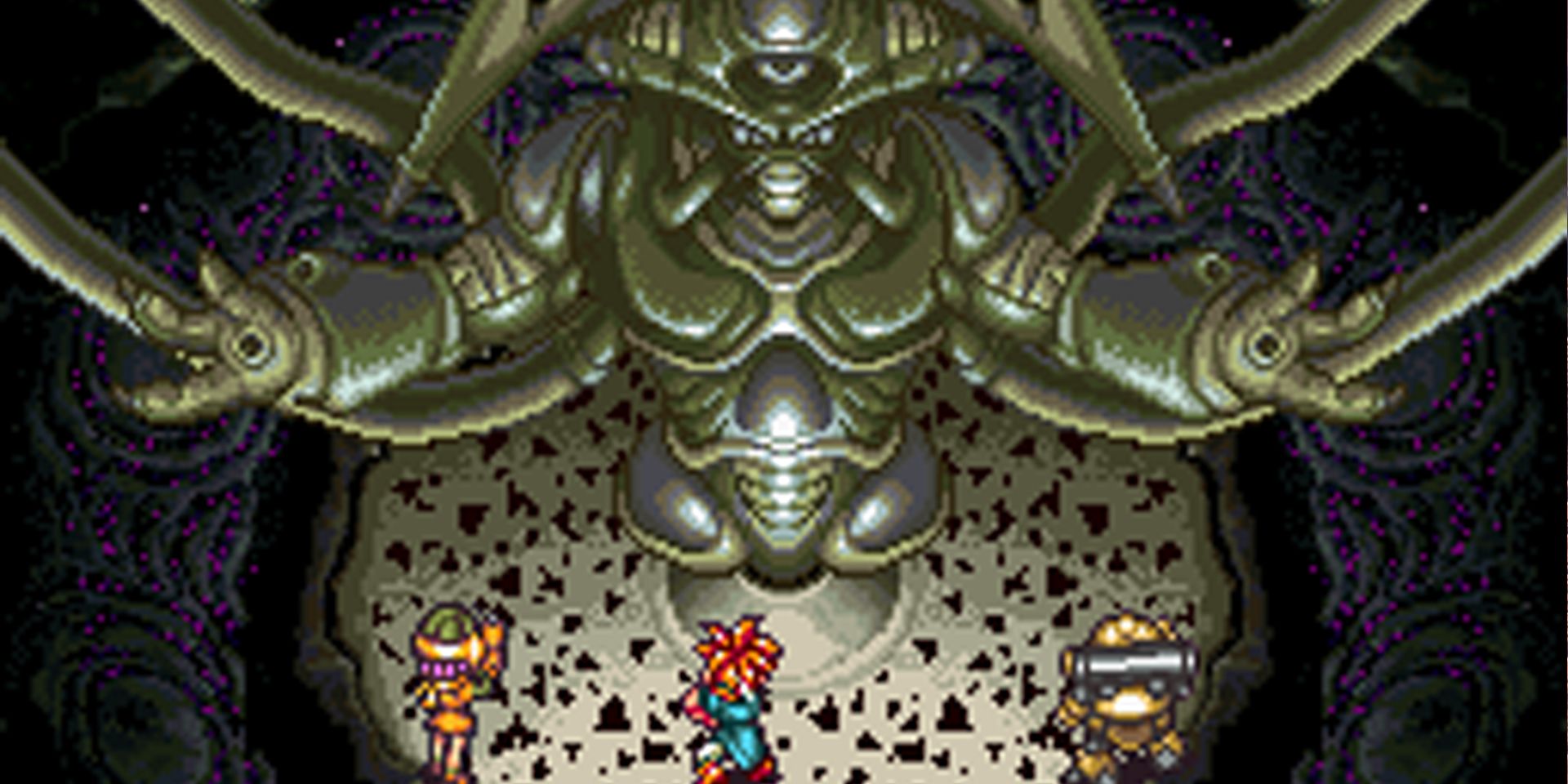
The Philosophy of a Great Boss Battle
A boss fight serves a much larger purpose than a random encounter. It's a test of everything the player has learned up to that point and a major milestone in their journey. Before we dive into implementation, let's explore the design principles that make a boss battle unforgettable.
The following article is a superb guide on this topic. It breaks down the core components of boss design, from building anticipation to creating a satisfying conclusion.
Boss Design: How to Make an Unforgettable Boss Battle
Please read 'Boss Design: How to Make an Unforgettable Boss Battle' from Game Design Skills. This will provide the theoretical framework for our work today.
Focus on the section titled 'The 4 key principles of boss design'. Pay close attention to the descriptions of Purpose, Theme, Moveset, and Escalation. These principles will be the cornerstones of our boss design.
As you've just read, every great boss is built on four pillars:
- Purpose: Why does this boss exist? Is it a Skill Test to ensure the player has mastered a mechanic (like using specific items or understanding elemental weaknesses)? Or is it a Narrative beat, a confrontation with a character the player has a history with?
- Theme: The boss's appearance, abilities, and the arena itself should all feel coherent. A fire demon shouldn't be using ice attacks unless there's a strong thematic reason for it.
- Moveset: The collection of actions the boss can take. A good moveset challenges the player to react and adapt, rather than just spamming their strongest attacks. The tells for each move must be readable.
- Escalation: How the fight evolves and intensifies. This is where phase changes come in. A boss that changes its tactics keeps the player on their toes and prevents the fight from becoming a repetitive slog.
With this framework in mind, let's get practical and look at how to design and implement these "distinct mechanics."
Architecting a Dynamic Boss
Your existing battle event system is the perfect tool for orchestrating a complex boss fight. A boss is essentially a highly advanced scripted encounter. The same conditions you used for tutorials—Turn, HP %, Switch—are what you'll use to trigger phase changes and special attack patterns.
Let's break down the two key mechanics mentioned in the learning outcome.
1. Phase Changes
A phase change marks a significant shift in the battle, often triggered when the boss's HP drops to a certain threshold. This is the "Escalation" principle in action.
For a clear, concise guide on the triggers and effects of phases, this next resource is excellent.
The blog post 'OSR: Boss Fight Design' offers a very practical, list-based approach to boss mechanics. We'll look at its section on phases.
Please read the section 'III: Phases'. Note the lists of potential triggers (damage taken, rounds passed) and what a phase change can include (new moves, more enemies, terrain changes).
Implementation in Your Engine:
You can think of a boss's state (which phase it's in) as a piece of state in a front-end application. A trigger (like HP dropping below 50%) is an event that causes a state update, which in turn re-renders the boss's behavior.
Here’s how you could structure this with your battle event system:
- Battle Event Page 1: Phase 2 Trigger
- Conditions:
Enemy 'Boss' HP <= 50%ANDSwitch 'Boss Phase 2' is OFF. - Commands:
Show Animation: (e.g., a power-up effect on the boss)Show Text: "The boss is enraged!"Set Switch {'Boss Phase 2', ON}Wait: 60 frames
- Span:
Battle(so it only runs once).
- Conditions:
Once the Boss Phase 2 switch is ON, the boss's AI can change. You can have different action patterns in the enemy's data file that are conditional on this switch, or you can use more battle event pages with the condition Switch 'Boss Phase 2' is ON to script specific new attacks.
2. Special Attacks
A special attack is more than just a high-damage move. It should be a unique event in the fight that may require a specific response from the player. Let's return to the OSR: Boss Fight Design resource for a great breakdown of attack types.
We'll now look at the different types of moves you can give your boss to create a varied and challenging moveset.
Read the section 'IV: Boss Moves'. Focus on the different categories: the 'moderate' attack, the 'oh fuck' damage attack, and especially the 'telegraphed mega-damage attack' and 'Reactions'.
Let's focus on two powerful types of special attacks:
-
Telegraphed Attacks: The boss spends a turn "charging" a powerful move. This creates tension and gives the player a window to react—perhaps by using a defensive skill, attempting to interrupt the attack, or healing up.
- Implementation: This is an AI pattern. The boss uses a "Charge" skill on turn N. This skill does nothing but play an animation and apply a "Charging" state to the boss. On turn N+1, the AI pattern dictates the use of the "Unleash" skill. The damage formula for "Unleash" could even be more powerful if the "Charging" state is still active, incentivizing players to find a way to remove it.
-
Reactive Attacks (Counters): The boss immediately retaliates when the player performs a specific action, like casting a spell or using an item.
- Implementation: This is a perfect use case for a
Script Callwithin a more advanced battle event condition. While our simple event system might not have aPlayer Used Magiccondition out-of-the-box, you could add one. A battle event page with this condition would run its command list immediately after the player's action resolves, breaking the normal turn flow to execute the counter-attack. This is analogous to anonEventhandler in JavaScript.
- Implementation: This is a perfect use case for a
Test your understanding!
Imagine a boss, a "Crystal Golem". In Phase 2, it gains a telegraphed attack called "Shatter". How would you use the battle event system to warn the player and give them a chance to react? Sketch out the event commands.
Show answer
Here is a possible implementation:
-
The AI Pattern: The Golem's Phase 2 AI would include a sequence like:
Use Skill "Crystalize" (Charge)->Use Skill "Shatter" (Unleash). -
The "Crystalize" Skill: This skill does no damage. It plays an animation of the golem hardening and applies a "Crystallizing" state to itself.
-
The Battle Event Page:
- Condition:
Enemy 'Crystal Golem' has state 'Crystallizing'. - Commands:
Show Text: "The Golem is hardening its crystal core! It's about to unleash a powerful shockwave!"Show Text: "A powerful physical blow might break its focus..."
- Span:
Turn(so it shows every turn the Golem is charging).
- Condition:
This setup clearly telegraphs the danger and hints at the solution (using a strong physical attack to potentially remove the "Crystallizing" state before "Shatter" is used).
Design Workshop: The Rogue Alchemical Golem
Let's apply these concepts to create a boss for your demo. Based on your "Missing Alchemist" narrative, a fantastic boss would be the alchemist's magnum opus gone wrong: the Rogue Alchemical Golem.
- Purpose: A skill test. It forces the player to use the different alchemical items they were introduced to in the tutorial battle (e.g., "Sparking Vial" for fire damage, "Fizzing Flask" for area damage, and a new "Coolant Vial").
- Theme: An unstable construct of metal and glass, visibly leaking volatile reagents. The arena could be the alchemist's trashed workshop, with interactive elements.
Mechanics & Phases
Phase 1: (100% - 51% HP) - Stable but Leaky
- AI Pattern: A mix of standard physical attacks.
- Special Mechanic:
Reagent Vent. Every few turns, the golem vents a different chemical, changing its own elemental weakness.- Implementation: The
Reagent Ventskill randomly applies one of three states:Volatile (Fire Weak),Corrosive (Water Weak), orConductive (Lightning Weak). A battle event would show text indicating the change: "The Golem is leaking a volatile fluid! It smells flammable!"
- Implementation: The
Phase 2: (50% - 0% HP) - Unstable Overload
- Trigger: When HP drops below 50%, a one-time battle event triggers.
- Event:
Show Animation: (Sparks fly),Show Text: "Core breach detected! The golem is going critical!",Set Switch {'Golem Unstable', ON}.
- Event:
- New Moves:
Unstable Burst: A light-damage Area-of-Effect (AoE) attack it uses frequently.
- Telegraphed Attack:
Overload.- Turn 1 (Charge): The golem uses the
Overload Chargeskill. It applies a "Meltdown" state to itself. A battle event triggers:Show Text: "The core is glowing intensely! It needs to be cooled down, fast!" - Turn 2 (Unleash): The golem uses
Overload Unleash. This is a massive damage AoE attack. However, if the player used a "Coolant Vial" on the golem during the charge turn, the "Meltdown" state is removed. The damage formula forOverload Unleashchecks for this state; if it's absent, the attack "fizzles" and does minimal damage.
- Turn 1 (Charge): The golem uses the
This design creates a dynamic fight. Phase 1 tests the player's observation and use of different elemental items. Phase 2 tests their ability to react to a telegraphed threat, creating a tense and rewarding puzzle within the combat.
Conclusion
You now have a comprehensive framework for designing and implementing compelling boss battles. By moving beyond simple stat increases and embracing unique mechanics, you can transform a fight from a mere obstacle into a memorable centerpiece of your game.
Key Takeaways:
- Bosses are defined by Purpose, Theme, Moveset, and Escalation.
- Phase changes are a powerful tool for escalation, driven by triggers like HP thresholds and implemented using your battle event system and switches.
- Special attacks, especially telegraphed and reactive ones, create a more interactive and puzzle-like combat experience.
- The battle event system is your primary architectural tool for scripting these complex behaviors, acting as a state manager for the encounter.
Preview of the next lesson:
We've designed a powerful boss, but how powerful is too powerful? In our next lesson, we will focus on balancing enemy stats, encounter rates, and rewards to create a smooth difficulty curve for the demo. We'll ensure that our Rogue Alchemical Golem is a challenging, but fair, capstone to the player's initial journey.