Recommended resources
The freely available resources this lesson will direct you to.
Welcome to the final module, "Advanced Protocols for Peak Daytime Energy." In the last lesson, you designed a comprehensive 60-minute wind-down routine to prepare your body and mind for sleep. That protocol was about deceleration. Today, we shift focus to what you can do during the day to maintain high energy and sharp focus, preventing the fatigue that often sets in from long periods of work.
Your learning outcome for this lesson is to implement strategic movement breaks (5-10 minutes every 90 minutes) to counteract sedentary fatigue. We will build a simple, repeatable protocol that leverages your body's natural rhythms to enhance productivity and alertness.
The "Why": Your Body's 90-Minute Clock
For an entrepreneur or remote worker with a flexible schedule, managing your own energy is as critical as managing your time. The idea of working nonstop for hours is a common but counterproductive approach. Your brain and body operate on natural cycles, and aligning your work with these cycles is key to sustainable performance.
The foundational principle here is the ultradian rhythm, a recurring cycle that your body goes through every 90 to 120 minutes during the day. This rhythm governs your alertness, focus, and energy levels.
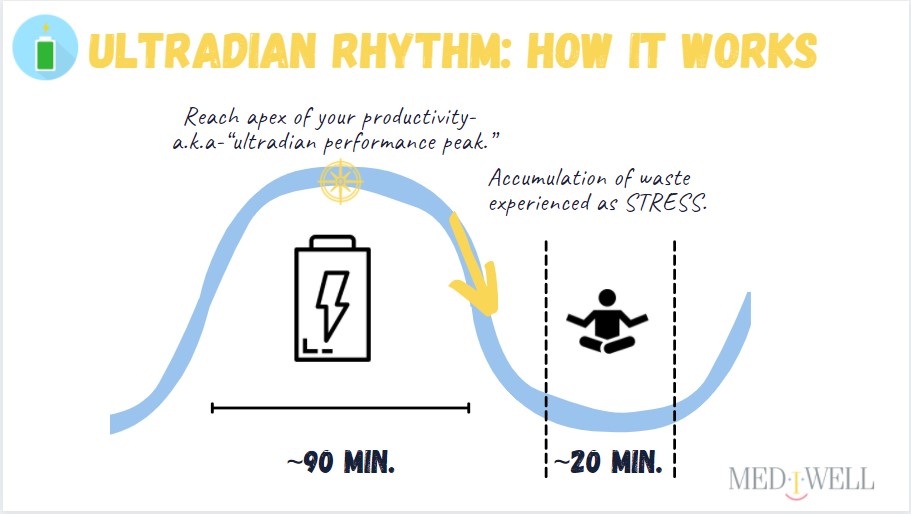
Forcing yourself to push past this natural 90-minute peak leads to diminishing returns: decreased focus, more mistakes, and accumulating fatigue. The protocol-based approach is to work with this cycle, not against it.
To understand the science and practical application of this concept, watch this short clip from Dr. Andrew Huberman.
The Ideal Length of Time for Focused Work
Dr. Huberman explains the biological basis for the 90-minute focus block and the critical importance of a 'deliberate defocus' period afterward.
Watch the clip from the beginning (00:03-01:09) and then from 02:25 to 04:32. Pay close attention to the concept of the 90-minute ultradian cycle and the role of 'deliberate defocus' in restoring your ability to concentrate.
The key takeaway is that the break is not wasted time; it is an essential part of the work cycle that enables the next bout of high-quality focus.
The "What": High-Impact "Exercise Snacks"
Now that we know when to take a break, the next question is what to do during that break. While Dr. Huberman emphasizes mental decompression (e.g., not looking at your phone), we can significantly enhance the restorative power of the break by adding a short burst of physical movement.
These are not full workouts. Think of them as "exercise snacks": brief, 1-2 minute bouts of vigorous activity designed to rapidly reset your physiology.
This 1-Minute "Snack" Could Add Years to Your Life | Dr. Rhonda Patrick
Dr. Rhonda Patrick explains the powerful benefits of 'exercise snacks,' citing research showing how just a few minutes of activity can have a significant impact on metabolic health and mortality risk.
Watch from the beginning to 03:37. Focus on how short, intense movements (like bodyweight squats) improve glucose regulation and how just a few minutes of this per day are linked to major health benefits.
The science is clear: brief, intense movement signals your muscles to pull glucose from the bloodstream, improving metabolic function and counteracting the negative effects of sitting. This provides an immediate boost in alertness and helps prevent the post-lunch energy dip.
The "How": Your Strategic Movement Break Protocol
We will now combine these principles into a structured, actionable protocol.
Step 1: Find Your Personal Rhythm (The 90-Minute Guideline)
While 90 minutes is a scientifically-backed starting point, your optimal focus duration can vary. The goal is to develop sensitivity to your own "break points"—the signals that your focus is beginning to wane.
Are “breaks every 90 minutes” really effective? How to find the focus cycle that fits you
This article provides a practical framework for moving beyond the rigid '90-minute rule' to find your personal focus cycle. It offers a simple, data-driven protocol for identifying your unique break points.
Read the sections titled 'Three steps for first‑timers' and the 'Frequently Asked Questions'. Focus on the three-step protocol for logging your focus and the practical Q&A about break duration and timing.
Your first action step is to follow the 2-week logging protocol described in the article. This will give you the data to customize your work/break cycle.
Step 2: Choose Your Movements (The "Exercise Snack" Menu)
During your 5-10 minute break, you need a quick routine that you can execute without much thought.
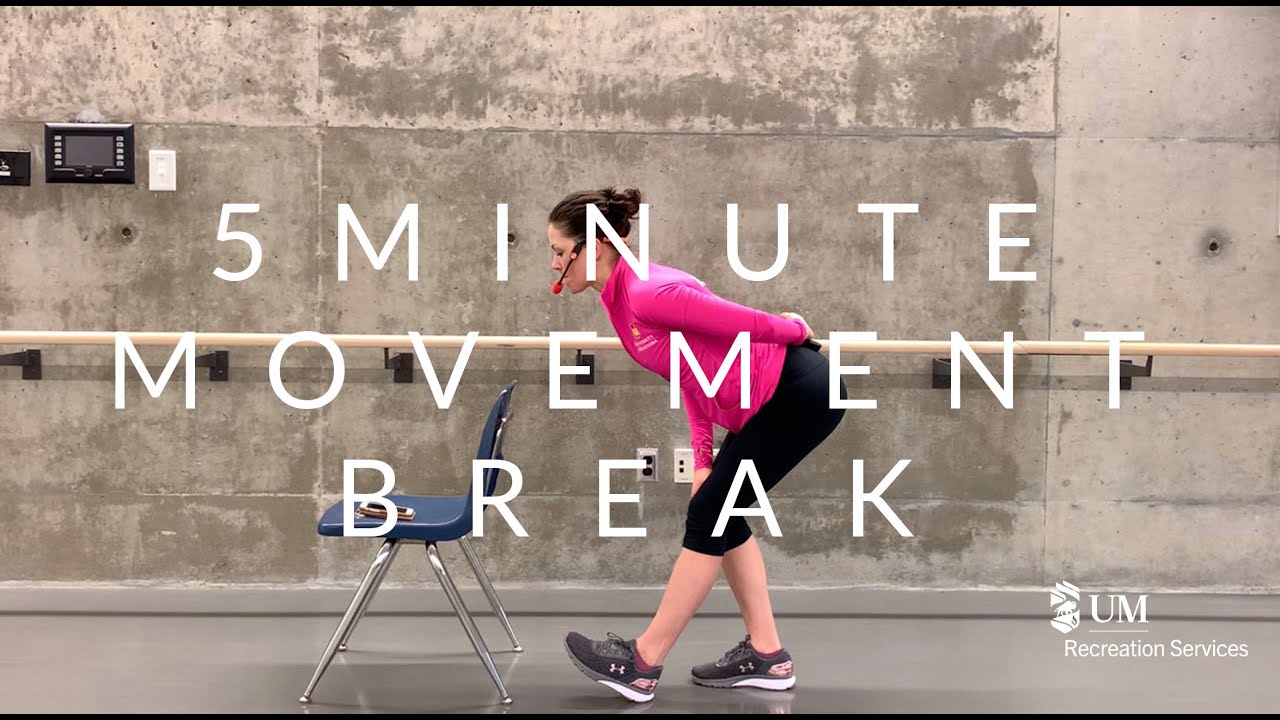
Here is a menu of 5-minute routines you can use as your "exercise snacks." Choose one or two that you can easily do in your workspace.
5-Minute Office Fitness: Quick Routines to Recharge Your Workday
This resource provides five distinct 5-minute routines designed for an office or home-office environment. Think of this as your menu of options for the movement portion of your break.
Scan the section '5 Quick Desk Fitness Routines to Try Today'. Identify one or two routines that seem most applicable to you, such as 'Routine 1: Full-Body Wake-Up' or 'Routine 3: Energy Boost Before Lunch'.
Step 3: Implement the Full Protocol
Now, let's assemble the pieces into a complete, repeatable protocol.
The Strategic Movement Break Protocol
- Set a Timer: Based on your 2-week log (or starting with 75-90 minutes), set a timer for a focused work block.
- Work Block: Work with singular focus until the timer goes off.
- Break Block (5-10 minutes): When the timer rings, stop immediately.
- Minutes 0-2 (Exercise Snack): Perform a short, vigorous activity.
- Example: 20-30 bodyweight squats, 1 minute of jumping jacks, or sprinting up a flight of stairs.
- Minutes 2-10 (Deliberate Defocus & Gentle Movement): Disengage mentally and move gently.
- Example: Walk to get a glass of water, do some light stretching from the routine menu, stare out a window. Crucially: Do not check your phone, email, or social media. This time is for mental idling.
- Minutes 0-2 (Exercise Snack): Perform a short, vigorous activity.
- Repeat: After the break, reset your timer and begin the next focus block.
Test your understanding!
You've just finished a 90-minute work block, and your timer goes off. According to the protocol we've just built, what is the most effective sequence of actions for your break?
A) Check your email for 5 minutes, then do 5 minutes of stretching.
B) Immediately do 20 push-ups, then walk around your apartment and look out the window for the remaining time.
C) Continue working for another 15 minutes to finish your thought, then take a 10-minute break to browse social media.
Show answer
The correct answer is B) Immediately do 20 push-ups, then walk around your apartment and look out the window for the remaining time.
This sequence correctly applies the protocol:
- Stop immediately when the timer goes off.
- Start with a vigorous "exercise snack" (push-ups).
- Follow with "deliberate defocus" and gentle movement (walking, looking out the window), avoiding digital distractions.
Option A fails because it starts with a mental task (email) instead of defocusing. Option C fails because it ignores the timer and uses the break for digital stimulation, which prevents mental recovery.
Conclusion
You have now built a protocol to manage your energy and focus throughout the workday, directly combating sedentary fatigue. This system is designed for flexibility, allowing you to tailor it to your personal rhythm while being grounded in the biological principle of ultradian cycles.
Key Takeaways:
- Your body operates on a ~90-minute ultradian rhythm of focus and recovery. Working with this cycle is more effective than fighting it.
- A strategic break is a two-part process: a brief, vigorous "exercise snack" to reset your physiology, followed by "deliberate defocus" to rest your mind.
- The "90-minute" rule is a guideline. Use the 2-week logging protocol to discover your personal focus duration.
- Consistency in applying this work/break cycle is what builds sustainable energy and productivity.
In our next lesson, we will add another tool to your daytime energy toolkit. We will cover a non-caffeinated alertness reset protocol for those moments during a midday slump when you need a quick boost but a full movement break isn't practical.