Recommended resources
The freely available resources this lesson will direct you to.
Welcome to the final lesson in our module on advanced energy protocols. In our previous lesson, we built a toolkit of non-caffeinated strategies—light, cold, and NSDR—to combat midday energy slumps. These tools are your frontline defense, allowing you to manage energy without relying on stimulants.
Today, we address the most common stimulant of all: caffeine. This lesson is the capstone of your energy management system. Your learning outcome is to design a caffeine taper strategy for resetting adenosine sensitivity and reducing dependency. The goal is not necessarily to quit caffeine forever, but to transform it from a daily necessity into a powerful, strategic tool that you control. This reset is one of the most effective ways to improve sleep quality and stabilize your daytime energy.
Why You Need a Caffeine Reset: The Adenosine Mechanism
To implement an effective protocol, you first need to understand the underlying mechanism. In earlier lessons, we learned that a molecule called adenosine builds up in your brain throughout the day, creating "sleep pressure."
Caffeine works by blocking the receptors that adenosine binds to. This is why you feel more awake after a coffee. However, your brain is an adaptive system.
Mastering Caffeine Cycling for Performance and Productivity
To understand this adaptation, let's look at a quick explanation from the article 'Mastering Caffeine Cycling for Performance and Productivity'.
Read the section titled 'Understanding Caffeine Tolerance and Dependence'. Focus on how the body responds to consistent caffeine intake by increasing the number of adenosine receptors.
As the article explains, when you consistently block adenosine receptors, your brain responds by creating more of them. This is tolerance. You now need more caffeine just to block the increased number of receptors and achieve the same level of alertness. What once felt like a boost now just makes you feel "normal." The purpose of a taper is to gradually reduce caffeine, allowing your brain to prune back these extra receptors and reset your sensitivity.
Why Not Just Quit? Understanding Withdrawal
If you suddenly stop consuming caffeine, all those extra, unoccupied adenosine receptors are suddenly hit with your body's natural adenosine. The result is a massive wave of fatigue, headaches, and irritability known as caffeine withdrawal.
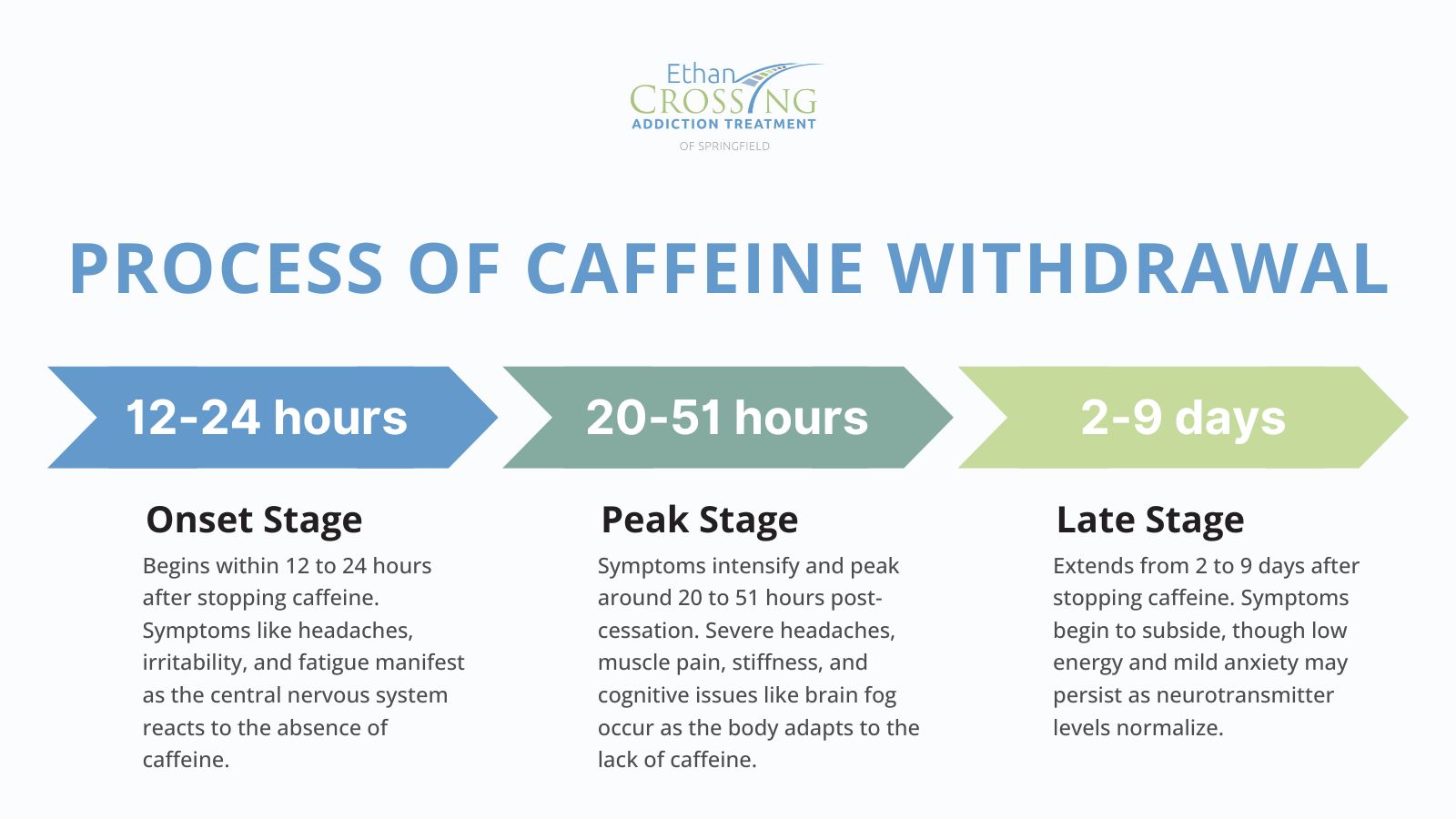
A structured, gradual taper allows your brain to down-regulate its adenosine receptors slowly, preventing this system shock.
Step 1: Your Pre-Taper Assessment
Just like any business project, you need to establish a baseline before you start. For the next 2-3 days, track your caffeine intake precisely. Don't change your habits; just measure them.
Action:
- Log every caffeinated product you consume (coffee, tea, soda, energy drinks, chocolate).
- Note the time and the amount.
- Use the chart below to estimate the milligrams of caffeine for each item.
- Calculate your average daily total in milligrams. This is your starting number.

Step 2: Choose Your Taper Protocol
Here are three distinct, actionable protocols. Choose the one that best fits your personality and lifestyle.
Protocol A: The Quantitative Taper (Precise & Controlled)
This protocol is for you if you appreciate data and a systematic, numbers-driven approach. It's based on clinical recommendations for managing caffeine dependence.
Management of Caffeine Addiction
The article 'Management of Caffeine Addiction' provides a clear, clinical protocol for tapering.
Read the section titled 'Practical Tapering Strategy'. Pay close attention to the recommended 'Reduction rate'.
The Protocol:
- Start with your calculated average daily intake.
- Reduce your total daily caffeine by 25mg to 50mg.
- Hold at this new level for 2-3 days to allow your body to adjust.
- Repeat the process until you reach your target (e.g., zero caffeine for a full reset, or a low level like 50mg/day).
Example: If your baseline is 200mg/day.
- Days 1-3: 175mg/day
- Days 4-6: 150mg/day
- Days 7-9: 125mg/day
- ...and so on.
Protocol B: The Substitution Taper (Simple & Practical)
This protocol is less about counting milligrams and more about systematically replacing a habit. It's practical and easy to implement without much calculation.
How To Quit Coffee Without Headaches | Method & Benefits
The video 'How To Quit Coffee Without Headaches' outlines an excellent substitution protocol using a French press. The principle can be adapted for any brewing method.
Watch the segment from 04:18 to 06:05. Focus on the method of mixing regular coffee with herbal coffee in decreasing ratios.
The Protocol:
- Acquire a non-caffeinated substitute that mimics your primary caffeine source (e.g., herbal coffee like Teeccino for coffee drinkers, or herbal tea for tea drinkers).
- Start by mixing a small amount of the substitute with your regular caffeinated beverage.
- Gradually increase the ratio of the substitute to the caffeinated beverage over a period of 1-2 weeks until you are consuming only the substitute.
Example (based on the video's 11-day coffee taper):
- Day 1: 100% Caffeinated Coffee
- Day 2: 90% Caffeinated, 10% Herbal Coffee
- Day 3: 80% Caffeinated, 20% Herbal Coffee
- ...continue until Day 11: 0% Caffeinated, 100% Herbal Coffee
Protocol C: The Lifestyle Taper (Flexible & Adaptive)
This approach focuses on structuring caffeine intake around your life's demands. It's less about a full "reset" and more about building a sustainable, long-term cycling strategy from the start. This is ideal for an entrepreneur or digital nomad whose schedule varies.
Mastering Caffeine Cycling for Performance and Productivity
The article 'Mastering Caffeine Cycling' offers several real-world protocols designed for performance and productivity.
Read the section 'Real-World Caffeine Cycling Protocols'. Focus on 'The Green Tea Protocol' and 'The Weekend Warrior Protocol' as two examples of this strategy.
The Protocol (Example using "The Green Tea Protocol"):
- Monday - Thursday: Switch from high-caffeine coffee to low-caffeine green tea (~25-30mg). This provides a mild boost for focused work without building significant tolerance.
- Friday - Saturday: Use coffee (~100-150mg) strategically for your most demanding or creative work sessions.
- Sunday: Go completely caffeine-free to allow for a mini-reset before the week begins.
This method allows you to maintain the performance benefits of caffeine while minimizing dependence.
Test your understanding!
You are a heavy coffee drinker (3-4 cups/day) and want to do a full 2-week reset to zero caffeine with the absolute minimum chance of withdrawal headaches, as you have important client presentations. Which protocol is best suited for this goal?
A) The Quantitative Taper: It's precise, but might require you to make complicated coffee fractions (e.g., 3/4 of a cup).
B) The Substitution Taper: By gradually mixing in decaf or herbal coffee, you maintain the ritual while slowly lowering the dose, which is ideal for avoiding withdrawal symptoms.
C) The Lifestyle Taper: This is more for long-term management, not a short, complete reset to zero.
Show answer
The best answer is B) The Substitution Taper. While the Quantitative Taper (A) is also very effective, the Substitution Taper is often easier to execute for heavy coffee drinkers. It keeps the habit and ritual of making and drinking coffee intact, which can psychologically ease the process. Most importantly, the very gradual replacement of caffeinated beans with decaffeinated or herbal ones is an extremely smooth way to reduce the chemical dependence and minimize the risk of withdrawal symptoms like headaches.
Step 3: Managing the Taper and Planning for the Future
During your taper, you may still experience mild fatigue. This is where the protocols from our last lesson come in. Feeling a slump? Use a light, cold, or NSDR reset instead of reaching for more caffeine.
To help manage the transition, you can also consider some of the supports mentioned in the resources, like B-vitamins and adaptogens. Watch this short clip for a summary.
The Shocking Effects of Going Caffeine-free for a Month
Dr. Eric Berg briefly mentions several tools to help ease caffeine withdrawal symptoms.
Watch the segment from 07:43 to 08:44 for a quick overview of supplements like B-vitamins and adaptogens that can support your transition.
After the Taper:
Once you have completed your reset (e.g., spent 1-2 weeks at zero or very low caffeine), you can reintroduce it strategically. To maintain your new sensitivity, adopt a cycling protocol like the "Weekend Warrior" or "I Love Mondays" from the davidwilliamrosales.com article. This ensures you continue to get the maximum benefit from caffeine when you choose to use it.
Conclusion: Completing Your Energy Management System
You have now designed the final component of your personal energy management system. By resetting your caffeine sensitivity, you have reclaimed control.
Key Takeaways:
- Caffeine tolerance is a physical adaptation in your brain (more adenosine receptors).
- A gradual taper is essential to avoid withdrawal by allowing your brain to slowly reverse this adaptation.
- The process is a clear protocol: Assess your baseline, Choose a taper strategy (Quantitative, Substitution, or Lifestyle), and Manage the process using non-caffeinated tools.
- The end goal is to use caffeine strategically for peak performance, not as a daily crutch to feel normal.
This lesson concludes our course. You have systematically built a comprehensive set of protocols covering sleep timing, light management, your sleep environment, and daytime alertness. Your task now is to integrate these individual protocols into a cohesive system that works for your unique life and goals. Congratulations on completing this journey and building the foundation for sustained energy and peak performance.