Recommended resources
The freely available resources this lesson will direct you to.
Hello! Welcome back.
In our last lesson, we explored how a film's soundscape—its layers of ambience, effects, and dialogue—creates mood and texture. We saw in the dream sequence from Bergman's Wild Strawberries how the absence of expected sounds can be just as powerful as their presence.
Today, we will build directly on that idea. Your learning outcome is to use silence as a dramatic, poetic, and rhythmic tool in film. We will treat silence not as a void, but as a deliberate, powerful, and active element of design. For a filmmaker inspired by the emotional intensity of Bergman and the sculptural quality of Rebecca Horn's work, understanding how to "sculpt" with silence is a crucial skill. It's the art of making nothing mean everything.
1. What is Cinematic Silence?
First, let's clarify what we mean by "silence" in film. It rarely means a complete and total absence of sound, which can feel unnatural or like a technical error to an audience. True silence is often the intentional removal of specific sonic layers, such as dialogue or music, to force our attention onto what remains.
To understand this better, let's start with a foundational reading.
The Art of Cinematic Silence | The LA Film School
This article, 'The Art of Cinematic Silence,' will give us a clear definition of what cinematic silence is and isn't. It makes the crucial point that silence in film often means the presence of 'room tone' or ambient sound, which keeps the world feeling real.
Please read the introduction and the section 'Hold up, what do we mean by cinematic silence?'. Focus on the distinction between absolute silence and the removal of specific sound layers like dialogue and music.
As the article explains, when the obvious sounds are stripped away, our brains lean in. The subtle sounds—a character's breath, the hum of a refrigerator, the distant city—suddenly become magnified. This is psychoacoustics at work. The director uses this shift in perception to achieve specific effects.
The article "The Art of Cinematic Silence" goes on to list several of these effects. The most common is creating suspense, but silence is also used to:
- Reveal character tension: The unspoken things between two people are often felt in the pauses.
- Create subjective POV: We can experience a character's shock or disorientation, as in the Saving Private Ryan example where sound drops out to mimic shell shock.
- Draw attention: A sudden silence forces us to focus on a key visual detail or action.
- Amplify emotion: It gives the audience space to sit with a character's feelings, as in the restroom scene in The Pursuit of Happyness.
These are all examples of silence being used as a dramatic tool.
2. Silence as Rhythm and Structure
Beyond creating dramatic beats within a scene, silence can be a structural and rhythmic device that shapes the entire film. It's about contrast—the interplay between loud and quiet. No one demonstrates this better than Martin Scorsese.
This video essay breaks down how Scorsese uses silence not just as an event, but as part of a larger cinematic rhythm.
Martin Scorsese - The Art of Silence
The video 'Martin Scorsese - The Art of Silence' is a masterful analysis of how a director can build a film's structure around the use of sound and its absence. It shows how silence isn't just an effect, but a core part of the narrative architecture.
Watch the video from 00:35 to 03:51. Pay close attention to these key concepts: Contrast (00:35 - 01:36): Notice how Scorsese often builds to a climax of sound which is immediately followed by silence, making the silence feel even more profound. Character (01:53 - 02:49): The video argues that the best uses of silence derive from character. The silence is a space where a character makes a crucial, internal choice. Structure (02:49 - 03:51): Focus on the analysis of Raging Bull. The pattern of 'quiet domestic moment' followed by a 'violent fight scene' is a brilliant example of using sound/silence as a rhythmic, structural element that underscores the film's central theme.
The key takeaway here is that silence gains its power from what surrounds it. By creating patterns of sound and silence, you create rhythm. The quiet moments in Raging Bull make the violence more shocking, and the violence gives the quiet moments a sense of dread. This is a highly sophisticated form of storytelling that moves far beyond simply making a scene "quiet."
3. Silence as Poetry and Metaphor
Now let's move from the dramatic and rhythmic to the poetic. This is where silence becomes a tool to explore abstract, metaphysical ideas—a technique central to the work of your influence, Ingmar Bergman. For Bergman, silence isn't just an absence of dialogue; it's often the felt presence of an absent God, a void in human connection, or an existential state.
The following video essay delves into this theme, focusing on Bergman's aptly named film, The Silence.
Love, God & Silence: The Evolution of the Films of Ingmar Bergman | Video Essay
This video, 'Love, God & Silence,' explores the evolution of Bergman's use of silence as a central theme. It's particularly insightful for understanding how to convey profound, abstract ideas without words.
Please watch the segment analyzing the film The Silence from 12:44 to 16:08. The narrator discusses how the film portrays a 'Godless world' and uses the hotel setting and the characters' interactions to explore what it means to live in a spiritual and emotional void.
In Bergman's hands, the quiet hotel is not just a location; it's a metaphor for a world stripped of meaning. The silence is the film's subject. The characters' inability to connect, the boy's wandering through the eerie corridors—these are all visual manifestations of this profound, thematic silence.
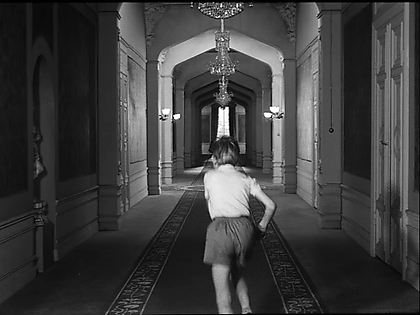

This is the poetic function of silence: to evoke a feeling, an idea, or a philosophical concept that exists beyond the plot. It aligns with your interest in telling stories through metaphor and exploring human emotions on a deeper level.
4. Practical Exercise: Designing a Scene with Silence
Now it's your turn to think like a director. Let's combine the dramatic, rhythmic, and poetic functions of silence in a creative exercise.
Your Task:
Think of a concept for a short, experimental scene (no longer than a page) that uses silence as its primary expressive tool. Your concept should draw from your own artistic interests—performance, sculpture, fashion, nature—and use silence in a deliberate way.
Choose one of the following prompts to guide you:
- The Dramatic Pause: Design a scene between two people where a long, intentional silence reveals an unspoken truth or a shift in their power dynamic. What are the subtle sounds we hear in this silence (e.g., the rustle of clothing, a sharp inhale)?
- The Poetic Void: Design a scene where a character interacts with an object (perhaps a piece of sculpture or a garment you designed) or a landscape. How does the silence of the scene convey the character's inner state or the metaphorical meaning of the object/landscape?
- The Rhythmic Shock: Design a scene that builds an intense, overwhelming soundscape and then cuts abruptly to silence. What is the emotional effect of this contrast? What single, small sound remains in the silence to anchor the audience?
Briefly describe the visuals, the character(s), the setting, and most importantly, the function of the silence. What do you want the audience to feel or understand in that quiet moment?
Conclusion
Today, we've reframed silence as one of the most versatile and powerful tools in a director's toolkit. It is not an absence, but a presence; not a lack, but a deliberate choice.
Key Takeaways:
- Cinematic silence is the intentional removal of sound layers to direct audience attention and heighten emotion.
- As a dramatic tool, silence creates suspense, reveals character, and communicates what words cannot.
- As a rhythmic tool, the contrast between sound and silence can create patterns that structure a film and underscore its themes.
- As a poetic tool, silence can express profound metaphysical ideas and explore the depths of a character's soul, as seen in the work of Ingmar Bergman.
By learning to control what your audience doesn't hear, you gain a new level of control over what they feel.
What's Next?
We've discussed the power of sound and the power of silence. In the next lesson, we will explore the fascinating space in between. We will learn how sound-image relationships can create counterpoint, irony, or reinforcement. This is where you can play with expectations, for example by pairing a beautiful image with a disturbing sound, to create complex and challenging new meanings.