Recommended resources
The freely available resources this lesson will direct you to.
- Are naps actually good for us? | Sleeping with Sciencewww.youtube.com
- The Science & Practice of Perfecting Your Sleep | Huberman Lab Essentialswww.youtube.com
- Your Brain Chooses Cleaning Over Focus When Sleep-Deprived ...drglorioso.substack.com
- The science behind power napping and work productivitychoosemuse.com
Hello! In our last lesson, we established a strict protocol for your caffeine cutoff time to protect the quality of your deep sleep. You now have a complete framework for using caffeine to boost alertness without creating a vicious cycle of dependency.
Today, we'll add another powerful, non-chemical tool to your daytime energy management toolkit: the strategic nap. While you might see napping as a sign of laziness or a luxury, research shows it's a potent performance-enhancing protocol when executed correctly. The learning outcome for this lesson is to apply the strategic napping protocol (10-20 minutes, before 3 PM) to manage acute sleepiness without disrupting night sleep.
By the end of this lesson, you will have a clear, step-by-step protocol for when and how to nap, turning a brief rest into a repeatable method for boosting focus and combating midday energy crashes.
The Science of the Midday Slump and the Napping Solution
Have you ever felt that predictable drop in energy and focus in the early afternoon, regardless of what you had for lunch? This isn't just a food coma; it's a hardwired biological feature.
Are naps actually good for us? | Sleeping with Science
Dr. Matthew Walker explains in this short TED talk clip why the afternoon slump is a natural, pre-programmed part of your daily rhythm.
Watch from 00:26 to 01:10. Notice the key point that this dip is a biological signal, suggesting our bodies may be designed for a short afternoon rest.
This natural dip, typically between 1 PM and 4 PM, presents an opportunity. You can either fight it (often with more caffeine, which we know can disrupt sleep) or you can work with it. This is where strategic napping comes in.
However, as both Dr. Walker and Dr. Huberman explain, napping is a "double-edged sword."
The Science & Practice of Perfecting Your Sleep | Huberman Lab Essentials
In this clip, Dr. Andrew Huberman and Dr. Matthew Walker discuss the pros and cons of napping. This will clarify the core mechanism of how a nap works and why the rules are so important.
Watch from 02:45 to 03:03. Focus on the explanation of how a nap releases 'sleep pressure' and why this can be problematic if you struggle with sleep at night.
The key mechanism is this:
- Napping temporarily relieves sleep pressure (the buildup of adenosine you learned about in Module 1).
- Benefit: This reduces sleepiness and boosts alertness in the short term.
- Risk: If you nap too long or too late, you release too much sleep pressure, making it difficult to fall asleep at your target bedtime.
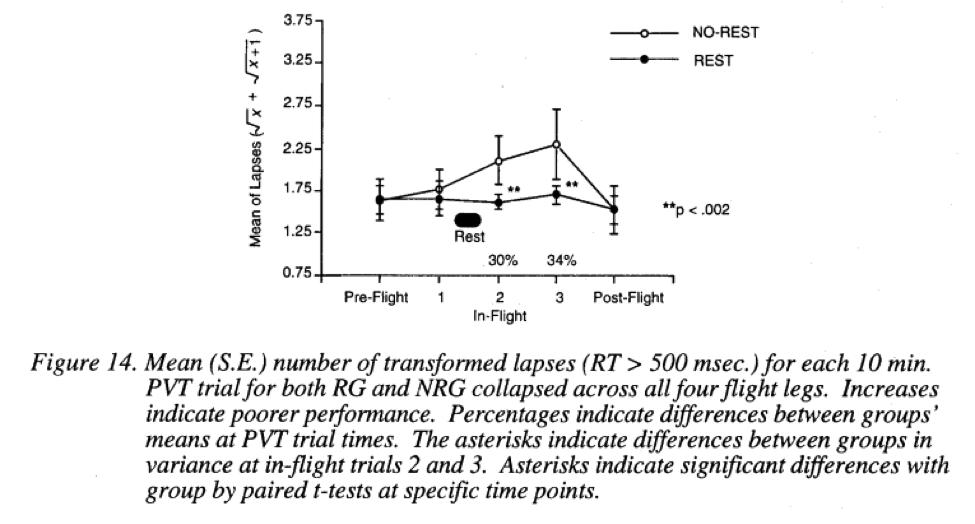
The goal of a strategic nap is to get the benefit without the risk. The performance improvements are not trivial. Research pioneered by NASA found that a short nap could improve alertness and performance by over 30%.
The Strategic Napping Protocol
To harness the benefits of napping effectively, you need a precise, repeatable protocol. Here are the three core rules.
Rule #1: Timing is Everything (The "When")
The Protocol: Take your nap in the early afternoon, ideally between 1 PM and 3 PM. Do not nap after 3 PM (or within 7-8 hours of your target bedtime).
The Mechanism: Napping in this window aligns with your body's natural dip in alertness. More importantly, it allows you enough waking hours afterward to rebuild sufficient sleep pressure, ensuring you can still fall asleep easily at night.
Rule #2: Duration is Critical (The "How Long")
For managing acute sleepiness and boosting alertness, you have two primary options. This allows you to choose based on your schedule and needs, a key principle of effective protocol design.
Option A: The Power Nap (Fast & Practical)
- Duration: 10-20 minutes (up to 30 minutes is acceptable).
- Mechanism: This short duration keeps you in the lighter stages of sleep (N1 and N2). You get the cognitive benefits of reduced sleep pressure without entering deep sleep. This is crucial for avoiding sleep inertia—the grogginess and disorientation you feel when an alarm rips you out of deep sleep.
- Best For: A rapid boost in alertness, focus, and energy to get through the rest of the workday.
Option B: The Full-Cycle Nap (Slow & Restorative)
- Duration: ~90 minutes.
- Mechanism: This duration allows you to complete one full sleep cycle, including light sleep, deep sleep, and REM sleep. This provides deeper restorative benefits, aiding memory consolidation and creative problem-solving.
- Best For: Days when you are significantly sleep-deprived and have a larger block of time. Be aware that waking up at the wrong point in the cycle can still cause grogginess.
For most situations, especially for busy entrepreneurs, the 10-20 minute power nap is the superior protocol.

Rule #3: Know If Napping is For You (The "Who")
The Protocol: Strategic napping is an effective tool for people who do not have chronic trouble falling or staying asleep at night.
The Mechanism: If you suffer from insomnia, you need to maximize your sleep pressure to help you fall asleep and stay asleep at night. Napping during the day works against this goal by releasing that precious pressure. In this case, the best protocol is to avoid naps and consolidate all your sleep into one nighttime block.
Implementation: A Step-by-Step Guide
Here is a practical guide to executing the power nap protocol.
The science behind power napping and work productivity
This article, 'The science behind power napping and work productivity', provides a straightforward guide on how to get started with power naps.
Read the section titled 'Getting started with power naps'. It gives three simple, actionable steps to implement this protocol.
Here is that process, refined into a protocol:
- Prepare the Environment: Find a space where you can relax with minimal distractions. It should ideally be cool, dark, and quiet. A sleep mask and earplugs can be invaluable tools here.
- Set a Non-Negotiable Alarm: Set your alarm for your target nap duration (e.g., 20 minutes). You might add 5-10 minutes to this to account for the time it takes to drift off. The alarm is critical to prevent oversleeping and entering deep sleep.
- Execute & Wake: When the alarm goes off, get up immediately. Splashing your face with water or getting a brief dose of bright light can help clear any lingering sleepiness.
Test your understanding!
It's 4:00 PM. You had a short night of sleep and are feeling a significant energy dip. You have a few more hours of work. You do not suffer from insomnia. What is the best course of action based on the protocols you've learned?
a) Take a 20-minute power nap immediately to regain focus.
b) Drink a large coffee to power through the rest of the day.
c) Acknowledge it's too late for a nap or more caffeine, and instead use an alternative alertness protocol (like getting some sunlight or doing a few minutes of light exercise).
Show answer
The correct answer is (c). It's after 3 PM, so a nap would be too late and could interfere with your nighttime sleep pressure. A large coffee would violate the caffeine cutoff rule you learned in the previous lesson (8-10 hours before bed). The best protocol is to use a different, non-sleep-disrupting method to boost alertness.
Conclusion
You have now added a powerful, precise, and science-backed protocol for strategic napping to your toolkit. Used correctly, a short nap is not a sign of weakness but a highly efficient tool for managing your energy and maintaining peak cognitive performance throughout the day.
Key Takeaways:
- The afternoon energy dip between 1-3 PM is a hardwired biological rhythm.
- A nap works by temporarily reducing sleep pressure (adenosine).
- The Strategic Nap Protocol:
- When: Between 1 PM and 3 PM.
- How Long: 10-20 minutes for a "power nap" to boost alertness without grogginess.
- Who: Only for those who do not struggle with falling/staying asleep at night.
- Executing the protocol requires a cool, dark, quiet environment and a non-negotiable alarm.
In our next lesson, we will address another major contributor to daytime energy levels: food. You'll learn a protocol for structuring your meal timing and composition to avoid the classic "post-lunch dip" and maintain stable energy throughout the afternoon.