Recommended resources
The freely available resources this lesson will direct you to.
- Gastos de conservación y mejora en inmuebles arrendados ¿Cómo se deducen en el IRPF?www.youtube.com
- Real Estate Basics Explained: Capital Expenditures aka CapEx (3 Minutes or Less)www.youtube.com
- Gastos deducibles antes de alquilar una viviendawww.gilmar.es
- Intereses y demás gastos de financiación y de ...sede.agenciatributaria.gob.es
Hello! Welcome to your seventh lesson in our first module, "Foundations of Real Estate Investment."
In our last lesson, we focused on the Operating Expense Ratio (OER), a metric for assessing a property's operational efficiency. We made a crucial point that OER calculations, and indeed Net Operating Income (NOI) itself, exclude large, infrequent expenses for major property upgrades. Ignoring these costs is one of the most common and dangerous mistakes an investor can make.
Today, we will address that gap head-on. The learning outcome for this lesson is to define and estimate capital expenditures (CapEx) and distinguish them from operating expenses. Mastering this distinction is fundamental for accurate financial analysis, realistic budgeting, and correct tax reporting in Spain.
1. Distinguishing Operating Expenses from Capital Expenditures
At a high level, the difference is straightforward:
-
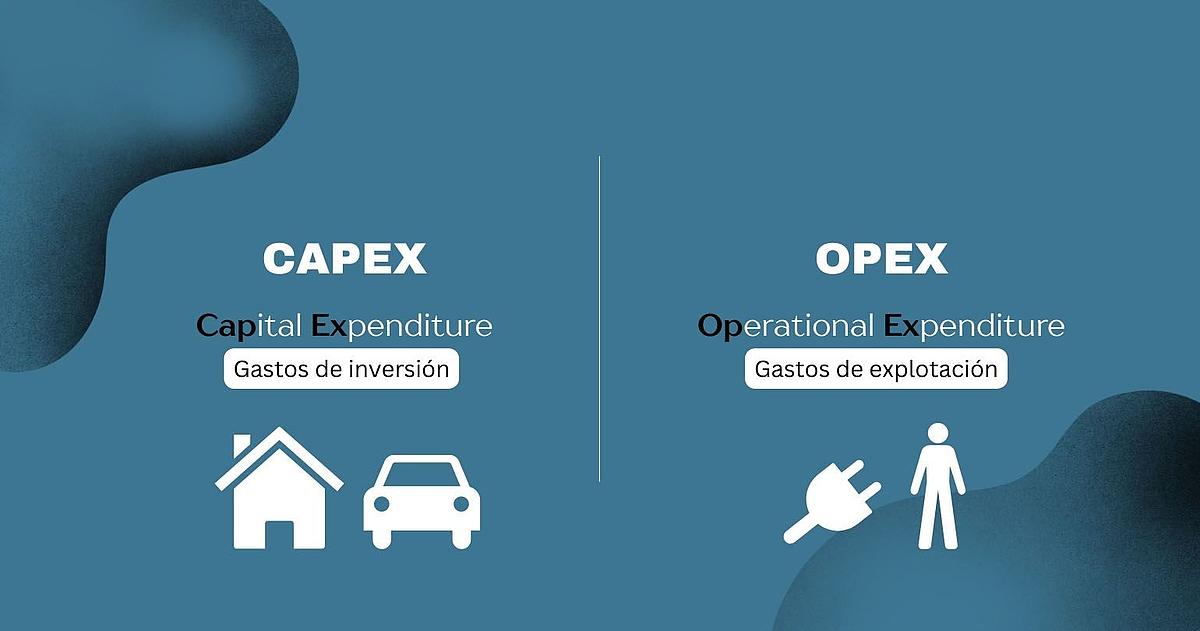
Operating Expenses (OpEx): These are the routine, day-to-day costs of keeping a property running and generating income. Think of them as expenses that maintain the property's current condition. Examples include utilities, insurance, property management fees, and minor repairs like fixing a leaky faucet. In Spanish tax terminology, these generally fall under gastos de conservación y reparación.
-
Capital Expenditures (CapEx): These are significant, infrequent investments that either replace a major component, extend the property's useful life, or substantially upgrade it, thereby increasing its value. Think of these as expenses that improve the property. Examples include replacing a roof, installing a new heating system, or remodeling a kitchen. In Spanish tax terms, these are considered gastos de mejora o ampliación.
From your software engineering background, you can draw a parallel:
- OpEx is like routine server maintenance: patching operating systems, running backups, monitoring performance. These activities keep the system running as-is.
- CapEx is like a major infrastructure upgrade: replacing all servers with new, more powerful hardware or migrating the entire application from a local data center to a cloud provider. These actions fundamentally improve the system's capacity or longevity.
2. Why This Distinction is Crucial in Spain: The Tax Impact
The distinction between OpEx and CapEx isn't just academic; it has significant tax implications under Spanish IRPF (Personal Income Tax) law.
- Gastos de Conservación y Reparación (OpEx) are generally considered deductible expenses in the tax year they are incurred. They directly reduce your taxable rental income for that year.
- Gastos de Mejora (CapEx) are not immediately deductible. Instead, they are "capitalized"—meaning they are added to the property's acquisition cost (
valor de adquisición). You then recover this cost gradually over many years through depreciation (amortización), a topic we will cover in detail in Module 9.
This difference has a massive impact on your annual cash flow and tax bill. Misclassifying a large CapEx as an OpEx could lead to issues with the tax authorities.
Let's look at the official guidance from the Spanish Tax Agency (Agencia Tributaria).
Deductible expenses: Conservation and repair
The Spanish Tax Agency provides a clear, albeit brief, rule on this. This resource outlines what qualifies as a deductible 'conservation and repair' expense.
Please read section '2. Conservación y reparación'. Pay close attention to the final paragraph, which explicitly states that amounts for 'ampliación o mejora' (expansion or improvement) are not deductible under this category, as they represent an increase in the property's acquisition value.
The key takeaway is the government's clear line: expenses to "maintain normal use" are deductible now; expenses to "expand or improve" are not.
3. Practical Examples in the Spanish Context
The line between "repair" and "improvement" can sometimes be blurry. To clarify, let's look at specific examples provided by a Spanish legal and advisory firm.
Gastos de conservación y mejora en inmuebles arrendados ¿Cómo se deducen en el IRPF?
This video provides an excellent breakdown of how the Spanish tax authorities classify various common landlord expenses. It offers concrete lists for both categories.
Please watch the following parts: 0:04 - 1:07: Introduction to the difference between 'gastos de conservación' (deductible now) and 'gastos de mejora' (amortized). 1:50 - 3:57: A detailed list of expenses considered 'conservación' (OpEx), such as replacing old windows, changing pipes, or painting. 4:21 - 6:33: A list of expenses considered 'mejora' (CapEx), such as structural consolidation, installing an elevator, or major insulation work. Take note of the specific examples. Some may be counter-intuitive!
As you saw, some classifications might surprise you. For instance, replacing old windows with new ones is considered a conservación expense (OpEx), not an mejora (CapEx), because you are substituting an existing element. However, installing an air conditioning system in a house that never had one would be an mejora (CapEx).
As the Gilmar article Gastos deducibles antes de alquilar una vivienda points out, the law is not always perfectly concise and leaves room for interpretation. The key principle is whether you are restoring functionality or adding new functionality/value.
Test your understanding!
You've just renovated a rental property in Spain. Classify the following expenses as either Gasto de Conservación/Reparación (OpEx) or Gasto de Mejora (CapEx) based on what you've learned.
- Painting the entire interior of the apartment.
- Replacing the 20-year-old boiler with a modern, energy-efficient one.
- Tearing down a wall and building a new bathroom where a closet used to be.
- Repairing a section of the roof that was damaged in a storm.
- Installing a new swimming pool in the backyard.
Show answer
- Gasto de Conservación/Reparación (OpEx): Painting is a classic maintenance expense.
- Gasto de Conservación/Reparación (OpEx): This is a substitution of an existing element (
sustitución), even if the new one is better. - Gasto de Mejora (CapEx): This is a significant structural change that adds functionality and value (
ampliación o mejora). - Gasto de Conservación/Reparación (OpEx): This is a repair to maintain the property's current state.
- Gasto de Mejora (CapEx): You are adding a major new feature that the property did not previously have.
4. How to Estimate and Budget for CapEx
Since CapEx costs are large and inevitable, failing to budget for them can turn a profitable investment into a financial disaster overnight. You must set aside money regularly into a reserve fund. There are two common methods for estimating how much to save.
Real Estate Basics Explained: Capital Expenditures aka CapEx (3 Minutes or Less)
Now that we can identify CapEx, let's learn how to budget for it. The following video explains the two primary methods for estimating these future costs. Although the examples are from the US, the estimation methodology is universal.
Watch the video from 0:41 to 3:18. The first part defines CapEx with examples, and the second part explains how to estimate it using both the item-by-item amortization method and the percentage-of-income rule of thumb.
Let's summarize the two methods discussed in the video:
-
The Item-by-Item Method (More Accurate):
- List all major components of the property (roof, boiler, windows, flooring, appliances, etc.).
- For each item, estimate its remaining useful life and its future replacement cost.
- Calculate the annual savings required for each item:
Replacement Cost / Useful Life = Annual Reserve. - Sum the annual reserves for all items to get your total annual CapEx budget.
This detailed approach is powerful for financial modeling, which aligns with your goal of creating code-based models.

This spreadsheet is an example of the item-by-item method. It lists major components, their costs, and their expected lifespans to project total CapEx needs over a 40-year period. -
The Percentage Rule (Simpler):
- Set aside a percentage of the property's Gross Rental Income each year.
- A common range is 5% to 15%, but this varies widely. An older property with deferred maintenance might require 20% or more, while a brand-new building might only need 5%.
- This is a quick and easy rule of thumb for initial analysis but is far less precise.
For serious analysis, the item-by-item method is superior. For a quick screening of a potential deal, the percentage rule can suffice.
Conclusion
You have now completed your understanding of the major expense categories for a rental property.
Key Takeaways:
- Operating Expenses (OpEx) are routine costs to maintain a property and are deductible in the current tax year in Spain.
- Capital Expenditures (CapEx) are major investments to improve a property. In Spain, they are not immediately deductible but are added to the property's cost basis and depreciated over time.
- This distinction is critical for correct NOI calculation, accurate tax filing, and long-term financial planning.
- You must budget for CapEx, either by using a detailed item-by-item analysis or a simpler percentage-of-income rule of thumb.
Preview of the Next Lesson:
We have now covered all the fundamental building blocks of a property's income statement: gross income, vacancy, operating expenses, and capital expenditures. In the final lesson of this module, we will bring it all together. You will write Python code to model basic rental property income and expenses to calculate NOI. This will be our first practical coding exercise, laying the foundation for all the sophisticated models we will build later in the course.