
Hello! In our last lesson, we built a strategic content plan for your book launch's organic social media, focusing on building awareness and engagement without an ad budget. Now, it's time to add fuel to the fire.
Today's lesson addresses the next logical step: paid advertising. While organic marketing is essential for building a community, paid ads can significantly accelerate your book's discovery, especially in the crowded Amazon marketplace. We will focus on understanding the purpose of Amazon's own advertising platform and the essential metrics you need to know to measure your success.
This lesson will cover the "why" and the "what" of Amazon Ads. We'll explore why they are a powerful tool for new authors and demystify the key performance indicator you'll use to determine if your ads are profitable: the Advertising Cost of Sales (ACOS).
1. The Purpose of Amazon Ads: Beyond Just Buying Clicks
When you first publish a book on Amazon, it's like adding a single grain of sand to a vast beach. No one knows it's there. Organic marketing, which we discussed previously, helps people you already know find it. Amazon Ads help total strangers—who are already on Amazon looking for books like yours—discover it.
To get a foundational understanding of why ads are so crucial, please watch the first part of the following video.
Amazon KDP Ads For Beginners | Full Step-By-Step Guide (2025)
The video 'Amazon KDP Ads For Beginners' by Samazonkdp provides a clear and concise explanation of the strategic value of running ads for your books.
Watch from 00:42 to 03:01. Focus on the three main reasons provided for using Amazon Ads.
As the video explains, the purpose of Amazon Ads is threefold:
-
Increase Visibility: Your ad places your book directly in front of potential buyers in search results and on the product pages of similar books.
-
Reach the Right Customers: You can target ads based on keywords (what people search for, e.g., "guide to starting a business") and products (placing your ad on a competitor's book page). This ensures your ad is seen by people with a high intent to buy.
-
Improve Organic Ranking (The Flywheel Effect): This is perhaps the most powerful aspect. When your ads generate sales, Amazon's algorithm takes notice. It sees that your book is relevant and converting customers. In response, it starts ranking your book higher in the organic (non-paid) search results. This creates a positive feedback loop:
Ad Sales → Higher Sales Rank → More Organic Visibility → More Organic Sales → Even Higher Rank
Given your IT background, you can think of this as a self-reinforcing system where an initial input (ad spend) generates cascading positive outputs across the entire platform.
2. How Amazon Ads Work: The PPC Auction
Amazon Ads operate on a Pay-Per-Click (PPC) model. This is a critical concept: you don't pay for your ad to be seen (an "impression"), you only pay when a customer actually clicks on it.
This click is purchased through a real-time auction system. Let's dig into the mechanics.
Amazon KDP Ads For Beginners | Full Step-By-Step Guide (2025)
The same 'Amazon KDP Ads For Beginners' video also offers a great explanation of the bidding system that powers Amazon's PPC ads.
Watch from 07:00 to 09:30. This section explains the PPC model and the concept of a 'default bid' in the ad auction.
Here's the breakdown of the system:
- The Auction: Every time a customer searches for a keyword you're targeting, a micro-auction happens in milliseconds to decide which ad gets shown.
- The Bid: When you set up an ad, you set a default bid. This is the maximum amount you are willing to pay for a single click. If you bid $0.40, you might pay $0.40, or you might pay less if the next highest bidder was much lower, but you will never pay more than your bid.
- Bidding Strategy: To protect your budget as a beginner, the recommended strategy is "Dynamic bids - down only." This tells Amazon to use your default bid as a hard ceiling and to lower it whenever possible to win an auction. We will put this into practice in our next lesson.
3. Measuring Success: Advertising Cost of Sales (ACOS)
You've run an ad, spent some money, and made some sales. But was it worth it? Was the campaign profitable? The single most important metric to answer this question is the Advertising Cost of Sales (ACOS).
What is advertising cost of sales (ACOS)?
Amazon's official advertising site provides the clearest and most direct definition of ACOS and its calculation. Please read the following short sections from their guide.
Read the sections titled 'What does advertising cost of sales (ACOS) mean?' and 'How to calculate ACOS.' This will give you the official definition and formula.
In simple terms, ACOS tells you what percentage of the sales generated by your ads was spent on the ads themselves.
The formula is:
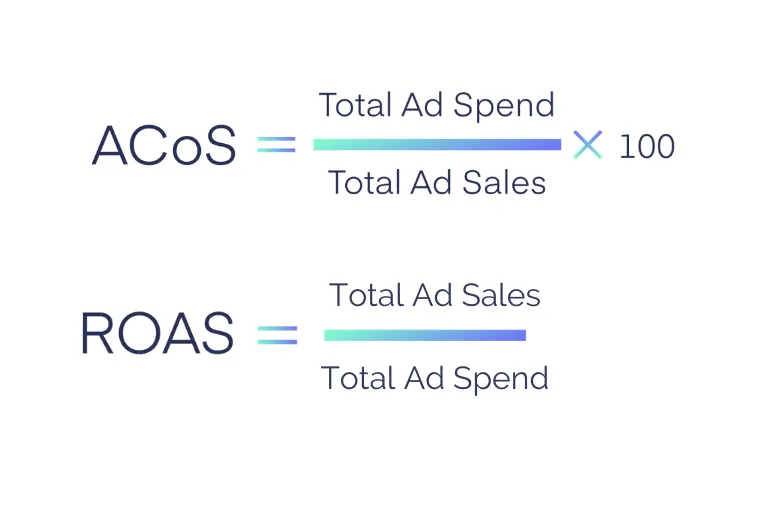
For example, if you spent $20 on ads and those ads generated $100 in book sales, your ACOS would be:
This means you spent 20 cents on advertising for every dollar of sales you made. A lower ACOS seems better, but whether 20% is "good" or "bad" depends entirely on your book's profitability.
4. The Key to Profitability: Break-Even ACOS
A low ACOS is meaningless if you're still losing money. To understand if your ad campaign is profitable, you must compare your actual ACOS to your break-even ACOS.
Your break-even ACOS is simply your profit margin on a single book sale, expressed as a percentage. If your actual ACOS is below this number, you're making money. If it's above, you're losing money.
Amazon KDP Advertising 101: A Beginner's Guide ...
The article 'Amazon KDP Advertising 101' from Sequence Commerce has an excellent, practical section on how to find your royalty and calculate your break-even ACOS.
Read the section titled 'What is Break-Even ACoS, and how do I crack it?'. Focus on how to find your book's royalty on the KDP dashboard and the formula provided.
Let's walk through the calculation step-by-step:
Step 1: Find Your Royalty
Your royalty is the profit you earn from a single book sale after Amazon takes its fees and printing costs (for paperbacks). As the article shows, you can find this exact amount in your KDP dashboard under your book's pricing settings.
Step 2: Calculate Your Break-Even ACOS
The formula connects your royalty to the sale price:
Example:
- You price your paperback book at $14.99.
- After fees and printing, your KDP dashboard shows your royalty is $4.50 per sale.
- Your break-even ACOS is:
Step 3: Compare and Decide
Your break-even ACOS is 30%. This is your target.
- If your ad campaign is running at an ACOS of 22%, you are profitable. For every sale, you are earning more in royalties than you are spending on ads.
- If your ad campaign is running at an ACOS of 40%, you are losing money on each ad-driven sale. You are spending more on ads than you are earning in royalties.
Note: Sometimes, running an unprofitable campaign (ACOS > Break-Even ACOS) can be a strategic choice for a new book launch. You might decide to lose a little money initially to generate sales, gather reviews, and kickstart the "flywheel effect" to boost your organic rank. However, for long-term passive income, your goal will be to keep ACOS below your break-even point.
Test your understanding!
You are writing a children's book.
- Sale Price: $12.00
- Royalty per sale: $3.00
You run an ad campaign for one week.
- Total Ad Spend: $50
- Total Sales from Ads: $200
- What is your break-even ACOS?
- What is your actual ACOS for the campaign?
- Is this campaign currently profitable?
Show answer
- Break-Even ACOS: ($3.00 Royalty / $12.00 Sale Price) * 100 = 25%
- Actual ACOS: ($50 Ad Spend / $200 Ad Sales) * 100 = 25%
- Profitability: The campaign is exactly breaking even. Your actual ACOS (25%) is equal to your break-even ACOS (25%). You are not losing money, but you are not making a profit on the ad-driven sales either.
5. A Broader View: Other Important Metrics
While ACOS is your primary gauge for profitability, it's not the only metric in your ad dashboard. Understanding a few others gives you a more complete picture of performance.
- Impressions: The total number of times your ad was displayed to shoppers.
- Clicks: The number of times shoppers clicked your ad.
- Click-Through Rate (CTR): Clicks divided by Impressions. This tells you how compelling your ad is. A low CTR might indicate your book cover or title isn't grabbing attention.
- Cost-Per-Click (CPC): Your total ad spend divided by the number of clicks. This is the average price you paid each time someone clicked your ad.

Conclusion
You now have the essential theoretical framework for understanding Amazon Ads. You know why they are a vital tool for gaining visibility and what to measure to ensure your investment is paying off. This knowledge is the foundation upon which you'll build and manage your own profitable ad campaigns.
Key Takeaways:
- Amazon Ads are crucial for new books to gain visibility, reach targeted customers, and kickstart the organic ranking flywheel.
- The system works on a Pay-Per-Click (PPC) auction, where you bid the maximum you're willing to pay for a click.
- ACOS (Advertising Cost of Sales) is the primary metric for measuring ad campaign efficiency.
- The key to profitability is ensuring your Actual ACOS stays below your Break-Even ACOS, which is calculated from your book's royalty and sale price.
Preview of the Next Lesson:
With the "why" and "what" firmly in place, our next lesson will be a hands-on practical exercise. I will guide you step-by-step through the process of setting up your very first basic, automatic-targeting Amazon Sponsored Products ad campaign for one of your books.