Recommended resources
The freely available resources this lesson will direct you to.
Hello! Welcome to your next lesson in the module "From Theory to Practice: Knowledge Transfer."
In our last session, we distinguished between 'near transfer' (applying skills to similar situations) and 'far transfer' (applying principles to novel situations). We concluded that facilitating transfer, especially far transfer, requires specific strategies to make abstract knowledge more flexible and applicable.
Today, we'll focus on one of the most powerful of those strategies. Our learning outcome is to use concrete examples from your design work to anchor abstract concepts. This technique is fundamental for turning theoretical knowledge—whether a UX principle, a line of code, or a data analysis concept—into something you can grasp, remember, and ultimately apply. It's a direct and practical way to improve both retention and application, two of your key learning goals.
From Abstract to Concrete
The human brain is better at remembering tangible, specific information than vague, abstract ideas. When you learn a new, abstract concept, it can feel slippery and hard to hold onto. Anchoring it to a concrete example provides a solid mental hook.
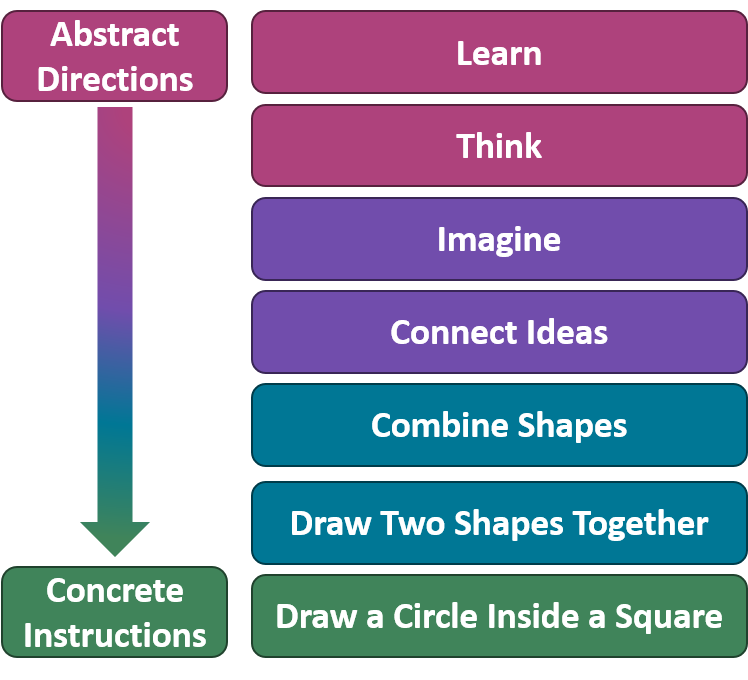
This image provides a simple but effective illustration of this idea. We want to move from the fuzzy, abstract idea at the top to a specific, actionable instruction at the bottom.
To start, let's explore the core principles behind this technique.
Learn to Study Using... Concrete Examples - The Learning Scientists
This blog post from The Learning Scientists, titled 'Learn to Study Using... Concrete Examples', explains the cognitive science behind why this strategy is so effective.
Please read the sections 'Why do you need concrete examples?' and the following two paragraphs that use 'scarcity' as an example. Focus on how a vague idea is made solid and memorable through a specific scenario (airline tickets).
The article makes a key point: our memory is designed for concrete information. By linking an abstract idea like "scarcity" to a specific example of booking a flight, you give your brain a vivid story to hold onto, which is much easier to retrieve later than a dry definition.
Now, let's watch a short video that expands on this with more examples and practical advice.
Concrete Examples: A Video for Students
The video 'Concrete Examples' by The Learning Scientists will demonstrate how to use multiple examples to understand a single abstract concept.
Watch from 00:32 to 04:35. Pay attention to how the abstract idea of an 'algorithm' is explained using three very different examples (baking a cake, troubleshooting a copier, grocery shopping). Also, note the advice about why it's important to have several examples for one idea.
The key takeaways here are:
- Collect Examples: Actively look for and record examples when you encounter them.
- Use Multiple Examples: A single example might be misleading. Multiple, varied examples help you identify the core principle and avoid focusing on irrelevant surface features.
- Generate Your Own: The most powerful step is to create your own examples, which forces you to process the idea deeply.
Anchoring Abstract UX Concepts in Your Work
This technique is not just for general learning; it's a cornerstone of how experts think and communicate in the design field. Abstract concepts like "mental models," "affordances," or "user trust" are only useful when they are grounded in the reality of an interface.
To see a masterclass in this, let's watch a video that explains the abstract UX concept of mental models by anchoring it in extremely powerful, concrete examples. As you watch, think of this not just as a lesson on mental models, but as a demonstration of the learning technique we're discussing today.
UX Design Basics: Mental Models
In 'UX Design Basics: Mental Models', Jamal N. uses a series of compelling, real-world examples to make a complex UX concept perfectly clear. This is the technique in action, applied directly to your field.
Please watch two key sections: the introduction (00:01 - 03:45) and the section on metaphors (07:47 - 11:11). Notice how the presenter uses the disastrous Chrysler gear shift design as a powerful, negative example. Then see how he uses positive examples like the original iPad Notes app (skeuomorphism) and the 'desktop' metaphor to show how designers can successfully bridge the gap between a new product and a user's existing mental model.
The power of this explanation comes from the specificity of the examples. The story of the Chrysler gear shift makes the abstract consequences of "violating a mental model" visceral and unforgettable. Similarly, the desktop and early iPad metaphors provide tangible proof of how to leverage existing mental models. This is precisely what it means to anchor an abstract concept in a concrete example.
Test your understanding!
Choose one of these abstract UX/product concepts: affordance, progressive disclosure, or Jobs-to-be-Done.
Briefly, in 2-3 sentences, generate your own concrete example for the concept you chose. Your example can be from a product you admire, one you've worked on, or even a physical object. The goal is to make the abstract idea tangible.
Show answer
Here are some possible answers:
- Affordance: "A button on a website that has a subtle drop shadow and changes color on hover has a strong affordance. These visual cues signal to the user 'I am clickable' without them needing to think about it. It's the digital equivalent of a physical doorknob, which clearly affords pulling or turning."
- Progressive Disclosure: "The settings menu on my iPhone is a great example. The main screen shows only the top-level categories (Wi-Fi, Bluetooth, General). You only see the complex options for Wi-Fi after you tap on it. This prevents cognitive overload by showing only the necessary information for the current task."
- Jobs-to-be-Done: "People don't buy a drill because they want a drill; they buy it because they want a hole in the wall (the 'job'). A concrete example is someone 'hiring' Instagram not just to 'browse photos,' but to 'fill an awkward 5 minutes while waiting for the bus.' Understanding this deeper 'job' helps designers create a more engaging product for that specific context."
From Examples to Reflective Practice
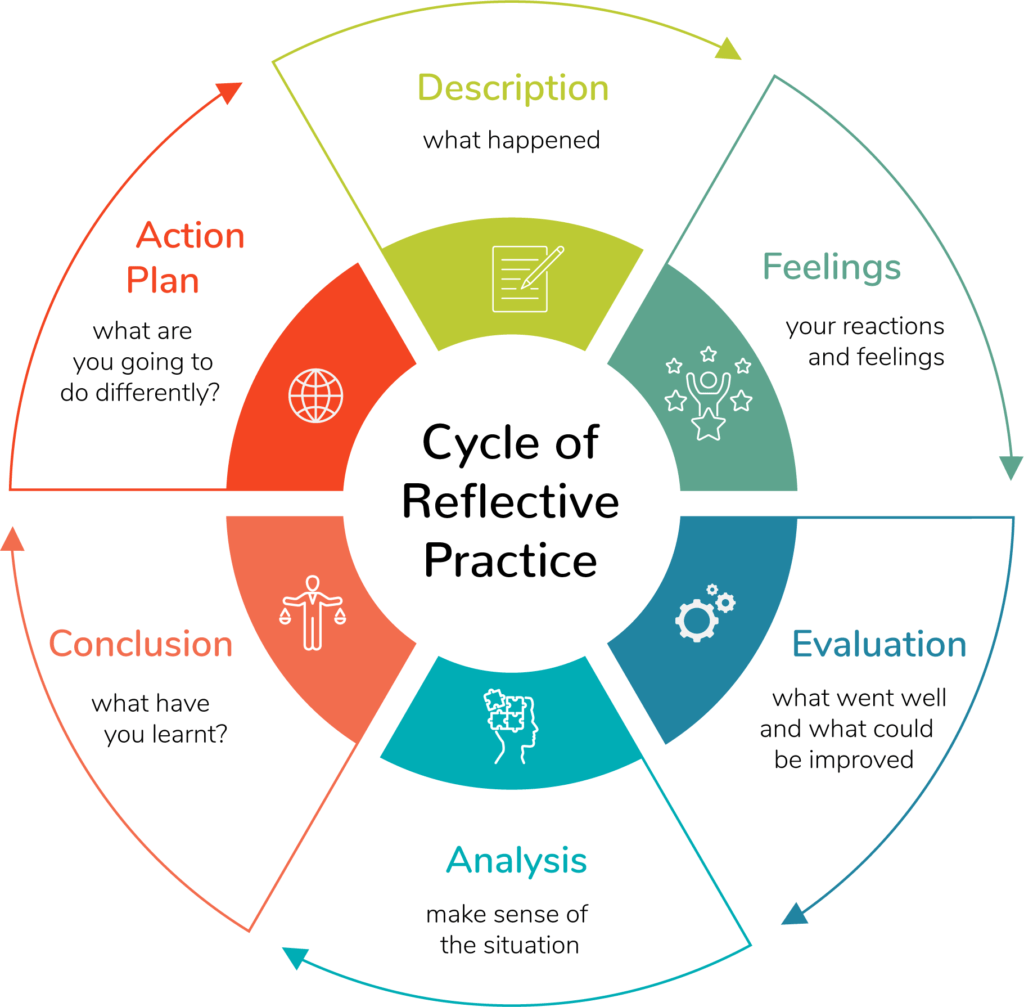
Using concrete examples is more than just a study trick; it's a professional habit that underpins what's known as reflective practice. As a designer, your work constantly involves translating abstract goals ("create a more intuitive checkout flow") into concrete decisions (the placement of a button, the wording of a label). Reflecting on this process—making your thinking visible—is how you grow as a practitioner.
A study from Parsons School of Design provides a fantastic look at how this is formally taught. They used learning portfolios (LPs) to have students explicitly connect abstract ideas to their concrete design work.
[PDF] A Pedagogy for Reflective Practice: Art and Design Thinking Made ...
This paper, 'A Pedagogy for Reflective Practice,' details how art and design students were prompted to make their thinking visible. It offers a powerful look at how to formalize the process of anchoring abstract ideas in your own creative work.
Please read the three short subsections under 'A Broader Framework for Teaching Reflection'. They are titled 'Inquiry', 'Curation', and 'Intra- and Extra-curricular Connections'. They contain brief but potent examples of student reflections. Pay attention to how: Student M connects the abstract idea of 'extreme embellishment' to concrete choices about materials and forms for an 'armor' project. Student A connects the abstract concept of 'cultural values' to the concrete design of a veil in a fashion project. Student E reflects on how her research (abstract) influenced her making (concrete) and helped her contemplate who she wants to be as a designer (identity).
What the Parsons program did was formalize the process of connecting theory to practice. This isn't just about passing a test; it's about developing a "sustainable practice" where you are constantly learning from your own work. The students' reflections are perfect examples of anchoring abstract ideas in concrete design choices.
You can adopt this reflective practice in a lightweight way:
- In your design files (e.g., Figma), add a small note explaining why you made a certain choice, linking it back to the abstract goal or user need.
- Keep a simple work journal. At the end of a project, write a short post-mortem connecting the initial abstract brief to the final concrete deliverables. What examples from this project could you use to explain a key principle to a junior designer?
This process can be structured using a model like the one below.
Conclusion
Today we explored a crucial strategy for making learning stick and become applicable. By grounding abstract ideas in the solid reality of concrete examples—especially those drawn from your own design work—you build stronger mental models and facilitate knowledge transfer.
Key Takeaways:
- Our brains remember concrete, specific information far better than abstract theories.
- To learn a new abstract concept, find or generate multiple, varied, and vivid examples.
- The most effective examples are often those you generate yourself, drawn from your own experience in UX design.
- Systematically documenting the link between abstract goals and concrete design decisions is a form of reflective practice, a key habit for professional growth.
What's Next?
Using concrete examples helps you pin down a single concept. In our next lesson, we will explore a related technique: creating analogies. While examples ground a concept in a specific instance, analogies help you understand a new concept by connecting its structure to a different concept you already know well. This is another powerful tool for enabling far transfer, particularly when learning adjacent skills like data analysis or coding.