Recommended resources
The freely available resources this lesson will direct you to.
Hello again. Last lesson separated the jobs of text, image, video, voice, music, and editing systems. A film, though, is not experienced as a set of tool outputs. Viewers encounter a story told through images, performances, sounds, and the timing of their combination.
We’ll return to the paper-crane micro-short: a person enters an empty room, finds a drawing inside a paper crane, and pulls out a second chair. This lesson asks how those events could communicate an emotional change without a character explaining it. The answer matters whether every frame is AI-generated or none is: the tools supply material, but the filmmaker shapes what the material means.
Meaning begins with a story question
A story is more than a list of things that happen. It gives the audience something to wonder about and lets a later event change their understanding. In the paper-crane film, “a person finds a crane and moves a chair” is a record of actions. A possible story is that someone arriving alone discovers a drawing of two people, hesitates, and makes room for another person. The final action can suggest an invitation, a memory, or a decision to reconnect.
The film need not settle every detail. We may never learn who made the drawing. But viewers need enough information to connect discovery, response, and choice. If the drawing flashes past too quickly, moving the chair may look like routine tidying. If the person pauses over it and looks toward the empty place at the table, the same movement can feel consequential.
Cinergies Co-Op’s Basics of cinematic language offers a compact introduction to the choices that make such connections possible.
Basics of cinematic language | Cinergies Co-Op
Read Cinergies Co-Op’s “Basics of cinematic language” to establish a vocabulary for how picture, sound, and sequence guide interpretation.
In Section 1, “What is cinematic language?”, start with the building blocks; notice that none has a fixed meaning on its own. Then go to Section 4, “Editing: how meaning is created between shots.” Read the editing passage, ending after the example of a person looking, what they see, and their reaction. Continue directly into Section 5, “Sound, atmosphere, and emotional tone,” from the sound passage. Focus on how the audience infers meaning rather than simply receives facts.
That word infers is important. A shot of a chair shows a chair. Its significance depends on whose chair it might be, what the person has just learned, how they approach it, what we hear, and how long the film lets us consider the action. You cannot reliably prompt a generator for “a meaningful chair shot” in isolation; meaning depends on relationships the finished film establishes.
Image and performance: what we see, and how it happens
An image gives viewers selected information. A wide view of one person in an otherwise empty room makes absence noticeable; a closer view makes the drawing readable. Framing also withholds information: a close view of a hand unfolding paper might delay our view of the person’s expression. These are not rules that every film must follow. They are ways to control what the audience can notice at a particular moment.
Performance is the behavior within and across those images. Imagine two versions of the same action. In one, the person glances at the drawing and immediately drags out the chair. In the other, their hand stops on the folded paper; they look from the drawing to the empty side of the table; only then do they move the chair. The object and final action are unchanged. The second performance makes the choice feel considered. Gesture, gaze, posture, timing, and—when used—spoken delivery all contribute to what we think the character intends.
Watch StudioBinder’s Directing Without Words: Visual Storytelling in Film for examples of performance and camera perspective working together. The first excerpt includes a poisoning scenario; the later editing excerpt in this lesson depicts threatened violence.
Directing Without Words: Visual Storytelling in Film
Watch StudioBinder’s “Directing Without Words: Visual Storytelling in Film” to see how a viewer reads small changes in behavior alongside framing and camera position.
In an expressive exchange from Phantom Thread, attend to faces, gestures, and the tighter view of a reaction; the excerpt is not entirely speech-free, but its visual behavior carries much of the tension. Then watch a changing viewpoint from Sound of Metal. Notice how a shift in camera position and closeness helps convey a shift in attention toward another person.
The camera does not manufacture the performance’s meaning by itself. A close view can let us see a flicker of doubt, but there must be a legible flicker to see. Likewise, a convincing facial expression in an AI-generated clip is not automatically useful. If the character smiles before noticing the drawing, viewers may read anticipation rather than discovery. If a generated face is inconsistent, a held gesture or change in posture may communicate the moment more reliably than a tight facial shot. The criterion is what the behavior tells us about the character here, not how impressive the animation looks.
For our short, the image of an empty chair establishes a possibility; the performer’s hesitation gives that possibility emotional weight. Neither contribution is quite the same as the other.
Sound: the world around an action and our feeling about it
Now keep the picture and performance fixed, but change what we hear. With quiet room ambience, crisp paper unfolding, and a distinct chair scrape, the ending may feel intimate and physical. Add a faint knock from elsewhere just before the chair moves, and viewers may wonder whether someone is about to arrive. Place an ominous musical tone beneath the same actions, and the empty chair may become unsettling. Sound can change our interpretation without changing the visible event.
Sound has several relationships to the picture. A chair scrape belongs to the visible action and confirms its weight and timing. Background room noise suggests a space beyond the frame. Music need not originate in the room at all; it can shape emotional expectation. Silence—or a marked reduction in sound—can make a small gesture unusually prominent. If the character speaks, their pace and tone can support or complicate what their face appears to say.
Jacob Nordin’s Sound Design for Cinematic Filmmaking | My Process demonstrates the roles of ambience, music, and quiet passages. Treat his workflow as one approach, not a required order for making your film.
Sound Design for Cinematic Filmmaking | My Process
Watch Jacob Nordin’s “Sound Design for Cinematic Filmmaking | My Process” to hear why a soundtrack does more than supply music.
In sound layers, listen for the separate purposes of speech, music, and ambience, especially ambience’s unobtrusive role in defining a place. In quiet and contrast, focus on how reducing sound can give a later cue more impact, and why an emotionally useful sound need not be a literal copy of reality.
The paper-crane scene would not need all these layers. Music throughout might tell the audience too insistently how to feel; continuous effects could bury the pause that matters most. A sparse soundtrack may leave room for the drawing’s reveal and the person’s response. Conversely, removing all environmental sound might make a room feel strangely unreal—useful if that is the intention, distracting if it is not.
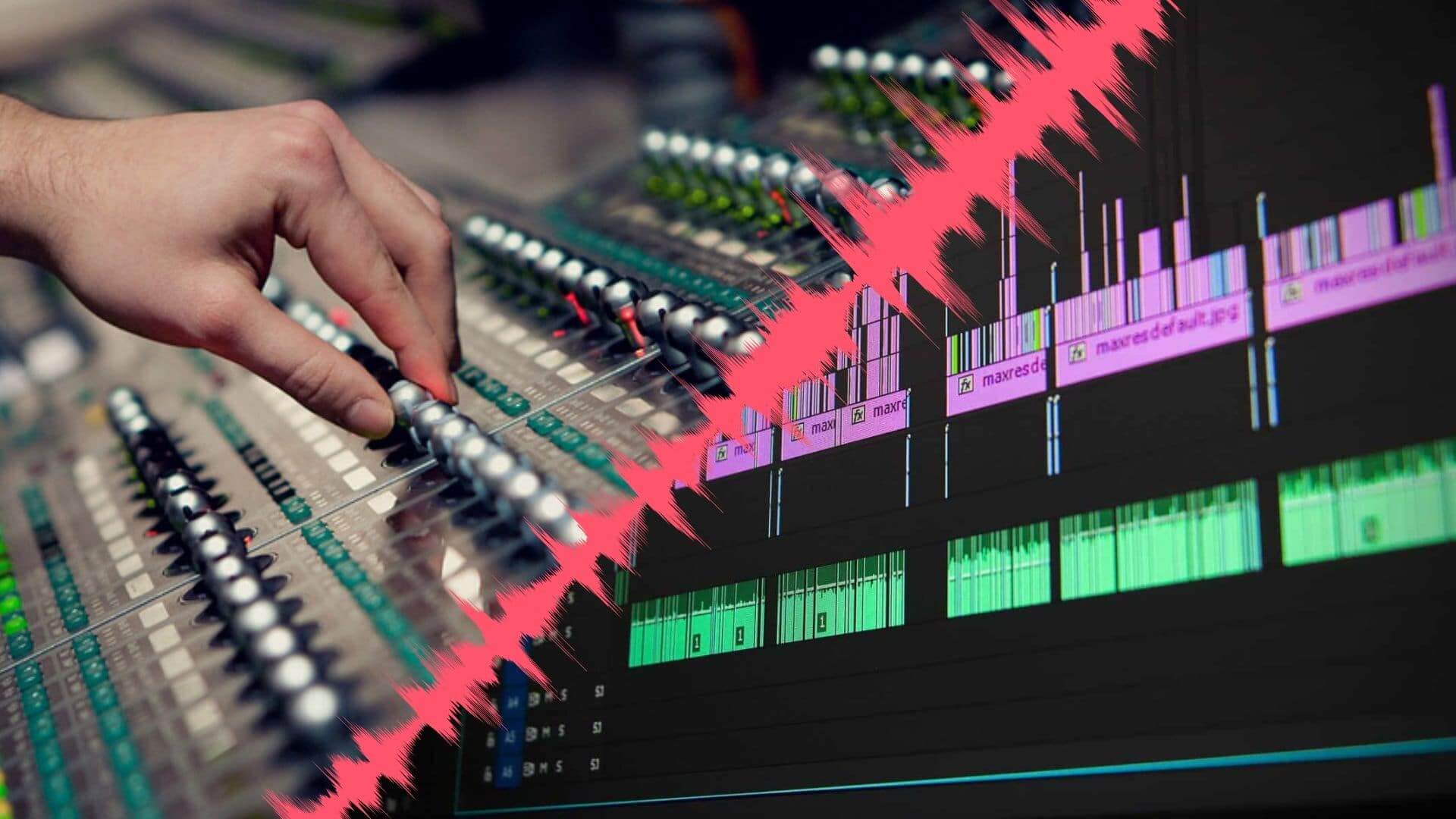
Picture and sound can also disagree productively. A character might smile while the room falls unnaturally quiet. We would have reason to question whether the smile expresses comfort. But contradiction needs an intelligible purpose; an arbitrary ominous cue can confuse a gentle scene rather than deepen it.
Editing: meaning between moments
Editing selects not only which shots appear but their order and duration. Think of three pieces of footage: the person looking down, the drawing of two people, and the person’s face changing. In that order, we infer that the drawing prompts the response. Hold the face before revealing the drawing, and we first experience curiosity about what caused the expression. The shots may be identical; their relationship changes.
Duration changes meaning as well. A drawing held long enough to recognize its two figures lets us share the discovery. A pause on the person afterward lets us register that it mattered. Cut straight from drawing to chair, and the film may convey a decision efficiently—but perhaps at the cost of feeling the decision being made. Hold every shot too long, and the action may lose momentum. There is no universal correct number of seconds; the question is whether viewers have time to perceive the information and experience the change.
Return to StudioBinder for a more suspenseful example of how glances and cuts create a wordless exchange.
Directing Without Words: Visual Storytelling in Film
Return to StudioBinder’s “Directing Without Words” for a sequence in which editing makes characters’ observations and intentions legible.
Watch glances and cuts from the discussion of Sabotage. The context involves a character considering violence. Follow how views of faces, a blade, and reactions connect what one person considers with what the other begins to realize; attend to the relationship between shots rather than the film’s subject matter.
Editing also decides when sound meets an image. The chair scrape could begin as the hand touches the chair, making the action feel immediate. It could arrive after a quiet pause, emphasizing the moment the person commits to moving it. A sound heard before its source is shown can make us anticipate what lies outside the frame. Thus sound and editing are not separate finishing touches: their timing helps construct the event we believe we witnessed.
For AI filmmaking, this is a useful safeguard against making too many attractive but disconnected clips. Suppose a generated shot of the crane looks beautiful but shows neither the drawing clearly nor the character interacting with it. It may not earn a place in the cut. A plainer shot that allows the discovery to register could do more storytelling work. The finished sequence, not the individual asset, is the unit the audience experiences.
Bringing the five parts together
Consider one possible cut of the micro-short. A wide image shows a person entering alone. Their deliberate, closed-off movements make the empty room feel like a place they expect to occupy by themselves. Quiet ambience establishes that space. A closer image makes the drawing inside the crane legible. The edit returns to the person and allows a hesitation; their gaze moves toward the empty place at the table. Music, if present, leaves space for a chair scrape as they pull out the second chair. The final shot holds both chairs long enough to let the new arrangement register.
Each part answers a different need. Story supplies the change from solitude toward making room. Image shows the relevant space and objects. Performance shows that the discovery affects someone. Sound gives the space texture and marks the action’s emotional weight. Editing lets viewers connect the discovery, response, and choice. None guarantees that every viewer will reach the same conclusion, but together they make a reading possible.
A version that changes only one part could tell a different story. An eager performance from the first frame suggests the person already expected company. An alarming sound under the last shot makes the invitation feel uncertain. Placing the drawing after the chair movement turns it into a later explanation rather than the discovery we watch prompt a choice. Film meaning is therefore neither hidden in a single frame nor added solely by music. It emerges from choices that support—or deliberately complicate—one another.
Conclusion
A viewer understands a film by connecting events over time. The story establishes what changes; images select what can be seen; performance reveals intention through behavior; sound shapes space and expectation; and editing determines how those clues meet. In an AI-generated film, strong individual assets matter less than whether they work together to make that change readable and felt.
Next, we’ll use this way of thinking to analyze a one-minute sequence, identifying its narrative beats, shot choices, sound, and emotional effect.