Recommended resources
The freely available resources this lesson will direct you to.

Hello! Welcome to the final lesson in the "Advanced Property Valuation Techniques" module.
In our last lesson, we dove deep into the Discounted Cash Flow (DCF) method, calculating a property's value by discounting its future cash flows. This gave us a powerful, income-based valuation. However, as you've seen in previous modules, this is just one of several ways to estimate a property's worth. The Sales Comparison and Cost approaches provide different perspectives, and they will rarely, if ever, give you the exact same number.
So, which number is right? Today's lesson answers that question. Our goal is to reconcile valuation figures from the income, sales comparison, and DCF approaches to determine a final market value estimate. This is the critical final step where an analyst or appraiser synthesizes data from multiple methods to arrive at a single, logical, and defensible conclusion of value.
1. The Three Paths to Value
Valuation is a process of triangulation. We approach a property's value from different angles, and where the results converge gives us confidence in our final estimate. The entire appraisal process can be visualized as a funnel where different analyses flow into a final conclusion.
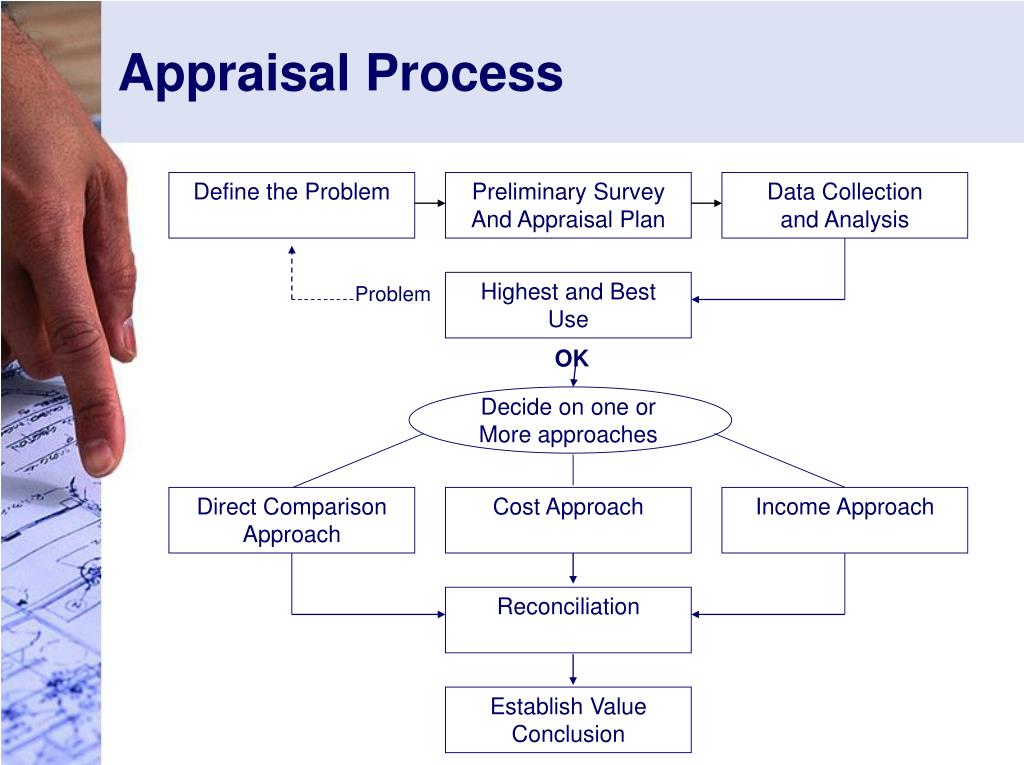
Let's briefly recap the three major approaches:
-
The Sales Comparison Approach (or Market Approach): This is based on the principle of substitution—a buyer won't pay more for a property than what a similar, substitute property has recently sold for. This is often the most reliable method for residential properties where plenty of comparable sales data ("comps") is available. We touched on this in Module 3 with metrics like value per square meter.
-
The Cost Approach: This approach also uses the principle of substitution, but from a different angle. The value is determined by what it would cost to build an equivalent property from scratch (replacement cost), minus accumulated depreciation due to age and wear. It's most useful for new construction or for unique, special-purpose properties (e.g., a school, a church) that have no comps and don't generate income in a conventional way.
-
The Income Approach: This method values a property based on its ability to generate income. It's the primary approach for commercial real estate and a key perspective for any rental property investment. We've explored its two main forms:
- Direct Capitalization: Using the Cap Rate (Value = NOI / Cap Rate) for a "snapshot" valuation.
- Discounted Cash Flow (DCF): The method from our last lesson, which models multi-year cash flows to derive an intrinsic value.
Since each method uses different data and assumptions, they will produce a range of values. The art and science of reconciliation is to narrow this range to a single point estimate.
2. The Reconciliation Process: More Art Than Arithmetic
A common mistake is to think reconciliation means simply averaging the results of the three approaches. This is incorrect. Reconciliation is a weighted conclusion where you, the analyst, give more weight to the methods you believe are most relevant and reliable for the specific property and the data you have.
The key factors to consider when assigning weight are:
- Property Type: For a standard apartment in a large building, the Sales Comparison approach is likely king. For a downtown office building, the Income Approach is paramount.
- Quality and Quantity of Data: Do you have three perfect, recent comps, or are they six months old and in a different neighborhood? Are your income projections based on existing leases or speculative market growth? You should lean on the approach with the strongest supporting data.
- Purpose of the Valuation: If you're an investor deciding what to offer, the DCF value (what it's worth to you) is extremely important. If the valuation is for a bank loan, the appraiser might prioritize the more conservative Sales Comparison approach.
Weighted Average Example
The most common method for reconciliation in investment analysis is a weighted average. You assign a percentage weight to each approach's value, and the sum of the weighted values is your final estimate.

3. Reconciliation in the Spanish Regulatory Framework
While the weighted average is a common technique for personal investment analysis, official appraisals in Spain, particularly for mortgage purposes, must follow specific rules. These are laid out in Orden ECO/805/2003, the primary regulation governing property valuation for financial entities.
This regulation applies the Principle of Prudence (Principio de prudencia), which states that when faced with several equally probable scenarios, the one resulting in a lower valuation should be chosen. This principle translates into a very specific rule for reconciliation.
Orden ECO/805/2003, de 27 de marzo, sobre normas de valoración de bienes inmuebles
To understand how this works in practice, let's look directly at the official Spanish government order, 'Orden ECO/805/2003'. This is the rulebook for certified appraisers in Spain.
Please read the following articles from the order. You can find them by searching for the article number. Article 45. 'Valor de tasación de edificios y elementos de edificios para el mercado hipotecario': Focus on paragraph 2, sections a) and b). Notice the recurring phrase: 'y se tomará, como valor de tasación, el menor de ellos' (and the appraisal value will be taken as the lesser of them). Article 46. 'Valor de tasación de edificios y elementos de edificios para Entidades aseguradoras y fondos de pensiones': Again, focus on paragraph 2, sections a) and b). You will see the same rule applied.
As you can see from the regulation, for mortgage appraisals (mercado hipotecario) of income-producing or rented properties, the reconciliation rule is not a weighted average. Instead, the appraisal value (Valor de tasación) is simply the lowest value obtained from the applicable methods (Comparison, Income/Update, and Cost/Replacement).
This is a crucial distinction.
- Your Investment Analysis: You might use a weighted average to determine what you think the property is truly worth and what you're willing to pay.
- Official Bank Appraisal (Tasación): The certified appraiser will be bound by regulations to report the most conservative (lowest) value to the bank.
This difference can sometimes explain why a bank's appraisal comes in lower than an investor's own valuation.
Test your understanding!
You are analyzing an apartment in Madrid for a buy-to-let investment. Your analysis yields the following values:
- Sales Comparison Approach: €350,000
- Income Approach (DCF): €325,000
- Cost Approach: €380,000
- What would the official Valor de Tasación for a mortgage likely be, according to Orden ECO/805/2003?
- If you were making a purchase offer, you might assign weights of 50% to Sales Comparison and 50% to your DCF value (ignoring the Cost Approach as less relevant for an existing apartment). What would your reconciled value be?
Show answer
- According to the principle of prudence in Orden ECO/805/2003, the Valor de Tasación would be the lowest of the calculated values: €325,000.
- Your personal reconciled value would be:
(0.50 * €350,000) + (0.50 * €325,000) = €175,000 + €162,500 = €337,500.
This shows how your own valuation for an offer (€337,500) can differ from the value a bank will use for the loan (€325,000).
4. Modeling Reconciliation in Python
Given your software engineering background, you can easily model these two different reconciliation scenarios in Python. This allows you to formalize the process and integrate it into a larger analysis toolkit.
Let's create functions for both the weighted average and the regulatory "lowest value" approach.
def reconcile_weighted_average(valuations):
    """
    Reconciles property values using a weighted average.

    Args:
        valuations (dict): A dictionary where keys are the approach names (str)
                           and values are tuples of (value, weight).
                           Example: {'Sales Comp': (350000, 0.5), 'DCF': (325000, 0.5)}

    Returns:
        float: The final reconciled value.
    """
    total_weighted_value = 0
    total_weight = 0
    for approach, (value, weight) in valuations.items():
        total_weighted_value += value * weight
        total_weight += weight

    # Check if weights sum to 1 (or close to it)
    if not (0.999 < total_weight < 1.001):
        print(f"Warning: Weights sum to {total_weight}, not 1.")

    return total_weighted_value

def reconcile_for_spanish_mortgage(valuations):
    """
    Reconciles property values according to Orden ECO/805/2003 for mortgages.

    Args:
        valuations (dict): A dictionary of approach names and their calculated values.
                           Example: {'Sales Comp': 350000, 'DCF': 325000, 'Cost': 380000}

    Returns:
        float: The minimum of the provided values.
    """
    return min(valuations.values())

# --- Using the numbers from our test question ---

# 1. For your own investment decision
my_valuations = {
    'Sales Comp': (350000, 0.5),
    'DCF': (325000, 0.5)
}
my_reconciled_value = reconcile_weighted_average(my_valuations)
print(f"My personal reconciled value for the offer is: €{my_reconciled_value:,.2f}")

# 2. For the official Spanish mortgage appraisal
official_valuations = {
    'Sales Comp': 350000,
    'DCF': 325000,
    'Cost': 380000
}
valor_de_tasacion = reconcile_for_spanish_mortgage(official_valuations)
print(f"The likely official 'Valor de Tasación' for the mortgage is: €{valor_de_tasacion:,.2f}")
This code clearly separates the two reconciliation contexts and provides a practical tool for your analysis.
Conclusion
You have now reached the summit of property valuation. By learning to reconcile the different values from the Sales, Cost, and Income approaches, you can move from a set of disjointed numbers to a single, confident estimate of value.
Key Takeaways:
- Reconciliation is the final step in the valuation process, where results from multiple approaches are synthesized into a single value.
- It is a process of reasoned judgment, not simple mathematical averaging. The weight given to each approach depends on the property type, data quality, and the purpose of the valuation.
- For personal investment decisions, a weighted average is a common and flexible reconciliation method.
- For official purposes in Spain, such as mortgage appraisals, regulations like Orden ECO/805/2003 mandate a more conservative approach based on the Principle of Prudence, often requiring the appraiser to take the lowest value as the final Valor de Tasación.
This lesson concludes the "Advanced Property Valuation Techniques" module. You now have a comprehensive framework for determining what a property is worth from multiple angles.
Preview of the Next Module:
Our next module, "Advanced Performance and Risk-Adjusted Returns," shifts our focus from valuation (what is it worth?) to performance (how good is the investment?). In the first lesson, you will learn to calculate the equity multiple, a powerful metric that tells you how many times you get your initial equity investment back over the life of the project.