Hello! Welcome back to the course.
In our previous lessons, we've systematically broken down the various taxes that apply when you sell a property in Spain, namely the IRPF capital gains tax and the plusvalía municipal. You've also seen how the holding period can strategically influence these taxes. Now, it's time to integrate all this knowledge into a single, powerful metric that captures the total return of an investment from start to finish.
This lesson addresses the learning outcome: Calculate after-tax IRR for Spanish property investments, incorporating all taxes.
We've touched on the Internal Rate of Return (IRR) before in Module 5, but we calculated it on a pre-tax basis. Today, we'll elevate that analysis to the after-tax level. The after-tax IRR is arguably the most important long-term performance metric because it measures the actual, spendable return on your invested capital after the government has taken its share.
Our goal is to construct a complete, multi-year cash flow projection—from the initial purchase to the final sale—accounting for all operational and dispositional taxes, and then use that projection to calculate the true IRR of the investment.
Understanding the After-Tax Cash Flow Stream
To calculate the after-tax IRR, we need to map out every euro that flows in or out of your pocket over the entire life of the investment. We can group these into a time series of cash flows, , where represents the year.
The series consists of three main components:
- Initial Investment (Year 0): The total cash required to acquire the property. This is a negative cash flow.
- Annual After-Tax Operating Cash Flows (Years 1 to N): The net cash generated by the property each year from operations, after paying for expenses, debt, and income taxes.
- After-Tax Reversion (Sale) Cash Flow (in Year N): The net cash received from selling the property, after paying off the loan, selling costs, and all capital gains taxes. This is added to the operating cash flow of the final year.
The IRR is the specific discount rate at which the net present value (NPV) of all these cash flows equals zero.
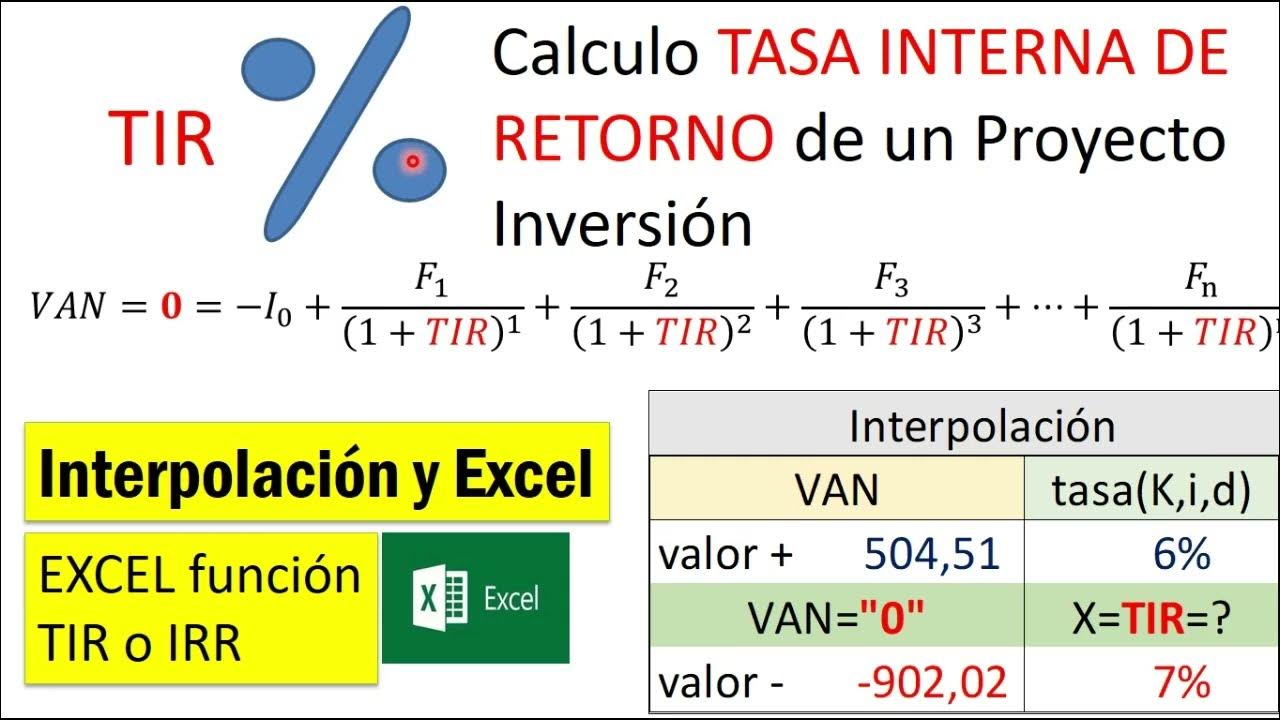
Step-by-Step Guide to Calculating After-Tax IRR
Let's walk through the process of building the after-tax cash flow series. We'll use a hypothetical investment to make it concrete.
Investment Scenario:
- Property: Apartment in Spain
- Purchase Price: €250,000
- Down Payment (20%): €50,000
- Purchase Tax (ITP @ 7%): €17,500
- Other Closing Costs (Notary, Registry): €2,500
- Loan: €200,000 at 3% interest for 30 years
- Gross Annual Rent (Year 1): €14,400 (€1,200/month)
- Annual Operating Expenses (Year 1): €3,000
- Rent & Expense Growth: 2% per year
- Holding Period: 5 years
- Projected Sale Price (End of Year 5): €300,000
- Selling Costs (5%): €15,000
- Investor's Marginal IRPF Rate (Ordinary Income): 30%
- Depreciation: 3% on the building's value (assume 50% of purchase price, so €125,000)
- Plusvalía
valor catastral del suelo: €50,000
Step 1: Calculate the Initial Investment (Cash Flow at Year 0)
This is the total cash you need to bring to the table.
- Initial Investment = Down Payment + Purchase Tax (ITP) + Closing Costs
- Initial Investment = €50,000 + €17,500 + €2,500 = €70,000
- Cash Flow at Year 0 (CF₀): -€70,000
Step 2: Calculate Annual After-Tax Operating Cash Flows (CF₁ to CF₅)
For each year of the holding period, we need to calculate the cash left after all operational payments. Let's do it for Year 1.
-
Net Operating Income (NOI):
NOI = Gross Rental Income - Operating ExpensesNOI = €14,400 - €3,000 = €11,400
-
Pre-Tax Cash Flow:
- First, find the annual debt service (mortgage payment): A €200k, 30-year loan at 3% has a monthly payment of €843.21, so an annual payment of €10,118.
Pre-Tax CF = NOI - Debt ServicePre-Tax CF = €11,400 - €10,118 = €1,282
-
IRPF on Rental Income:
- As you recall from Module 9, this is calculated on taxable income, not cash flow.
- Mortgage interest in Year 1 is ≈ €5,920.
- Depreciation is 3% of €125,000 = €3,750.
Taxable Income = Gross Rent - OpEx - Interest - DepreciationTaxable Income = €14,400 - €3,000 - €5,920 - €3,750 = €1,730- Apply the 60% reduction for long-term rentals:
€1,730 * (1 - 0.60) = €692 IRPF Tax = €692 * 30% = €208
-
After-Tax Operating Cash Flow (Year 1):
After-Tax CF = Pre-Tax CF - IRPF on Rental IncomeAfter-Tax CF = €1,282 - €208 = €1,074- CF₁ = €1,074
You would repeat this for years 2, 3, 4, and 5, adjusting for rent/expense growth and the changing interest component of your mortgage payments. For simplicity, let's estimate the next few years:
- CF₂ ≈ €1,150
- CF₃ ≈ €1,230
- CF₄ ≈ €1,310
Step 3: Calculate the After-Tax Reversion (Sale) Cash Flow
At the end of Year 5, you sell the property. The total cash flow for this year is the operating cash flow plus the net proceeds from the sale. We've already calculated the operating part, so let's focus on the sale.
-
Calculate IRPF Capital Gains Tax:
- Adjusted Acquisition Cost =
€250,000 (price) + €17,500 (ITP) + €2,500 (costs) = €270,000 - Total Depreciation Taken =
€3,750 * 5 years = €18,750 - Adjusted Tax Basis =
€270,000 - €18,750 = €251,250 - Net Sale Price =
€300,000 (sale price) - €15,000 (costs) = €285,000 - Taxable Capital Gain =
€285,000 - €251,250 = €33,750 - IRPF Tax (using 2024 brackets):
(€6,000 * 19%) + ((€33,750 - €6,000) * 21%) = €1,140 + €5,827.50 = **€6,968**
- Adjusted Acquisition Cost =
-
Calculate
Plusvalía Municipal:- Using the objective method we learned, for a 5-year holding period, the coefficient is 0.17.
- Taxable Base =
€50,000 (land value) * 0.17 = €8,500 - Assuming a local tax rate of 30%:
Tax = €8,500 * 30% = **€2,550**
-
Calculate Net Proceeds from Sale:
- The remaining mortgage balance after 5 years (60 payments) is approximately €179,350.
Net Proceeds = Sale Price - Selling Costs - Remaining Mortgage - IRPF Tax - PlusvalíaNet Proceeds = €300,000 - €15,000 - €179,350 - €6,968 - €2,550 = **€96,132**
-
Calculate Total Cash Flow for Year 5 (CF₅):
- The operating cash flow for Year 5 would be around €1,400.
CF₅ = After-Tax Operating CF₅ + Net Proceeds from SaleCF₅ = €1,400 + €96,132 = €97,532- CF₅ ≈ €97,532
Step 4: Assemble the Cash Flow Series and Calculate IRR
We now have our complete after-tax cash flow series:
| Year (t) | Cash Flow (CFt) |
|---|---|
| 0 | -€70,000 |
| 1 | +€1,074 |
| 2 | +€1,150 |
| 3 | +€1,230 |
| 4 | +€1,310 |
| 5 | +€97,532 |
Given your background, you'll recognize that solving the IRR equation manually is tedious. We use software for this. In Python, the numpy library makes this trivial.
import numpy as np

# Our final after-tax cash flow series
cash_flows = [-70000, 1074, 1150, 1230, 1310, 97532]

# Calculate the Internal Rate of Return
after_tax_irr = np.irr(cash_flows)

print(f"The after-tax IRR is: {after_tax_irr:.2%}")
# Expected output: The after-tax IRR is: 8.84%
This 8.84% represents the true annualized rate of return on your initial €70,000 investment, after accounting for every single cost and tax along the way.

Test your understanding!
Imagine you discover that you are eligible for the pre-1994 transitional regime on a different property, which significantly reduces your IRPF capital gains tax upon sale. All other numbers (NOI, debt, etc.) remain the same. How would this affect the after-tax IRR compared to an identical property without this tax break?
Show answer
The after-tax IRR would increase. The tax reduction would lower the IRPF capital gains tax paid at the time of sale. This increases the final cash flow received in the last year of the holding period (the "reversion" cash flow). Since this is a large positive cash flow, increasing it while keeping the initial investment and intermediate cash flows the same will result in a higher IRR.
Conclusion
In this lesson, we've integrated concepts from across the entire course to achieve a comprehensive and realistic performance evaluation. Calculating the after-tax IRR is a detailed process, but it is the definitive way to compare different investment opportunities on an apples-to-apples basis.
Key Takeaways:
- After-tax IRR is the true measure of return: It reflects the actual cash returned to the investor after all expenses, debt service, and taxes.
- The calculation requires a complete cash flow model: This includes the initial investment (CF₀), annual after-tax operating cash flows (CF₁ to CFₙ), and the final after-tax reversion cash flow from the sale (added to CFₙ).
- Every tax matters: ITP/IVA at purchase, annual IRPF on rental income, and IRPF/
plusvalíaat the sale all directly impact your cash flows and, therefore, your final IRR.
This detailed calculation forms the backbone of any serious real estate investment analysis.
Preview of the Next Lesson:
This was the final conceptual lesson in the module on disposition taxes. To solidify your understanding and give you a powerful, reusable tool, our next and final lesson of this module will be a practical coding session. We will write a comprehensive Python script to model the entire process we just walked through, calculating the total tax liability and the final after-tax IRR for a property investment in Spain.