Recommended resources
The freely available resources this lesson will direct you to.
Introduction
Welcome to the final lesson of your capstone project and the culmination of our journey into the titanium industry. Over the past six modules, we have moved from a high-level market overview to the detailed chemical engineering of the Kroll process. Most recently, we developed and used a techno-economic model to quantify the impact of both an evolutionary improvement (induction heating in a Kroll plant) and a revolutionary alternative (the FFC Cambridge process).
You now possess a robust analytical toolkit. The final step is to synthesize this knowledge into a strategic decision. This lesson is designed to guide you in formulating a coherent and defensible investment thesis, a task that directly leverages your background in economics, finance, and venture capital.
Our learning outcome for this final lesson is to: Develop a high-level investment thesis for a hypothetical new entrant or for an existing small-scale producer in the titanium market, justifying the strategic approach based on technical and market analysis.
We will first outline the essential components of a strong investment thesis. Then, we will deconstruct a real-world example of a new entrant, IperionX, by analyzing a professional equity research report. Finally, you will be tasked with building your own thesis, choosing a strategic path and justifying it with the quantitative and qualitative insights you've gathered throughout this course.
1. The Anatomy of an Investment Thesis
An investment thesis is a reasoned argument for a particular investment strategy. It articulates the opportunity, the plan to capture it, and the reasons why that plan is likely to succeed. Given your experience, you can think of this as the core logic that would underpin an investment memo for a VC or private equity fund.
A compelling thesis in a capital-intensive industry like titanium production must integrate four key elements:
- The Opportunity: What specific inefficiency, market gap, or structural shift are you targeting? Is it the high cost of the incumbent process, the geopolitical risk of the current supply chain, the environmental footprint, or an unmet need in a new market?
- The Strategic Path: How will you capture this opportunity? You must choose a clear strategic direction. We can simplify the options into three main archetypes:
- The Incumbent Improver: Acquire or invest in an existing (likely small-scale) Kroll process producer. Your value-add is applying operational and technical improvements to boost efficiency and profitability, leveraging a de-risked and certified process.
- The Disruptive New Entrant: Found or fund a new venture based on a novel production technology (like the FFC process we analyzed, or another alternative). The goal is to fundamentally change the cost structure of the industry, potentially unlocking new markets.
- The Niche Specialist: Focus on a specific, high-margin segment of the value chain with a unique angle. A prime example is a "circular economy" player focused on turning abundant scrap metal into high-value powders for additive manufacturing.
- The Justification (Technical, Market, & Economic): This is the heart of the thesis, where you use data to support your chosen path.
- Technical: Why is your chosen technology the right tool for the job?
- Market: Why is the market ready for your strategy now?
- Economic: What do the numbers say? What is the projected cost, profitability, and return on investment?
- Risks & Mitigation: What are the primary risks to your thesis, and how do you plan to manage them?
2. Case Study: Deconstructing a Real-World Disruptor
To see how these components come together in practice, we'll analyze the investment case for IperionX (IPX), a real company attempting to disrupt the titanium market with its proprietary technologies.
The following equity research report from Bell Potter provides a detailed investment thesis for IPX. As you read, your goal is to reverse-engineer their argument and identify the key pillars of their case. This is directly analogous to performing due diligence on a potential investment.
IperionX Ltd (IPX) - Bell Potter
This Bell Potter report on IperionX lays out a comprehensive investment thesis for a company pursuing a disruptive, niche strategy. Please read the indicated sections to deconstruct their argument.
Read the following sections from the report: Executive Summary (Page 1): This is the thesis in a nutshell. Global patents for disruptive Ti manufacturing technology (Page 3): Understand their core technological claim against the Kroll process. Addressing US Titanium Security of Supply and Commercialisation (Page 4-5): Identify the market opportunity and their go-to-market strategy. Titanium Manufacturing Campus, Virginia sections (Pages 10-12): Extract the key economic parameters—CAPEX, OPEX, and target pricing for their products. Core technology 1: HAMR (Pages 13-14): Get a bit more detail on the technical justification for their process. Titanium market; focus on the US (Pages 20-22): Understand the market data they use to justify their focus on the US. Scrap titanium markets (Page 22): See how their feedstock strategy fits into the market structure. While reading, focus on answering: What is the core problem IPX solves? What is their technical and market justification? What are the key numbers underpinning their economic case?
After studying the report, the investment thesis for IperionX becomes clear. It is a blend of the "Disruptive New Entrant" and "Niche Specialist" archetypes.
- Opportunity: Targets the high cost and waste of the Kroll process, the lack of a domestic US supply chain (a national security issue), and the growing demand for powdered metals in additive manufacturing.
- Strategic Path: Uses novel, lower-energy HAMR and HSPT technologies to upcycle abundant titanium scrap into high-value powders and near-net-shape parts. They are starting with a small commercial facility in Virginia, USA, directly addressing the domestic supply gap.
- Justification:
- Technical: Their process operates at lower temperatures and eliminates many of Kroll's energy-intensive and corrosive steps (as shown in the report's description of HAMR).
- Market: They leverage the ~95% US import reliance for titanium metal and target high-value applications (aerospace, defense, luxury goods) where customers like Lockheed Martin and Ford are already engaged.
- Economic: The report models a path to significant profitability, projecting that a 2,000 tpa facility (Phase 2) could generate +US$120m EBITDA from a ~US$70m capital investment, with target margins of over US$60/kg.
- Risks: The report classifies the stock as "Speculative," acknowledging the significant commercialization and execution risk inherent in scaling a new industrial process.
This case study provides a powerful template for how to build a thesis grounded in technical differentiation, market need, and a clear economic model.
3. Your Turn: Formulate Your Investment Thesis
Now it is your turn to act as the strategist and investor. Your task is to develop a high-level investment thesis for a hypothetical venture in the titanium market. Choose one of the three strategic paths (Incumbent Improver, Disruptive New Entrant, or Niche Specialist) and build your argument.
There is no single "right" answer. The quality of your thesis will be judged on its coherence, its justification, and its use of the knowledge and analytical tools we've developed throughout this course.
Use the following structure to build your thesis. Be concise, but ensure each section is supported by logic and data from our lessons and resources.
Investment Thesis: [Give Your Venture a Name]
1. Executive Summary (The 30-Second Pitch)
- Concisely state the opportunity you are targeting, your strategic approach, and the expected outcome (e.g., "Our venture, 'Kroll-Plus', will acquire and upgrade small US-based Kroll producers. By implementing induction heating and process controls, we target a 20% IRR by serving the high-margin, certified aerospace market, mitigating the risk of foreign supply disruption.").
2. The Market Opportunity
- What specific market failure or gap are you exploiting? Justify this with data.
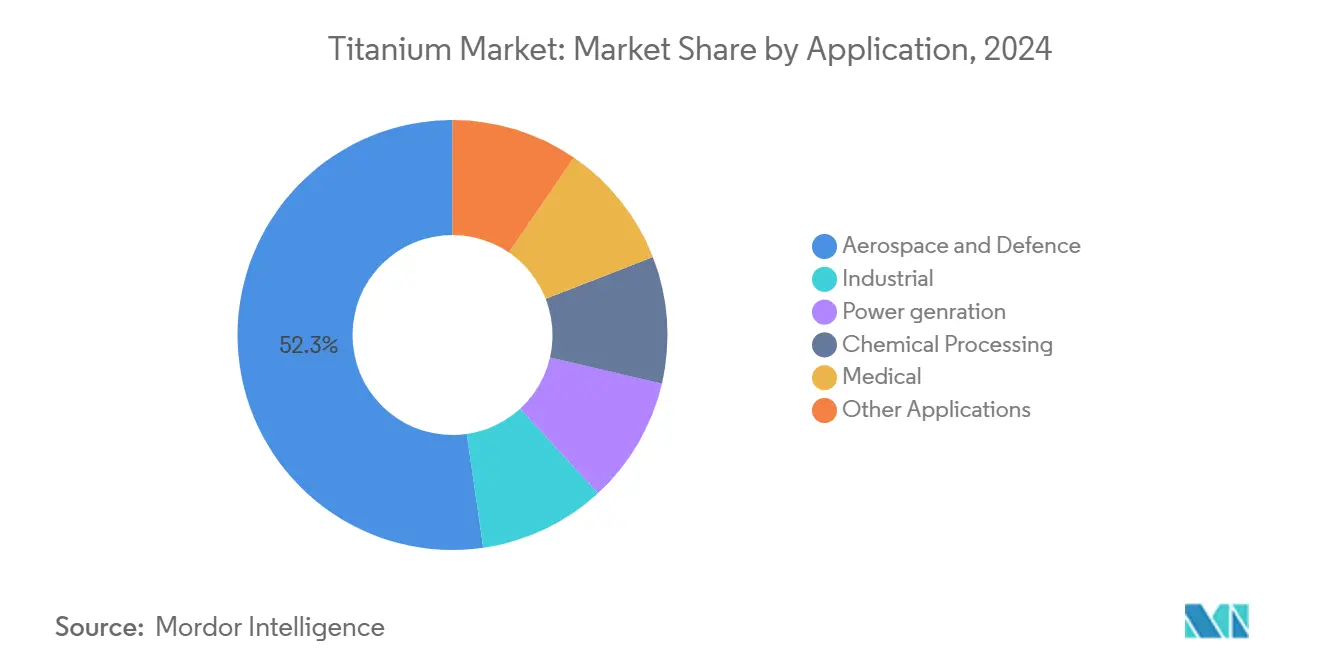
- (Prompt: Refer to the US import dependency figures from the IperionX report (LINK), the market segmentation chart (LINK), and the high cost/energy/carbon footprint of the Kroll process we modeled).
3. Strategic Approach
- Clearly state which path you have chosen (Improver, Disruptor, or Specialist) and describe your hypothetical company's mission.
- (Prompt: Will you be acquiring an existing plant? Building a greenfield facility with new tech? Focusing only on scrap recycling? Where will you be located and why?)
4. Justification
**a. Technical Justification:**
*   *Why is your chosen technology the best fit for your strategy?*
*   *(Prompt: If you are an 'Incumbent Improver', explain why sticking with the proven Kroll process is superior to risking a new technology. Reference our analysis on induction heating. If you are a 'Disruptive New Entrant', explain why a new process like FFC is necessary to capture the opportunity. Reference our breakeven analysis from the last lesson).*

**b. Market Justification:**
*   *Why is the market ready for your venture now? Who are your target customers?*
*   *(Prompt: Is the aerospace & defense industry's conservatism an advantage for your 'Improver' strategy? Is the rise of electric vehicles and 3D printing creating a new market that only a 'Disruptor' can serve? Use the partnerships listed in the IperionX report (e.g., GKN, Lockheed, Ford) as examples of market signals).*

**c. Economic Justification:**
*   *Present the core numbers that make your case compelling. You don't need a full financial model, but you must use the outputs from your techno-economic analysis.*
*   *(Prompt: Create a simple summary table comparing your projected cost per kg against the Kroll baseline we've used. State your key assumptions for CAPEX, OPEX (energy, materials), and target ROI. How do your projected economics compare to those of IperionX or the Titan Project ([LINK](https://iperionx.com/wp-content/uploads/2022/07/Scoping-Study-June-30.pdf))?)*
5. Key Risks & Mitigation Strategy
- What are the top 1-2 risks that could cause your thesis to fail? How will you mitigate them?
- (Prompt: If you chose the 'Improver' path, your risk might be disruption by a lower-cost technology. How do you defend against that? If you chose the 'Disruptor' path, your risk is technical failure. How do you de-risk the technology development and scale-up?)
Conclusion
This capstone exercise concludes your deep dive into the titanium industry. You began with a simple but profound question—"How do I get rich?"—and a desire to understand unpopular, complex industries. Through this journey, you have not only learned the specifics of titanium production but have also constructed and applied a powerful, generalizable framework for strategic analysis.
You have learned how to:
- Map an industrial value chain and identify its key economic drivers.
- Translate chemical engineering principles into a quantitative techno-economic model.
- Use that model to evaluate the financial impact of both incremental and disruptive technological change.
- Synthesize technical, market, and economic analysis into a coherent investment thesis.
This ability to move fluidly between the technical details of a process and the high-level strategic implications is precisely what is required to identify and execute on opportunities in the industrial and chemical sectors, whether as an investor or an operational leader. Congratulations on completing the course.