Hello! In our last lesson, we built your "prompt factory" by creating a library of reusable, structured templates for each phase of book creation. You now have the tools to generate content systematically and efficiently.
Today, we're building the final quality control station on your assembly line. This lesson is about creating a comprehensive pre-publishing checklist. Before you click that "Publish" button on Amazon, you need a rigorous quality assurance (QA) process to ensure your book is professional, discoverable, and compliant with platform rules.
Think of this as the final deployment check in an IT project. A small bug or misconfiguration found here can save you from major issues post-launch, such as bad reviews, low sales, or even account suspension. Our goal is to develop a checklist that covers the three pillars of pre-publishing QA: Editing, Formatting, and Metadata.
1. Pillar 1: The Editing and Content Checklist
This first stage goes beyond simple spell-checking. It ensures your manuscript is coherent, credible, and compliant. Your personal brand as an author depends on it.
Content & Style Review
This is your final human pass to catch issues that AI and grammar checkers miss.
- Voice & Tone Consistency: Read through the manuscript. Does it sound like it was written by one person? Have you successfully infused your personal voice, as we practiced in previous lessons?
- Flow & Coherence: Do the chapters and sections transition smoothly? Are there any logical jumps or gaps in the narrative?
- Repetition Check: AI models can be repetitive. Look for overused phrases, concepts explained multiple times, or similar sentence structures.
Accuracy & Legal Compliance
This is arguably the most critical part of the checklist, especially for your non-fiction books on business, tech, and mentoring. Remember, you are 100% responsible for everything in your book.
- Fact-Checking: Verify every statistic, historical claim, technical detail, and piece of advice. AI can "hallucinate" facts, and publishing incorrect information (especially in advice-based books) can damage your credibility and even have legal consequences.
- Plagiarism & Originality: AI-generated text can sometimes be too similar to its training data. Use a plagiarism checker to scan your final manuscript. While many powerful checkers are paid, you can find free online versions to run spot-checks on sections you feel are less original.
- Rights & Permissions: Have you used any images, quotes, song lyrics, or data you didn't create? Confirm you have the legal right to use them. For AI-generated images, the terms of service of the tool you used (e.g., Leonardo.AI, Bing Image Creator) dictate your commercial usage rights.
AI Content Disclosure (A Critical Step)
Amazon KDP requires you to disclose the use of AI-generated content. Getting this wrong can lead to publishing delays or rejections. The distinction is crucial:
- AI-Assisted: You wrote the content and used AI for brainstorming, outlining, or editing (like using Grammarly). This does not require disclosure.
- AI-Generated: An AI model created the text, images, or translations that appear in your book, even if you heavily edited them later. This requires disclosure.
To understand this policy in detail, please review the following resource. It breaks down Amazon's rules clearly and provides an excellent checklist.
KDP’s AI Disclosure Rules Explained for 2025: A Plain-English Guide
The article 'KDP’s AI Disclosure Rules Explained for 2025' by Brandon Rohrbaugh provides a plain-English guide to Amazon's policy. It's essential for ensuring you remain compliant.
Please read the sections 'AI-generated vs AI-assisted, the core difference', 'Where you disclose inside the KDP setup flow', 'What counts as AI-generated text', 'Images and covers, special cases', 'Quality, copyright, and liability', and pay special attention to the 'Action checklist before you hit Publish'. This directly informs our QA checklist.
Based on this, your AI Disclosure check should include:
- Did an AI model write text that is in the final manuscript? (Yes/No)
- Did an AI model create the cover art or any interior illustrations? (Yes/No)
- If "Yes" to either, have I prepared to select "Yes" on the KDP AI content disclosure question?
2. Pillar 2: The Formatting Checklist
A poorly formatted book screams "amateur" and can lead to a frustrating reading experience. We'll use Microsoft Word, a free and accessible tool, to create professional files for both ebook and print.
The following video provides a comprehensive, step-by-step guide to formatting a book in Word for KDP. It covers everything you need for both formats.
How to Format a Book in Microsoft Word for Amazon KDP (Step-by-Step)
The video 'How to Format a Book in Microsoft Word for Amazon KDP' by Sean Dollwet is a practical tutorial that will guide you through creating both your ebook and paperback files. Follow along to understand the key settings.
Watch the video from the start (00:31) to the end (14:49). Pay close attention to these key formatting actions, as they will become items on our checklist: Setting the trim size (e.g., 6x9) and margins. Using page breaks correctly between chapters. Applying the 'Heading 1' style to all chapter titles. Generating a clickable Table of Contents for the ebook. Adding headers, footers, and page numbers for the paperback. Saving the final files as EPUB (for ebook) and PDF (for print). Note: Word can save to PDF. For EPUB, a tool like Calibre (free) can convert a properly formatted DOCX file.
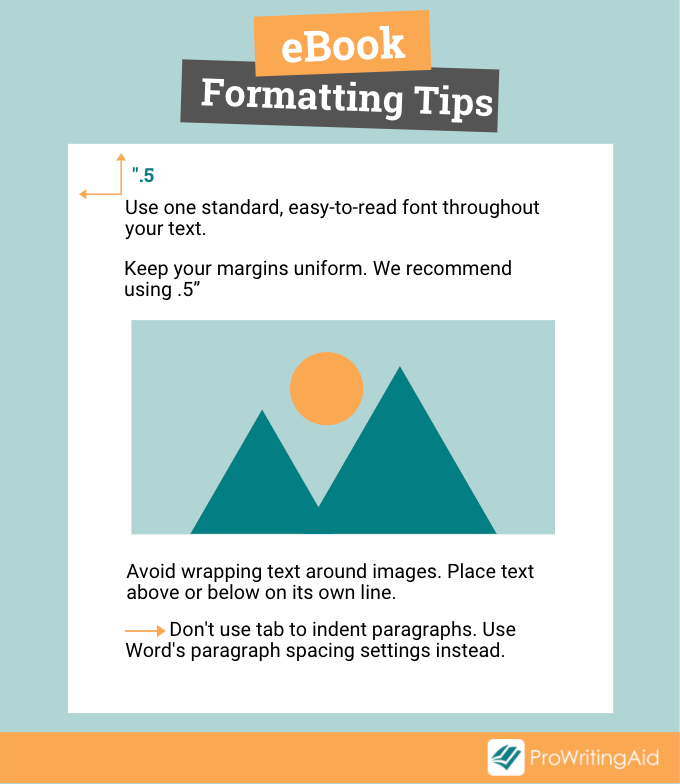
Your formatting checklist should look something like this:
For Ebook (EPUB/KDPX):
- Text is a single, readable font (e.g., Georgia, Times New Roman), size 11-12.
- All chapter titles use the "Heading 1" style.
- Body text is justified.
- Page breaks are used at the end of each chapter (no extra manual line breaks).
- A clickable Table of Contents is generated and works correctly.
- Images are "in line with text" and not wrapped.
For Paperback (Print-Ready PDF):
- All ebook formatting checks are complete.
- Page/trim size is set correctly (e.g., 6" x 9").
- Margins are mirrored, with an adequate gutter margin (e.g., 0.12").
- Headers and footers are set up (e.g., Author Name on even pages, Book Title on odd pages).
- Page numbering is correct and doesn't appear on front matter like the title page.
- The Table of Contents is updated to show static page numbers.
- The file is saved as a high-quality PDF.
3. Pillar 3: The Metadata Checklist
Metadata is the set of data that describes your book to Amazon's systems and to potential customers. Getting this right is crucial for discoverability. If your content is the product, your metadata is the marketing and SEO.
Amazon KDP's own video on this topic is the best source of truth.
The video 'Discovering Metadata' from the official Amazon KDP channel explains what metadata is and why it's critical for traffic and sales. This is your guide to optimizing your book's visibility.
Watch the key sections that detail the components of metadata. Focus on how each piece contributes to discovery and conversion: What is Metadata? (03:18 - 04:00) Categories (05:20 - 08:07) Keywords (08:32 - 12:18) Title & Subtitle (13:21 - 16:03) Book Description (16:03 - 18:11) Author Bio & Editorial Reviews (18:11 - 20:52)
From this video, we can build our final metadata checklist:
- Title & Subtitle: Is the title memorable and intriguing? Does the subtitle add clarity and relevant keywords?
- Book Description (Blurb): Does it have a strong hook? Does it outline the problem and promise the solution? Is it formatted with bolding/italics for readability? (Use the Author Central tip from the video!).
- Categories: Have you chosen 2-3 of the most specific and relevant BISAC categories available in the KDP dashboard? Have you researched competitor categories?
- Keywords: Have you filled all 7 keyword slots? Are they phrases customers would actually search for? Have you avoided repeating words from your title/subtitle and using punctuation?
- Author Name: Is it spelled correctly and consistently with your Author Central profile?
- Series Information: If it's part of a series, is it correctly linked?
Test your understanding!
A fellow author tells you they used ChatGPT to brainstorm ideas for their tech book, then wrote the entire manuscript themselves. When publishing on KDP, they disclosed it as "AI-Generated" just to be safe. Based on what you've learned, was this the correct action? Why or why not?
Show answer
This was not the correct action. According to Amazon's guidelines, their work would be classified as "AI-Assisted," not "AI-Generated."
The key distinction is who created the final content that appears in the book. Since the author wrote the manuscript themselves and only used AI for brainstorming and ideation, they remain the creator. AI was just a tool to help them plan, much like an outliner or a mind-mapping software. Therefore, they did not need to disclose AI usage.
Your Master Pre-Publishing QA Checklist
Here is a template consolidating all the points we've covered. You can copy this into a spreadsheet or a document to use for every book you publish.
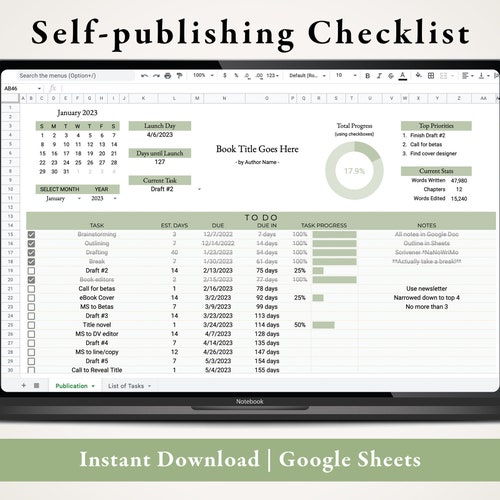
Master QA Checklist Template
Phase 1: Editing & Content
- Final Read-Through:
- Checked for consistent authorial voice.
- Ensured smooth transitions and logical flow.
- Removed repetitive words and phrases.
- Proofreading:
- Ran through a grammar/spelling tool (e.g., Grammarly).
- Manually proofread for typos the tools missed.
- Compliance & Accuracy:
- All facts, stats, and technical data are verified and cited if necessary.
- Manuscript scanned with a plagiarism checker.
- Confirmed rights for all third-party content (images, quotes).
- AI Disclosure decision made: Determined if content is AI-Generated or AI-Assisted.
Phase 2: Formatting
- Ebook File (EPUB/KDPX):
- Clean, readable font (11-12pt).
-
Heading 1style applied to all chapters. - Justified text.
- Correct page breaks.
- Clickable Table of Contents generated and tested.
- Print File (PDF):
- Correct trim size and mirrored margins.
- Headers/Footers with Author Name/Title.
- Page numbers correctly placed.
- Table of Contents updated with page numbers.
- Saved as a high-quality PDF.
Phase 3: Metadata
- Core Metadata:
- Final Title and Subtitle are compelling and keyword-optimized.
- Book Description (blurb) is persuasive and well-formatted.
- Discoverability Metadata:
- All 7 keyword slots are filled with relevant search phrases.
- 2-3 specific, niche categories have been selected.
- Final Checks:
- Cover image file meets KDP specifications (size, resolution).
- Author name is correct.
- Series information is correct (if applicable).
Conclusion
You have now built the final, and most critical, system in your book production process. This quality assurance checklist transforms publishing from a hopeful guess into a deliberate, professional procedure. It protects your brand, enhances the reader's experience, and ensures you are compliant with platform rules, safeguarding the KDP account that is central to your business goals.
Key Takeaways:
- A pre-publishing QA checklist is non-negotiable for professional self-publishing.
- The process is divided into three pillars: Editing (content quality and compliance), Formatting (reader experience), and Metadata (discoverability).
- You are always the publisher of record, fully responsible for your book's accuracy, originality, and compliance with rules like AI disclosure.
- Systematizing this final check will save you time, reduce errors, and dramatically increase the quality of your published works.
Preview of the Next Lesson:
Your book is polished, compliant, and ready for publication. What's next? To build a sustainable passive income stream, one book is often just the beginning. In our next lesson, we will outline a content strategy for a potential book series to encourage repeat purchases, turning a single buyer into a loyal fan.