Recommended resources
The freely available resources this lesson will direct you to.
Introduction
Welcome to our final lesson of the "Emerging Architectures and Future Trends" module, and indeed, the conclusion of the foundational portion of your curriculum. In our last lesson, we analyzed how distributing large models across thousands of GPUs creates a formidable communication bottleneck. We saw that solving for memory capacity and compute density immediately leads to a new challenge: the network.
Today, we take a step further back to confront the most fundamental constraints of all: the laws of physics. Even if we could build infinitely fast interconnects, we would run headlong into the twin crises of power and heat. The sheer energy required to operate exascale hardware and the immense waste heat it produces are now primary drivers of AI system design, from the chip to the datacenter.
Our learning outcome for this lesson is to: Describe the power, cooling, and sustainability challenges of operating exascale AI hardware.
We will explore:
- The physical and economic drivers of the AI power crisis.
- The technological shift from air to liquid cooling required to manage extreme heat density.
- The broader sustainability challenges, including grid stability, water consumption, and strategies for a more energy-efficient future.
This lesson provides the final piece of the full-stack puzzle, connecting the architectural concepts we've studied to the physical, real-world limits that will define the future of large-scale AI.
Part 1: The Power Problem: Hitting the Physics Wall
For decades, the computer industry enjoyed a "free lunch" where chips became faster and more power-efficient with each generation. That era is over. The exponential growth of AI has collided with the physical limits of semiconductor technology, creating an unprecedented demand for energy.
The End of Free Performance Gains
To understand the root of the power problem, we first need to look at two key principles in chip design.
NVIDIA Blackwell & The 3nm Wall: Is AI Scaling Broken?
This video from Tiff In Tech provides an excellent, concise explanation of why modern chips, particularly those for AI, have become so power-hungry and difficult to cool.
Please watch the segment from 00:18 to 03:43. The video explains the breakdown of Dennard Scaling, the problem of leakage current, and the resulting phenomenon of 'dark silicon'.
As the video explains, the magic of Dennard scaling—the rule that transistor power density stays constant as they shrink—broke down around 2006. While transistors continued to shrink (Moore's Law), they stopped getting more power-efficient. The primary culprit is leakage current: as the insulating gates on transistors become just a few atoms thick, electrons "tunnel" through even when the transistor is off.
This has two critical consequences for system architects:
- Extreme Power Density: Packing billions of leaky transistors onto a single GPU creates a massive power draw and, consequently, immense heat. A modern AI accelerator is as much a space heater as it is a processor.
- Dark Silicon: It is physically impossible to power on all the transistors on a modern chip simultaneously without it melting. A significant fraction of the silicon must remain "dark" or idle at any given moment to manage the thermal load. This is a fundamental utilization limit imposed by physics.
Jevon's Paradox and The Scale of AI Datacenters
You might expect that chip vendors' efforts to improve energy efficiency would lead to lower overall power consumption. However, the opposite has occurred, a classic example of Jevon's Paradox: as a technology becomes more efficient, its total consumption increases because it's used more. More efficient GPUs have simply enabled us to build and train vastly larger models, deploying accelerators at an unprecedented scale.
The following video details the dramatic difference in power requirements between traditional and AI datacenters.
How AI Datacenters Eat the World
The channel 'High Yield' breaks down the components of an AI datacenter, quantifying the staggering increase in power consumption at both the rack and facility level.
Please watch two segments from this video: Rack-Level Power (07:14 - 11:47): This section compares the power draw of traditional server racks (5-10 kW) with modern AI racks, like NVIDIA's GB200 NVL72, which can exceed 130 kW. Facility-Level Power (14:38 - 17:52): This part expands the view to the entire datacenter campus, discussing facilities with critical IT power loads of hundreds of megawatts, and soon, gigawatts.
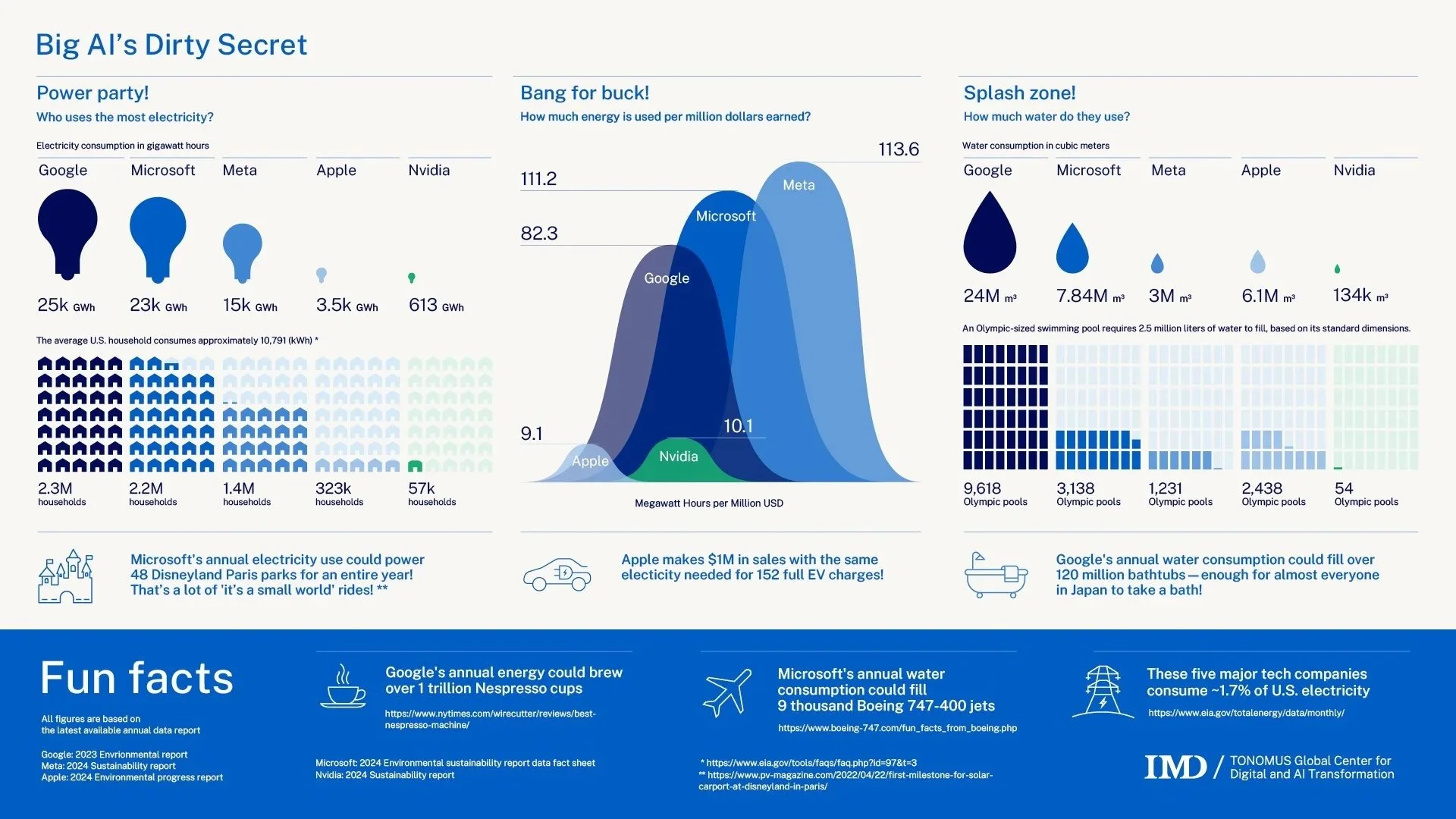
The numbers are stark:
- A single AI server rack can consume 10-40 times more power than a traditional one.
- AI datacenter campuses are being built with power capacities that rival those of large cities.
- Unlike traditional datacenters with fluctuating loads, AI training clusters often run near maximum power 24/7, putting continuous, heavy strain on the power grid.
This massive energy consumption is a defining feature and a critical vulnerability of the current AI paradigm.
Part 2: The Cooling Challenge: Taming the Inferno
All the electricity consumed by a GPU is ultimately converted into heat. Removing this heat from a densely packed server rack is a monumental engineering challenge.
The Inevitable Shift to Liquid Cooling
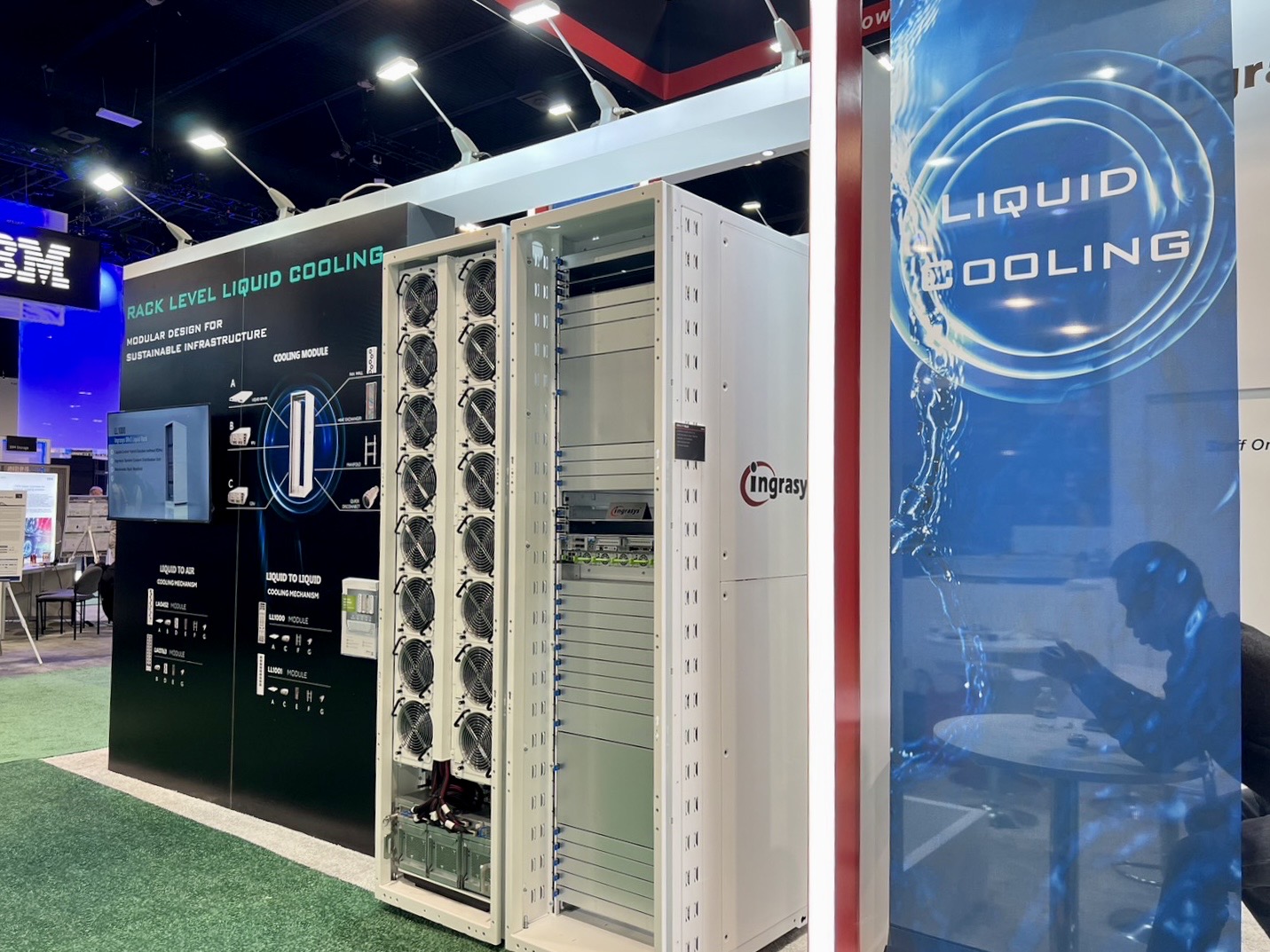
The extreme heat density of modern AI racks—over 100 kW in the space of a large refrigerator—has made traditional air cooling obsolete. The industry is rapidly transitioning to liquid cooling.
How AI Datacenters Eat the World
Let's return to the 'High Yield' video, which provides a clear explanation for why liquid cooling is no longer optional for high-performance AI hardware.
Watch the segment from 11:47 to 14:38. Focus on the three key advantages of liquid cooling that the video outlines.
The key drivers for adopting liquid cooling are:
- Physical Density: A liquid cold plate is far more compact than a massive air-cooling heatsink, allowing more GPUs to be packed into a single rack.
- Thermal Performance: Water can absorb and transfer heat about 4,000 times more effectively than air by volume, making it the only viable option for dissipating such concentrated heat loads.
- Energy Efficiency: Liquid cooling allows the facility to run more efficiently. Furthermore, keeping the silicon at a lower, more stable temperature reduces leakage current, saving power and increasing the lifespan of the chips.
Facility-Level Integration and Efficiency
Implementing liquid cooling is not as simple as adding a water loop to a server. It requires a complete co-design of the datacenter facility, including large-scale plumbing, pumps, and external cooling towers.
A key metric for measuring the efficiency of this infrastructure is Power Usage Effectiveness (PUE).
An ideal PUE is 1.0, meaning no energy is wasted on overhead like cooling or power conversion. While the industry average hovers around 1.5, leading-edge facilities like the Oak Ridge Leadership Computing Facility (OLCF), which houses the Frontier supercomputer, achieve an astonishing PUE of 1.03. They accomplish this through innovations like using warmer water (e.g., 90°F / 32°C) in their cooling loops, which is efficient enough that it can be cooled by external towers without expensive refrigeration. You can read more about OLCF's approach in their article, "OLCF Pioneers Approaches to Energy Efficient Supercomputing" (resource LINK).
Part 3: The Sustainability Imperative
The power and cooling challenges scale up to a broader crisis of sustainability. The AI industry's trajectory is colliding with global constraints on electricity generation, grid infrastructure, and natural resources like water.
Key Sustainability Challenges
Towards Sustainable Post-Exascale Leadership Computing
This research paper from the Oak Ridge National Laboratory outlines the key trends that threaten the sustainability of post-exascale computing, which are directly applicable to large-scale AI.
Please read Section II-B, 'Key Trends in Post-Exascale HPC'. This section concisely lists the major headwinds facing the industry.
As the paper and our previous resources highlight, the primary sustainability challenges are:
- Limited Power Budgets: The operational cost of energy is enormous (roughly $1 million per megawatt per year). AI companies are hitting economic limits on what they can afford to power.
- Grid Instability: The demand for power is growing faster than utilities can build new generation capacity and high-voltage transmission lines. This has led companies like Microsoft and Amazon to make deals to restart or directly connect to nuclear power plants, effectively bypassing the public grid.
- Carbon Emissions: Most of the world's electricity is still generated from fossil fuels. The massive energy draw of AI directly contributes to carbon emissions, conflicting with corporate and national climate goals.
- Water Consumption: Large-scale liquid cooling relies on evaporative cooling towers, which consume millions of gallons of water, putting a strain on local water supplies, particularly in the arid regions where many datacenters are built.
A Roadmap for Sustainable Computing
Addressing these challenges requires a holistic approach that goes beyond just hardware. It requires co-design across the entire stack, from applications to facility operations.
The OLCF article "OLCF Pioneers Approaches to Energy Efficient Supercomputing" and the paper "Towards Sustainable Post-Exascale Leadership Computing" (resource LINK) outline several key strategic opportunities. As a computer scientist focused on system design, these software- and policy-level interventions are particularly relevant:
-
Applications as First-Class Citizens: Much of the opportunity for energy savings lies in the software.
- Mixed-Precision & Algorithmic Tuning: Using lower-precision arithmetic (like FP16 or INT8) where possible and designing algorithms to reduce data movement can yield significant energy savings for a small, or sometimes negligible, performance trade-off.
- Frequency Scaling: Running a GPU at its absolute maximum clock frequency is often not its most energy-efficient point. Dynamically tuning the frequency can save considerable power.
-
Energy-Aware System Software: The operating and scheduling systems that manage the cluster can be made much smarter.
- Data-Driven Optimization: By collecting and analyzing telemetry from the entire facility (power, temperature, utilization), a "digital twin" of the datacenter can be created. This allows operators to simulate and deploy energy-saving strategies, such as optimizing cooling loops based on the current workload.
- Energy-Aware Scheduling: A scheduler could place jobs based on energy availability (e.g., prioritizing work when renewable energy is abundant) or co-locate workloads to maximize resource utilization and minimize idle power, which still accounts for a huge portion of energy use.
-
Energy-Aware Policies: The economic and organizational incentives must be aligned with efficiency goals. The current model of allocating compute time in "node-hours" provides no incentive for users to reduce their energy consumption. A future model might allocate resources in "joules" or "watt-hours," directly rewarding users who optimize their applications for energy efficiency, not just time-to-solution.
Conclusion and Course Wrap-Up
Today, we've seen that the phenomenal computational power of exascale AI comes at a staggering physical cost. The very foundation of this technology rests on a precarious supply of electricity, water, and cooling capacity.
Key Takeaways:
- The Physics Wall: The breakdown of Dennard scaling means that modern processors are fundamentally limited by power and heat, leading to concepts like "dark silicon."
- Extreme Density: AI datacenters concentrate power and heat at densities 10-40x greater than traditional facilities, mandating a wholesale shift from air to advanced liquid cooling.
- Sustainability is a System Problem: The challenges extend beyond the datacenter to the stability of the power grid, carbon emissions, and water consumption.
- Co-Design is the Solution: Sustainable AI requires a holistic approach, optimizing everything from application algorithms and system software to facility infrastructure and allocation policies.
With this lesson, you have completed the Foundational and Core courses of your curriculum. Congratulations! You have journeyed from the transistors and ALUs inside a single GPU, through the memory hierarchy, programming models, and communication fabrics, to the concrete-and-steel realities of the datacenter.
You now have a robust, full-stack understanding of the principles and trade-offs involved in designing and scaling AI systems. This foundation will serve you well as you proceed to the Advanced Courses, where you will dive deeper into specialized topics like GPU architecture design and advanced distributed training paradigms, equipped with the context of the real-world constraints that shape them.