Recommended resources
The freely available resources this lesson will direct you to.
Introduction
In our last lesson, we focused on the external, technical challenges of deploying AI features, exploring how to manage hallucinations, latency, and cost. This was about controlling the machine. Today, we pivot inward to focus on mastering your own internal operating system. This shift from the technical to the psychological is a critical part of the journey to becoming a senior developer and leader. The ability to manage your mindset under pressure is just as vital as your ability to write clean code.
You've specifically mentioned wanting to tackle "imposter syndrome" using techniques from Neuro-Linguistic Programming (NLP). This lesson directly addresses that by focusing on our learning outcome: to apply cognitive reframing techniques to transform self-limiting thoughts into growth-oriented statements. We will explore what cognitive reframing is, why it's so crucial in a demanding field like tech, and most importantly, practice a systematic process for applying it.
1. Your Mind as Code: What is Cognitive Reframing?
At its core, cognitive reframing is the practice of identifying and changing the way you view situations, experiences, or emotions to see them in a more positive and empowering light. It’s not about ignoring reality or "thinking happy thoughts"; it's about consciously choosing a more constructive interpretation.
Given your background as a developer, you can think of this as mental refactoring. Just as you might refactor a piece of poorly written code that is inefficient or hard to maintain, you can refactor a self-limiting thought that is causing stress and hindering your performance. The goal is the same: to produce a "cleaner," more effective, and more resilient output.
One of the most powerful applications of this is shifting from a "fixed mindset" to a "growth mindset." A fixed mindset assumes abilities are static, while a growth mindset sees them as developable through effort and learning.
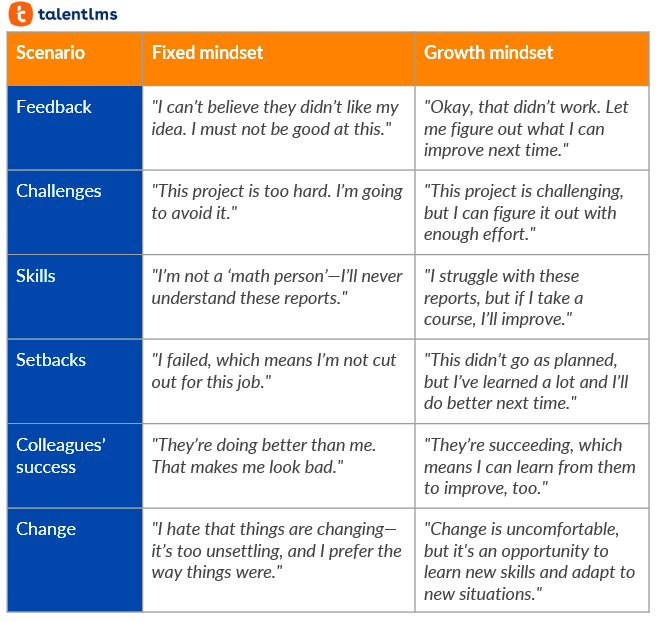
Look closely at the table. The "Fixed mindset" column contains automatic, often self-limiting thoughts. The "Growth mindset" column contains their deliberate, refactored versions. Our goal in this lesson is to learn the process of turning the statements on the left into the statements on the right.
2. The Imposter Phenomenon in Tech
Before diving into the "how," it's important to understand why this skill is so necessary. Feelings of self-doubt, or "imposter syndrome," are incredibly common in the tech industry. The constant evolution of technology, the vast scope of knowledge, and the culture of high achievement create a fertile ground for such feelings. Recognizing that this is a shared experience, not a personal failing, is the first step.
How I deal with Impostor Syndrome as a Software Engineer (yes I feel it too)
Mayuko, a software engineer, offers a relatable perspective on why imposter syndrome is so prevalent in our field.
Watch the segment from this timestamp where she discusses the specific pressures of a software engineering career that contribute to these feelings. This will help normalize the experience and set the context for the techniques that follow.
3. A Four-Step Framework for Refactoring Your Thoughts
Now, let's establish a systematic process for cognitive reframing. We'll use a four-step framework that you can apply anytime you catch yourself in a negative or self-limiting thought loop.
Step 1: Find and Isolate the Limiting Belief
You cannot refactor a line of code you can't find. Similarly, you must first become aware of the specific thought that is limiting you. These thoughts often hide behind feelings of anxiety, procrastination, or being "stuck."
destroy any limiting belief in 28 minutes
This video provides a structured method for uncovering the beliefs that hold you back. The presenter explains how to identify them by looking at areas where you feel stuck or are avoiding challenges.
Watch the section from this timestamp. Pay close attention to the three introspective questions he poses, especially the final one: "What am I putting off even though I want to do it?" This question is excellent for uncovering the internal conflict between a desire and a limiting belief.
Step 2: Articulate and Challenge the Belief with Evidence
Once you've identified the thought, get it out of your head and onto paper (or a screen). This act of externalizing it separates you from the thought and allows you to analyze it objectively.
destroy any limiting belief in 28 minutes
Here, the presenter demonstrates the power of writing down a limiting belief to expose its irrationality.
Watch from this segment. Notice how he structures the analysis: State the Want (e.g., "I want to rest"). State the Limiting Belief (e.g., "Resting is selfish"). Question Why (e.g., "I should be able to work non-stop"). Seeing it written down makes it much easier to challenge.
This is where you bring in the data. Your primary tool for challenging the belief is evidence. Just as you'd use logs or metrics to debug a system, you'll use your own history of accomplishments to debug a faulty belief.
Overcome Imposter Syndrome in Tech With Proven Steps
This article provides concrete tools for challenging negative self-talk, perfectly aligning with our refactoring process.
Read Step 3. Focus on the suggestion to create an "evidence notebook." This is a direct parallel to the 'brag document' we'll be building later in this course and is a perfect example of creating the "paper trails of competence" you value.
A similar idea is the "Evidence Bag," a collection of past successes you can draw upon when self-doubt arises.
5 Powerful Tips to Overcome Imposter Syndrome Using NLP and ...
This article presents the "Evidence Bag" as a practical NLP technique.
Read the section titled The Evidence Bag. This concept provides a memorable metaphor for collecting proof of your capabilities.
Step 3: Write the Reframe
Now that you have challenged the old thought with evidence, it's time to write its replacement—the refactored version. This new thought should be realistic, constructive, and grounded in the growth mindset.
5 Powerful Tips to Overcome Imposter Syndrome Using NLP and ...
This article gives a clear, direct example of an NLP-style reframe.
Read the section Reframe Negative Thoughts with NLP. The "Old Thought" versus "Reframe" structure is the exact model you should use.
Refer back to the "Fixed vs. Growth Mindset" table. Your goal is to turn your specific limiting belief into a statement that fits the "Growth mindset" column.
Step 4: Reinforce the New Belief
Committing the refactored thought to memory requires practice. It's like deploying a code change; you need to ensure it's integrated and becomes the new default.
One gentle way to do this is by simply contemplating the alternative. Instead of fighting the old belief, you rehearse the new one.
destroy any limiting belief in 28 minutes
This part of the video explains a powerful technique: contemplating the opposite of your limiting belief.
Watch from this timestamp. The key idea is that by asking "What would my life look like if the opposite were true?", you are rehearsing a new "psychological blueprint" without the pressure of outright rejecting the old belief.
Another powerful reinforcement technique is external validation. Sharing your experience with a trusted colleague or mentor can provide an objective perspective that short-circuits your internal self-criticism.
How I deal with Impostor Syndrome as a Software Engineer (yes I feel it too)
Mayuko's second piece of advice reinforces the importance of external feedback.
Watch her explanation starting from this segment. Verbalizing your fear to someone else often reveals how harsh you're being on yourself, and their support can help solidify your new, reframed perspective.
Practical Application
Knowledge becomes skill through application. Let's put this framework into practice right now.
Exercise (10 minutes):
- Identify: Think of one recurring, self-limiting thought you've had at work recently. (e.g., "I'm not qualified to lead this feature," "I'm going to fail this code review," "Everyone else understands this faster than I do.")
- Articulate: Write this thought down, verbatim.
- Challenge: Below it, write down two or three specific pieces of evidence from your career that contradict this thought. These are your first entries for your "evidence notebook."
- Reframe: Now, rewrite the original thought into a growth-oriented statement. Use the examples from the resources as a guide. For example:
- Original: "I'm not qualified to lead this feature."
- Reframe: "Leading this feature is a challenge that will stretch my skills, and I can figure it out by breaking it down and learning as I go."
- Reinforce (Optional but Recommended): Share your original thought and your reframe with a trusted friend or peer.
Conclusion
In this lesson, you have learned a systematic, four-step process for cognitive reframing—a powerful tool for managing self-doubt and building a resilient, growth-oriented mindset.
Here are the key takeaways:
- Cognitive Reframing is Mental Refactoring: It's a learnable skill for improving your internal thought patterns, much like refactoring improves code.
- The Framework is Key: By following the process of Find -> Challenge with Evidence -> Reframe -> Reinforce, you can systematically transform destructive thoughts into constructive ones.
- Evidence is Your Ally: Building an "evidence notebook" or "brag document" provides you with the data needed to counter the emotional claims of imposter syndrome.
- It's a Process, Not a Switch: Like any skill, this takes practice. Be patient with yourself as you work to make this a new mental habit.
This ability to manage your inner state is foundational. In our next lesson, we will build directly on this by exploring the concept of locus of control. We'll shift from reframing our thoughts to reframing our problems, learning to distinguish between what is outside our influence and what we can take direct, effective action on.