Hello! In our last lesson, you created a professional drawing package for your rotary mechanism, translating the 3D design into formal manufacturing and assembly instructions. With the design fully detailed, analyzed, and documented, the final step for this project is to learn how to communicate your work effectively.
Today's lesson addresses the learning outcome: Prepare a design review presentation summarizing the design process, analysis, and DFMA considerations. This is a critical skill in industry. A design review is where you justify your engineering decisions, demonstrate that the design meets its requirements, and get buy-in from stakeholders. For your portfolio, a polished design review presentation serves as a powerful summary of your entire problem-solving process.
1. The Purpose of a Design Review
Before building the slides, it's crucial to understand the purpose and etiquette of a formal design review. It isn't just a presentation; it's a collaborative technical assessment.
EML2322L Design Report Template
The University of Florida's 'EML2322L Design Report Template' includes an excellent section on the purpose and best practices for a design review. It sets the stage for the professional mindset required.
Please read the section titled 'Design Review Instructions'. Focus on the 'TIPS FOR GOOD DESIGN REVIEWS'. Note the goals: to improve the design, make it easier to manufacture, and receive valuable feedback. This is identical to what you will experience in industry.
As the document highlights, a design review is a structured process where your design is evaluated against a set of criteria. The goal is to identify weaknesses and improve the design before committing to expensive manufacturing.

2. Structuring Your Presentation: Telling the Engineering Story
A successful design review tells a compelling story. It walks the audience from the initial problem to the final, validated solution. We can borrow a structure from portfolio design, the "inverted pyramid," to frame this story.
The guide from the MIT Mechanical Engineering Communication Lab provides an excellent framework for this.
Portfolio - Mechanical Engineering Communication Lab
This guide explains how to structure a project narrative. While it's for a written portfolio, the 'inverted pyramid' structure is perfectly suited for a presentation.
Read the section 'Frame your story'. Pay close attention to the hierarchy: Impactful title -> Outcome -> Experience -> Motivation -> Technical Details. We will adapt this for our slide deck.
Here is a slide-by-slide structure for your Project 2 design review based on this narrative approach:
- Title Slide: Project Title (Rotary Mechanism Design), Your Name, Date, "Final Design Review".
- Project Motivation & Requirements: State the problem your mechanism solves. List the key, quantifiable design requirements (e.g., indexing accuracy, torque capacity, size constraints).
- Concept Development & Selection: Briefly show 2-3 initial concepts. Display the decision matrix you used to justify your chosen design. This demonstrates a systematic engineering process.
- Final Design Overview: Present a clear, rendered isometric view of your final assembly. Briefly explain its principle of operation.
- Key Analysis & Validation: This is where you provide the evidence that your design works. Dedicate one slide to each major analysis:
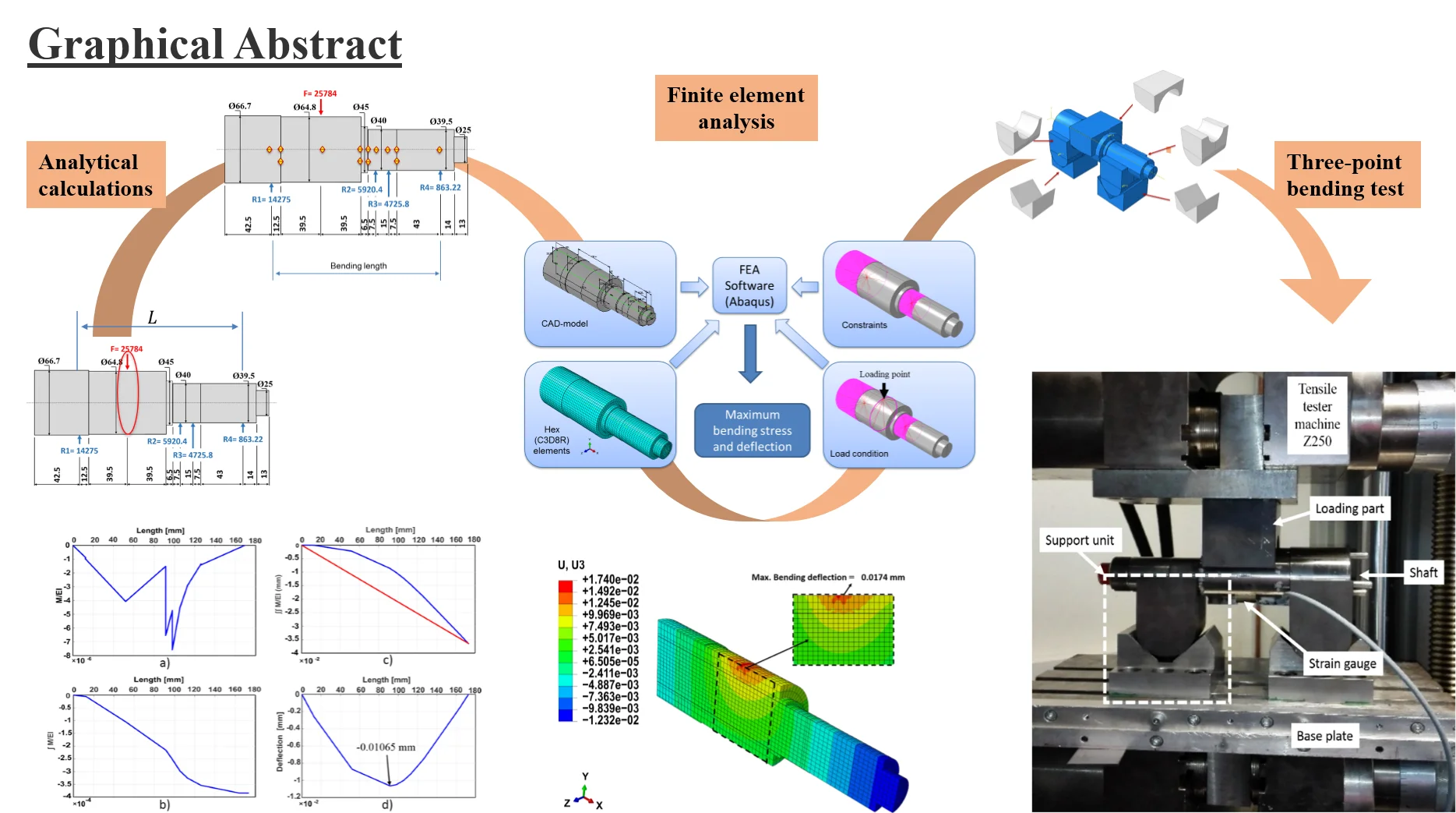
- Shaft Deflection Analysis: Show your calculations and state clearly whether the deflection is within the acceptable limit.
- Bearing Life Calculations: Display the calculated bearing life and compare it to the requirement.
- Housing FEA: Show the mesh, boundary conditions, and the final stress or displacement plot. Clearly state the Factor of Safety.
- Design for Manufacturing and Assembly (DFMA) Considerations: Demonstrate that you've thought about how this will be built. First, let's quickly review the core principles of DFMA.
DFM Lecture 3: DFMA Principles
This lecture provides a concise overview of DFMA, explaining its benefits and core principles.
Watch the sections from 01:14-04:14 and 11:21-17:59. The first part introduces the concept of DFMA. The second part details the principles of Design for Assembly (DFA), such as reducing part count and standardizing parts. As you watch, think of one or two examples from your rotary mechanism project where you applied (or could apply) these principles.
On your DFMA slide, highlight 1-2 specific decisions you made to improve manufacturability or assembly. For example:
*   "Combined two separate brackets into one sheet metal part to reduce part count and eliminate fasteners."
*   "Added large chamfers on shaft ends to guide insertion into bearings."
*   "Standardized all fasteners to use M4 socket head cap screws to simplify assembly tooling."
7. Risk Assessment (FMEA) Summary: You've already done a detailed FMEA. For the presentation, summarize the top 1-2 failure modes with the highest Risk Priority Numbers (RPNs) and briefly state your mitigation strategy for each.
8. Bill of Materials (BOM) & Cost Summary: Display a summarized BOM and the final estimated cost. This shows you've considered the business and logistical aspects of the project.
9. Conclusion & Recommendations: Summarize the key achievements. State clearly that the design meets all requirements and is ready for the next phase (e.g., "Ready for prototype fabrication").
3. Presenting Your Project Effectively
How you present the information is as important as the information itself. Your presentation should be visual, concise, and focused on results.
How to Create an Engineering Portfolio
This video on creating an engineering portfolio offers excellent advice on how to present a project, which is directly applicable to a design review presentation.
Watch from 04:18 to 11:00. Notice how the presenter structures each project around 'What, How, and Results'. Pay attention to his use of visuals (CAD, photos) and quantifiable outcomes (e.g., 'reduce production costs by 62%'). This is the approach you should take on each of your key slides.
Test your understanding!
You are creating the slide for your Housing FEA. Based on the resources and the structure discussed, what are the three essential pieces of information you should present to follow the "What, How, Results" framework?
Show answer
- What: A clear statement of the analysis objective. "A static stress analysis was performed on the housing to ensure structural integrity under maximum load."
- How: A visual summary of the setup. An image showing the part with annotations for material, loads, and constraints.
- Results: The quantifiable outcome. An FEA plot showing the stress distribution and a clear statement of the calculated Factor of Safety (e.g., "The minimum Factor of Safety is 3.2, which meets the design requirement of >3.0").
4. Your Task: Create the Project 2 Design Review Presentation
Now it's time to build your presentation. Use a tool like Google Slides or PowerPoint and follow the 9-slide structure outlined in section 2.
Your Goal (approx. 35-40 minutes):
- Create a slide deck of approximately 9-10 slides.
- Gather the necessary assets:
- Rendered images of your concepts and final assembly from Onshape.
- Screenshots of your decision matrix, analysis results (FEA plots, calculation summaries), FMEA table, and BOM summary.
- For each slide, write concise text that follows the "What, How, Results" model. Use bullet points rather than long paragraphs.
- Focus on clean, professional visuals. The MIT guide's advice on using annotations and showing the process is highly relevant here.
This presentation is a key deliverable for your portfolio. It encapsulates the entire project in a format that is easy for a hiring manager to digest.
Conclusion
Today you've learned to translate a complex engineering project into a concise and compelling design review presentation. This skill is fundamental for communicating technical work, justifying your decisions, and demonstrating your value as an engineer.
Key Takeaways:
- A design review is a formal, criteria-driven evaluation aimed at improving a design before production.
- Structure your presentation as a narrative: problem, concepts, final design, validation, and practical considerations (DFMA, FMEA, cost).
- Communicate using the "What, How, Results" framework, emphasizing visuals and quantifiable data.
- A polished presentation is a powerful portfolio piece that showcases your entire engineering workflow.
Preview of the Next Lesson:
In our next session, we will compile all technical documentation for the Project 2 portfolio entry. You'll gather your CAD files, drawings, analysis reports, and this presentation into a single, professional package ready to be showcased.