Welcome back. In our previous lesson, you designed the architectural blueprint for your outreach: a multi-channel follow-up cadence that dictates when and where you'll connect with prospects. You now have a system in place. Today, we'll breathe life into that system by crafting the messages that will flow through it.
This lesson focuses on the substance of your communication. You will learn how to draft unique, value-driven messages for each step of your follow-up sequence. This is the skill that transforms persistence from potentially annoying to genuinely helpful, dramatically increasing your response rates and positioning you as a high-caliber professional. Instead of just "checking in," you'll be strategically adding value, demonstrating your expertise, and building trust with every touchpoint.
The Mindset Shift: From Asking to Giving
The fundamental mistake most people make in their follow-ups is making it all about their own needs: "Did you see my email?" or "Any updates?" This signals neediness, not value. To land high-ticket clients, you must shift your mindset from asking for their time to giving them a reason to give it.
The data shows that persistence is crucial, but it must be intelligent persistence.
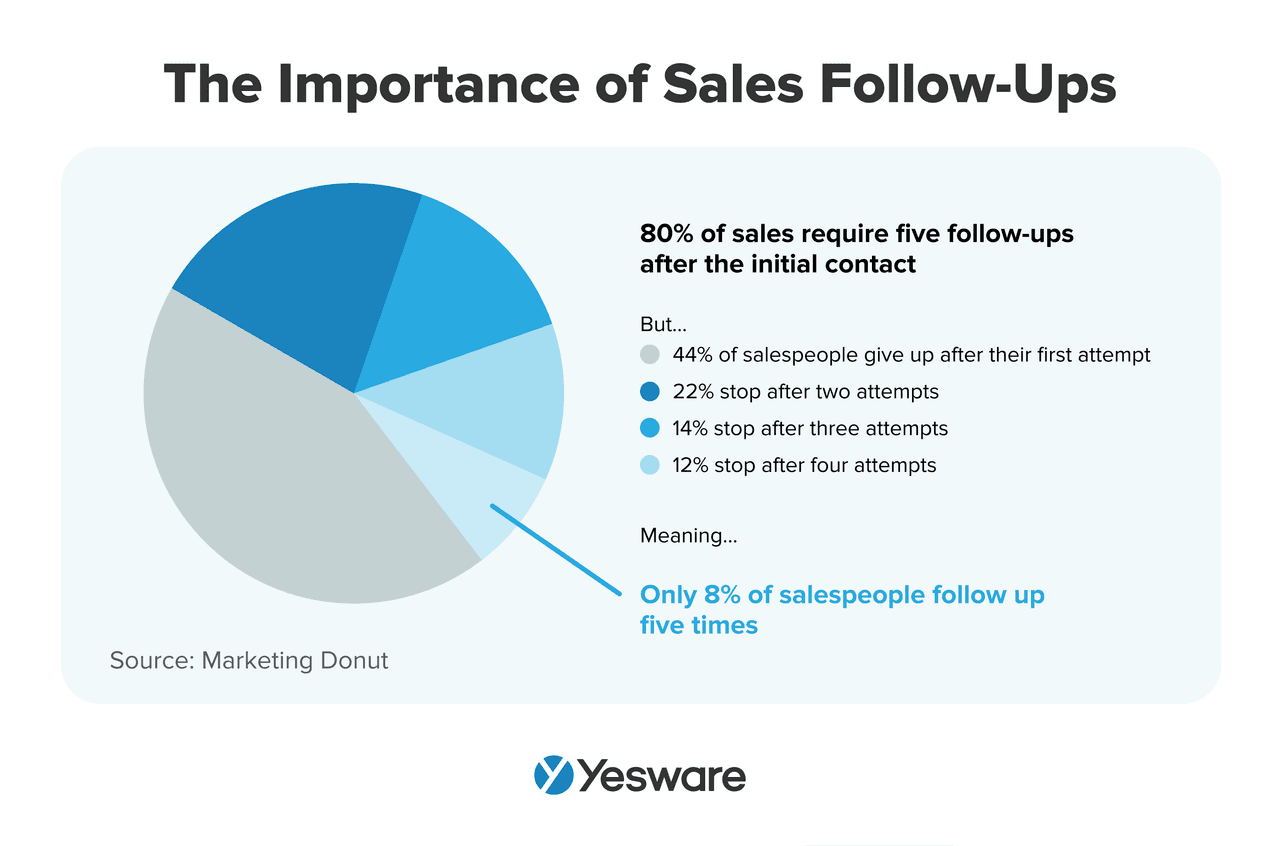
The key is to understand that most of your prospects are not ready to hire you right now. A concept called the "Buyer's Pyramid" can help visualize this.
DM Appointment Setter Job Training Free Course - LinkedIn Tutorial
This video introduces the Buyer's Pyramid, a framework that explains why consistent, value-driven follow-up is so critical. It will provide a solid, analytical foundation for our messaging strategy.
Watch the segment explaining the Buyer's Pyramid. Pay close attention to the breakdown: only 3% of your market is actively buying at any given moment. The majority are either not thinking about it or not actively looking. Your follow-up messages are designed to nurture this larger group.
Since only a tiny fraction of your prospects are ready to hire immediately, your follow-up sequence serves to educate, build trust, and stay top-of-mind with the other 97%. You do this by consistently delivering value.
Let's explore this core principle further.
Writing Follow-Up Messages That Get Responses
This LinkedIn article provides powerful insights and concrete examples of value-driven follow-ups, perfectly illustrating the mindset shift we're discussing.
First, read the section by Dr. Sneha Sharma. She brilliantly contrasts ineffective "checking in" messages with those that deliver value. This is the central idea of our lesson. Next, read the section by Andrew Oziemblo, which discusses the psychology of friction. His point is that your messages must be easy to reply to. Then, review his three templates for an effective sequence, noting how each message has a distinct purpose and is exceptionally concise.
The takeaway is clear: your follow-up isn't about reminding them you exist. It's about reminding them why they need you by showing you're already thinking about their problems.
Building Your Follow-Up Message Library
To work efficiently, you should create a library of message templates for each stage of your cadence. You won't send these verbatim, but having a solid foundation allows you to personalize quickly without reinventing the wheel for every prospect.
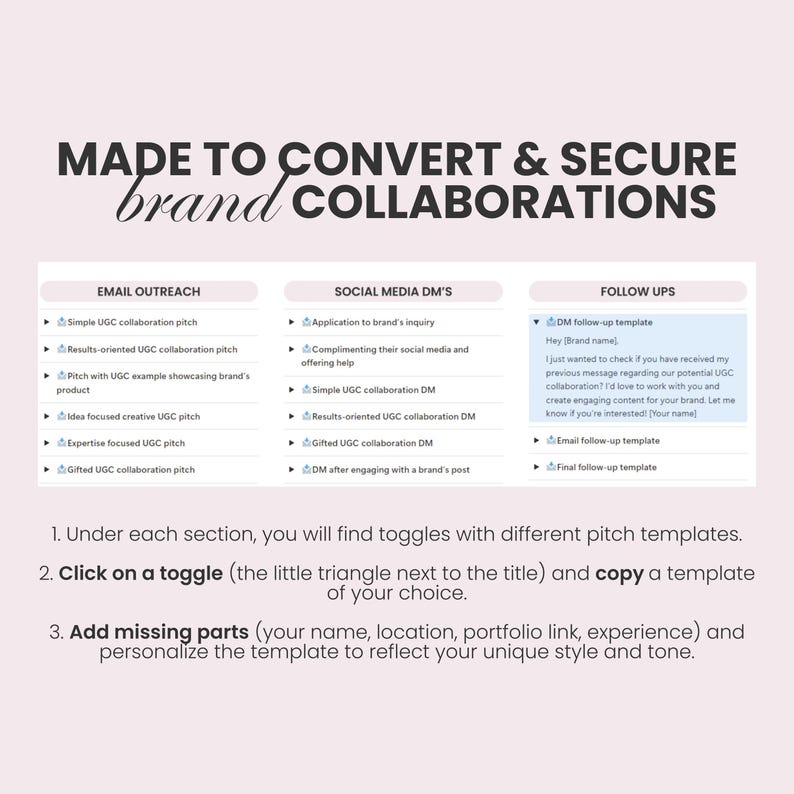
We can categorize these messages based on the type of value they provide. Let's create five categories for your library.
- The Gentle Nudge / Easy Reply: A short, low-friction message early in the sequence to bring your conversation to the top of their inbox. The goal is simply to make replying effortless.
- The Insight Drop: Sharing a genuinely useful piece of content (an article, a podcast, a tool) or a unique idea that relates to a problem they have. This is a "pure value" play with no direct ask.
- The Social Proof / Quick Update: Highlighting a recent win, a new client result, or a concise case study that is relevant to the prospect. This builds credibility and shows momentum.
- The Social Media Play: This isn't a message, but an action. Engaging with their content on LinkedIn or Instagram (a thoughtful comment or a share) before you send your next DM. It warms up the interaction and shows you're paying attention.
- The "Breakup" Message: A professional and polite final message that closes the loop. It removes pressure and, paradoxically, often triggers a response due to the fear of loss.
For more examples of these message types, the following resource provides an excellent catalogue of tactics.
Tips for Successful Follow-Up Strategies
This article offers a diverse set of practical, value-adding follow-up ideas that you can add to your message library.
First, review the 7 follow-up moves from Mo Bunnell. His ideas like "Share a Fresh Insight," "Ask a Sharp Question," and "Highlight a Win" are perfect examples for your message categories. Then, read Chauncey Nartey's 5-step playbook. His advice to "Close the Loop" (acting on something they mentioned) and "Add Value" provides a fantastic framework for your interactions.
From Categories to Content: Example Sequence
Now, let's apply these categories to the 5-touchpoint, 14-day balanced cadence we discussed in the last lesson. Here are example templates you can adapt.
Touch 1: Day 1 (Initial Outreach)
- This is your personalized, value-first cold outreach message that you drafted in the previous module.
Touch 2: Day 3 (DM/Email) - The Gentle Nudge
- Goal: A simple, low-friction prompt.
- Template:
"Hi [Name], just wanted to bring this back to the top of your inbox. Curious to hear your thoughts on [mention the core idea of your first message] when you have a moment."
Touch 3: Day 7 (LinkedIn/Instagram) - The Social Media Play + Insight Drop
- Step 1: Find a recent post by your prospect and leave a thoughtful comment.
- Step 2 (Send DM a few hours later):
"Hi [Name], really liked your post on [topic]. It reminded me of this [article/podcast] on [related challenge] that I thought you might find useful. [Link] No need to reply, just thought I'd share!"
Touch 4: Day 10 (DM/Email) - The Social Proof
- Goal: Build credibility with a relevant result.
- Template:
"Hi [Name], I was thinking about your goal to [prospect's goal] and wanted to share a quick win. We recently helped a coach in the [prospect's niche] space book 15 qualified calls in their first month with us. It's amazing what a consistent DM strategy can do."
Touch 5: Day 14 (DM/Email) - The "Breakup" Message
- Goal: Close the loop professionally and create urgency without pressure.
- Template:
"Hi [Name], I haven't heard back, so I'll assume that finding a DM setter isn't a priority right now. I'll close the loop on my end, but the door is always open if things change. Wishing you all the best."
Notice how none of these messages say "just checking in." Each one has a clear purpose and either adds new value or makes it easy to respond.
The Art of Hyper-Personalization
Templates provide the science, but the art is in the personalization. The most effective outreach often comes from breaking the template and finding a unique, human connection. Your research should uncover personal details you can use to craft a message that truly stands out.
The following video shows a masterclass in this, demonstrating how a witty, personalized message can "unlock" a prospect and immediately build rapport.
DM Appointment Setter Job Training Free Course - LinkedIn Tutorial
This video provides one of the best real-world examples of a highly effective, personalized outreach message you will ever see. It will show you how to go beyond simple templates.
First, watch the section that explains the message template, which focuses on a "humane approach" by combining personalization with a clear business intent. Then, watch the practical example. The sender uses a humorous observation about the prospect's small town (found via a quick Google search) to create an instant, positive emotional connection. The result? The prospect is so impressed he books a call immediately.
This example shows that "value" isn't always a case study or an article. Sometimes, the most valuable thing you can do is show you've done your homework and are approaching them as a human, not just a lead in a spreadsheet.
Conclusion
You are now equipped with the principles and templates to craft follow-up messages that get responses. You understand the psychological shift from asking to giving, and you have a library of value-driven message types to pull from for each step of your outreach cadence.
Key Takeaways:
- Follow Up with Value, Not Reminders: Shift your mindset from "checking in" to delivering solutions, insights, or social proof.
- Nurture the 97%: Use the Buyer's Pyramid as your guide. Most prospects aren't ready to buy now; your job is to build trust until they are.
- Build a Message Library: Create adaptable templates for different follow-up types: the Gentle Nudge, the Insight Drop, Social Proof, and the "Breakup" message.
- Personalization is Your Superpower: Use your research to find unique, human connection points that make your messages stand out from the noise.
In our next lesson, you will put all the pieces from this module together. You'll begin implementing your daily prospecting routine, sending your initial outreach and follow-up messages, and logging all your activity in the Notion tracker you built. This will set the stage for our final module, where you will use your analytical skills to measure the performance of these messages and optimize your entire outreach strategy.