Welcome to the final lesson of our "Multi-Platform Prospecting" module. Over the past few lessons, we've systematically explored how to uncover high-ticket opportunities on Instagram, Facebook, LinkedIn, and Skool. You now possess a map to the territories where your ideal clients operate. However, having a map is only the first step; you also need a vehicle and a consistent travel schedule to reach your destination.
This lesson is about building that vehicle. Our goal is to synthesize everything you've learned into a powerful, sustainable daily prospecting routine. In line with your preference for practical, daily actions, we will design a focused 30-minute system. This will transform prospecting from a series of sporadic tasks into a structured, predictable engine for generating opportunities.
From Random Activity to a Predictable Workflow
The single biggest challenge in prospecting is not a lack of platforms, but a lack of structure. It's easy to open a social media app "to engage a bit" and find that 45 minutes have passed with nothing to show for it but mindless scrolling. This is the difference between being busy and being productive.
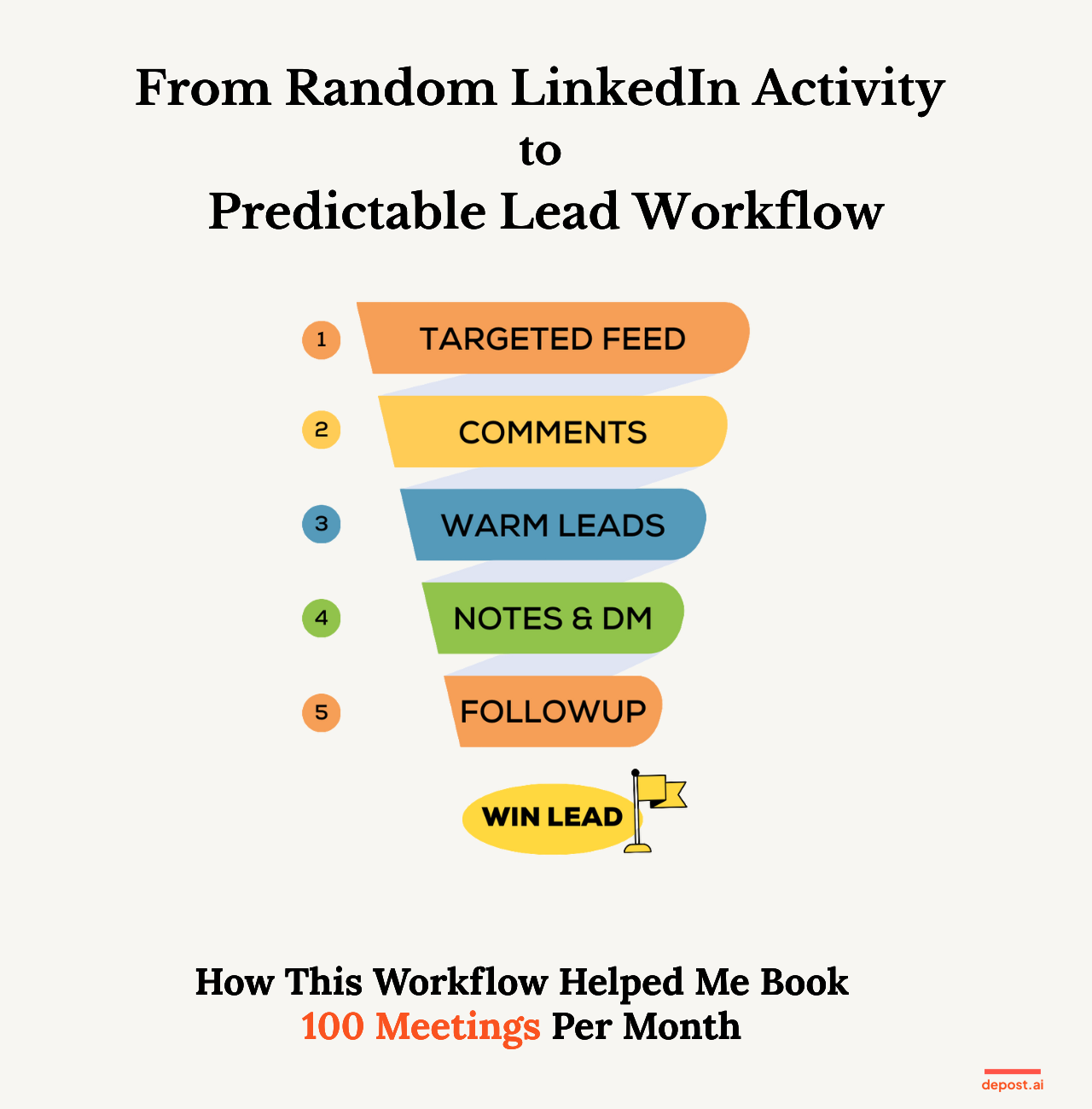
A structured routine prevents this drift. By assigning a specific purpose and a strict time limit to each action, you ensure that every minute you spend on prospecting contributes directly to your goal. The article "The 30-Minute Daily LinkedIn Routine" explains this philosophy perfectly.
LS #87: The 30-Minute Daily LinkedIn Routine (Steal My Exact Schedule)
This article breaks down the problem of unstructured time and presents the solution: a time-boxed daily routine.
First, read the introduction and the section Why Most People Waste Time. This sets the stage for the importance of having a system. Then, jump to the section What NOT to Do, which highlights the common traps you need to avoid to maintain focus.
The Architecture of Your 30-Minute Daily Routine
We will adapt the time-block model from the LinkedIn article to create a multi-platform routine. Your 30 minutes will be divided into four distinct blocks, each with a clear objective. This structure ensures you cover all critical prospecting activities every single day.

Block 1: Inbox Triage & Notifications (5 minutes)
This is your reactive block. The goal is to handle all incoming communication efficiently.
- Tasks:
- Clear Inbound: Check your primary inboxes on Instagram, LinkedIn, and Facebook for new messages, message requests, and replies to your outreach. As detailed in the "Appointment Setting Framework" video by Bastiaan Slot, handling new inbound leads is your first priority.
- Reply to Active Conversations: The same video emphasizes that engaging with someone who is currently active is your highest-leverage activity. If someone replies while you're online, pause other tasks to advance that conversation.
- Process Notifications: Quickly scan your notifications on all platforms for comment replies and new connection requests (on LinkedIn). Accept relevant connections to bring them into your network.
This first block is about momentum—clearing the decks and capitalizing on warm interactions immediately.
Block 2: Strategic Engagement (10 minutes)
This is your proactive "warming" block. The goal is not to sell, but to build familiarity and place yourself on the radar of high-value prospects. Remember the "12-15 touchpoints" concept from the LinkedIn post by Radisa Radisic; this is where you create those touchpoints.
- Tasks:
- Leave Value-Driven Comments: Instead of trying to comment everywhere every day, rotate your focus.
- Day 1: Focus on LinkedIn and Facebook. Leave thoughtful comments on posts from 5-10 of your ideal prospects or in relevant Facebook groups.
- Day 2: Focus on Instagram and Skool. Engage with a target coach's content on IG or participate authentically in a free Skool community you've joined for reconnaissance.
- Visit Profiles (LinkedIn): As mentioned in Artem GSS's "LinkedIn Tutorial" video, simply visiting a prospect's LinkedIn profile sends them a notification. This is a subtle, low-effort touchpoint.
- Leave Value-Driven Comments: Instead of trying to comment everywhere every day, rotate your focus.
The aim here is for about 10 meaningful comments in this block. Avoid generic "Great post!" comments; your contribution should add to the conversation.
Block 3: Pipeline & Follow-up (10 minutes)
This block is dedicated to moving existing conversations forward. This is where your persistence pays off. The "Appointment Setting Framework" video provides a comprehensive list of follow-up tasks.
Appointment Setting Framework for Coaches to Book 80-100 Calls Per Day Using Instagram
This video provides an excellent, detailed breakdown of the daily tasks involved in managing an appointment setting pipeline.
Watch the section detailing the daily workflow, starting from the list of tasks. Pay close attention to the different types of follow-ups he describes: Post-call follow-up (PCFU) Following up on proposed calls (CPP) Following up with people who received the calendar link (SC)
- Tasks:
- Send Follow-up Messages: Based on your tracking system, send your next scheduled follow-up message to prospects who haven't replied.
- Execute Specific Follow-ups: Implement the post-call and proposed-call follow-ups mentioned in the video.
- Log All Activity: Briefly update your lead tracker (which we will build in the next module) with the actions you've taken.
Block 4: New Prospecting (5 minutes)
This final block is about feeding the top of your funnel by adding new, qualified prospects.
- Tasks:
- Identify 2-3 New Prospects: Using the advanced search techniques you learned in previous lessons, identify a small number of highly-qualified prospects on your platform of choice for the day.
- Initiate Contact: Send an intentional connection request on LinkedIn or the first message of your outreach sequence on Instagram or Facebook.
- Log the New Prospects: Add these new names to your tracker.
Measuring Your Engine's Performance: Daily KPIs
Given your background in mathematics, you'll appreciate that a system is only as good as its measurable outputs. To optimize your routine, you must track your Key Performance Indicators (KPIs). The videos by Bastiaan Slot and Artem GSS both provide excellent benchmarks.
Appointment Setting Framework for Coaches to Book 80-100 Calls Per Day Using Instagram
This clip provides concrete daily KPI targets for a high-volume appointment setter.
Watch the short section on KPIs from this timestamp. Note the targets for New Conversations, Follow-ups, Calls Proposed, and Calls Booked.
Your initial daily KPIs, based on a 30-minute routine, might look like this:
- Activity KPIs (What you do):
- New Conversations Started: 2-3
- Follow-ups Sent: 5-10
- Value Comments Left: 5-10
- Outcome KPIs (The results):
- Positive Replies Received
- Calls Proposed
- Calls Booked
Start by tracking the activity KPIs. The outcome KPIs will follow as a result of your consistent effort. This data will be invaluable later when we analyze your performance and optimize your strategy.
Conclusion
You have now designed a complete, multi-platform prospecting system tailored to your 30-minute daily schedule. This routine transforms your client acquisition from a game of chance into a process of disciplined execution.
Key Takeaways:
- Structure is Freedom: A time-boxed routine prevents wasted time and ensures all critical tasks are completed.
- The 4-Block System: Your day is divided into Inbox Triage (5 min), Strategic Engagement (10 min), Pipeline Follow-up (10 min), and New Prospecting (5 min).
- Rotate Your Focus: Cover all platforms by rotating your strategic engagement and new prospecting efforts daily.
- Consistency Compounds: As the LinkedIn article notes, "30 focused minutes every day will outperform 3 random hours twice a week." Your daily efforts build on each other.
- Track Everything: Your KPIs are the data that will allow you to diagnose problems and optimize your results.
This lesson concludes our module on finding prospects. You know where to look and you now have a daily system for looking. The next logical step is to manage the flow of information this system will generate.
In our next lesson, we will begin Module 4, "Managing the Outreach Pipeline." We will start by building your central nervous system for this operation: a customized Notion database to track every prospect, conversation, and follow-up, turning your daily efforts into organized, actionable data.