In our last lesson, we built a system for reflection with the reading log, transforming reading from a passive activity into a conscious one. You now have a method for capturing your thoughts after you read. Today, we'll bring that active engagement directly into the moment of reading itself.
This lesson is dedicated to a foundational skill for any deep reader, and especially for an aspiring author: practicing active annotation to question, summarize, and react to the text while you are reading. If the reading log is your post-project review, annotation is the live commentary you add to the project plan as it unfolds. It’s the tool that closes the distance between you and the author, turning reading into a dynamic conversation.
1. From Highlighting to a Conversation
You might associate "annotation" with highlighting random sentences for a school assignment. We need to reframe that. True annotation is the process of recording your thoughts directly onto the text, creating a visible record of your engagement. It’s the difference between merely receiving information and actively processing it.
In your work as a technical writer and project manager, you don't just passively read a requirements document. You mark it up. You question ambiguities, highlight key deliverables, and add comments to track connections between different parts of the system. We will apply this same analytical impulse to the system of a story.
📖 How To Annotate Books Like a Pro ✍🏻 get more out of reading with these tips + tricks!
This video, "How To Annotate Books Like a Pro," begins by perfectly capturing the "why" behind this practice. It reframes reading as an active, immersive experience rather than passive observation.
Watch the introductory section, from the beginning to the end of the list of reasons to annotate. Pay close attention to the idea of being an "active participant in a conversation that an author started."
By annotating, you slow down, absorb the material more deeply, and build a unique record of your journey through the text. For your goal of one day writing your own novels, this practice is your apprenticeship. You'll be reverse-engineering the craft of storytelling, one note at a time.
2. Finding Your Annotation Style: A Progressive Approach
There is no single "correct" way to annotate. The goal is to find a system that enhances your reading, rather than complicating it. Let's explore a three-level approach, starting with the simplest method and gradually adding layers of detail.
Level 1: Annotation without Commitment (Tabs and Sticky Notes)
If you're hesitant to write in your books, this is the perfect place to start. This method uses only removable tabs and sticky notes. The key is to create a system.
📖 How To Annotate Books Like a Pro ✍🏻 get more out of reading with these tips + tricks!
We'll continue with the same video, which now provides a brilliant, structured walkthrough of non-permanent annotation methods.
First, watch the segment on "Level 1" annotation. The presenter explains how to use tabs with a color-coded key to track different elements. Notice her examples of creating different keys for different genres, like mystery or sci-fi. Next, watch her explanation of using sticky notes and transparent notes to write comments without marking the page itself.
The most powerful takeaway here is the concept of a key. Before you start reading, decide what each color tab represents. For example:
- Blue: A question I have
- Yellow: An important plot point
- Pink: A favorite quote or a strong emotional reaction
This simple act of categorization forces you to think critically about why a particular passage stands out.
Levels 2 & 3: Making Your Mark
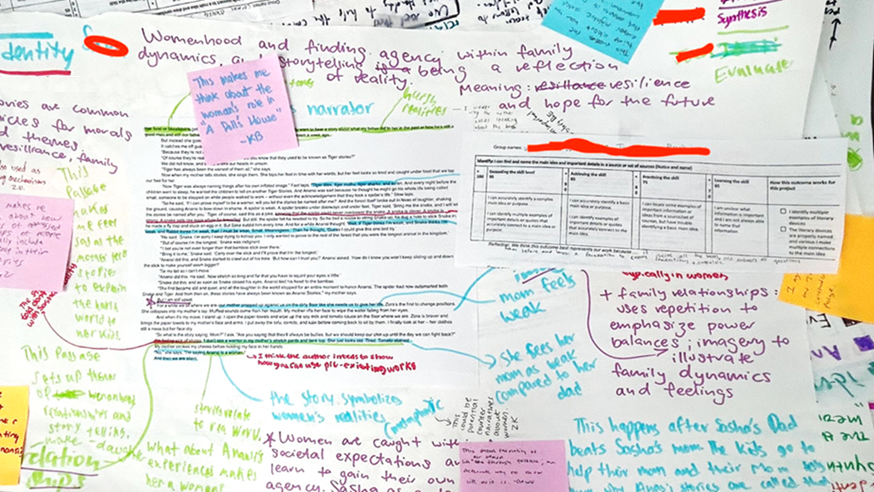
As you get more comfortable, you can graduate to writing directly in your books. This is the most direct way to have a conversation with the text.
📖 How To Annotate Books Like a Pro ✍🏻 get more out of reading with these tips + tricks!
Finally, let's look at what it means to write in your books and what kind of notes create the deepest engagement.
Watch the section on "Level 2" annotation, which focuses on highlighting and underlining. Then, pay close attention to "Level 3", where she discusses writing your own thoughts—reactions, connections, and summaries—in the margins. This is our ultimate goal.
Writing in your book makes it uniquely yours. It becomes a fusion of the author's work and your own intellectual and emotional response to it.
3. What to Annotate: Question, Summarize, React
Knowing how to annotate is only half the battle. The other half is knowing what to look for. Your learning outcome gives us the perfect framework: Question, Summarize, and React.
This is the core of critical reading. You are no longer just asking "What happens next?" but also "Why is it happening this way?"
[PDF] How to Annotate a Fictional Text
This document provides an excellent, detailed list of what to look for when annotating. It's a practical checklist for turning critical thinking into written notes.
Read the section titled "What do I annotate?". As you read through the bulleted list, notice how each suggestion falls into one of our three categories: questioning, summarizing, or reacting.
Let's break down these three actions:
1. Questioning the Text
This is your primary tool for digging beneath the surface. Your questions can be simple or complex. Don't worry about finding answers immediately; the act of asking is what matters.
- Confusion: "What does this word mean?" "I don't understand this character's motivation." (Mark with a
?) - Prediction: "I bet this character is the real villain." "Will this decision come back to haunt them?"
- Authorial Intent: "Why did the author describe the scene this way?" "What is the purpose of this subplot?"
How to Read Critically 101 📚 stop reading passively & unlock deeper meaning
The video "How to Read Critically 101" offers a fantastic bank of questions that can fuel your annotations. Asking questions is the engine of critical reading.
Watch the segment from "One of my favorite ways" to "feel that way?". This will give you a rich palette of questions to bring to any text. Don't feel you need to answer all of them; use them as prompts to spark your own curiosity.
2. Summarizing the Action
This helps you keep track of the narrative, especially in complex books. This isn't about rewriting the book, but about creating signposts for yourself.
- In the margin, write a one-line summary of a key event: "MC discovers the hidden map."
- Draw lines connecting a moment of foreshadowing to its later payoff.
- Use brackets
[ ]to enclose a paragraph that explains a crucial piece of backstory.
3. Reacting to the Story
This is where you record your personal, emotional, and aesthetic responses. This makes the book feel alive and makes the reading experience more memorable.
- Emotional: "This made me so angry!" "This part is heartbreaking." Use simple emojis if you like:
:),:(,!. - Aesthetic: "Beautiful sentence." "Clunky dialogue."
- Connections: "This reminds me of Harry Potter." "This is just like what happened in Chapter 2."
To help guide your focus, you can use this infographic as a quick reference for the key literary elements you might want to annotate.

Conclusion
Today we have moved your active reading practices from post-session reflection into the text itself. Annotation is not a chore, but a powerful method of engagement that deepens comprehension, improves memory, and begins your training as an analytical reader and future writer.
Key Takeaways:
- Annotation is an active conversation with the text, not just passive highlighting.
- Start with a simple, non-permanent system like color-coded tabs and a key, and gradually add more detail as you become comfortable.
- Focus your annotations on three key actions: Question (ask why, how, what if), Summarize (track key events), and React (record your feelings and opinions).
- Connecting your annotations back to your reading log creates a powerful loop of engagement and reflection.
In our next lesson, we will hone in on one specific type of annotation. We will focus on how to generate predictive 'what if' questions during reading to maintain engagement with the plot. This technique is especially powerful for keeping momentum and staying hooked on a story, directly addressing the challenge you've faced with not returning to books after a break.