Welcome! In our last session, you learned how to generate predictive "what if" questions to stay engaged with a story and create your own "cliffhangers." This active curiosity is a powerful tool for maintaining reading momentum.
Today, we will build directly on that skill by giving your predictions a solid foundation. This lesson will equip you to identify the inciting incident and central conflict within a story's opening. Understanding these two core components of narrative architecture is like having a blueprint for the story. It allows you to move beyond guessing what might happen next to making informed analyses of where the plot is headed and why. For someone with your background in project management and technical writing, you can think of this as identifying the project's "kick-off event" and its "primary objective." Mastering this will be invaluable for both deconstructing complex books and, eventually, constructing your own.
1. The Spark that Lights the Fuse: The Inciting Incident
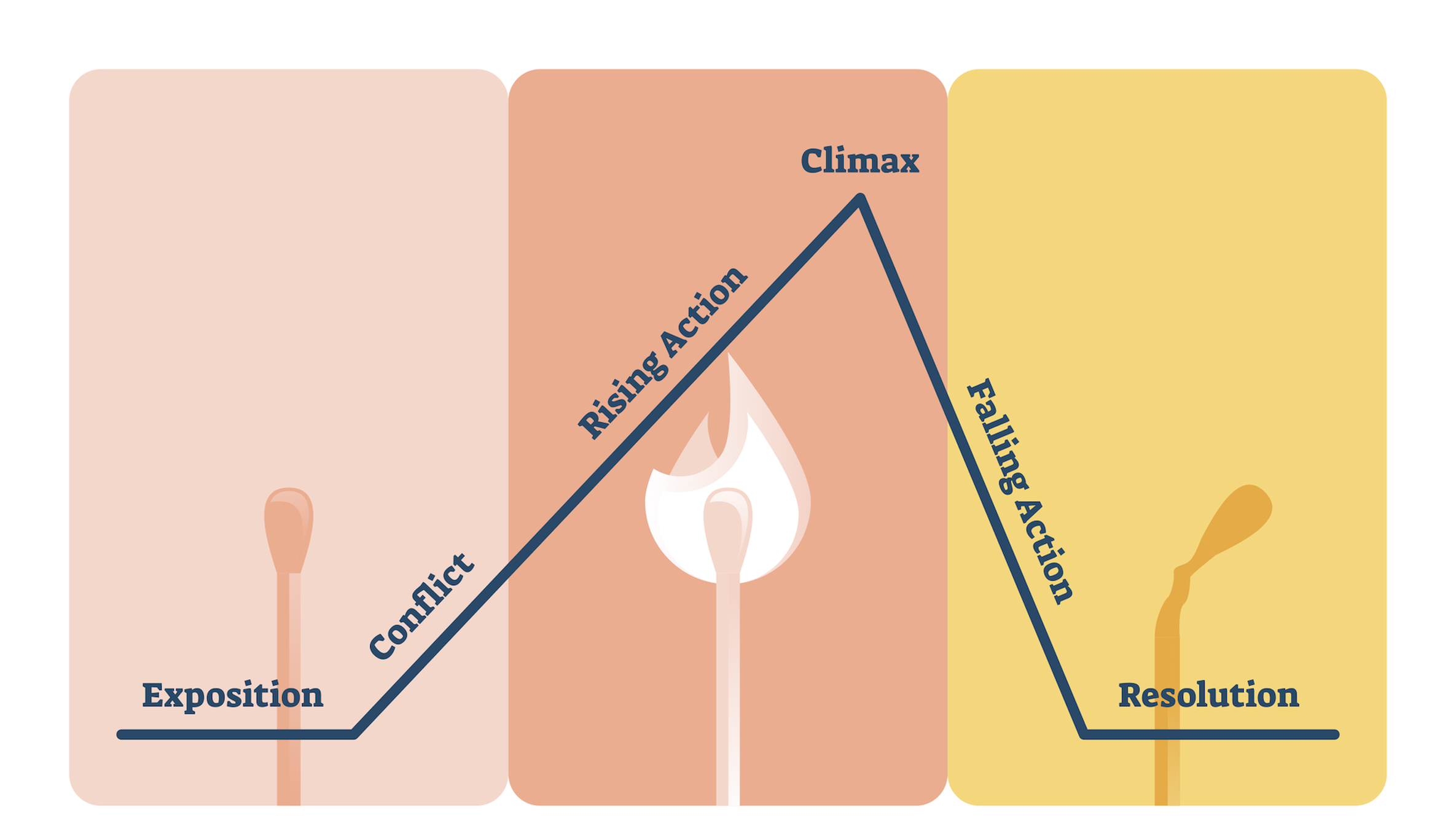
Every story begins with a state of normalcy, a "before" picture of the protagonist's world. The inciting incident is the event that shatters this status quo and catapults the protagonist into the main plot. It's the knock on the door, the discovery of a body, the arrival of a mysterious letter—the moment after which nothing can be the same.
This event is the engine of the narrative. It disrupts the equilibrium and creates a problem that the rest of the story will be dedicated to solving.
To get a clear understanding of this concept, let's watch a detailed explanation.
The Inciting Incident: How to Fire Up Your Story's Conflict (Writing Advice)
The YouTube channel of writer Brandon McNulty offers a fantastic breakdown of the inciting incident. This video defines the concept clearly and, crucially, distinguishes it from other similar-sounding story elements.
First, watch the section that answers the question "what is an inciting incident?". Pay close attention to the five characteristics he outlines, especially that it "kicks off the story's main conflict." Next, watch the segment on common misconceptions, titled "what it is not." This part is vital. He explains the difference between the story's opening "hook" and the inciting incident, and also clarifies why it isn't the same as the protagonist's decision to act (often called Plot Point 1).
As the video explains, the inciting incident isn't always a dramatic explosion in the first pages. It's the specific event that directly involves the protagonist and sets the main plot in motion. For example, in Star Wars: A New Hope, the inciting incident isn't Darth Vader capturing Princess Leia (that's a hook). It's Luke Skywalker discovering Leia's holographic message inside R2-D2, which pulls him personally into the conflict.
Here is another short video that offers a helpful way to think about this moment.
The Inciting Incident Explained
This video from the ComicsForBeginners channel provides a concise summary and a very useful linguistic trick for identifying the inciting incident.
Watch the video from the beginning to see another explanation of how the inciting incident moves the character from the "normal world" to the "special world." Note the examples for a detective story and a love story. Then, pay special attention to the practical tip at the end, where he explains how to use the phrase "but then" to articulate the inciting incident.
The "but then..." formula is a simple but effective tool. It frames the narrative's pivot point: "Cinderella lived a life of servitude, but then an invitation to the royal ball arrived."
2. A Taxonomy of Trouble: Types of Inciting Incidents
While inciting incidents are unique to each story, they often fall into recognizable patterns, especially within genres. Since you're interested in mystery and sci-fi, learning these patterns will give you a powerful analytical shortcut.
The following article provides a clear checklist for identifying an inciting incident and then categorizes them by genre.
Inciting Incident: Definition, Examples, Types, and How to Start a ...
This article from The Write Practice is a comprehensive guide to the inciting incident. It provides a formal definition, criteria for identification, and a useful list of common types.
First, read the definition and the list of five criteria an event must meet. This is your analytical checklist. Next, scroll down to the section "The 10 Types of Inciting Incidents With Examples." Read through this list, paying particular attention to the types that are most relevant to your interests: #2: Death of a Loved One (Action/Adventure) #3: Show Me the Body (Mystery/Crime/Thriller) #4: The Haunted House/Forbidden Object (Horror/Mystery) #8: Here There Be Dragons (often found in Sci-Fi/Fantasy, where a new reality is revealed)
By familiarizing yourself with these archetypes, you'll start to recognize the structural mechanics at play in the books you read. You'll see how an author uses a well-established trigger like "Show Me the Body" to launch a mystery plot that feels both familiar and fresh.
3. The Core Struggle: The Central Conflict
The inciting incident is the cause; the central conflict is the effect. It is the main, story-spanning struggle that the protagonist must face. It's the "why" of the story—the problem that needs solving, the question that needs answering, the opposition that must be overcome.
If the inciting incident is John Wick's dog being killed, the central conflict is his ensuing one-man war against the mob. If the inciting incident is Katniss Everdeen volunteering for her sister, the central conflict is her struggle to survive the Hunger Games.
A great way to understand and categorize this core struggle is to learn the classic types of conflict found in literature.
How to use central conflict and drama to drive your novel
This article from Now Novel explains what a central conflict is and details the primary categories it can fall into.
Begin by reading the definition under the heading "What is a central conflict?" to ground your understanding. Then, focus on the extensive section titled "Explore types of conflict in literature." Read through the six main types: Man vs. Man Man vs. Self Man vs. Nature Man vs. Society Man vs. Technology Man vs. The Supernatural Notice the examples provided for each. This framework is essential for analysis. Finally, briefly review the sections on connecting conflict to character goals and the importance of "stakes."
Understanding these categories allows you to define the story's core tension with precision. When you started Dostoyevsky, you likely faced a complex mix of these: Raskolnikov's struggle is "Man vs. Self" (his internal moral turmoil), "Man vs. Man" (his cat-and-mouse game with the detective Porfiry), and "Man vs. Society" (his rebellion against what he sees as a corrupt social order). By identifying these threads, a complex novel becomes more manageable.
Conclusion
In this lesson, we've established the foundational pillars of narrative structure. You now have the tools to pinpoint the precise moment a story truly begins and to define the fundamental struggle that will propel it forward. This isn't just an academic exercise; it's a practical skill that transforms you from a passive consumer of story into an active analyst.
Key Takeaways:
- The inciting incident is a specific event that disrupts the protagonist's normal life and launches the main plot.
- The central conflict is the core, story-long struggle that results from the inciting incident. It can be categorized (e.g., Man vs. Society, Man vs. Self).
- Identifying these two elements gives you a "map" of the story, making it easier to follow complex plots and make insightful predictions.
- This framework of incident and conflict is a fundamental principle you will use not only in reading but in the "project planning" phase of your own future writing.
In our next module, we will shift our focus from the large-scale architecture of plot to the microscopic level of the sentence. Our first lesson will focus on a critical skill for tackling more advanced texts: inferring the meaning of unfamiliar words using surrounding contextual clues.