Hello!
In our last lesson, we saw Alexander transition from conqueror to state-builder, using city-founding and cultural fusion to weave together his vast new empire. His marriage to Roxane was a key strategic move to pacify the rebellious northeastern frontier. But why was that region so rebellious? And what new trials awaited him beyond the Hindu Kush?
This lesson plunges us into the heart of those challenges. We'll explore the brutal, two-year guerilla war in Bactria and Sogdiana that reshaped the Macedonian army's mindset. Then, we will follow Alexander on his legendary campaign into India, a land of formidable new adversaries and environmental extremes. Our focus will be on the nature of the warfare he encountered and the specific challenges he overcame, culminating in one of the most brilliant and difficult battles of his career: the Battle of the Hydaspes.
This part of Alexander's story is crucial for understanding his military genius under pressure and the immense physical and psychological toll the campaign took on his men—a toll that would soon reach its breaking point.
Part 1: The Crucible of Central Asia (329-327 BC)
Before Alexander could secure an alliance through his marriage to Roxane, he and his army endured two years of grueling warfare in the rugged terrain of Bactria and Sogdiana (modern-day Afghanistan, Uzbekistan, and Tajikistan). This was not a war of decisive battles like Gaugamela, but a frustrating and bloody counter-insurgency against a highly mobile and elusive enemy.
The resistance, led by the brilliant Sogdian nobleman Spitamenes, refused to meet the Macedonians in a pitched battle. Instead, they used hit-and-run tactics, ambushes, and their knowledge of the terrain to inflict repeated setbacks on Alexander's forces. This new kind of warfare had a profound effect on the Macedonian army, pushing them toward a level of brutality not seen before in their campaigns.
To understand the nature of this conflict and its impact, let's start with a scholarly analysis.
“Just Rage”: Causes of the Rise in Violence in the Eastern Campaigns of Alexander the Great
The following excerpt from the article '“Just Rage”: Causes of the Rise in Violence in the Eastern Campaigns of Alexander the Great' examines how the guerrilla war in Bactria and Sogdiana conditioned the Macedonians for greater violence.
Please read the section titled 'Bactria and Sogdiana' (pages 133–138). Focus on how Spitamenes' resistance movement repeatedly frustrated the Macedonians and how this led to an escalation of retaliatory violence against both soldiers and civilians.
As the reading highlights, the Macedonian army found itself in a quagmire. Their traditional methods were ineffective, and their losses mounted. In response, Alexander adapted both his army and his policies.
Alexander the Great Indian Campaigns and Battle of the Hydaspes History Channel Documentary
This documentary clip provides a vivid picture of the new kind of enemy Alexander faced and shows how he was forced to adapt his army's tactics to counter them.
Watch from 12:41 to 14:46. Pay attention to the description of the 'hit and run cavalry' and how Alexander restructured his army, making it lighter and incorporating cavalry archers—a direct response to the tactics of his Central Asian foes.
The key takeaway is that the war in Bactria and Sogdiana was a formative, brutalizing experience. It conditioned the army to use overwhelming force preemptively to crush resistance before it could fester. This harsh new doctrine would be carried into India, where it would be applied with devastating effect.
Part 2: The Invasion of India (327-326 BC)
With Central Asia subdued, Alexander marched his army across the forbidding peaks of the Hindu Kush and into the Indus Valley. The challenges here were different, but no less severe. The campaign was not a single march but a series of difficult sieges against the fiercely independent tribes of the Swat and Bajaur valleys.
These tribes often employed a scorched-earth policy, burning their own cities and retreating to mountain fortresses. This forced Alexander into a succession of bloody sieges, a type of warfare that was costly in both time and lives.
Alexander and his successors in Central Asia
The campaigns in the valleys leading to the Indus were incredibly challenging. This text from a UNESCO volume on the Silk Roads provides a detailed, chronicle-like account of the resistance Alexander met.
Please read the sections titled 'The battle with the Aspasians' and 'Fight with the Assacenians' (pages 73-76, from the start of the section to the paragraph just before 'The capture of Aornos'). Note the scorched-earth tactics of the locals and the ferocity of the sieges, like at Massaga, where Alexander himself was wounded.
The experience in Bactria led Alexander to adopt a ruthless "no resistance" policy in India. Any sign of opposition or flight was met with overwhelming force. At the siege of Massaga, after the city's leader was killed, Alexander offered terms to the 7,000 Indian mercenaries defending it, promising to integrate them into his own army. However, believing they intended to desert, he had them surrounded and slaughtered in their camp, along with their families who had taken up arms to defend them.
This act of treachery, and others like it, demonstrated that this was a war of annihilation. The goal was to terrify the population into submission and avoid the kind of protracted insurgency that had plagued him in Sogdiana.
Part 3: The Battle of the Hydaspes (May 326 BC)
After months of campaigning west of the Indus, Alexander secured an alliance with Taxiles, a local king, and prepared to face his most formidable Indian opponent: King Porus of the Pauravas.
Porus had drawn up his army, including a terrifying contingent of war elephants, on the eastern bank of the Hydaspes River (modern Jhelum). The river was swollen and fast-flowing due to the monsoon rains, making a direct, contested crossing suicidal. This was one of the greatest tactical challenges of Alexander's career.
The Crossing: A Masterpiece of Deception
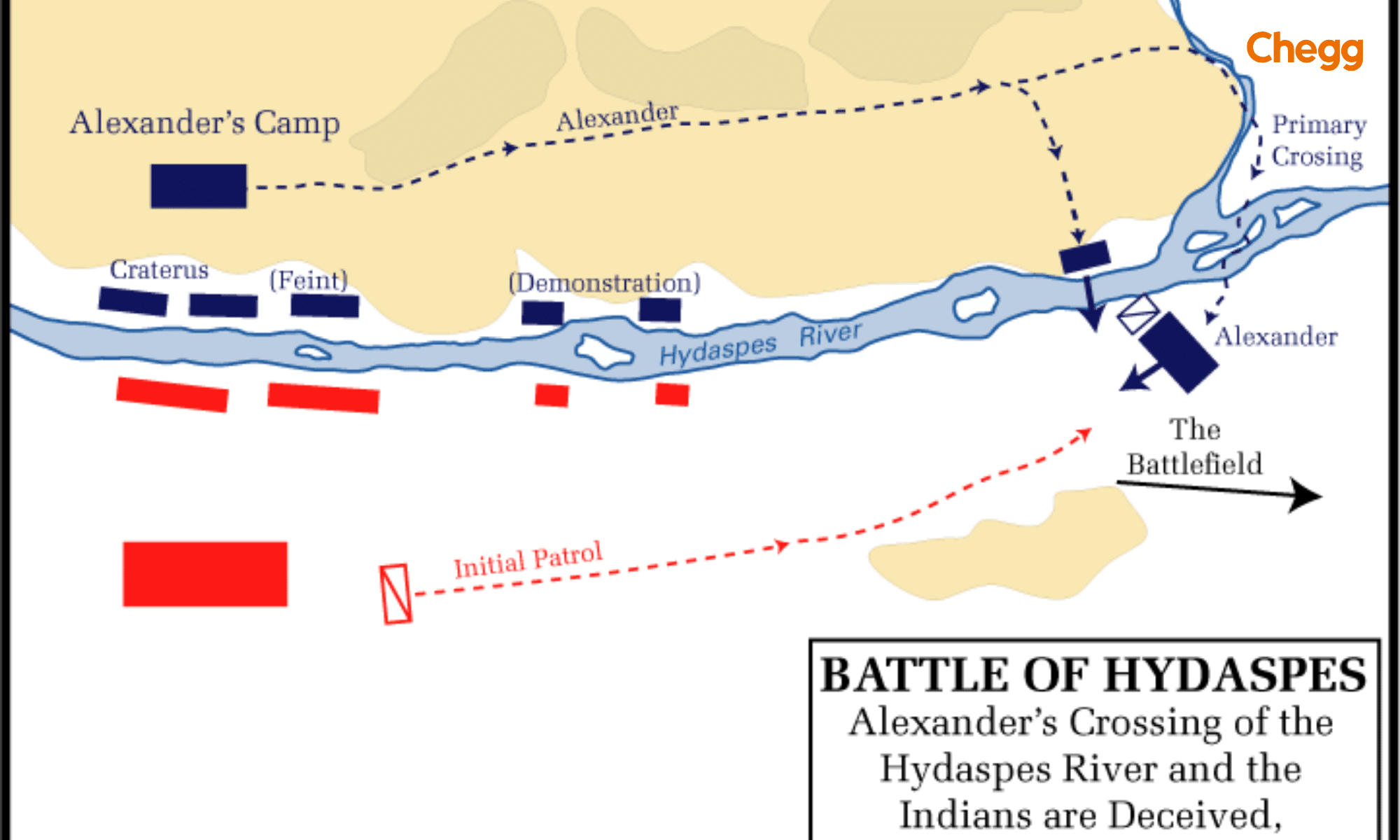
To get his army across, Alexander executed a brilliant plan based on psychological warfare and deception.
Alexander the Great Indian Campaigns and Battle of the Hydaspes History Channel Documentary
Facing Porus across a raging river, Alexander couldn't risk a direct assault. The following clip details the elaborate game of cat-and-mouse he used to get his army across the Hydaspes undetected.
Watch from 01:09:25 to 01:12:29. Focus on the stages of his deception: bringing in grain supplies to suggest a long wait, making loud, repetitive troop movements to lull Porus's guards, and finally, using the noise of a thunderstorm to mask his actual crossing.
Alexander left a substantial force under his general Craterus in the main camp to maintain the illusion that the army was still there. He then marched his main strike force 17 miles upstream under the cover of night and the storm, and crossed at a concealed bend in the river.
The Battle: Elephants, Cavalry, and Carnage
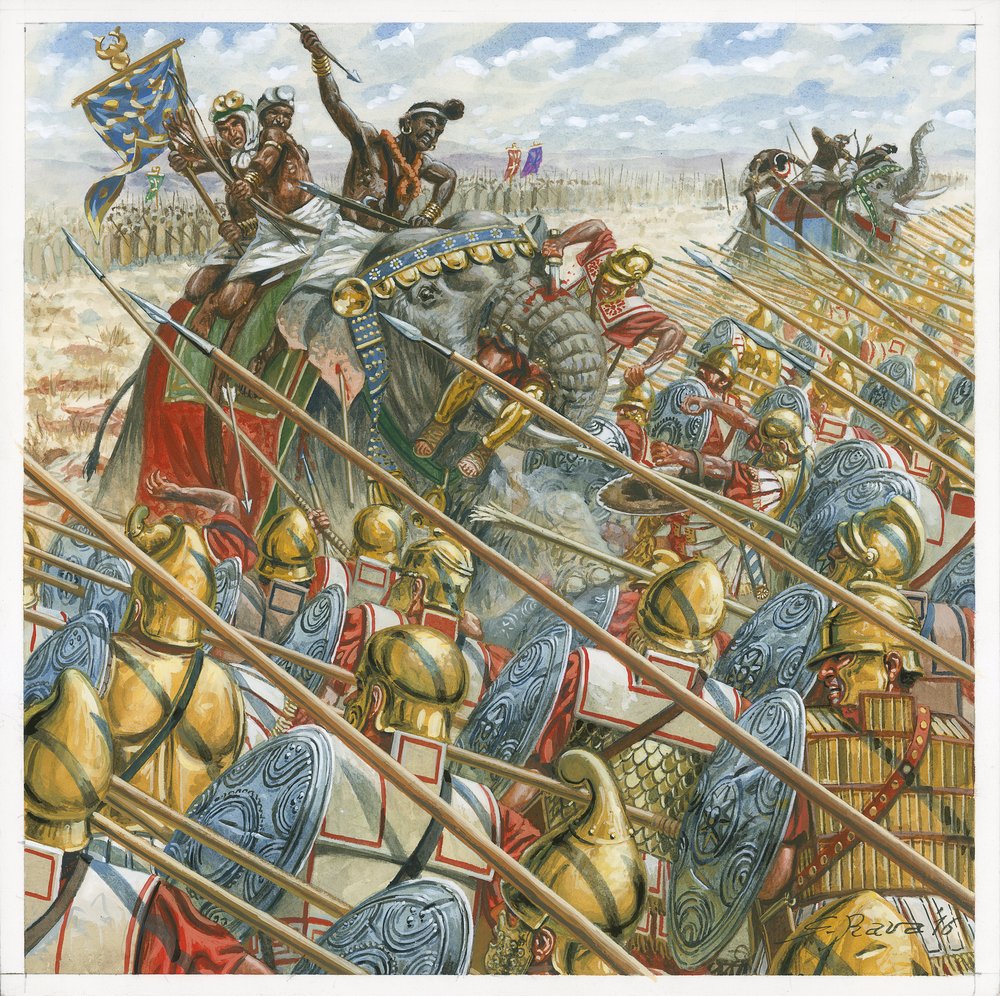
Even with the successful crossing, the battle was far from won. Porus reacted quickly, sending a force under his son to intercept Alexander, and then moving his main army to face the threat. The battle that followed was one of the most brutal Alexander ever fought. The Macedonians had to contend with a courageous infantry, skilled cavalry, and the terrifying power of Porus's war elephants.
To understand how Alexander overcame this immense challenge, let's watch a detailed breakdown of the battle.
Alexander the Great Indian Campaigns and Battle of the Hydaspes History Channel Documentary
The History Channel documentary offers a clear, step-by-step analysis of the battle's progression, from the initial clash to the final, bloody encirclement.
Watch the combined segments from 58:05 to 01:04:13 and 29:54 to 38:29. (Note: The documentary presents these out of chronological order). First clip (58:05-01:04:13): Focus on the initial clash and how Alexander's light horse archers, a tactic learned in Central Asia, were used to neutralize the Indian chariots, which were bogged down in the mud. Second clip (29:54-38:29): Pay close attention to Alexander's main tactical masterstroke: how he used his superior cavalry to neutralize Porus's cavalry, surround the Indian flanks, and then use his infantry to attack the elephants and infantry, who were now trapped and unable to maneuver.
Alexander's genius lay in his ability to create a "battle within a battle." He refused to engage the elephants head-on initially. Instead, he used his cavalry superiority to destroy the Indian cavalry on the wings. This forced the Indian infantry to bunch together for protection, making them a static target. The elephants, now confined and panicked by the attacks of light infantry who targeted their eyes and legs, rampaged through their own lines. Trapped between the Macedonian phalanx from the front and the cavalry from the rear, Porus's army was systematically destroyed in a horrific cauldron of slaughter.
Test your understanding!
Alexander's experiences in Bactria/Sogdiana and his tactics at the Battle of the Hydaspes seem very different. One was a frustrating counter-insurgency, the other a climactic pitched battle. How did the challenges of the first campaign prepare him to overcome the challenges of the second?
Show answer
The connection lies in adaptation. The grueling war in Bactria and Sogdiana forced Alexander to fundamentally restructure his army. He integrated lighter, more mobile units, especially missile cavalry like horse archers.
This adaptation proved crucial at the Hydaspes. In the initial phase of the battle, it was these very horse archers who were instrumental in defeating the advance force led by Porus's son, neutralizing their chariots which were ineffective in the mud. This shows that the hard lessons learned in the mountains of Central Asia directly equipped him with the versatile tools needed to win on the plains of India. He learned to fight a multi-dimensional war, not just a phalanx-centric one.
Conclusion
This lesson has traced Alexander's path through some of the most arduous campaigns in military history. The challenges he faced were immense and multifaceted.
Key Takeaways:
- The Bactrian Crucible: The two-year guerrilla war in Bactria and Sogdiana was a brutalizing experience that forced Alexander to adapt his military and led to an escalation in violence against any form of resistance.
- Challenges in India: In India, Alexander faced a combination of fierce tribal resistance in fortified mountain towns, new forms of warfare involving war elephants, and extreme environmental conditions like the monsoon.
- The "No Resistance" Policy: Conditioned by his past struggles, Alexander adopted a ruthless policy of annihilation against any group that opposed him, leading to extremely high casualties, including among civilians.
- The Hydaspes Masterpiece: The Battle of the Hydaspes was a showcase of Alexander's tactical brilliance. He overcame the natural barrier of a flooded river through cunning deception and defeated a formidable army with war elephants by using combined arms tactics—masterfully coordinating his cavalry and infantry.
Despite this stunning victory, the Indian campaign had pushed Alexander's men to their absolute limit. The endless marching, constant fighting, strange diseases, and monsoon rains had taken a terrible toll.
Preview of the Next Lesson:
Just as Alexander prepared to march deeper into India toward the great river Ganges, his army, for the first time, collectively refused to go on. In our next lesson, we will explore the dramatic mutiny at the Hyphasis River, analyze Alexander's complex character, and follow the army's harrowing journey back to Babylon.